July 8, 2026
The Strait of Hormuz Crisis and What It Reveals About India's Maritime Power
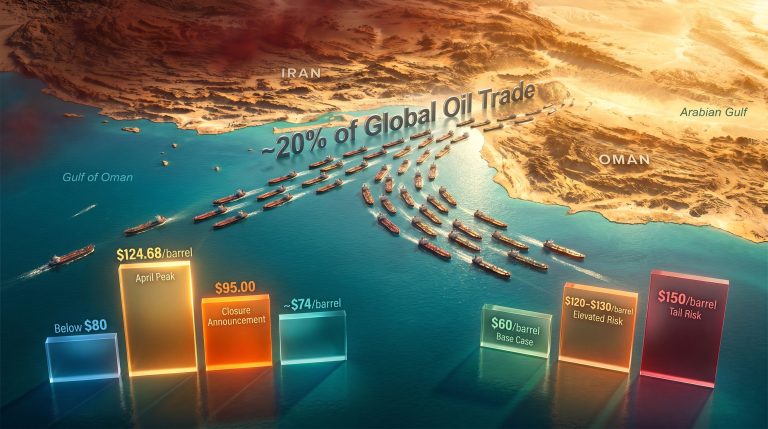
Few geographic features carry as much economic consequence as a narrow band of water separating two landmasses. The Strait of Hormuz, measuring roughly 33 kilometres at its narrowest navigable point, is the defining example of this paradox. Through this single corridor, approximately 20 to 21 percent of the world's total daily oil trade passes, making it the most consequential chokepoint in the global energy system. When that corridor becomes a theatre of military confrontation, the consequences ripple outward almost immediately, and no major economy feels those tremors more acutely than India.
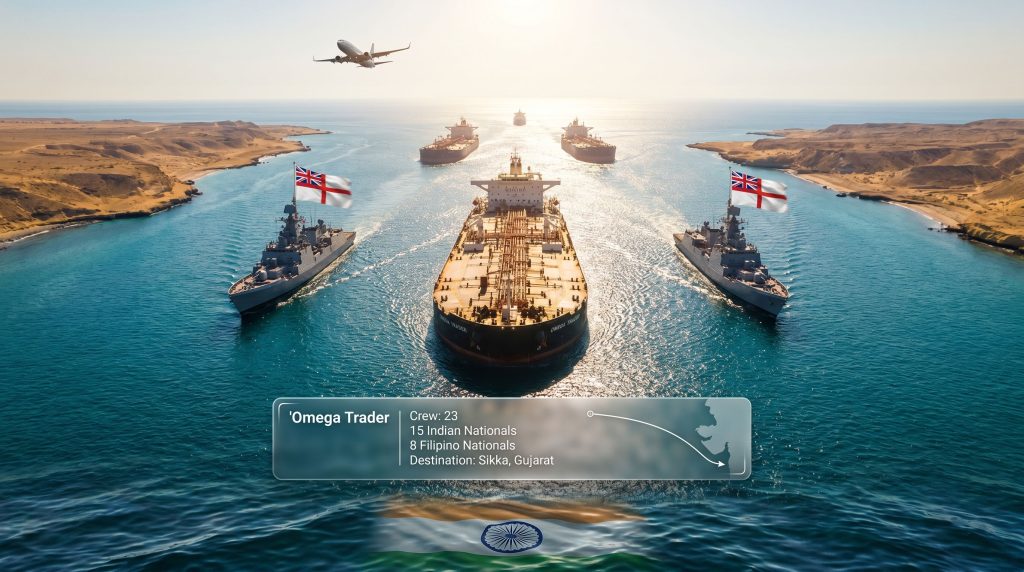
The Indian Navy secures safe passage for Omega Trader through the Strait of Hormuz stands as far more than a humanitarian or logistical achievement. It was a demonstration of a maturing strategic doctrine that blends hard naval capability with sophisticated back-channel diplomacy, executed under conditions of active military escalation. Understanding the full significance of that operation requires stepping back from the immediate event and examining the structural forces that made it both necessary and extraordinarily difficult.
When big ASX news breaks, our subscribers know first
Why the Strait of Hormuz Concentrates So Much Risk in So Little Space
The geographical constraints of the Strait of Hormuz are not merely a trivia point for maritime specialists. They are the root cause of the corridor's extraordinary strategic sensitivity. At its navigable narrowest, vessels are compressed into a channel where proximity to hostile actors is unavoidable, radar coverage is dense, and reaction times are measured in minutes rather than hours.
The ripple effects of any disruption here extend across Asia's major energy import economies simultaneously. India, China, Japan, and South Korea all draw significant proportions of their crude oil supply through this passage. For India specifically, the Gulf region accounts for roughly 60 percent of total crude oil imports, making the strait not one of several important routes but effectively the primary arterial connection between India's refineries and their feedstock.
The escalation cycle that preceded the Omega Trader operation involved a significant intensification of regional hostilities. Following a series of attacks on commercial vessels transiting the strait, the United States Central Command (CENTCOM) launched military strikes against Iranian targets. This chain of events transformed what had been a simmering geopolitical contest into an acute operational threat for every merchant vessel transiting the region, including Indian-flagged and Indian-crewed tankers. Furthermore, these geopolitical trade tensions reverberated far beyond the immediate waterway.
Operation Detail: What Actually Happened with the Omega Trader
Vessel Profile and the Stakes Involved
The Omega Trader is a crude oil tanker that was transiting the Strait of Hormuz en route to Sikka port in Gujarat, India. It carried a crew of 23 personnel, comprising 15 Indian nationals and 8 Filipino nationals. The vessel's cargo, destination, and crew composition made its safe transit a matter engaging both India's energy security and its constitutional obligations to protect citizens operating in active conflict zones.
According to reporting from the Economic Times, the coordinated intervention represented one of the most complex diplomatic and naval operations India had conducted in the region in recent years.
Omega Trader: Key Operational Facts
| Detail | Specifics |
|---|---|
| Vessel Name | Omega Trader |
| Cargo Type | Crude Oil |
| Total Crew | 23 |
| Indian Nationals Aboard | 15 |
| Filipino Nationals Aboard | 8 |
| Destination Port | Sikka, Gujarat, India |
| Transit Zone | Strait of Hormuz |
| Coordinating Authorities | Indian Navy and Government of India |
How the Coordinated Response Worked
What made the Indian Navy secures safe passage for Omega Trader operation distinctive was not a single naval intervention but a carefully structured two-track approach. The Government of India engaged diplomatically with Iranian authorities while the Indian Navy maintained operational coverage and escort capability in the region. This simultaneous deployment of civilian diplomatic channels and naval command structures requires institutional coordination at a level most navies are not configured to execute.
The operation did not proceed in isolation. Reports indicate that Iran set preconditions for granting safe passage to Indian vessels, including the return of previously seized tankers and the provision of medical supplies. Consequently, the resolution of these conditions through diplomatic engagement before the tankers were cleared for transit represents a sophisticated negotiation outcome rather than a purely military deterrence result.
Three Tankers, One Framework
Critically, the Omega Trader was not the only Indian tanker requiring coordinated intervention. Two additional vessels, the Pushpak and the Parimal, transited the strait as part of the same overarching diplomatic and naval arrangement. The simultaneous clearance of three tankers significantly raises the complexity of the operation compared to previous single-vessel interventions.
It suggests that India's engagement with Tehran produced a framework agreement of sorts rather than a case-by-case concession, which has broader implications for how future incidents in the region might be managed.
India's Structural Vulnerability: The Numbers Behind the Risk
To understand why the Indian government acted with such urgency, it is necessary to examine the underlying energy dependency figures that frame every decision New Delhi makes regarding Gulf security.
India imports approximately 85 to 88 percent of its crude oil requirements, placing it among the highest import-dependency ratios of any major global economy. With Gulf nations supplying around 60 percent of that total, the arithmetic of vulnerability becomes stark. A sustained disruption to Strait of Hormuz traffic would not merely raise fuel prices in India. It would threaten refinery feedstock availability for major processors including Reliance Industries, Hindustan Petroleum (HPCL), and Bharat Petroleum (BPCL) within days.
India's Strategic Petroleum Reserve (SPR) capacity stands at approximately 5.33 million metric tonnes, providing a buffer estimated at only 9 to 13 days of consumption at current rates. This is not a trivial exposure. It means that the government's ability to absorb any major disruption without visible economic pain is extremely limited, and the political costs of inaction in a maritime crisis are correspondingly high.
Scenario Projection: What a 30-Day Strait Closure Would Mean for India
- Crude price shock: Brent crude could spike 15 to 25 percent within the first week of a confirmed closure, amplifying the effect of any existing oil price rally already underway in global markets
- Refinery constraints: Indian processors dependent on Gulf crude would face immediate feedstock shortfalls
- SPR buffer window: Approximately 9 to 13 days before strategic reserves are depleted at current consumption rates
- Rerouting cost: Redirecting tankers around the Cape of Good Hope adds roughly 15 to 20 days to voyage time and substantially inflates freight costs
- Market psychology: Sustained uncertainty in the strait historically triggers speculative buying that amplifies price movements beyond the physical supply impact
The Human Dimension: Indian Seafarers as a Strategic Constituency
Beyond energy economics, India carries a distinct human-capital exposure in the Gulf shipping lanes. India is one of the world's largest suppliers of maritime labour, with an estimated 240,000 or more Indian seafarers employed globally at any given time. A disproportionate share of these individuals serve aboard tankers operating Gulf-to-Asia routes, meaning that any escalation in the strait directly endangers a significant portion of India's maritime workforce.
This creates a political dynamic that operates independently of energy economics. The Government of India faces constitutional and diplomatic obligations to protect its citizens abroad, particularly when they are employed in active conflict zones. The crew composition of the Omega Trader, with 15 Indian nationals, placed those obligations at the centre of the crisis response.
India's Strategic Positioning: The Dual-Track Advantage
What differentiates India's capacity to navigate the Strait of Hormuz crisis from that of most other major powers is its unusual diplomatic geometry. New Delhi maintains functional relationships with both Washington and Tehran simultaneously, a positioning that most Western powers cannot replicate due to sanctions alignment and alliance obligations.
This dual-track access gives India a communication channel with Iranian authorities that is unavailable to the United States or the European Union when military confrontation is active. India's ongoing energy import relationship with Iran, furthermore, sustains a level of bilateral engagement that translates into practical leverage during maritime incidents. Analysts tracking crude oil price trends have noted that such diplomatic frameworks can meaningfully reduce supply shock risk for import-dependent economies.
Comparative Response Framework: How Major Powers Handle Strait of Hormuz Threats
| Country or Bloc | Primary Response Mechanism | Diplomatic Access to Iran |
|---|---|---|
| United States | CENTCOM military operations | Minimal, through back-channels only |
| European Union | EUNAVFOR naval escort missions | Multilateral but politically constrained |
| China | Bilateral diplomacy, PLA Navy presence | Strong, through trade relationship |
| India | Naval escort combined with diplomatic negotiation | Direct, through energy trade relationship |
India's non-aligned strategic tradition, maintained across decades of Cold War and post-Cold War geopolitics, is not simply a passive historical posture. In contexts like the Strait of Hormuz crisis, it functions as an active operational asset.
Operation Sankalp and the Precedent That Made This Possible
The Omega Trader operation did not emerge from a blank slate. In 2019, the Indian Navy deployed warships to the Gulf of Oman under Operation Sankalp following a series of tanker attacks attributed to Iranian actors. That deployment established a formal precedent for the Indian Navy operating in contested Gulf waters to protect Indian-flagged and Indian-crewed vessels.
What the 2026 Omega Trader operation adds to that precedent is qualitatively significant:
- Multi-vessel clearance rather than single-vessel escort, indicating a negotiated framework rather than a one-off intervention
- Resolution of Iranian preconditions before transit, demonstrating that India's diplomatic engagement produced concrete outcomes
- Integrated government-navy command coordination that combined civilian diplomatic channels with military operational readiness in real time
- A replicable template that can be applied to future incidents without starting from zero each time
These distinctions matter because they indicate a shift from reactive crisis response toward a more institutionalised maritime security framework, at least within India's Gulf engagement posture. In addition, analysts monitoring OPEC's market influence have noted that stable transit through the strait is equally critical for supply-side predictability across Gulf producer nations.
The next major ASX story will hit our subscribers first
Frequently Asked Questions: The Omega Trader Operation
What is the Omega Trader and why was it at risk?
The Omega Trader is a crude oil tanker with 23 crew members, including 15 Indian nationals and 8 Filipino nationals, transiting the Strait of Hormuz toward Sikka, Gujarat. The vessel was at risk due to escalating military confrontation in the strait following U.S. CENTCOM strikes against Iranian targets in response to attacks on commercial shipping.
How did the Indian Navy secure safe passage for the tanker?
Through a coordinated dual-track model: the Indian Navy provided naval escort and operational coverage while the Government of India negotiated diplomatically with Iranian authorities, addressing Iran's stated preconditions before the tankers were authorised for transit. Coverage from Business Standard confirms this two-pronged approach was central to the operation's success.
Were other Indian vessels also affected?
Yes. The Pushpak and the Parimal were part of the same coordinated passage arrangement, making this a three-vessel clearance operation rather than an isolated intervention.
What conditions did Iran require for granting safe transit?
Reports indicate Iran's preconditions included the return of previously seized tankers and the supply of medical materials. These were resolved through diplomatic engagement before transit clearance was granted.
How exposed is India if the Strait of Hormuz is disrupted long-term?
Extremely exposed. With approximately 85 to 88 percent crude import dependency and the Gulf supplying around 60 percent of that total, a sustained disruption would exhaust India's strategic petroleum reserves within roughly 9 to 13 days at current consumption. It would also force costly rerouting around the Cape of Good Hope, a concern directly linked to broader trade war and oil prices dynamics already straining global energy markets.
Key Takeaways: What the Omega Trader Operation Signals
- India's dual-track model combining naval power with diplomatic access to both Western and Iranian interlocutors is emerging as a distinctive and effective framework for maritime crisis resolution in the Gulf
- The simultaneous clearance of three Indian tankers signals a maturation beyond ad hoc responses toward a negotiated access model
- India's 85 to 88 percent crude oil import dependency makes Strait of Hormuz protection an existential economic priority, not merely a military or diplomatic preference
- The human dimension, with over 240,000 Indian seafarers employed globally and significant numbers on Gulf routes, creates a political obligation that operates independently of energy economics
- The resolution of Iranian preconditions through back-channel diplomacy demonstrates that India's non-aligned positioning continues to generate practical strategic leverage in active conflict environments
- The Indian Navy secures safe passage for Omega Trader and provides a replicable institutional template: pre-negotiated access conditions, coordinated government-navy response, and multi-vessel clearance executed simultaneously
Disclaimer: Scenario projections, economic impact estimates, and price forecasts referenced in this article are based on analytical modelling and historical precedent. They represent possible outcomes under specific conditions and should not be interpreted as predictions or investment advice. Readers should consult primary energy market data and independent research for any financial or policy decision-making purposes.
Want to Identify the Next Major Resource Discovery Before the Market Does?
Discovery Alert's proprietary Discovery IQ model delivers real-time alerts on significant ASX mineral discoveries — cutting through complexity to give investors a genuine edge in fast-moving markets, much like the geopolitical forces reshaping global energy supply chains explored above. Explore historic discoveries and the returns they generated, then begin your 14-day free trial at Discovery Alert to position yourself ahead of the market.