July 25, 2026
The global energy landscape faces unprecedented challenges as maritime chokepoints become critical vulnerabilities in supply chains worldwide. The strait of Hormuz disruption has exposed fundamental weaknesses in international energy security frameworks, with cascading effects reaching far beyond immediate commodity price volatility. Furthermore, this crisis demonstrates how geographic constraints intersect with political tensions to create systemic risk scenarios that reshape trade patterns, investment flows, and geopolitical alliances across interconnected markets.
Understanding the Strategic Importance of Maritime Chokepoints
Why the Strait of Hormuz Commands Global Attention
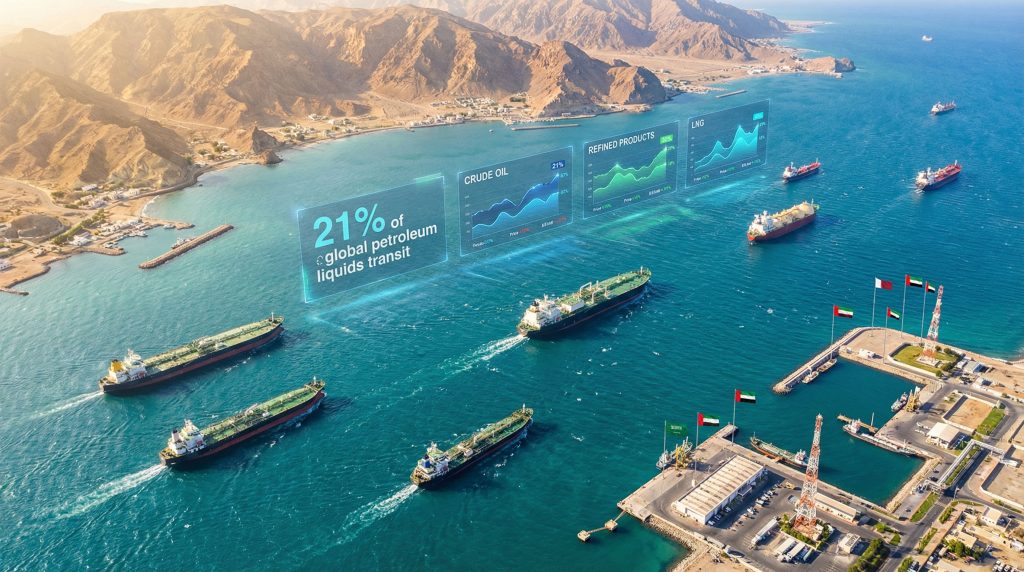
The narrow waterway connecting the Persian Gulf to the Arabian Sea represents one of the world's most critical energy transit routes, facilitating approximately 21% of global petroleum liquids flow under normal operating conditions. This strategic bottleneck spans just 21 miles at its narrowest point, yet its control fundamentally shapes international energy security calculations.
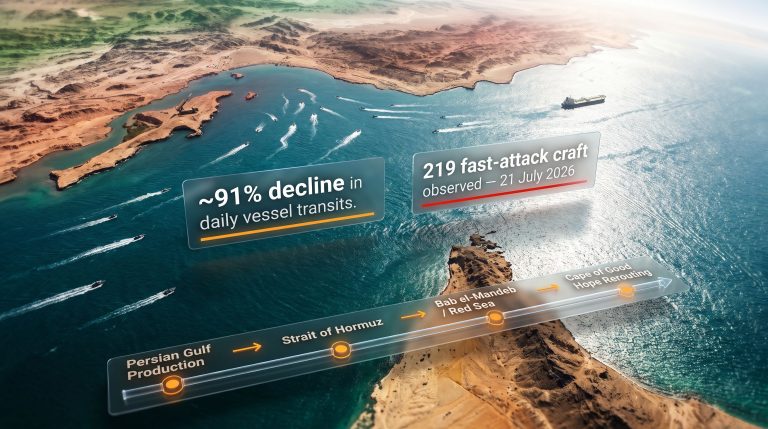
Geographic positioning grants Iran significant leverage over global energy flows, with the strait serving as the primary export route for major Gulf producers including Saudi Arabia, Iraq, Kuwait, and the United Arab Emirates. Recent events have highlighted this vulnerability, with Iranian retaliatory actions heavily restricting traffic through the key waterway, severely curtailing exports of crude oil, refined products, LNG, fertilizers, and other commodities from the region.
The current disruption demonstrates how quickly maritime chokepoints can transform from routine commercial passages into geopolitical weapons. Unlike previous temporary closures driven by technical issues or weather conditions, the ongoing strait of Hormuz disruption reflects deliberate policy implementation designed to pressure international actors through economic disruption.
The Anatomy of a Critical Shipping Lane
Under normal operations, the Strait of Hormuz witnesses continuous vessel traffic carrying diverse cargo compositions that support global manufacturing and energy systems. The disruption affects multiple commodity categories simultaneously, creating compounding supply chain challenges across interconnected industries.
Current passage restrictions operate through selective permitting rather than absolute closure. Iranian officials have implemented protocols allowing specific vessels to transit based on national affiliations and diplomatic arrangements. Pakistan secured approval for 20 Pakistani-flagged vessels to traverse the strait, while Malaysia and Thailand received assurances of safe passage for their maritime assets.
This selective access system reveals the sophisticated nature of modern maritime disruptions. Rather than implementing blanket closures that would invite immediate international intervention, authorities can calibrate economic pressure through targeted restrictions while maintaining plausible diplomatic cover.
When big ASX news breaks, our subscribers know first
What Are the Immediate Economic Ramifications of Transit Restrictions?
Energy Supply Chain Vulnerabilities Exposed
European energy security assessments reveal stark disparities in strategic preparedness across major economies. Analysis of national stockpiles and consumption patterns identifies critical vulnerability points where supply disruptions could rapidly escalate into operational crises.
| Country | Jet Fuel Coverage | Diesel Coverage | Vulnerability Level |
|---|---|---|---|
| United Kingdom | 3 months | 9 months | Highest Risk |
| Ireland | 4 months | N/A | Moderate Risk |
| Portugal | 4 months | N/A | Moderate Risk |
| Hungary | N/A | 5 months | Elevated Risk |
| Denmark | N/A | 6 months | Moderate Risk |
| Germany | N/A | 7 months | Lower Risk |
| France | 8 months | 8 months | Best Positioned |
| Romania | N/A | 16 months | Minimal Risk |
The United Kingdom emerges as the highest-risk European nation, combining short jet fuel coverage with significant import dependency. This vulnerability reflects structural challenges in strategic reserve management and highlights how geographic isolation compounds supply chain risks during international crises.
Calculations based on Joint Organisations Data Initiative (Jodi) data reveal theoretical stock exhaustion timelines that underscore the urgency of alternative sourcing arrangements. However, these projections assume proportional impact distribution across all importers, while actual market dynamics would likely see vulnerable countries bidding aggressively for available supplies.
Ripple Effects Across Global Manufacturing
Manufacturing sectors face cascading disruptions as refined product shortages interact with seasonal demand patterns and maintenance schedules. Poland's aviation fuel vulnerability illustrates how domestic production capabilities can provide buffer capacity, yet infrastructure maintenance requirements create temporal weak points that compound external supply shocks.
Portugal's energy security calculations demonstrate the intersection of refinery scheduling with import dependencies. The country's single refinery completed maintenance in the previous year, providing temporary stability, but normal import resumption typically occurs around May, primarily sourcing from Middle East Gulf suppliers. Moreover, the effects resemble challenges seen in australia energy export challenges where domestic infrastructure limitations compound external pressures.
European industrial operations must navigate not only immediate supply constraints but also the prospect of sustained premium pricing that could fundamentally alter production economics. Energy-intensive manufacturing may face difficult decisions between maintaining operations at elevated costs or implementing temporary shutdowns that preserve working capital but sacrifice market position.
How Are Different Regions Adapting to Supply Disruptions?
European Market Response Strategies
European governments have mobilised multilateral coordination mechanisms to address the maritime disruption through diplomatic channels rather than direct military intervention. The United Kingdom announced hosting a meeting of 35 nations' foreign ministers to assess waterway reopening strategies, representing institutional response frameworks designed to maintain international law principles while applying collective pressure.
This diplomatic approach contrasts sharply with earlier French proposals for coalition-based security operations. Initial plans for international naval coordination to secure vessel traffic were subsequently abandoned in line with broader EU stance against direct military involvement, highlighting policy fragmentation within European security frameworks.
Strategic petroleum reserve utilisation patterns remain closely guarded by national authorities, though theoretical calculations suggest most European countries possess sufficient buffer capacity to weather short-term disruptions. The challenge lies not in absolute supply exhaustion but in managing price volatility and maintaining industrial competitiveness during extended periods of premium pricing.
Critical Assessment: European response strategies prioritise diplomatic solutions over direct intervention, reflecting institutional preferences for multilateral frameworks even when facing severe economic pressure through energy supply manipulation.
Asian Energy Security Calculations
Asian importers have demonstrated greater flexibility in negotiating bilateral arrangements with Iranian authorities. Pakistan's successful approval of 20 vessel transits establishes a precedent for state-to-state negotiations that bypass multilateral frameworks, potentially offering more immediate practical solutions for energy-dependent economies.
The selective passage system creates opportunities for diplomatic differentiation, allowing countries to maintain energy access through careful political positioning. Malaysia and Thailand's receipt of safe passage assurances demonstrates how regional powers can leverage historical relationships and strategic neutrality to maintain commercial operations during international crises.
This fragmented approach to crisis management reflects the absence of unified international energy security mechanisms. Unlike European attempts at collective response coordination, Asian markets appear more willing to pursue individual solutions that prioritise immediate commercial continuity over broader geopolitical solidarity.
What Long-Term Structural Changes Could Emerge?
Infrastructure Investment Acceleration
Maritime chokepoint vulnerabilities are driving accelerated infrastructure development programmes designed to reduce dependence on traditional shipping routes. Pipeline capacity expansion projects that previously faced economic viability challenges now receive enhanced political support as governments prioritise energy security over pure cost optimisation.
Strategic reserve facility construction timelines have compressed significantly as decision-makers recognise the inadequacy of current buffer capacity. Ireland's four-month jet fuel coverage provides better cushioning than most European nations, yet even this relatively robust position may prove insufficient if disruptions extend beyond initial projections.
Additionally, developments in battery recycling breakthrough technologies offer alternative energy storage solutions that could reduce dependence on traditional fuel reserves.
Port infrastructure development outside the Gulf region gains strategic importance as importers seek to diversify sourcing patterns. Alternative terminals capable of handling large-scale LNG, refined products, and crude oil shipments from non-Gulf suppliers represent critical infrastructure investments that enhance long-term supply chain resilience.
Geopolitical Realignment Scenarios
Current diplomatic positioning reveals potential pathways for resolving the maritime disruption, though timeline uncertainty creates planning challenges for energy markets. US President Trump's indication that forces could leave the region within two to three weeks provides tentative guidance for short-term supply chain management, yet Iranian demands for ironclad guarantees against future attacks suggest more complex negotiation requirements.
| Resolution Scenario | Estimated Probability | Expected Duration | Market Impact Level |
|---|---|---|---|
| Diplomatic Breakthrough | 35% | 4-8 weeks | Rapid normalisation |
| Gradual De-escalation | 40% | 3-6 months | Sustained volatility |
| Extended Standoff | 20% | 6-18 months | Structural adjustment |
| Regional Escalation | 5% | 12+ months | Market transformation |
These scenario probabilities reflect current diplomatic dynamics, though rapid changes in military positioning or breakthrough negotiations could significantly alter timeline projections. Consequently, the broader us-china trade war impact demonstrates how multiple geopolitical tensions can compound to create systemic market vulnerabilities.
How Might Energy Markets Permanently Transform?
Accelerated Transition Dynamics
Maritime chokepoint risks are reshaping long-term energy investment strategies by highlighting the vulnerability of fossil fuel supply chains to geopolitical manipulation. Renewable energy projects that previously competed primarily on economic merit now receive additional strategic value premiums as investors and governments recognise their immunity to shipping lane disruptions.
Nuclear power renaissance discussions gain momentum in energy-importing nations seeking to reduce dependence on seaborne fossil fuel shipments. The current crisis provides political cover for nuclear expansion programmes that faced public resistance during periods of stable energy imports, potentially accelerating deployment timelines for projects with multi-decade operational lifecycles.
Furthermore, us oil production decline trends highlight how domestic production challenges compound supply security concerns when combined with maritime disruptions.
Battery storage deployment acceleration addresses both renewable intermittency challenges and emergency backup requirements during supply disruptions. Large-scale storage systems can provide grid stability during renewable generation variability while offering critical backup capacity if conventional fuel supplies face interruption during future crises.
New Trade Route Development
Arctic shipping lane viability assessments receive enhanced funding and political support as traditional southern routes demonstrate vulnerability to regional conflicts. Climate change-driven ice reduction creates opportunities for year-round northern passages that bypass Middle Eastern chokepoints entirely, though infrastructure requirements and environmental considerations remain significant barriers.
Overland pipeline project feasibility studies experience renewed government backing as energy security considerations outweigh traditional economic optimisation criteria. Cross-border interconnection investments that seemed economically marginal during stable supply conditions now receive strategic priority as governments prioritise supply chain diversification over pure cost minimisation.
Regional energy hub establishment strategies focus on creating multiple redundant supply pathways that reduce dependence on single transit routes. These hubs require significant upfront investment but provide long-term resilience against future disruption scenarios while creating opportunities for energy trading and storage services.
What Investment Opportunities Are Emerging from This Crisis?
Energy Infrastructure Plays
Pipeline companies with routing capabilities that bypass traditional chokepoints experience enhanced investor interest as market participants recognise the strategic value of alternative transport infrastructure. These assets provide steady cash flows while offering protection against geopolitical supply disruption risks that affect seaborne transportation networks.
Strategic storage facility operators benefit from increased demand for buffer capacity as importers recognise the inadequacy of current reserve levels. Facilities located in politically stable regions with multiple supply route access points command premium valuations due to their enhanced strategic importance during crisis periods.
Alternative fuel transportation technologies, including hydrogen shipping infrastructure and advanced battery systems, receive accelerated development funding as investors anticipate structural shifts toward energy sources less vulnerable to traditional maritime chokepoint risks. These technologies offer long-term growth potential while addressing immediate security concerns.
Regional Energy Independence Themes
Domestic production enhancement projects gain political and financial support as governments prioritise energy self-sufficiency over import cost optimisation. Enhanced oil recovery techniques, unconventional resource development, and renewable energy expansion all benefit from increased strategic value recognition beyond pure economic returns.
Cross-border interconnection investments create opportunities for regional energy sharing arrangements that provide mutual security benefits while generating infrastructure returns. These projects typically require government backing but offer stable long-term cash flows with strategic premium valuations during crisis periods.
Emergency response capability development encompasses everything from mobile power generation systems to rapid fuel distribution networks. Companies providing these capabilities experience increased demand as both governments and private sector actors recognise the need for enhanced crisis response infrastructure.
The next major ASX story will hit our subscribers first
How Should Stakeholders Prepare for Future Disruptions?
Corporate Risk Management Evolution
Supply chain diversification mandates require fundamental restructuring of procurement strategies to ensure multiple sourcing options across different geographic regions and transportation routes. Companies must balance the higher costs of diversified supply chains against the catastrophic risks of concentrated dependencies during crisis periods.
Force majeure clause restructuring in contracts reflects lessons learned from current disruption scenarios. Traditional contract language may prove inadequate when dealing with selective shipping restrictions rather than complete route closures, requiring more sophisticated legal frameworks that address partial disruption scenarios.
Geographic hedging strategies for commodity exposure must account for regional price differentials that emerge during supply chain disruptions. In addition, tracking oil price movements becomes essential as traditional hedging approaches may prove insufficient when different markets experience varying degrees of supply constraint.
Government Policy Response Frameworks
Strategic reserve target adjustments reflect recognition that current buffer capacity levels may prove inadequate during extended disruption scenarios. France's eight-month coverage for both jet fuel and diesel represents better positioning than most European nations, yet even this level may require enhancement if disruption patterns become more frequent or prolonged.
International cooperation mechanism strengthening addresses the fragmented response patterns observed during the current crisis. Effective coordination requires pre-established frameworks that can activate rapidly during emergency situations, rather than attempting to create collaborative structures during active crisis periods.
Critical infrastructure protection prioritisation extends beyond traditional military security concerns to encompass cyber resilience, supply chain redundancy, and rapid repair capabilities. These comprehensive protection strategies require significant investment but provide essential foundation for energy security in an increasingly uncertain global environment.
What Does This Mean for Global Energy Security Architecture?
Multilateral Coordination Mechanisms
International Energy Agency emergency response protocols face testing under current disruption conditions, with varying degrees of success in coordinating member nation responses. The effectiveness of existing frameworks depends heavily on political willingness to prioritise collective action over individual national interests during crisis periods.
Regional security partnership development creates opportunities for enhanced cooperation among geographically proximate nations facing similar energy security challenges. These partnerships can provide more rapid response capabilities than global institutions while addressing specific regional vulnerability patterns that may not align with broader international priorities.
Shared strategic reserve management systems offer potential efficiency gains through coordinated inventory management and emergency sharing arrangements. However, implementation requires significant trust-building and legal framework development to ensure equitable burden-sharing during activation periods.
Technology-Driven Resilience Building
Real-time supply chain monitoring systems provide enhanced visibility into global energy flows, enabling more rapid response to emerging disruption patterns. Advanced tracking technologies can identify potential chokepoint risks before they fully develop, providing decision-makers with critical early warning capabilities.
Predictive analytics for disruption forecasting integrate geopolitical intelligence with shipping pattern analysis to provide probabilistic assessments of future supply chain risks. These systems help energy market participants and government officials make informed decisions about inventory management, alternative sourcing, and emergency preparedness investments.
Automated emergency response deployment systems can activate predetermined contingency plans more rapidly than manual coordination processes. These systems require significant upfront investment in infrastructure and planning but provide enhanced response speed during time-critical disruption scenarios.
Navigating an Era of Energy Uncertainty
Key Strategic Takeaways
Diversification emerges as the fundamental risk mitigation strategy across all aspects of energy security planning. Single-source dependencies, whether geographic, technological, or institutional, create unacceptable vulnerability levels in an environment where disruption scenarios are becoming more frequent and sophisticated.
Regional cooperation frameworks provide more effective crisis response mechanisms than purely national approaches, yet implementation requires careful balance between sovereignty preservation and collective security benefits. Successful cooperation models must address both immediate crisis management and long-term strategic planning requirements.
Technology acceleration offers the most promising pathway toward long-term energy security resilience, though transition periods create temporary vulnerabilities that require careful management. Investment in advanced energy systems, monitoring technologies, and emergency response capabilities provides essential foundation for future security architecture.
Monitoring Critical Indicators
Diplomatic negotiation progress between conflicting parties provides the most immediate indicator of potential crisis resolution timelines. Iranian demands for ironclad guarantees against future attacks suggest complex requirements that extend beyond simple ceasefire arrangements, indicating potentially extended negotiation periods.
Alternative supply route capacity utilisation rates offer practical measures of market adaptation effectiveness. Successful diversion of energy flows to non-Gulf routes provides evidence of supply chain resilience while identifying infrastructure constraints that may limit long-term adaptation capabilities.
Strategic reserve drawdown patterns across major economies reveal both current stress levels and remaining buffer capacity. Coordinated analysis of these patterns provides insights into collective resilience levels while identifying potential trigger points for more aggressive policy responses.
Investment Disclaimer: Energy market investments carry significant risks during periods of geopolitical uncertainty. Readers should conduct independent due diligence and consult qualified financial advisors before making investment decisions based on crisis-driven market conditions. Historical performance does not guarantee future results, and energy commodity investments may experience extreme volatility during disruption scenarios.
The strait of Hormuz disruption represents more than a temporary supply chain challenge; it signals a fundamental shift toward an energy landscape where geographic vulnerabilities and geopolitical tensions create permanent risk premiums. Stakeholders who recognise these structural changes and adapt their strategies accordingly will be better positioned to navigate the complex energy security environment. For instance, comprehensive analysis from the FAO regarding food security risks demonstrates how maritime disruptions extend beyond energy into critical food supply chains. Success requires balancing immediate operational requirements with long-term strategic positioning in markets increasingly shaped by the intersection of technology, geography, and international relations.
Ready to Navigate Energy Market Disruptions?
Discovery Alert's proprietary Discovery IQ model delivers real-time alerts on significant mineral and energy-related discoveries across the ASX, helping investors identify actionable opportunities during periods of market volatility like the current strait of Hormuz crisis. Explore how major mineral discoveries can generate substantial returns by visiting Discovery Alert's dedicated discoveries page, and begin your 14-day free trial today to position yourself ahead of rapidly changing market conditions.