June 9, 2026
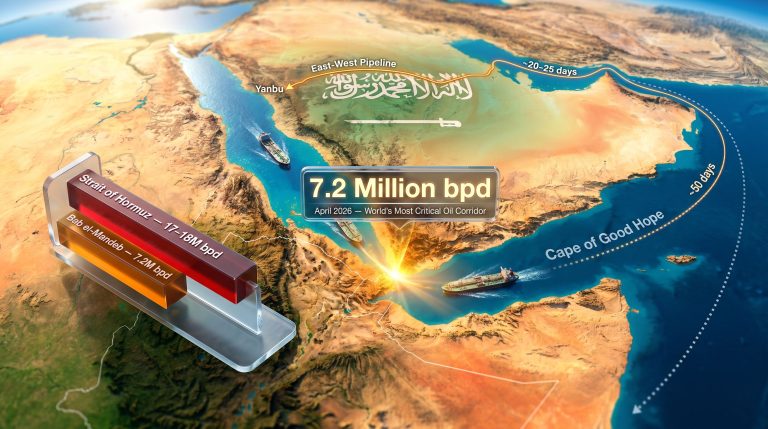
Global energy markets operate within a complex web of interdependent supply chains, where single points of failure can trigger cascading economic disruptions across continents. Among the world's most critical energy infrastructure bottlenecks, maritime chokepoints represent systemic vulnerabilities that extend far beyond regional geopolitics to reshape fundamental economic relationships between nations, industries, and consumers. The Strait of Hormuz disruption represents one of the most significant threats to global energy security, affecting billions of dollars in daily energy trade.
The concentration of global energy flows through narrow shipping corridors creates unique risk profiles that traditional economic models struggle to capture. When these pathways face disruption, the resulting market dynamics challenge established pricing mechanisms, force rapid supply chain reconfigurations, and accelerate structural changes across multiple economic sectors simultaneously.
What Makes Maritime Energy Chokepoints Critical to Global Economic Stability?
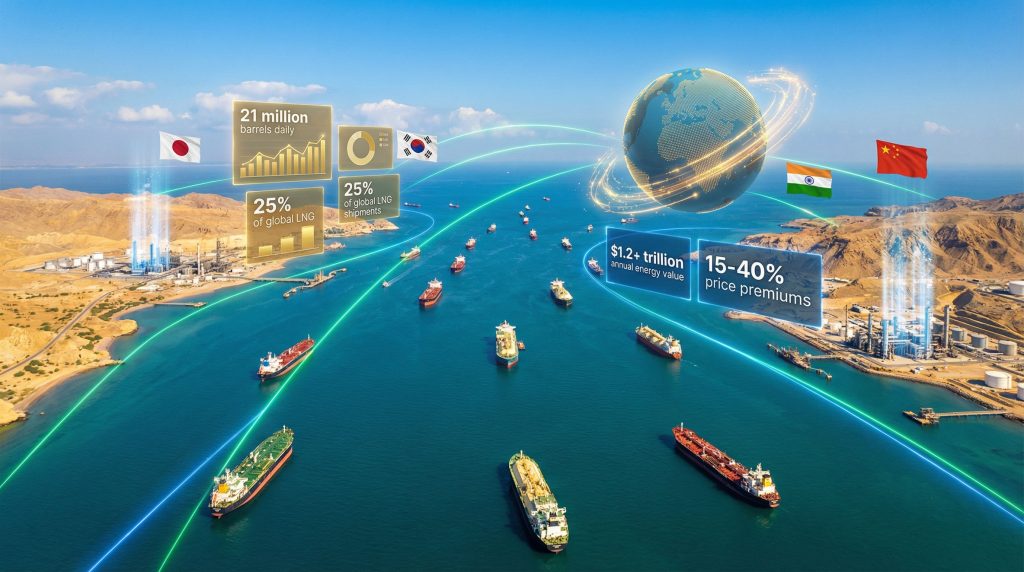
The world's energy security hinges on several narrow maritime passages, with the Strait of Hormuz representing the most economically significant bottleneck in global petroleum trade. This 21-nautical-mile-wide passage facilitates the transit of approximately 21 million barrels per day of oil, representing roughly 21% of global petroleum liquids traded internationally, according to the U.S. Energy Information Administration.
Beyond crude oil volumes, this strategic waterway serves as the primary conduit for 25% of global liquefied natural gas shipments, creating dual vulnerabilities across petroleum and gas markets simultaneously. The economic significance extends beyond simple volume metrics, as Persian Gulf producers controlling nearly 40% of proven global oil reserves depend on this single route for market access.
Critical Transit Infrastructure Specifications:
- Daily oil throughput capacity: 21 million barrels
- Annual energy value: $1.2+ trillion
- Shipping lane width: 2 miles each direction
- Daily tanker transits: 100-120 vessels
- Maximum vessel capacity: 300,000+ tons deadweight
The geographic constraints create operational bottlenecks that limit surge capacity during disruptions. Current infrastructure accommodates Very Large Crude Carriers (VLCCs) with maximum efficiency, but alternative routing options provide less than 30% of current volume capacity even under optimal conditions.
Regional Import Dependency Analysis
Asian economies demonstrate the highest vulnerability to chokepoint disruptions due to import concentration and limited strategic buffer capacity. India imports 2.5-2.7 million barrels daily through this route, representing approximately 60-65% of total crude oil imports, with major sourcing from Iraq, Saudi Arabia, the UAE, and Kuwait.
Strategic Reserve Coverage by Major Economies:
| Country | Reserve Days | Import Dependency | Vulnerability Level |
|---|---|---|---|
| Japan | 240+ days | 99% | Moderate (high reserves) |
| South Korea | 180-200 days | 95% | Moderate |
| India | 17-18 days | 85% | Critical |
| China | 90-100 days | 70% | High |
| Singapore | 60-70 days | 100% | High |
India's critically low strategic reserve coverage of 17-18 days represents a significant economic vulnerability, as any sustained disruption beyond two weeks would force immediate demand management measures and supply rationing across industrial sectors.
When big ASX news breaks, our subscribers know first
Which Economic Sectors Experience Maximum Disruption Impact?
Energy supply shocks propagate through economic systems via multiple transmission mechanisms, creating compounding effects that amplify initial price movements. Historical analysis reveals that chokepoint-related supply concerns generate price premiums of 15-40% within 48-72 hours, with volatility persistence extending 3-6 months beyond initial resolution.
Immediate Price Transmission Dynamics
Recent market data from March 2026 demonstrates these transmission mechanisms in real-time, as regional conflicts triggered immediate energy market responses. Brent crude increased nearly 10% to around $80 per barrel, while European gas prices surged over 40% following infrastructure attacks, as reported by Reuters on commodity market analysis, including disruptions at Saudi Arabia's Ras Tanura refinery and Qatari LNG facilities.
Sector Vulnerability Hierarchy:
- Refined Products Markets: Jet fuel, diesel, and petrol experience the steepest price acceleration due to inelastic short-term demand
- Industrial Manufacturing: Petrochemical feedstock costs surge 25-50% as naphtha-based inputs track crude price movements
- Transportation Networks: Shipping rates increase 200-400% for alternative routing scenarios
- Agricultural Systems: Fertiliser costs spike through natural gas price correlations, with 50% of global ammonia production dependent on gas feedstock
Supply Chain Reconfiguration Economics
Disruption events force simultaneous supply chain adaptations across multiple industries, creating multiplicative cost effects that persist beyond initial crisis resolution. Furthermore, companies must simultaneously secure alternative sourcing at premium prices, reroute logistics infrastructure, renegotiate supplier contracts, and increase safety stock holdings.
Alternative Routing Cost Analysis:
| Routing Option | Additional Transit Time | Cost Premium | Daily Capacity Constraints |
|---|---|---|---|
| Cape of Good Hope | 14-21 days | 35-45% | 5-6 million bpd maximum |
| Suez-Mediterranean | 7-10 days | 20-30% | 2-3 million bpd |
| Trans-Arabian Pipeline | N/A | 15-25% | 5 million bpd |
| Russian/Central Asian | 10-15 days | 40-60% | Political restrictions |
These routing alternatives cannot fully replace disrupted capacity, as global tanker fleet limitations and port infrastructure constraints create physical bottlenecks that compound economic costs.
Critical Infrastructure Vulnerabilities
Liquefied Petroleum Gas (LPG) represents the most immediate vulnerability for import-dependent economies. India imports nearly two-thirds of LPG requirements, with 85-90% sourced from Gulf producers. Current stock levels, including cargoes already in transit, provide less than two weeks of supply coverage if imports cease entirely.
State-run refiners including Indian Oil Corporation, Bharat Petroleum Corporation Limited (BPCL), and Hindustan Petroleum Corporation Limited (HPCL) have implemented emergency protocols to boost domestic LPG production capacity. However, government officials develop targeted rationing frameworks for consumers with access to alternative cooking fuels.
How Do Macro-Economic Ripple Effects Amplify Through Global Systems?
Energy price shocks transmit to broader economic indicators through well-documented channels, with secondary effects appearing across inflation, employment, and fiscal balances within 6-9 months of initial disruption. Federal Reserve research indicates that a $10 per barrel oil price increase correlates with 0.5-0.7% increases in headline CPI within three months.
This connects directly to broader economic pressures, including concerns about us tariffs & inflation impact which compound energy-driven inflationary pressures.
Inflation Transmission Pathways
Primary Economic Channels:
- Direct Energy Costs: Immediate fuel price increases affecting transportation, heating, and electricity generation
- Input Cost Inflation: Manufacturing processes dependent on petroleum-based materials experience margin compression
- Logistics Cost Escalation: Supply chain expenses increase across all sectors due to higher transportation costs
- Substitution Effects: Alternative energy sources experience demand-driven price appreciation
Regional Economic Impact Assessment
European Market Dynamics:
European economies face moderate direct exposure through crude oil imports but experience significant secondary effects via natural gas market disruptions. The 40% surge in European gas prices during recent March 2026 tensions illustrates price discovery sensitivity. However, this represents moderate disruption compared to the 600%+ price increases experienced during the 2022 Ukraine crisis peak.
Asia-Pacific Economic Vulnerability:
Asian manufacturing economies demonstrate the highest systemic risk due to concentrated import dependency and limited strategic reserves. Chemical and petrochemical manufacturing facilities facing sustained margin compression typically implement workforce adjustments within 60-90 days. Furthermore, historical precedent shows 15-25% workforce reductions during prolonged price spike periods.
What Financial Market Mechanisms Price Disruption Risk?
Energy derivatives markets provide real-time risk assessment for supply disruption scenarios, with options markets typically embedding 8-12% probability premiums for sustained closures extending beyond 30 days. During geopolitical tension periods, out-of-the-money call options increase in premium by 40-70%, representing measurable economic costs for risk management.
The broader impact on energy markets is reflected in analyses such as the current oil price rally analysis which examines how various market factors influence pricing dynamics.
Corporate Risk Management Strategies
Major energy consumers implement sophisticated hedging programs to manage supply disruption exposure:
Hedging Instrument Portfolio:
- Crude Oil Futures: 60-80% of anticipated consumption hedged 6-12 months forward
- Crack Spread Options: Refiners hedge processing margins against volatile input costs
- Freight Rate Derivatives: Shipping cost protection for alternative routing scenarios
- Currency Forwards: Import-dependent economies hedge foreign exchange exposure
Market Structure Adaptations
Repeated disruption risks drive permanent structural changes in global energy markets. Consequently, contract terms incorporate more sophisticated force majeure clauses and pricing mechanisms reflecting increased regional differentials.
Risk Premium Components:
- Geopolitical Risk Premium: 5-8% baseline addition to crude oil prices
- Supply Disruption Insurance: Options market pricing reflects 15-25% disruption probability
- Volatility Risk: Energy sector correlations increase 40-60% during tension periods
- Currency Hedging Costs: Emerging market currencies face depreciation pressure
How Do Alternative Supply Configurations Emerge During Crises?
Strategic Petroleum Reserve deployment serves as the primary buffer mechanism during acute supply disruptions. Coordinated releases from International Energy Agency member countries can provide 60-90 days of replacement supply. However, effectiveness depends on global coordination and reserve accessibility.
Strategic Reserve Holdings Analysis
Major Strategic Petroleum Reserve Capacity:
- United States: 650-700 million barrels
- China: 500-600 million barrels (estimated)
- Japan: 320-350 million barrels
- Germany: 240-260 million barrels
- South Korea: 180-200 million barrels
Non-Conventional Supply Response Mechanisms
US Shale Production Flexibility:
American shale producers demonstrate rapid response capability, with potential to increase production 1-2 million barrels daily within 6-12 months of sustained price increases above $85-90 per barrel. This production flexibility provides strategic buffer capacity that can partially offset disrupted conventional supplies.
However, the us oil production decline presents challenges to maintaining this responsiveness, requiring careful analysis of long-term production capacity.
Arctic and Deepwater Development:
Higher sustained energy prices justify previously marginal projects, though development timelines extend 3-7 years for major offshore developments. These longer-term supply responses require sustained price signals above $70-80 per barrel to trigger significant investment commitments.
What Long-Term Energy Transition Economics Result From Disruption Events?
Supply disruption events historically accelerate renewable energy investment by highlighting fossil fuel supply vulnerabilities. Previous major disruptions correlate with 20-30% increases in clean energy capital allocation within 12-18 months of crisis resolution.
This acceleration relates to broader energy transition challenges faced by nations seeking to reduce dependence on volatile fossil fuel imports.
Investment Flow Redirection Patterns
Clean Energy Investment Acceleration:
- Solar/Wind Capacity: Accelerated deployment timelines with increased capacity targets
- Battery Storage: Grid-scale storage investment receives priority funding
- Electric Vehicle Infrastructure: Charging network expansion accelerates beyond planned schedules
- Hydrogen Economy: Alternative fuel development receives increased government and private funding
Policy Framework Evolution
Governments implement structural policy changes following major supply disruptions, creating permanent shifts in energy security approaches:
Government Policy Adaptations:
- Strategic Reserve Expansion: Minimum reserve requirements increase 50-100%
- Supply Diversification Mandates: Import source concentration limits implemented
- Critical Infrastructure Protection: Enhanced maritime security investment priorities
- Alternative Route Development: Pipeline and shipping infrastructure receive strategic classification
The next major ASX story will hit our subscribers first
How Do Geopolitical Economic Dynamics Shift During Disruptions?
Chokepoint disruptions fundamentally alter regional economic relationships and power balances. Alternative suppliers gain significant market leverage whilst traditional producers face revenue volatility and potential market share erosion.
Regional Power Balance Economics
Russia's Strategic Economic Positioning:
Supply disruptions enhance Russia's economic leverage, with potential revenue increases of $40-60 billion annually during sustained disruption periods, despite existing sanctions frameworks. This economic positioning provides diplomatic flexibility and strengthens relationships with energy-import-dependent economies.
US Energy Diplomatic Leverage:
American shale production capacity enables both domestic energy security and international diplomatic influence through emergency supply provision to allied nations. This production flexibility creates strategic options unavailable to import-dependent economies during crisis periods.
This links to the us natural gas forecast which affects America's ability to provide alternative energy supplies during disruptions.
Market Structure Transformation
Permanent Structural Changes:
- Contract Terms: Force majeure clauses incorporate more sophisticated disruption scenarios
- Pricing Mechanisms: Regional price differentials increase permanently as risk premiums embed
- Infrastructure Investment: Alternative route capacity expansion receives strategic priority
- Technology Adoption: Digital monitoring and predictive risk systems deployment accelerates
Employment and Industrial Impact:
Manufacturing sectors dependent on energy-intensive processes face structural adjustments during sustained price elevation periods. Chemical and petrochemical industries, which consume 50% of petroleum products as feedstock, experience the most severe margin compression and operational adjustments.
In addition, the interconnected nature of global energy markets ensures that Strait of Hormuz disruption scenarios cascade through multiple economic layers, creating both immediate volatility and long-term structural changes. Understanding these transmission mechanisms becomes crucial for policymakers, investors, and corporate strategists developing resilience frameworks for an increasingly complex energy security landscape.
This analysis is based on current market data and historical precedents. Energy market conditions and geopolitical situations can change rapidly, potentially altering the economic relationships and risk assessments discussed above. Investors and policymakers should consult multiple sources and current market intelligence when making strategic decisions related to energy security planning.
Want to Stay Ahead of Energy Market Disruptions?
While global energy chokepoints create massive market volatility, smart investors focus on opportunities closer to home. Discovery Alert's proprietary Discovery IQ model delivers instant notifications on significant ASX mineral discoveries, helping subscribers identify actionable opportunities before broader market awareness drives prices higher. Explore how major mineral discoveries generate substantial returns and begin your 14-day free trial today to secure your market-leading advantage.