August 11, 2026
Understanding the Strait of Hormuz: Global Energy's Most Critical Chokepoint
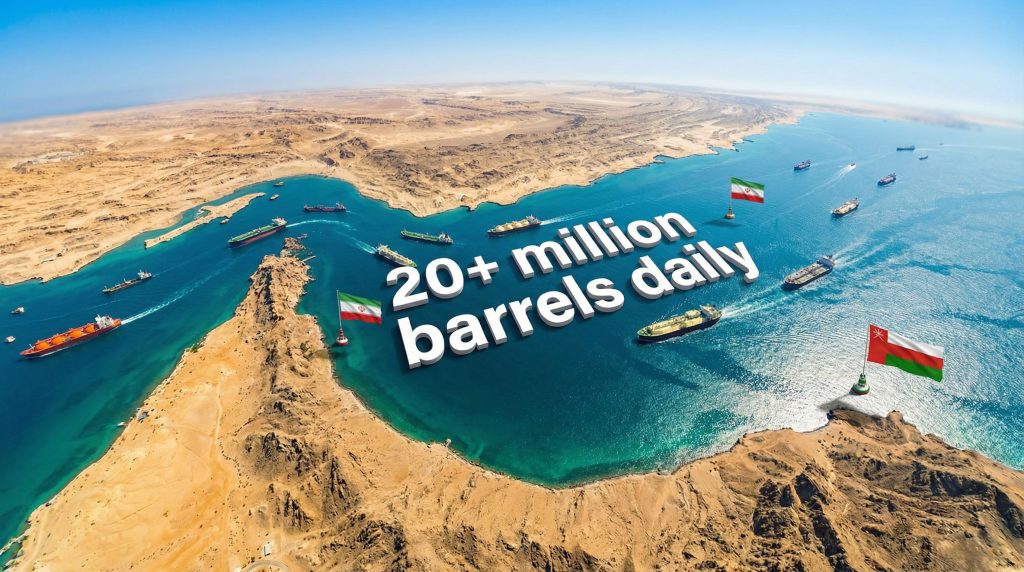
The intricate web of global energy security rests precariously on a handful of maritime passages that, if disrupted, can send shockwaves through international markets within hours. Among these critical waterways, the Strait of Hormuz transit stands as perhaps the most strategically vulnerable chokepoint in the world's energy infrastructure. This narrow passage between Iran and Oman has evolved into a focal point where geopolitics, economics, and energy security converge in ways that can reshape global markets overnight.
Understanding the mechanics of Strait of Hormuz transit requires examining both its physical characteristics and the complex web of factors that make this waterway so economically vital yet strategically precarious.
When big ASX news breaks, our subscribers know first
Geographic and Strategic Positioning
The Strait of Hormuz measures approximately 54 nautical miles in length, connecting the Persian Gulf to the Arabian Sea through the Gulf of Oman. At its narrowest point, the waterway spans just 21 nautical miles, with the shipping lanes divided between Iranian territorial waters (15 nautical miles) and Omani jurisdiction (6 nautical miles). This geographic bottleneck creates what maritime security experts term a "single-point-of-failure" risk for global energy flows.
The strait's depth characteristics accommodate the world's largest oil tankers, with waters ranging from 50 to 300 metres deep. Very Large Crude Carriers (VLCCs) with drafts up to 15.5 metres can navigate the main shipping channels, which follow established International Maritime Organisation separation schemes. The northbound route spans 2 miles whilst the southbound channel covers 3 miles, creating defined traffic patterns that enhance safety but also concentrate vessel movements.
Unlike alternative maritime routes such as the Suez Canal or Panama Canal, the Strait of Hormuz possesses virtually no practical bypass for large-scale tanker traffic. This geographic reality distinguishes it from other critical waterways and amplifies its strategic importance for global energy security.
Energy Transit Volume Analysis
Prior to recent regional disruptions, the Strait of Hormuz transit facilitated the passage of approximately 20-21 million barrels of crude oil daily, representing roughly 20-21% of global crude oil supply. The waterway also handled significant volumes of liquefied natural gas, with approximately 3.5 billion cubic feet transiting daily, accounting for about 25% of global LNG trade.
| Energy Product | Daily Volume | Global Market Share |
|---|---|---|
| Crude Oil | 20-21 million barrels | 20-21% |
| LNG | 3.5 billion cubic feet | 25% |
| Petroleum Products | 2.8 million barrels | 15-18% |
| Total Daily Value | ~$1.5-2 billion | Critical Mass |
These volumes represent more than statistical significance; they constitute a structural dependency that makes global energy markets vulnerable to supply disruptions. The concentration of such massive energy flows through a single chokepoint creates price volatility risks that extend far beyond the immediate region.
What Makes Maritime Transit Through Hormuz So Vulnerable?
The vulnerability of Strait of Hormuz transit stems from a complex intersection of geographic constraints, military capabilities, and jurisdictional complications that create multiple vectors for potential disruption.
Geopolitical Control Mechanisms
Iran's Islamic Revolutionary Guard Corps Navy (IRGCN) operates over 100 fast-attack craft equipped with anti-ship missiles capable of ranges between 100-300 kilometres. These vessels, combined with coastal-based missile systems including Khalij Fars, Ghadir, and Khalije Toophan missiles, create comprehensive coverage of the entire strait with overlapping fields of fire.
The territorial control framework adds another layer of complexity to Strait of Hormuz transit security. Iran claims territorial waters extending 12 nautical miles from its coastline under the UN Convention on the Law of the Sea (UNCLOS), which Oman also follows. This creates competing jurisdictional claims over the strait's median line, with no single authority controlling the entire waterway.
Furthermore, the OPEC meeting impact on global supply chains demonstrates how regional tensions can quickly escalate into worldwide market disruptions.
The asymmetric warfare capabilities deployed in the Persian Gulf represent a fundamental shift from conventional naval doctrine, where numerous small, fast craft can overwhelm defensive systems designed for traditional fleet engagement scenarios.
Physical Infrastructure Risks
Iran possesses significant mine warfare capabilities, including moored contact mines with explosive charges exceeding 300 kilograms. These devices can be deployed from small vessels, helicopters, or submarines, creating persistent area denial capabilities that are difficult to detect and neutralise. The global inventory of specialised mine countermeasures vessels (MCMVs) capable of operating effectively in the Strait of Hormuz numbers only 10-15 ships, highlighting the challenge of clearing newly-laid minefields.
The IRGCN's radar infrastructure provides comprehensive surveillance coverage with Fajr-class and Thales TRS-4D systems offering detection ranges of 200-250 kilometres. This surveillance network enables real-time monitoring of commercial vessel movements throughout the strait, though coverage gaps of 40-50% exist during adverse weather conditions or darkness.
How Do Regional Conflicts Impact Global Energy Security?
Regional conflicts affecting Strait of Hormuz transit trigger cascading effects that ripple through global energy markets with remarkable speed and intensity. Historical precedents demonstrate how quickly localised tensions can escalate into worldwide economic disruption, particularly affecting oil price movements across international markets.
Supply Chain Disruption Cascades
Energy market disruptions follow predictable patterns that escalate in both severity and geographic scope:
1. Initial Transit Restrictions (0-48 hours)
- Insurance underwriters immediately withdraw coverage or increase premiums by 500% or more
- Shipping companies reduce vessel deployments to affected chokepoints
- Spot market prices begin reflecting risk premiums before actual supply impacts occur
2. Insurance Premium Spikes (48 hours – 5 days)
- War-risk premiums increase from standard 0.02% to 1.5-2% of cargo value
- For typical LNG cargoes valued at $3-5 million, insurance costs escalate from $600 to $50,000-75,000
- Commercial shipping economics become prohibitive for non-essential cargoes
3. Alternative Routing Costs (5-14 days)
- Cape of Good Hope routing adds 6,000-8,000 nautical miles to voyage distances
- Additional fuel costs range from $150,000-250,000 per voyage for VLCCs
- Transit times increase by 10-15 days, disrupting delivery schedules globally
4. Strategic Reserve Activations (14-21 days)
- United States Strategic Petroleum Reserve authorises releases up to 1 million barrels daily
- International Energy Agency coordinates additional releases potentially totalling 1.5-2 million barrels daily
- Government intervention signals escalation from commercial to strategic threat levels
5. Global Price Volatility (21+ days)
- Oil prices historically increase $5-15 per barrel for each million barrels daily of lost supply
- Commodity volatility indices increase 150-300%, affecting derivative markets worldwide
- Economic recession risks emerge as sustained high energy costs impact industrial production
Economic Multiplier Effects
Asian economies demonstrate particular vulnerability to Strait of Hormuz transit disruptions due to their heavy dependence on Persian Gulf crude oil imports. Japan sources approximately 75% of its oil imports through the strait, whilst South Korea relies on the waterway for 80% of its crude oil supplies. India's dependence reaches 65%, creating a concentrated risk exposure that affects nearly half the world's population.
| Country/Region | Hormuz Dependency | Economic Impact per $10/barrel |
|---|---|---|
| Japan | 75% of oil imports | 0.3% GDP reduction |
| South Korea | 80% of oil imports | 0.4% GDP reduction |
| India | 65% of oil imports | 0.5% GDP reduction |
| China | 45% of oil imports | 0.2% GDP reduction |
Alternative Energy Route Analysis: Bypassing Hormuz Dependencies
The quest to reduce global dependence on Strait of Hormuz transit has driven significant investment in alternative energy transportation infrastructure, though none can fully replace the strait's capacity in the short term.
Pipeline Infrastructure Solutions
Saudi Arabia's East-West Pipeline system represents the most significant existing bypass capability, with a capacity to transport approximately 5 million barrels daily from the Eastern Province to Red Sea terminals. This infrastructure can handle roughly 25% of typical Strait of Hormuz crude oil flows, providing partial but not comprehensive alternative routing.
The Trans-Arabian Pipeline, whilst historically significant, currently operates at reduced capacity due to regional security concerns and maintenance challenges. Its maximum throughput of 1.5 million barrels daily offers limited relief compared to the strait's normal traffic volumes.
However, the ongoing US oil production decline has created additional pressure on global supply chains, making alternative routing even more critical.
Proposed pipeline projects, including various Iran-Pakistan-India configurations, remain in development phases with uncertain completion timelines. These projects face complex financing, regulatory, and security challenges that have historically prevented full implementation.
Maritime Alternative Assessment
Cape of Good Hope routing provides the primary maritime alternative to Strait of Hormuz transit, though with significant economic penalties. This routing adds approximately 6,000-8,000 nautical miles to typical voyage distances, increasing transit times by 10-15 days and fuel costs by $150,000-250,000 per VLCC voyage.
The economic differential between Hormuz transit and Cape routing can add $2-4 per barrel to delivered oil costs, making this alternative viable only during sustained high-risk periods or actual closures.
Suez Canal capacity constraints limit the effectiveness of alternative Mediterranean routing for Asian-bound cargoes. The canal's maximum daily throughput of approximately 50-60 vessels cannot accommodate large-scale redirection of Persian Gulf energy exports without creating significant bottlenecks.
Additionally, according to recent analysis from the International Energy Agency, emergency response protocols require coordination between multiple agencies to maintain energy security during transit disruptions.
The next major ASX story will hit our subscribers first
Strategic Response Frameworks for Transit Disruptions
International coordination mechanisms for addressing Strait of Hormuz transit disruptions involve complex military, diplomatic, and commercial frameworks designed to maintain energy security during crisis periods.
International Naval Coordination
The Combined Maritime Forces (CMF) structure involves 32-34 participating nations, though actual daily presence typically includes only 15-20 vessels across the entire Persian Gulf region. This force structure provides surveillance and escort capabilities but cannot guarantee uninterrupted commercial transit during active hostilities.
Escort convoy protocols require careful coordination between naval forces and commercial shipping companies. Historical precedents from the 1987-1988 "Tanker War" period demonstrate both the possibilities and limitations of such protective measures. During that conflict, over 400 ships were attacked over four years, with 119 vessels suffering significant damage despite international naval presence.
Furthermore, monitoring agencies like Hormuz Strait Monitor provide real-time updates on vessel movements and security conditions that help inform commercial shipping decisions.
Commercial Shipping Adaptations
Maritime insurance markets respond rapidly to Strait of Hormuz transit risks, with war-risk premiums serving as both a market signal and practical barrier to shipping operations. Lloyd's of London historical data shows premiums increasing from typical levels of 2% to 20% or more of cargo value during high-risk periods.
Commercial shipping companies maintain contingency protocols for route diversions, though implementation requires 48-72 hours for full activation. Fleet repositioning involves significant costs and logistical complexities that make prolonged alternative routing economically challenging for most operators.
Energy Market Implications of Hormuz Transit Volatility
Financial markets demonstrate remarkable sensitivity to Strait of Hormuz transit disruptions, with price discovery mechanisms that often anticipate rather than react to actual supply interruptions. These dynamics are closely related to broader patterns in oil price rally analysis and global market sentiment.
Price Discovery Mechanisms
Historical analysis reveals that oil markets typically respond to Strait of Hormuz threats within hours of initial reports, often before any actual supply disruption occurs. The 2019 tanker attacks in the Persian Gulf triggered immediate 20% price increases, with Brent crude moving from $60 to $72 per barrel within 48 hours despite minimal actual supply impact.
Futures market responses to transit disruption risks create volatility patterns that persist long after immediate threats subside. Options markets typically price in risk premiums of $5-15 per barrel for each million barrels daily of threatened supply, reflecting market participants' assessment of disruption probabilities.
| Historical Event | Supply Impact | Price Response | Duration |
|---|---|---|---|
| 1987-1988 Tanker War | 2-3 mb/d disrupted | $15-40/barrel | 18 months |
| 2019 Aramco Attack | 5.7 mb/d temporary | $60-71/barrel | 2 weeks |
| 2019 Gulf Tanker Attacks | Minimal actual | $60-72/barrel | 1 month |
Investment Strategy Considerations
Energy security premiums built into long-term investment decisions reflect persistent concerns about Strait of Hormuz transit vulnerabilities. Infrastructure investments in alternative transportation routes, strategic petroleum reserves, and renewable energy capacity all incorporate risk assessments related to potential strait closures.
Portfolio managers increasingly factor Hormuz transit risks into energy sector allocations, with particular attention to companies with heavy Persian Gulf exposure versus those with diversified supply chains. This risk assessment drives capital allocation decisions that shape long-term energy infrastructure development, particularly in light of geopolitical oil supply concerns.
Future Outlook: Reducing Global Dependence on Hormuz Transit
Technological and geopolitical developments offer potential pathways for reducing global vulnerability to Strait of Hormuz transit disruptions, though implementation timelines extend across decades rather than years.
Technological Innovation Pathways
Floating LNG terminal deployment represents one promising avenue for reducing fixed infrastructure vulnerabilities. These mobile facilities can be repositioned away from high-risk areas whilst maintaining energy processing and export capabilities. Current global capacity includes approximately 40 floating LNG units with combined processing capacity exceeding 150 million tons annually.
Subsea pipeline development offers longer-term alternatives to surface shipping, though technical and financial challenges remain substantial. Proposed subsea connections between Persian Gulf producers and alternative export terminals could potentially bypass surface transit vulnerabilities, though such projects require multi-billion dollar investments and international cooperation agreements.
Key technological breakthrough areas include:
- Autonomous shipping systems for reduced crew risk exposure
- Advanced mine detection technologies for faster waterway clearance
- Floating production platforms for geographic diversification
- High-capacity battery storage for renewable energy integration
- Advanced radar and surveillance systems for enhanced maritime domain awareness
Geopolitical Stabilisation Scenarios
Regional security architecture evolution could potentially reduce Strait of Hormuz transit risks through enhanced diplomatic engagement and economic interdependence mechanisms. Successful models from other regions, such as the North Sea's multilateral management frameworks, provide templates for cooperation even among competing nations.
Economic interdependence strengthening offers perhaps the most sustainable path toward reduced transit risks. When all parties benefit significantly from uninterrupted energy flows, incentives for maintaining open waterways typically outweigh motivations for disruption. Historical precedents suggest that robust commercial relationships can persist even during periods of political tension.
FAQ Section: Strait of Hormuz Transit Concerns
How long can global markets withstand complete closure?
Global energy markets can typically absorb complete Strait of Hormuz closure for 30-60 days through strategic petroleum reserve releases and alternative routing before experiencing severe economic disruption. The International Energy Agency estimates that coordinated reserve releases could provide approximately 2-3 million barrels daily for up to 6 months, though this would not fully replace the strait's normal 20-21 million barrel daily capacity.
Which countries are most vulnerable to disruptions?
Asian economies, particularly Japan, South Korea, and India, face the highest vulnerability due to their heavy dependence on Persian Gulf crude oil imports through the Strait of Hormuz. These nations typically maintain 90-day strategic reserves but lack sufficient alternative supply arrangements to offset prolonged disruptions without economic impact.
What emergency protocols exist for energy security?
The International Energy Agency maintains coordinated response protocols involving 31 member countries with combined strategic petroleum reserves exceeding 1.5 billion barrels. These reserves can be released at rates up to 4 million barrels daily during supply emergencies, though full activation requires consensus among member nations and typically occurs only during severe disruptions.
How do shipping companies prepare for transit risks?
Commercial shipping operators maintain comprehensive risk management protocols including insurance coverage adjustments, alternative routing preparations, and crew safety procedures. Most major tanker operators conduct quarterly risk assessments and maintain contingency plans for Persian Gulf operations that can be activated within 48-72 hours of threat escalation.
Investment decisions involving energy sector companies or commodities should consider multiple risk factors beyond transit chokepoint vulnerabilities. This analysis is for educational purposes and does not constitute investment advice. Energy market conditions and geopolitical situations can change rapidly, affecting the relevance of historical patterns and projections.
Could the Next Major Energy Discovery Transform Your Investment Strategy?
Discovery Alert's proprietary Discovery IQ model delivers instant notifications when significant ASX mineral discoveries are announced, helping investors capitalise on energy and commodity opportunities as they unfold. With the global energy landscape increasingly focused on securing alternative supply chains and resources, understanding historic discovery patterns provides crucial insights into how transformative mineral finds can generate substantial market returns.