July 28, 2026
The Strait of Hormuz: Why a 33-Kilometre Corridor Controls Global Energy Security
Few geographic features carry as much economic weight as a narrow body of water separating two coastlines by less than 60 kilometres at its widest navigable point. The Strait of Hormuz is not merely a shipping lane. It is a pressure valve for the global energy system, and when geopolitical forces tighten their grip around it, the consequences ripple across every major economy on earth. Understanding why Iran Hormuz talks with Saudi Arabia and Oman have become one of the most closely watched diplomatic developments of 2026 requires starting not with the politics, but with the geography.
When big ASX news breaks, our subscribers know first
The Physics of Energy Dependency: What Makes Hormuz Irreplaceable
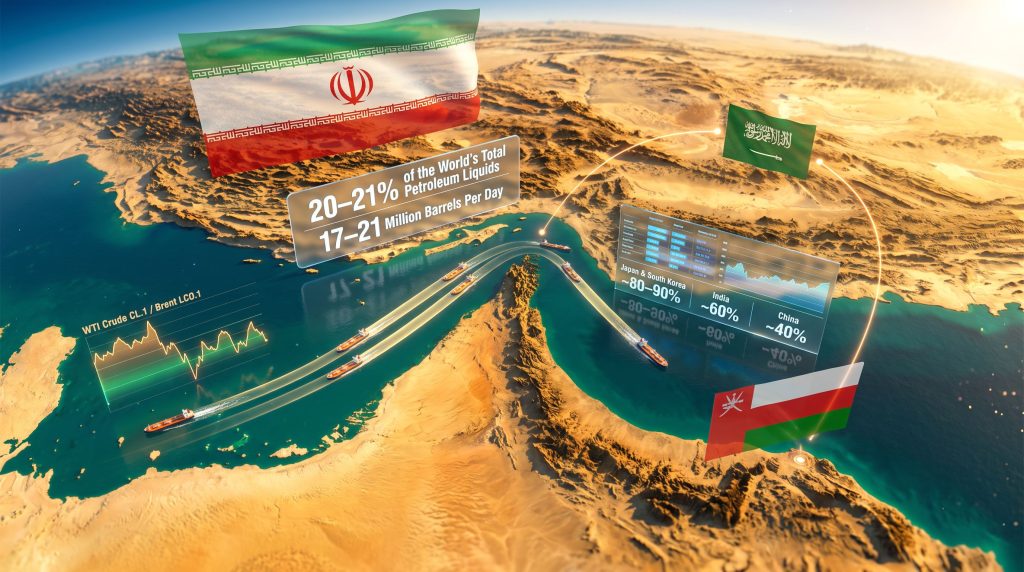
The strait's navigable shipping corridor consists of two lanes, each approximately three kilometres wide, separated by a two-kilometre buffer zone. Within these extraordinarily tight parameters, an estimated 17 to 21 million barrels of petroleum liquids move daily under normal operating conditions, representing roughly 20 to 21% of the world's total oil supply.
What makes this figure even more remarkable is that the strait is not merely an oil highway. Qatar, consistently ranked among the world's largest exporters of liquefied natural gas, routes virtually its entire LNG production through Hormuz. A prolonged closure would therefore simultaneously disrupt both crude oil and natural gas supply chains across three continents. Furthermore, the LNG supply outlook for global markets makes this vulnerability increasingly consequential for energy planners worldwide.
Alternative bypass routes do exist but provide limited relief at scale:
- Saudi Arabia's East-West Pipeline connects eastern oil fields to Red Sea terminals but operates well below Hormuz's daily throughput capacity
- The UAE's Habshan-Fujairah pipeline can divert roughly 1.5 million barrels per day, a fraction of normal Hormuz volumes
- Full logistical adaptation to alternative routes would require months of operational reorganisation and would still leave significant supply gaps for Asian importers
The structural reality is that no combination of existing bypass infrastructure can replicate Hormuz at equivalent volume or speed. Any disruption to the strait is, by definition, a global energy crisis.
Which Economies Face the Greatest Exposure
The distribution of risk from a Hormuz disruption is deeply uneven across global regions:
| Region | Hormuz Import Dependency | Primary Risk Mechanism |
|---|---|---|
| Japan and South Korea | 80-90% of crude imports | Immediate energy shortfall and rationing pressure |
| India | ~60% of crude imports | Inflation surge and industrial slowdown |
| China | ~40% of crude imports | Supply chain disruption across manufacturing |
| European Union | Indirect via LNG pricing | Energy price volatility and winter supply concerns |
| United States | Net oil exporter, indirect exposure | Global oil price inflation affecting trade balances |
Asian economies carry by far the heaviest structural exposure. Japan and South Korea, both of which lack significant domestic energy reserves, would face near-immediate shortfall conditions within weeks of a sustained closure. India's rapidly expanding industrial base has similarly oriented its import infrastructure heavily toward Gulf supply corridors.
How the Two Diplomatic Tracks Actually Function
The Iran Hormuz talks with Saudi Arabia and Oman should not be understood as a single unified negotiation. They represent two structurally distinct processes operating in parallel, each serving a different strategic function.
The Oman Track: Technical Maritime Security Architecture
Iran's engagement with Oman is the more operationally advanced of the two channels. Talks have involved technical specialists alongside senior diplomatic officials, with discussions centred on establishing concrete mechanisms for maintaining safe shipping through the strait during periods of elevated regional tension.
Several factors make Oman uniquely credible as a partner in this process:
- Oman has consistently maintained functional diplomatic relations with Tehran even during periods when other Gulf states severed or downgraded ties
- Oman never joined the Saudi-led military coalition operations in Yemen, preserving its neutrality credentials with Iran
- Muscat served as the physical location for the confidential back-channel communications that ultimately produced the 2015 Joint Comprehensive Plan of Action nuclear framework
- Oman shares a direct maritime boundary with Iran across the strait, meaning its own energy export revenues depend on unimpeded passage
The Oman track is best characterised as a technical maritime safety negotiation rather than a political reconciliation process. Its goal is to preserve shipping functionality regardless of how broader geopolitical tensions evolve.
The Saudi Track: High-Level Political Coordination
Iran's engagement with Saudi Arabia operates at a higher political level but with less operational specificity. Iranian Foreign Minister Seyyed Abbas Araqchi held direct phone consultations with his Saudi counterpart Prince Faisal bin Farhan, covering bilateral and regional developments, freedom of navigation principles, and joint diplomatic coordination objectives.
This channel carries strategic significance beyond maritime safety. The Saudi-Iran relationship has undergone its own carefully managed thaw since a Chinese-brokered diplomatic rapprochement in 2023, and the Hormuz discussions reflect that broader shift in Gulf regional dynamics. In addition, the evolving geopolitical risk landscape across the region continues to shape how both parties approach these sensitive negotiations.
| Dimension | Iran-Oman Track | Iran-Saudi Track |
|---|---|---|
| Engagement depth | Technical and operational | Political and diplomatic |
| Progress status | Advanced, mechanisms being drafted | Early-stage coordination |
| Oman's role | Active neutral facilitator | Not applicable |
| Primary objective | Safe shipping mechanisms | Regional stability framework |
| Historical precedent | JCPOA back-channel precedent | 2023 rapprochement framework |
The Fragile Ceasefire: Reading the Signals Correctly
Following approximately two weeks of direct military exchanges between the United States and Iran, hostilities entered a temporary pause in late July 2026. Markets responded immediately and decisively. Equity indices rallied, crude oil prices declined, and risk sentiment improved across asset classes. However, experienced geopolitical analysts caution against reading the pause as evidence of durable resolution.
The complexity of the current environment becomes clear when examining the simultaneous streams of activity occurring alongside the ceasefire:
- Saudi Arabia confirmed it intercepted multiple drones allegedly launched by Iran-backed militias in Iraq targeting the kingdom's oil production infrastructure
- Yemen's Houthi movement separately claimed responsibility for attacks on Saudi oil facilities, though the attribution between Iraqi militia and Houthi involvement remained unclear at the time of reporting
- Jordan's military confirmed it had downed a drone in its national airspace, illustrating how the conflict's destabilising effects had spread well beyond the core U.S.-Iran theatre
A ceasefire between two primary actors does not neutralise the broader proxy network that has been activated across the region. Any Hormuz diplomatic framework must account for the behaviour of non-state actors operating under strategic umbrellas that extend far beyond a single government's direct control.
Decoding Trump's Public Messaging Strategy
U.S. President Donald Trump's public statements on the Iran talks have been deliberately ambiguous, serving multiple domestic and diplomatic audiences simultaneously. He publicly described ongoing discussions as productive and characterised the negotiating atmosphere as friendly, while separately warning reporters aboard Air Force One that military strikes would resume if diplomatic progress stalled.
At a rally in Michigan, Trump made clear that his administration viewed coercive pressure as central to the negotiating strategy, framing the diplomatic track as running parallel to, rather than replacing, the military option. Iran's Foreign Ministry responded by consistently denying that any direct negotiations with Washington were occurring, while simultaneously acknowledging that messages were being exchanged through intermediary channels.
This distinction carries significant analytical weight:
- Domestic political insulation: Iran's government cannot publicly engage in direct negotiations with Washington while under active military pressure without generating severe internal political backlash
- Procedural flexibility: Indirect communication allows both governments to test positions and float trial balloons without formal diplomatic commitment
- Oman's structural utility: Muscat's historical role as a physical and procedural conduit for U.S.-Iran back-channel communications positions it as the logical intermediary in this configuration
- Reversibility: Maintaining the public fiction of non-negotiation preserves Iran's ability to disengage without the reputational cost of a formal diplomatic failure
How Energy Markets Are Processing the Uncertainty
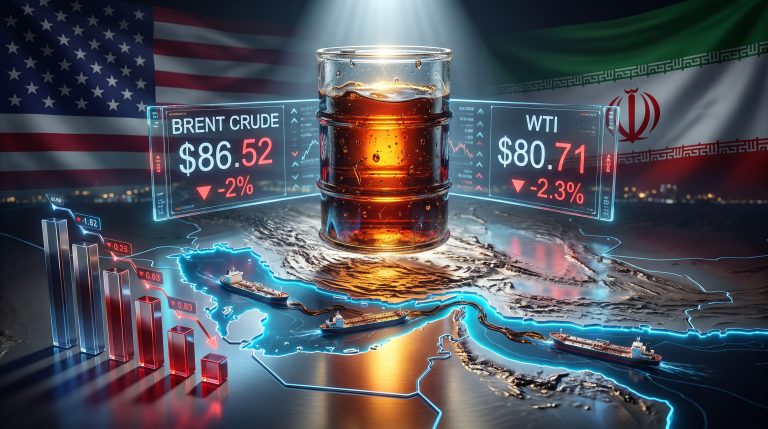
The market's response to developments in the Hormuz diplomatic process has followed a recognisable pattern, one that experienced commodity traders have observed across multiple cycles of Middle East tension. Consequently, the ongoing oil market volatility has reinforced just how sensitive global benchmarks remain to any signals emerging from the strait's diplomatic environment.
- Ceasefire announcements produce rapid oil price declines as disruption risk is priced out
- Reports of proxy attacks or new military activity reintroduce war risk premiums
- Diplomatic progress signals trigger broader risk asset rallies extending well beyond energy markets
The key indicators to monitor for early signals of shifting conditions include:
- WTI Crude and Brent Crude benchmarks as the primary real-time measures of Hormuz disruption pricing
- Asian LNG spot prices, which directly reflect Qatar's export vulnerability and the most acute regional dependency
- Shipping insurance war risk premiums, which function as a leading indicator of how commercial operators assess maritime security conditions on the ground
- Gulf sovereign credit spreads, which capture broader market assessments of regional governmental stability
Furthermore, understanding crude oil price trends in this environment remains essential for any investor or policymaker seeking to navigate the near-term uncertainty with confidence.
Important Disclaimer: Energy market forecasts in conflict zones carry substantial uncertainty. Historical precedent from the Iran-Iraq War, the Gulf War, and multiple Hormuz tension episodes demonstrates that markets have consistently underestimated both the duration of regional conflicts and the time required to achieve durable diplomatic resolution. Nothing in this analysis constitutes financial advice.
Three Scenarios for Hormuz: What Investors and Policymakers Are Weighing
The range of plausible outcomes from the current diplomatic process spans a wide spectrum. Analysts tracking the Iran Hormuz talks with Saudi Arabia and Oman are broadly evaluating three primary scenarios:
Scenario One: Durable Maritime Safety Framework
Iran, Oman, and Saudi Arabia formalise operational protocols for safe passage. U.S.-Iran hostilities remain suspended. War risk premiums normalise. This outcome requires sustained momentum across both the Oman technical track and the Saudi political track, combined with effective management of Iran's proxy networks.
Scenario Two: Partial Agreement with Persistent Proxy Instability
A Hormuz maritime safety mechanism is agreed in principle but Iran-backed proxy groups continue low-level attacks on Gulf infrastructure. Shipping insurance premiums remain elevated. Markets price in a partial but not comprehensive resolution. This is arguably the most historically consistent outcome given the structural difficulty of constraining non-state actors.
Scenario Three: Talks Collapse and Hostilities Resume
The intermediary communication structure breaks down under domestic political pressure in either Washington or Tehran. U.S. military strikes restart. Hormuz transit is actively disrupted. Oil prices spike sharply and Asian economies face immediate supply management challenges. Saudi and Omani diplomatic channels are suspended indefinitely. An oil price rally of the kind seen in prior Middle East escalations could materialise rapidly under this scenario.
The next major ASX story will hit our subscribers first
Frequently Asked Questions: Iran Hormuz Talks With Saudi Arabia and Oman
What is the current status of Iran's Hormuz talks with Saudi Arabia and Oman?
As of late July 2026, Iran has confirmed active diplomatic engagement with both Saudi Arabia and Oman focused on maritime security in the Strait of Hormuz. The Oman track is more technically advanced, with both sides discussing operational mechanisms for safe shipping. The Saudi track involves higher-level political coordination on regional stability principles.
Are the Iran-Oman-Saudi Hormuz talks connected to U.S.-Iran negotiations?
Iran has explicitly framed its discussions with Oman as a bilateral matter independent of the United States. However, given Oman's established role as a U.S.-Iran back-channel facilitator over multiple decades, most geopolitical analysts view the two processes as structurally interlinked even when formally separate.
Why is Hormuz so difficult to replace as a shipping route?
Existing bypass alternatives, including Saudi Arabia's East-West Pipeline and the UAE's Habshan-Fujairah pipeline, have combined capacity that falls far short of normal Hormuz throughput volumes. A full closure would require months of logistical adaptation and would still produce significant supply shortfalls, particularly for east Asian importers with no viable alternative supply corridors.
Could the Hormuz talks lead to a broader U.S.-Iran agreement?
The current maritime talks are a functional, technical process rather than a comprehensive peace framework. However, successful progress on maritime security mechanisms could build procedural trust and create institutional infrastructure for broader negotiations. This is particularly plausible if Oman continues to serve as an effective communication bridge between Washington and Tehran, as analysts have recently noted.
Key Takeaways on the Iran Hormuz Diplomatic Process
- The dual Iran-Oman and Iran-Saudi tracks represent parallel but complementary diplomatic processes, each serving a structurally distinct strategic function
- Iran's consistent framing of these talks as bilateral and independent of the U.S. provides domestic political insulation while preserving negotiating flexibility
- The persistence of proxy activity, including intercepted drone strikes on Saudi oil infrastructure and Houthi operations, represents the primary structural risk to any Hormuz stability agreement
- Markets are pricing in optimism following the ceasefire pause, but historical patterns from prior Middle East tension cycles suggest the risks of premature confidence are substantial
- Oman's continued centrality to the process reinforces its role as the indispensable neutral actor in Gulf conflict management, a position built over decades of deliberate diplomatic positioning
Readers seeking ongoing coverage of U.S.-Iran diplomatic developments and energy market implications can access CNBC's dedicated coverage of regional security conditions and market responses for real-time updates.
Want to Stay Ahead of the Resource Opportunities Emerging From Global Energy Disruptions?
When geopolitical flashpoints like the Strait of Hormuz create volatility across commodity markets, Discovery Alert's proprietary Discovery IQ model cuts through the noise by delivering real-time alerts on significant ASX mineral discoveries — helping investors identify actionable opportunities before the broader market reacts. Start your 14-day free trial at Discovery Alert today, or explore the discoveries page to see how historic mineral finds have generated substantial returns even amid global uncertainty.