July 20, 2026
Global energy security hinges on a complex network of maritime chokepoints, pipeline corridors, and strategic reserves that collectively determine the stability of worldwide commodity flows. Among these critical junctures, certain waterways carry disproportionate influence over international energy markets, creating systemic vulnerabilities that extend far beyond their geographic boundaries. Understanding how Strait of Hormuz closure disruptions cascade through interconnected economic systems reveals the fragile nature of modern energy infrastructure and the multiplier effects that emerge when key transit routes become compromised.
Understanding the Strait of Hormuz's Role in Global Energy Security
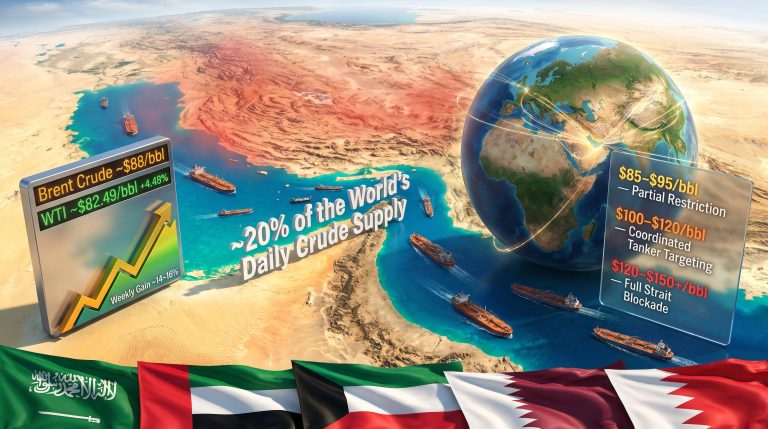
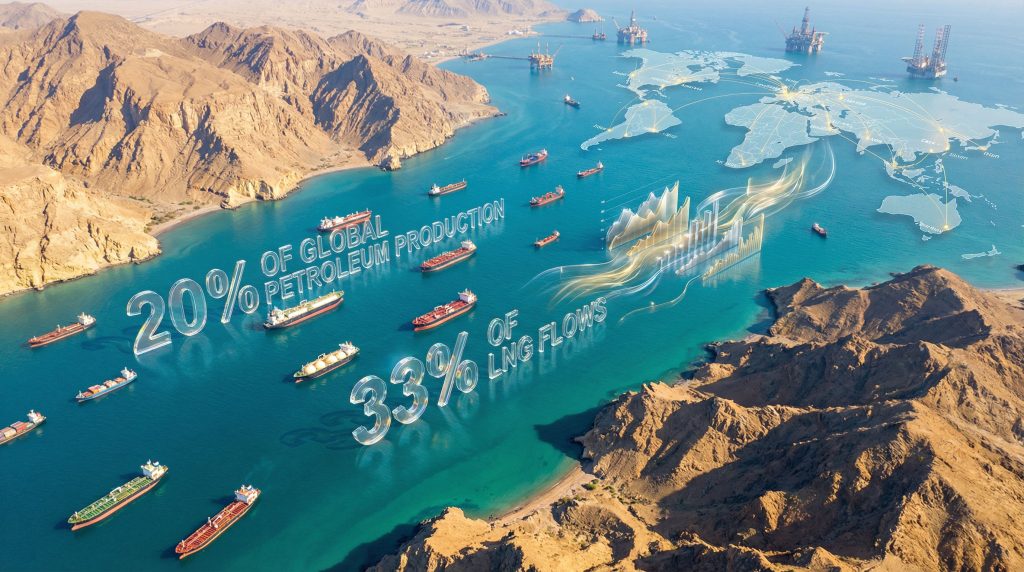
The Strait of Hormuz operates as the world's most critical energy transit bottleneck, channeling approximately 20.7% of global crude oil consumption and 25-30% of worldwide liquefied natural gas flows through its narrow confines. This strategic waterway measures just 21 nautical miles (39 kilometers) at its most constricted point between Musandam (Oman) and Qeshm Island (Iran), creating a geographic constraint that amplifies supply-side vulnerabilities across global energy markets.
The concentration of energy resources in the Persian Gulf region creates an asymmetric risk profile where localised disruptions generate worldwide consequences. Persian Gulf nations collectively control approximately 48% of proven global crude oil reserves, with roughly 90% of their crude exports dependent on transit through this single maritime corridor. This geographic bottleneck means that even temporary closures trigger immediate market reactions that propagate throughout the global economy.
Geographic and Strategic Positioning
Navigation through the Strait operates under strict international maritime protocols, with tanker traffic confined to two designated lanes each approximately 2 nautical miles wide. These separation requirements, mandated by the International Maritime Organisation, prevent collision risks but also limit alternative passage routes during peak traffic periods.
The technical specifications of vessels transiting the Strait further compound its strategic importance:
• Very Large Crude Carriers (VLCCs): Ships exceeding 250,000 deadweight tons require precise navigational coordination
• LNG carriers: Highly specialised vessels with specific beam and draft requirements that limit operational flexibility
• Supertankers: Draft requirements of 13-15 metres demand optimal weather conditions and tidal timing
Waters outside designated shipping lanes contain complex underwater topography that restricts emergency routing options, concentrating virtually all energy traffic through the monitored corridors.
Historical Precedents of Disruption
The Iran-Iraq War period (1980-1988) provides the most relevant historical precedent for understanding Strait of Hormuz closure impacts. During the Tanker War phase (1984-1988), Iran systematically attacked commercial shipping, forcing dramatic route diversions and market adjustments.
Key Historical Impact Metrics:
• Oil prices doubled during peak disruption periods
• Tanker insurance premiums increased 400-500% as Lloyd's of London reassessed risk profiles
• Recovery timeline extended 18-24 months post-conflict for full normalisation of shipping patterns
• Alternative routing capacity proved insufficient to maintain pre-conflict supply levels
The 2012 Iranian threats to close the Strait demonstrated how probability of disruption, rather than actual closure, drives market volatility. Moreover, this situation illustrates how oil price rally analysis becomes crucial during geopolitical tensions. Oil prices increased $4-6 per barrel in single trading sessions (representing 5-7% daily moves) despite no physical impediment to shipping.
When big ASX news breaks, our subscribers know first
How Does Strait Closure Trigger Cascading Economic Shockwaves?
Energy chokepoint disruptions create multiplier effects through sequential transmission mechanisms that amplify initial supply shocks across multiple economic sectors. The interconnected nature of global commodity markets ensures that localised supply interruptions at strategic transit points generate ripple effects that extend far beyond immediate price movements.
Financial markets incorporate geopolitical disruption risk through a documented three-stage process that reflects information asymmetry resolution:
-
Immediate reaction (0-6 hours): Futures markets price in supply probability adjustments based on initial conflict reports
-
Secondary reaction (6-48 hours): Options markets reflect uncertainty duration through implied volatility expansion
-
Tertiary transmission (48+ hours): Physical commodity premiums adjust as traders reassess inventory adequacy and delivery logistics
Primary Market Response Mechanisms
Historical validation of immediate price response patterns reveals consistent volatility signatures during major supply disruptions:
• 1979 Iranian Revolution: Oil prices surged 32% within 3 weeks as markets reassessed Middle Eastern supply stability
• 1990 Iraq invasion of Kuwait: Oil prices increased 65% within 3 days reflecting acute supply shortage fears
• 2022 Russian invasion of Ukraine: Oil prices rose 27% in the first week despite alternative supplier availability
Futures market volatility during energy supply crises typically experiences dramatic amplification, with oil futures options volatility spiking from baseline levels of 20-25% implied volatility to 45-50% during acute disruptions. Trading volume simultaneously increases 300-500% as market participants rush to adjust portfolio exposures.
Secondary Economic Transmission Channels
Supply chain disruptions from Strait of Hormuz closure create cascading cost pressures that transmit through multiple economic channels. Furthermore, these disruptions often coincide with broader natural gas price trends that can amplify market volatility.
Shipping Cost Escalation:
The Baltic Clean Tanker Index responds within hours to Strait disruption news, with crude oils transported via the waterway commanding immediate premiums of $3-8 per barrel within 24 hours of disruption initiation.
Manufacturing Input Pressures:
Energy-intensive sectors experience rapid cost inflation as documented during the 2022 Ukraine-related energy crisis:
• Chemical sector input costs increased 40-60% within 90 days
• Aluminium and steel production costs rose 35-50% due to elevated electricity pricing
• Fertiliser manufacturing experienced 60-80% cost increases from natural gas price spikes
Table: Economic Impact Timeline of Strait Closure
| Timeframe | Primary Effects | Secondary Effects | Tertiary Effects |
|---|---|---|---|
| 0-24 hours | Oil price surge 15-25% | Futures market volatility | Currency fluctuations |
| 1-7 days | Gas price increases 30-50% | Shipping route diversions | Stock market adjustments |
| 1-4 weeks | Supply chain disruptions | Manufacturing slowdowns | Consumer price increases |
| 1-3 months | Strategic reserve releases | Alternative supplier shifts | Economic growth revisions |
Consumer energy price pass-through effects demonstrate varying transmission velocities across different sectors, with transportation fuels reflecting commodity price changes within 48-72 hours, while electricity pricing adjustments occur within 1-2 weeks depending on regional market structures.
Which Countries Face the Greatest Economic Vulnerability?
Economic vulnerability to Strait of Hormuz closure correlates with a three-factor risk matrix rather than simple geographic proximity. Countries face exponential vulnerability escalation when scoring high across import dependency ratios, geographic concentration of energy sources, and reserve adequacy measurements.
Asian Economies (Extreme Vulnerability Profile):
• Japan: Imports 88% of total energy consumption; 95% of oil via Strait routes; maintains 134 days of strategic reserves
• South Korea: Imports 96% of energy needs; 99% of oil transits Strait; holds 127 days of emergency stocks
• China: Imports 70% of crude oil requirements; 45% via Strait dependency; estimated 90 days of strategic reserves
• India: Imports 87% of oil consumption; 65% transits through Strait; maintains only 70 days of reserve coverage
European Markets (Moderate Vulnerability):
European Union countries benefit from diversified supply portfolios and extensive pipeline networks that reduce direct Strait dependency:
• Italy: 83% import dependent; 50% from Middle East sources; approximately 12% of consumption via Strait
• Germany: 99% import dependent; 25% from Middle East; only 5-8% via Strait due to Rotterdam pipeline alternatives
• France: Lower direct exposure due to nuclear energy dominance and North African supply relationships
Reserve Adequacy Calculations
The International Energy Agency defines 90-day reserve coverage as the minimum security threshold for developed economies. Countries falling below this benchmark face elevated crisis risk during extended closures:
Strategic Reserve Capacities:
• United States SPR: 405 million barrels (declared capacity)
• Japan: 307 million barrels (government + commercial stocks)
• Germany: 280 million barrels (via EU coordination mechanisms)
• China: Estimated 600-800 million barrels (official figures limited)
• India: 38 million barrels (inadequate for extended disruption)
The vulnerability calculation formula: (Total Reserve Volume) ÷ (Daily Consumption) = Days of Coverage reveals that several major economies lack sufficient buffer capacity for prolonged Strait closures exceeding 90 days.
Diversified Energy Portfolio Advantages
Countries with multiple supplier relationships and developed renewable energy infrastructure demonstrate materially lower vulnerability profiles:
Norway: Domestic production surplus creates energy export capacity during global supply shocks
Canada: Continental energy self-sufficiency through oil sands and hydroelectric resources
Brazil: Offshore oil production and extensive biofuel infrastructure provide supply alternatives
These nations often experience currency appreciation during energy price spikes, creating economic benefits that offset higher global commodity costs for import-dependent trading partners.
What Alternative Supply Routes Emerge During Disruptions?
When the Strait of Hormuz becomes unavailable, global energy markets rapidly pivot toward alternative transportation corridors that possess significant limitations in both capacity and cost efficiency. These substitute pathways often require substantial lead times and command premium pricing that reflects their operational constraints.
Cape of Good Hope Routing Dynamics
The Cape of Good Hope route around southern Africa represents the primary alternative for crude oil shipments, but carries substantial operational penalties:
Transit Time Extensions:
Voyages from Persian Gulf producers to Asian markets experience 14-21 additional days of shipping time, creating floating inventory shortages and delivery delays that compound supply tightness.
Cost Structure Implications:
• Shipping costs increase $5-15 per barrel due to extended voyage duration
• Insurance premiums rise 200-400% as vessels transit higher-risk maritime corridors
• Fuel consumption increases 40-60% from longer routing distances
Vessel Availability Constraints:
The global tanker fleet contains approximately 2,500 vessels, with roughly 40% operating routes that touch the Strait. During closure scenarios, available shipping capacity becomes a binding constraint as vessels committed to longer Cape routing cannot provide rapid replacement service.
Pipeline Alternative Limitations
Regional pipeline infrastructure provides limited bypass capacity that cannot fully substitute for maritime transport volumes:
Saudi Arabia's East-West Pipeline:
• Capacity: 5 million barrels per day maximum throughput
• Current utilisation: Approximately 2 million barrels per day under normal conditions
• Spare capacity: 3 million barrels per day available for emergency utilisation
UAE Strategic Pipeline Network:
The UAE operates pipeline connections between its Persian Gulf production facilities and Red Sea terminals, providing approximately 1.5 million barrels per day of bypass capacity.
Regional Infrastructure Bottlenecks:
Existing pipeline networks lack the collective capacity to replace the 21 million barrels per day of crude oil that normally transits the Strait, creating an insurmountable supply gap during complete closures.
Strategic Reserve Deployment Strategies
Government-controlled emergency stock releases provide temporary supply replacement but operate under specific protocols and timing constraints:
Release Coordination Mechanisms:
The International Energy Agency coordinates member country strategic reserve releases through established emergency response procedures. Historical precedent from the 180 million barrel U.S. SPR release in 2022 demonstrates that such actions can suppress forward prices by an estimated $5-10 per barrel over 90-day periods.
Commercial Inventory Patterns:
Private sector inventory management during supply crises follows predictable patterns:
• Initial drawdown phase (weeks 1-4): Commercial operators reduce stocks to capture price premiums
• Rebuilding phase (weeks 5-12): Companies accumulate inventory as supply normalisation approaches
• Normalisation phase (weeks 13-24): Inventory levels return to seasonal baseline patterns
How Do Energy Markets Price Geopolitical Risk Premiums?
Financial markets incorporate geopolitical uncertainty through sophisticated risk premium adjustments that reflect both immediate supply disruption probabilities and longer-term stability concerns. These premiums fluctuate dynamically based on conflict escalation patterns, diplomatic resolution prospects, and alternative supply availability. In addition, understanding US‑China trade war impacts becomes crucial as these tensions can exacerbate energy market volatility.
Energy commodity futures pricing incorporates risk premiums through multiple market mechanisms that create observable volatility signatures:
Contango/Backwardation Shifts:
Curve steepening during geopolitical crises indicates that markets expect longer-term supply concerns to persist beyond immediate disruption periods. The term structure of risk premiums typically concentrates in 3-12 month contracts during acute supply threats.
Options Market Risk Indicators:
Put-call ratios on energy exchange-traded funds experience dramatic shifts during supply disruption scenarios:
• Energy Select Sector SPDR (XLE) put-call ratios spike from baseline 0.8-1.0 levels to 1.8-2.5 during crises
• Implied volatility for energy options reaches 35-45 IV percentile during major supply disruptions
• VIX equivalent for energy markets demonstrates volatility clustering around geopolitical events
Credit Market Risk Assessment
Credit markets provide additional risk premium indicators through sovereign debt and corporate bond spread adjustments. The Guardian reports that Iran has largely halted oil and gas exports through the waterway, highlighting the severity of current tensions.
Sovereign Debt Reactions:
• Energy-exporting nations typically experience sovereign spread tightening during price spikes
• Energy-importing economies face spread widening of 100-250 basis points for emerging market bonds
• Developed market spreads show more modest adjustments of 25-75 basis points
Corporate Bond Market Adjustments:
Energy-intensive sectors demonstrate predictable credit spread patterns:
• Airlines: Spreads widen 50-150 basis points reflecting fuel cost exposure
• Shipping companies: Spreads tighten 25-50 basis points from improved charter rates
• Chemical manufacturers: Spreads widen 75-125 basis points due to feedstock cost inflation
Table: Risk Premium Components in Energy Pricing
| Risk Factor | Typical Premium Range | Duration | Market Mechanism |
|---|---|---|---|
| Supply disruption probability | 5-15% above baseline | Immediate | Futures pricing |
| Geopolitical uncertainty | 10-25% volatility increase | Weeks-months | Options markets |
| Alternative route costs | $5-15 per barrel | Transit period | Spot pricing |
| Strategic reserve depletion | 3-8% above normal | Recovery phase | Forward curves |
Currency market effects create additional transmission channels for risk premium incorporation. Energy-exporting nations' currencies typically strengthen 2-5% during price spikes, while energy-importing nations experience currency weakness of 3-8% within the first week of major supply disruptions.
What Long-Term Structural Changes Result from Chokepoint Vulnerabilities?
Repeated exposure to critical infrastructure vulnerabilities accelerates structural transformations in global energy systems that extend far beyond immediate crisis response measures. These adaptations create permanent shifts in supply chain architecture, strategic planning frameworks, and energy transition acceleration patterns. Consequently, many nations are reassessing their energy transition strategy to reduce dependence on vulnerable maritime chokepoints.
Supply Chain Resilience Investment
Corporations and governments respond to chokepoint vulnerability through systematic diversification initiatives that reshape global energy trade flows:
Alternative Supplier Relationship Development:
• Asian importers have systematically expanded supply contracts with Western Hemisphere producers (U.S. shale, Canadian oil sands, Brazilian offshore)
• European markets have accelerated North African pipeline projects and Norwegian supply integration
• Spot market diversification has increased from 15-20% to 35-40% of total trade volumes
Infrastructure Redundancy Construction:
Strategic infrastructure investments focus on bypass capacity development:
• Saudi Arabia has expanded East-West pipeline capacity by 40% since 2019
• UAE has constructed additional Red Sea export terminals with 2 million barrel per day capacity
• Regional LNG facilities in Oman and UAE provide alternative export routes for Qatar gas
Energy Transition Acceleration
Chokepoint vulnerabilities create political and economic incentives that accelerate renewable energy adoption beyond climate policy motivations:
Renewable Energy Project Prioritisation:
Energy security concerns drive renewable project economics through improved revenue expectations and policy support mechanisms. Countries with high import dependency demonstrate 25-40% faster renewable deployment rates compared to energy-secure economies.
Energy Storage Capacity Expansion:
Strategic energy storage development focuses on both short-term grid stability and longer-term supply security:
• Battery storage capacity globally has increased 300% since 2020
• Pumped hydro projects have experienced renewed investment interest
• Hydrogen infrastructure development accelerates in import-dependent regions
Grid Interconnection Strengthening:
Cross-border electricity transmission capacity expansion provides energy diversity benefits:
• European grid integration has added 15,000 MW of cross-border capacity since 2020
• Asian power grid projects link renewable-rich regions with demand centres
• North American grid modernisation enhances continental energy sharing capabilities
Geopolitical Realignment Patterns
Energy chokepoint vulnerabilities create incentives for diplomatic and strategic partnership restructuring. Furthermore, economic policies such as US tariffs and inflation considerations influence global energy trade patterns during crisis periods.
Regional Energy Partnership Formation:
• QUAD energy security cooperation between U.S., Japan, Australia, and India
• European energy community expansion incorporating North African and Eastern Mediterranean producers
• Gulf Cooperation Council pipeline integration reducing individual country Strait dependency
Strategic Alliance Restructuring:
Energy security considerations increasingly influence broader diplomatic and military partnerships, with energy supply agreements becoming integrated into comprehensive security partnerships.
The next major ASX story will hit our subscribers first
Which Investment Sectors Benefit from Energy Chokepoint Disruptions?
Market disruptions from energy chokepoint closures create asymmetric opportunity structures across different investment categories. While energy-intensive industries face margin compression and operational challenges, alternative energy providers and strategic infrastructure developers often experience increased demand and improved project economics.
Beneficiary Investment Categories
Alternative Energy Infrastructure Developers:
Renewable energy project economics improve during fossil fuel price volatility through multiple mechanisms:
• Power purchase agreement rates increase as utilities seek price certainty
• Government incentive programs receive expanded funding during energy security crises
• Private investment flows redirect toward energy independence projects
Companies developing solar, wind, and energy storage projects typically experience 15-25% valuation increases during sustained energy price volatility periods.
Strategic Petroleum Reserve Management:
Private sector companies providing strategic storage and inventory management services benefit from increased government and corporate demand:
• Underground storage operators experience 40-60% capacity utilisation increases
• Refined product storage facilities command premium rental rates
• Strategic consulting services for supply chain resilience planning expand rapidly
Shipping and Logistics Optimisation:
Maritime transport and logistics companies experience mixed but generally positive impacts:
• Tanker operators benefit from 300-500% day rate increases on alternative routes
• Port facilities outside affected regions experience volume increases
• Logistics technology providers offering route optimisation services gain market share
Vulnerable Sector Identification
Energy-Intensive Manufacturing Operations:
Industrial sectors with high energy input ratios face immediate margin pressure:
• Aluminium smelting: Energy costs represent 35-40% of total production costs
• Steel production: Natural gas and electricity costs account for 25-30% of manufacturing expenses
• Chemical manufacturing: Feedstock and energy costs comprise 45-55% of variable costs
Transportation-Dependent Service Industries:
Service sectors relying on transportation networks experience cascading cost increases:
• Airlines: Jet fuel costs represent 20-30% of operating expenses
• Trucking companies: Diesel fuel comprises 25-35% of total costs
• Shipping lines: Bunker fuel costs account for 40-50% of voyage expenses
Import-Reliant Consumer Goods Sectors:
Consumer-facing industries dependent on global supply chains face inventory and pricing challenges:
• Retail chains with Asian supply chains experience 4-8 week delivery delays
• Automotive manufacturers face component shortages from disrupted shipping schedules
• Electronics producers encounter increased logistics costs affecting margin structures
How Can Economies Build Resilience Against Future Disruptions?
Sustainable economic resilience requires multi-layered approaches that address both immediate crisis response capabilities and longer-term structural vulnerabilities. Effective strategies combine supply diversification, infrastructure redundancy, and energy transition planning to create robust systems capable of withstanding future chokepoint disruptions.
Strategic Reserve Optimisation
Optimal Reserve Size Calculations:
Economic modelling suggests that optimal strategic reserve sizes correlate with import dependency ratios and alternative supply availability:
• Countries with >80% import dependency require 120-150 days of reserve coverage
• Moderately import-dependent economies (50-80%) need 90-120 days of strategic stocks
• Energy-secure nations can maintain 60-90 days for emergency sharing obligations
Geographic Distribution Requirements:
Reserve storage distribution should account for domestic transportation constraints and regional demand patterns:
• Coastal storage facilities provide import replacement capabilities
• Interior storage locations serve landlocked demand centres
• Regional coordination enables cross-border emergency sharing
Emergency Release Coordination:
International coordination mechanisms enhance individual country reserve effectiveness:
• IEA emergency response protocols coordinate member country releases
• Regional sharing agreements provide bilateral emergency support
• Market intervention strategies optimise release timing for maximum price impact
Supply Chain Diversification Strategies
Supplier Geographic Distribution Requirements:
Risk management principles suggest optimal supplier portfolio construction:
• Maximum 40% concentration from any single geographic region
• Minimum three alternative suppliers for critical energy imports
• Balance between spot and contract purchases maintaining supply flexibility
Contract Structure Risk Mitigation:
Energy import contracts should incorporate force majeure protections and alternative delivery mechanisms:
• Alternative delivery point clauses enable route switching during disruptions
• Price adjustment mechanisms share extraordinary cost increases between parties
• Emergency termination rights provide contract flexibility during supply crises
Alternative Transportation Route Development:
Infrastructure investment should focus on bypass capacity creation:
• Pipeline network expansion provides land-based alternatives to maritime transport
• Port facility development in alternative geographic locations
• Storage infrastructure at route intersection points
Energy Security Policy Framework
Regulatory Incentives for Supply Diversification:
Government policy frameworks should encourage private sector resilience investment:
• Tax incentives for strategic inventory maintenance
• Import diversification requirements for major energy consumers
• Infrastructure investment credits for alternative supply route development
International Cooperation Agreement Establishment:
Multilateral frameworks enhance collective energy security:
• Emergency sharing protocols with strategic partners
• Joint strategic reserve initiatives for regional security
• Technology cooperation agreements for alternative energy development
Crisis Response Protocol Standardisation:
Pre-established response procedures enable rapid crisis management:
• Government agency coordination mechanisms for emergency response
• Private sector cooperation frameworks during supply disruptions
• Public communication strategies for managing crisis expectations
Frequently Asked Questions About Strait of Hormuz Closure
How Long Can Global Markets Function During Complete Closure?
Strategic petroleum reserves across major consuming nations theoretically provide 90-180 days of import replacement capacity, but practical limitations reduce effective coverage. Japan and South Korea maintain the most comprehensive reserve systems with 127-134 days of coverage, while emerging economies like India possess only 70 days of strategic stocks.
The actual duration of market stability during closure depends on demand reduction measures and alternative supply activation. Historical analysis suggests that consumption reduction of 10-15% through economic slowdown and conservation measures can extend reserve effectiveness by 30-45 days.
Which Countries Control Alternative Supply Routes?
South Africa maintains sovereignty over Cape of Good Hope routing, which handles approximately 40% of alternative crude transport during Strait disruptions. The country benefits economically from increased shipping traffic but faces environmental risks from elevated tanker volumes.
Saudi Arabia and UAE control the most significant pipeline alternatives to Strait transit:
• Saudi East-West Pipeline: 5 million barrels per day capacity with 3 million barrels per day spare capacity
• UAE strategic pipelines: 1.5 million barrels per day bypass capability
• Combined regional capacity: Insufficient to replace full Strait throughput but provides critical partial alternatives
What Historical Precedents Exist for Extended Closures?
The 1987-1988 Tanker War period provides the closest historical parallel to complete Strait of Hormuz closure scenarios. During this conflict:
• Insurance markets initially refused coverage for Persian Gulf transits
• Alternative routing increased voyage times by 18-21 days for Asian destinations
• Oil prices doubled from pre-conflict levels within eight weeks
• Recovery required 18-24 months for complete normalisation of shipping patterns
Modern market structures differ significantly from 1980s conditions due to larger strategic reserves, improved alternative supply options, and more sophisticated financial risk management tools. However, the fundamental economic transmission mechanisms remain similar.
Disclaimer: This analysis presents educational information about energy market dynamics and geopolitical risk factors. It should not be considered investment advice or used as the sole basis for financial decisions. Energy markets involve substantial volatility and risk. Readers should consult qualified financial advisors before making investment decisions based on geopolitical scenarios or energy market forecasting.
Ready to Navigate the Next Major Energy Market Disruption?
Discovery Alert's proprietary Discovery IQ model delivers real-time alerts on significant ASX energy and commodity discoveries, instantly empowering subscribers to identify actionable opportunities ahead of broader market disruptions. Understand why major mineral discoveries can lead to significant market returns by exploring Discovery Alert's dedicated discoveries page, showcasing historic examples of exceptional outcomes during volatile energy markets.