July 13, 2026
The Architecture of Vulnerability: How the Strait of Hormuz Became Ground Zero for Global Energy Risk
Long before the first airstrike was launched in July 2026, the conditions for a crisis involving Strait of Hormuz Iran airstrikes were already embedded in the geography of global energy supply. The strait is not simply a body of water connecting two regions. It is the load-bearing column of the international oil market, a structural dependency so deeply wired into the world's energy architecture that any sustained interference does not merely move prices — it fundamentally disrupts the logic by which energy markets operate.
Understanding why the 2026 conflict escalated so rapidly, and why financial markets reacted with such immediacy, requires examining not just the military exchange itself but the underlying geographic, legal, and diplomatic fragilities that made the waterway so explosive a flashpoint.
When big ASX news breaks, our subscribers know first
The Strategic Geography Behind the Crisis: What Makes the Strait of Hormuz Irreplaceable?
The Strait of Hormuz is a narrow passage connecting the Persian Gulf to the Gulf of Oman, with its most constrained navigable channel measuring roughly 21 nautical miles in width at its narrowest point. Within that space, internationally recognised shipping lanes occupy two corridors of approximately two nautical miles each, separated by a median zone. These dimensions are what make the strait both indispensable and extraordinarily fragile.
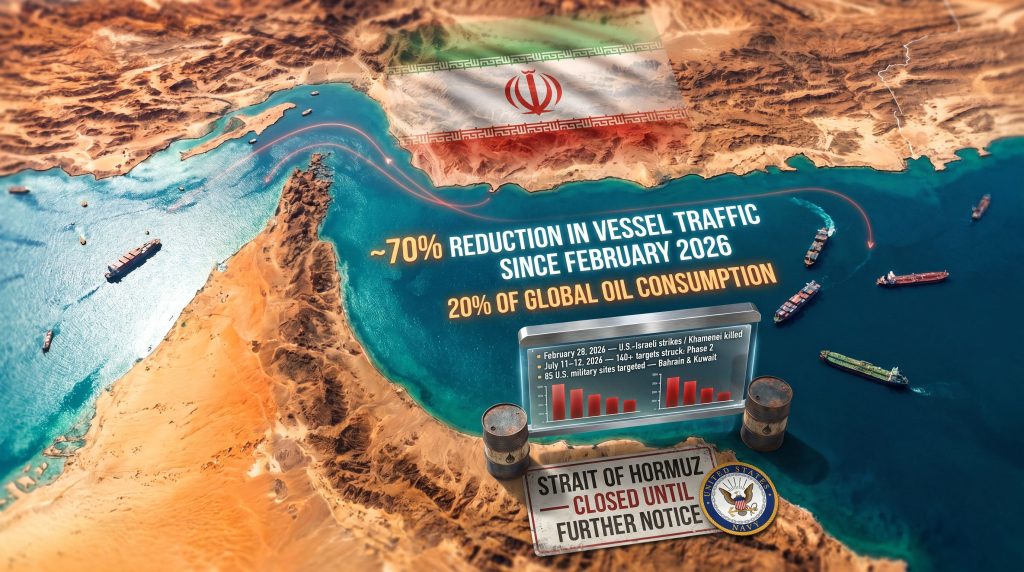
Approximately 20% of total global oil consumption transits this passage on any given day, according to the U.S. Energy Information Administration. That figure encompasses not only crude oil but significant volumes of liquefied natural gas, refined petroleum products, and petrochemical feedstocks. There is no alternative route capable of absorbing that volume without substantial cost, delay, and infrastructure investment. For more context on the LNG supply outlook and its broader market implications, the pressures here extend well beyond crude alone.
The legal framework governing the strait adds a further layer of complexity. Under the United Nations Convention on the Law of the Sea, the passage qualifies as an international strait, granting all vessels transit passage rights regardless of the adjacent sovereign state's preferences. Iran, which controls the northern coastline, has long disputed this characterisation, arguing that the passage falls within its sovereign jurisdiction and is therefore subject to its regulatory authority over shipping access.
This jurisdictional ambiguity is not new. What made 2026 different was the specific gap left by the U.S.-Iran framework agreement signed in June 2026. That deal, despite addressing a range of bilateral concerns, failed to define enforceable shipping lane boundaries within the strait — an omission that created the exact conditions for the confrontation that followed.
What Triggered the U.S. Airstrikes on Iran in July 2026?
The Incident That Ignited the Escalation
The immediate catalyst for U.S. military engagement was an Iranian attack on a Cyprus-flagged container vessel transiting the strait in early July 2026. The vessel sustained fire damage and engine failure, and one Indian crew member was reported missing. While the attack was one of many during an extended campaign of Iranian maritime pressure, its scale and the direct threat to civilian crew members provided U.S. Central Command with the operational justification it needed to escalate.
The Islamic Revolutionary Guard Corps has long maintained a sophisticated maritime denial toolkit, including fast attack boats, coastal missile batteries, drone platforms, and surveillance infrastructure positioned along Iran's southern coastline. These capabilities have been used systematically to monitor, harass, and in some cases interdict commercial shipping during periods of heightened tension. The geopolitical risk landscape surrounding this region has consequently drawn renewed scrutiny from investors and policymakers alike.
The Broader War Context: February 2026 to July 2026
The July exchange did not emerge in isolation. The strategic environment had been transformed months earlier. On February 28, 2026, coordinated U.S. and Israeli military strikes altered the Iranian political landscape at its highest level, following which Iran initiated a blockade of the Strait of Hormuz as a retaliatory instrument of economic warfare.
What followed was not a brief closure but a sustained campaign of commercial shipping interdiction that stretched across five months. Vessel traffic through the strait fell by nearly 70% from pre-blockade levels — a contraction with no modern parallel in the waterway's history.
| Timeline Milestone | Date | Key Development |
|---|---|---|
| U.S.-Israeli strikes / Supreme Leader killed | February 28, 2026 | Iran initiates Strait blockade |
| Iranian attacks on commercial shipping | Ongoing (Feb–July 2026) | ~70% reduction in vessel traffic |
| Cyprus-flagged vessel attacked | Early July 2026 | Direct trigger for U.S. military response |
| U.S. strikes: 80+ targets (Phase 1) | July 2026 | Fast boats, coastal radar, naval infrastructure |
| U.S. strikes: 140+ targets (Phase 2) | July 11–12, 2026 | Missile/drone sites, air defense, surveillance |
| Iran strikes U.S. facilities | July 2026 | 85 U.S. military sites in Bahrain and Kuwait targeted |
How Extensive Were the U.S. Military Strikes on Iran?
Phase-by-Phase Breakdown of U.S. Central Command Operations
U.S. Central Command conducted operations across two distinct phases, each targeting different layers of Iran's maritime denial infrastructure.
Phase 1 involved strikes against more than 80 targets, focused on degrading Iran's immediate capacity to threaten commercial shipping. This included Iranian fast attack boat fleets, coastal radar installations used to track and vector in interdiction forces, and naval logistics nodes that sustain those operations.
Phase 2 expanded the campaign significantly, engaging more than 140 targets concentrated around Qeshm Island and installations near Bandar Abbas. This phase struck deeper into Iran's integrated maritime defense architecture, targeting missile and drone launch infrastructure, air defense batteries, and maritime surveillance systems. U.S. Central Command's stated objective was to degrade Iran's ability to continue attacking international shipping flowing through the strait.
Iranian Counter-Strikes and Military Response
Iran's response demonstrated both the reach of its missile and drone arsenal and the breadth of its targeting doctrine. Iranian forces struck approximately 85 U.S. military facilities across Bahrain and Kuwait, including a Navy headquarters and an air base. Confirmed IRGC casualties from the exchange were limited, with one guard reported killed.
Despite the scale of the exchange, Iran's Islamic Revolutionary Guard Corps formally declared the strait closed. U.S. President Donald Trump publicly rejected that characterisation, stating the waterway remained open. The U.S. Navy has continued to assert freedom of navigation through the passage, though commercial operators have drawn their own conclusions from the traffic data.
While Iran formally announced the strait's closure and the U.S. military rejected that claim outright, the market reality visible in vessel traffic data suggests commercial operators are treating operational risk rather than legal declarations as their primary decision-making framework.
What Is the Real-World Impact on Global Shipping Through the Strait of Hormuz?
Vessel Traffic Collapse: The Data Behind the Disruption
The numbers tell a stark story. Shipping volumes transiting the strait fell from 41 vessels on Tuesday to just 22 vessels by Thursday, representing a decline of approximately 46% within a matter of days following the July military exchange. Set against the backdrop of a 70% overall reduction in traffic since the February 2026 initial closure, the cumulative impact on energy supply chains is substantial.
The compounding effect extends well beyond the strait itself. Rerouting cargo via the southern Oman corridor adds significant transit time, increases fuel consumption, and triggers escalating war risk insurance premiums that effectively price smaller operators out of the region entirely.
Who Bears the Burden? Mapping the Shipping Disruption
The economic burden of the Hormuz disruption is distributed unevenly across the global economy, with the most acute exposure concentrated among:
- Gulf state energy exporters, including Saudi Arabia, the UAE, Kuwait, and Iraq, all of whom depend on the strait as their primary crude export outlet with no viable high-volume alternative
- Asian energy importers, particularly China, Japan, South Korea, and India, whose heavy reliance on Persian Gulf crude makes them structurally exposed to any sustained closure
- Shipping insurers and their clients, as war risk premiums have surged to levels that make the strait economically unnavigable for vessels operating on thin commercial margins
- Crew members and maritime workers, represented in this conflict by the missing Indian crew member from the attacked Cyprus-flagged vessel — a human dimension that often receives insufficient attention relative to the commodity price discussion
How Have Oil Markets Responded to the Strait of Hormuz Crisis?
Oil Price Surge: Mechanisms and Magnitude
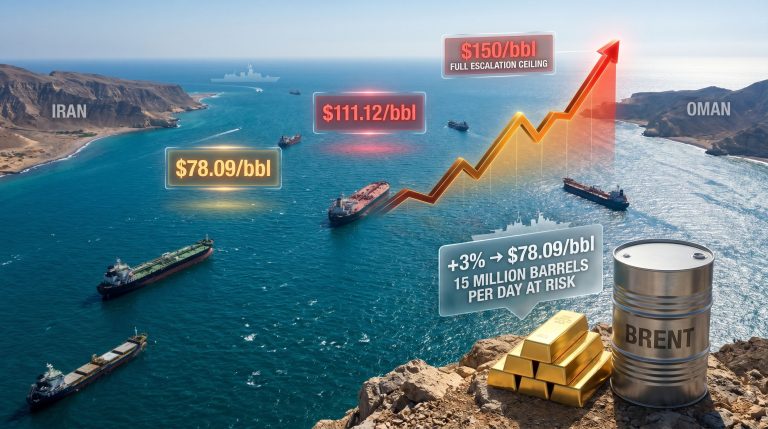
Oil prices jumped sharply at the start of the week of July 13, 2026, following the weekend military exchange between U.S. and Iranian forces. This rapid oil price rally reflects a straightforward structural driver: when a single maritime passage carries roughly one-fifth of global oil consumption, any credible threat to its operability is immediately priced into futures markets as a supply risk premium.
What distinguishes the 2026 crisis from prior Hormuz disruption events is its duration and character. Previous spikes in Hormuz risk were typically triggered by isolated incidents, allowing markets to discount the risk relatively quickly once the incident resolved. The 2026 event follows five months of sustained blockade activity, meaning the market is pricing an ongoing structural supply constraint rather than a single event.
Equity Market Reactions and Investor Positioning
U.S. stock futures declined at the open on Monday, July 13, 2026. Both the S&P 500 and Nasdaq Composite were coming off their fourth winning week in the last five sessions, while the Dow Jones Industrial Average had snapped its longest consecutive positive weekly streak since 2024 in the prior session. The geopolitical shock arrived at a moment of relative market optimism, amplifying its psychological impact.
Sector exposure to the crisis is concentrated in several areas:
- Energy producers and integrated majors, who face a complex dual exposure to higher oil prices on one hand and supply disruption risk on the other
- Shipping and maritime logistics companies, whose cost structures and route viability are directly affected by both insurance premiums and traffic volumes
- Aviation, which faces elevated jet fuel costs as refinery feedstock supply chains tighten
- Defense contractors, whose near-term order pipelines benefit from escalating military expenditure on both sides
Historically, geopolitical disruptions to the Strait of Hormuz produce sharp but sometimes short-lived oil price spikes. The 2026 conflict is structurally different because it follows a sustained blockade rather than a single incident, which may support a more durable risk premium embedded in forward energy curves.
The next major ASX story will hit our subscribers first
Could Iran Actually Mine the Strait of Hormuz? The Escalation Scenarios
Iran's Asymmetric Warfare Toolkit
One of the most underappreciated dimensions of the Hormuz crisis is Iran's naval mine stockpile. Iran is estimated to hold approximately 6,000 naval mines — a capability that no U.S. airstrike campaign has yet specifically neutralised. While no confirmed large-scale mining operation had been reported as of mid-July 2026, the credible threat of mine deployment fundamentally alters how both military planners and commercial insurance underwriters assess passage risk.
Naval mines represent an asymmetric warfare instrument of particular strategic value in the Hormuz context. Unlike fast attack boats or coastal missile batteries, which can be targeted and destroyed from the air, mines deployed in shallow water present a clearing challenge that requires sustained naval minesweeping operations and can render a passage unusable even after the immediate military confrontation subsides.
Iran's broader maritime denial toolkit — including fast attack boat fleets, coastal missile batteries, and drone platforms — represents what military analysts describe as the first layer of its maritime interdiction strategy. Mines represent a second layer that remains largely intact.
Three Escalation Scenarios and Their Market Implications
| Scenario | Description | Oil Market Impact |
|---|---|---|
| De-escalation | Diplomatic channel reopens; shipping resumes under U.S. naval escort | Risk premium fades; prices normalise over weeks |
| Sustained Standoff | Conflict remains active but contained; partial traffic via Oman route | Elevated prices persist; supply chain rerouting costs absorbed |
| Full Blockade + Mining | Iran deploys mines and closes strait completely | Severe supply shock; potential for oil price spike to multi-year highs |
What Is the Legal and Diplomatic Battle Over Strait of Hormuz Control?
The Sovereignty Dispute at the Heart of the Crisis
The legal contest over the Strait of Hormuz has been simmering for decades, but the 2026 escalation has brought it into sharp relief. Iran's position is that the strait lies within its territorial jurisdiction, conferring upon it sovereign authority to regulate shipping access. The international legal community, anchored by UNCLOS provisions, maintains that the passage qualifies as an international strait subject to transit passage rights that cannot be unilaterally suspended by an adjacent coastal state.
The U.S. position aligns with the international framework, and the U.S. Navy has continued to assert its role as a guarantor of lawful commercial transit. Gulf states hosting U.S. military facilities, now directly exposed to Iranian retaliatory strikes, have called for both parties to restore navigational freedom — representing a notable alignment of regional Arab interests with American strategic objectives in this specific context.
The Failed Framework: What the 2026 U.S.-Iran Deal Left Unresolved
The June 2026 bilateral agreement between the United States and Iran addressed a range of contested issues but critically omitted any definition of specific shipping lane boundaries within the strait. This jurisdictional gap is identified by analysts as the structural root cause of the current confrontation, distinct from but related to the military exchange itself.
The absence of clearly defined corridors means that Iranian and American interpretations of what constitutes legitimate passage remain fundamentally incompatible. Any durable resolution to the current crisis will almost certainly require this gap to be addressed directly through enforceable navigational provisions. Furthermore, the broader geopolitical oil tensions at play suggest that energy markets will remain volatile until a binding framework emerges.
The Alternative Route: Oman's Southern Corridor
The U.S. has urged commercial operators to divert southward through Omani waters to bypass Iranian interdiction zones. While technically viable for certain vessel classes, this alternative carries meaningful practical limitations:
- Significantly longer transit times that increase voyage costs for already margin-compressed operators
- Higher fuel consumption that compounds the cost impact of elevated oil prices
- Uncertainty about whether the Omani route provides sufficient geographic separation from Iranian drone and missile reach at extended ranges
- Infrastructure limitations at alternative loading and offloading points that constrain the volume of cargo that can be practically rerouted
The Broader Strategic Calculus: What Comes Next for the Strait of Hormuz?
Diplomatic Pathways and Their Probability
Several actors carry potential diplomatic leverage that has not yet been fully deployed. Gulf Cooperation Council states face a uniquely acute exposure: they depend on the strait for the bulk of their export revenues, host U.S. military infrastructure now under Iranian fire, and maintain economic and diplomatic channels to Tehran that Western governments do not. Their role as potential intermediaries is substantial if they choose to exercise it.
China's position deserves particular attention. As the world's largest oil importer and a country with significant economic relationships with both Iran and the Gulf states, Beijing carries both the motivation and the diplomatic standing to apply meaningful pressure for a negotiated resolution. Whether that pressure materialises in any substantive form remains one of the key geopolitical unknowns. The OPEC market influence in shaping production decisions during this period adds yet another layer of complexity.
The 2026 U.S.-Iran framework agreement provides a potential starting point for renegotiation, specifically around the insertion of enforceable shipping lane provisions. However, the political conditions for such a negotiation, on both sides, have been complicated by the military exchange.
Long-Term Structural Implications for Global Energy Security
The 2026 crisis has accelerated conversations that were already underway in energy policy circles. Strategic petroleum reserve deployment has been discussed as a short-term pressure relief mechanism, while LNG diversification strategies and alternative supply corridors have received renewed attention from policymakers in Japan, South Korea, and the European Union.
The deeper structural implication is the renewed urgency of reducing single-point-of-failure dependencies in global energy infrastructure. The Strait of Hormuz represents perhaps the most acute example of such a dependency in the modern energy system. Its sustained disruption in 2026 has made the theoretical case for diversification concrete and quantifiable in ways that prior short-lived incidents never did.
For long-term energy contracts and sovereign wealth fund energy allocations, the geopolitical risk premium now embedded in Persian Gulf supply is likely to persist well beyond the resolution of the immediate military exchange, reshaping the economics of both supply and investment decisions across the sector.
Frequently Asked Questions: Strait of Hormuz Iran Airstrikes
What Did the U.S. Strike in Iran During the July 2026 Airstrikes?
U.S. Central Command conducted two phases of strikes targeting over 140 Iranian military installations, including missile and drone launch sites, naval fast attack capabilities, coastal radar systems, air defense batteries, and maritime surveillance infrastructure concentrated around Qeshm Island and the Bandar Abbas region.
Has Iran Actually Closed the Strait of Hormuz?
Iran's Islamic Revolutionary Guard Corps formally declared the strait closed. However, the U.S. military rejected this claim, with President Trump stating publicly that the waterway remains open. In operational terms, commercial shipping traffic has fallen by approximately 70% since February 2026, reflecting the practical reality of the disruption regardless of its contested legal status.
Why Is the Strait of Hormuz So Important to Global Oil Supply?
The strait serves as the transit corridor for approximately 20% of total global oil consumption. No fully equivalent alternative route exists for the volume of energy that passes through it, making any sustained disruption a systemic event for global energy markets rather than a regional inconvenience. This reality has prompted urgent debate around the Strait of Hormuz Iran airstrikes and their long-term consequences for supply security.
Could Iran Mine the Strait of Hormuz?
Iran possesses an estimated stockpile of approximately 6,000 naval mines. While no confirmed large-scale mining operation had been reported as of mid-July 2026, the capability represents a credible escalation threat that is factored into both military planning and commercial shipping assessments globally.
What Is the Southern Oman Route and Can It Replace the Strait of Hormuz?
The U.S. has recommended a southern diversion through Omani waters as an alternative to transiting the strait. While technically viable for some vessel types, the route adds transit time and cost, and does not replicate the throughput capacity or logistical efficiency of the strait for large-scale energy exports.
Disclaimer: This article contains forward-looking analysis, scenario projections, and market commentary. It does not constitute financial advice. Geopolitical situations evolve rapidly, and readers should consult current sources and professional advisors before making any investment or commercial decisions based on the information presented here.
Want to Stay Ahead of the Market Moves Driven by Major Geopolitical Disruptions?
When energy crises reshape commodity markets as rapidly as the 2026 Strait of Hormuz conflict has, identifying high-potential ASX mineral discoveries before the broader market becomes critical — Discovery Alert's proprietary Discovery IQ model scans ASX announcements in real time, delivering actionable alerts across more than 30 commodities the moment significant discoveries are made. Explore historic discovery returns on Discovery Alert's dedicated discoveries page and begin your 14-day free trial to position yourself ahead of the next major market move.