August 8, 2026
The Geography of Vulnerability: Why One Narrow Waterway Controls Global Energy Flow
Every few decades, a single geographic feature becomes the fulcrum of global economic stability. The Suez Crisis of 1956 taught the world how a 193-kilometre canal could paralyse international trade. The 1973 Arab Oil Embargo demonstrated that supply interruptions measured in weeks could produce price dislocations lasting years. Today, the world's attention has turned to a 33-kilometre stretch of water between the Iranian coastline and the shores of Oman and the UAE — a passage so consequential that its disruption would reshape energy markets, geopolitical alignments, and economic trajectories across dozens of nations simultaneously.
The question of whether Iran could permanently block the Strait of Hormuz is no longer a theoretical exercise confined to war-gaming seminars. It has become an active policy debate, with Tehran's parliament reviewing legislation that would formalise shipping restrictions, Iranian and Omani officials negotiating corridor arrangements, and oil markets embedding a persistent risk premium into benchmark prices. Understanding what is actually happening — and what is merely posture — requires separating the strategic logic from the noise.
When big ASX news breaks, our subscribers know first
The Scale of What Passes Through Hormuz Every Single Day
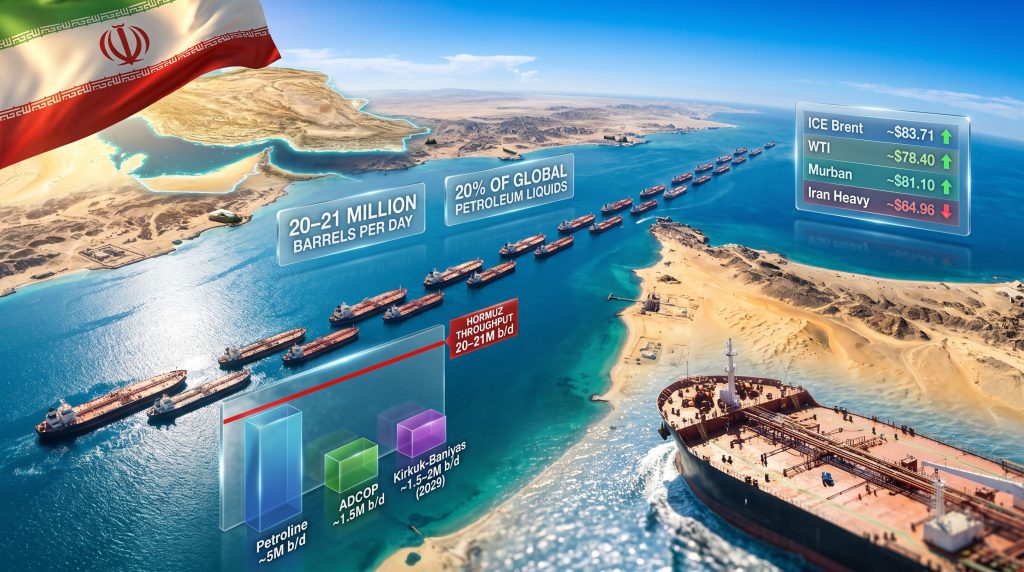
The Strait of Hormuz functions as the world's most critical energy artery, not because of its size, but because of its irreplaceability. Approximately 20 to 21 million barrels of oil per day transited the strait in recent years, accounting for roughly 20% of global petroleum liquids consumption. The nations dependent on this single exit point for their crude exports include Saudi Arabia, Iraq, Kuwait, the UAE, Qatar, and Iran itself.
Beyond crude oil, the strait carries an estimated 25 to 30% of global LNG trade, making it simultaneously the world's dominant oil and gas chokepoint. Qatar, the second-largest LNG exporter globally, routes virtually all of its liquefied natural gas through Hormuz. European gas markets, already under pressure with storage levels at their lowest since 2011, would face acute disruption if Qatari LNG exports were interrupted — for more context on these supply pressures, the broader LNG supply outlook reveals just how precarious the global balance has become.
The Bypass Capacity Problem: Numbers That Expose the Myth of Alternatives
The conversation around Hormuz alternatives often conveys more reassurance than the underlying data supports. A clear-eyed review of existing bypass infrastructure reveals a substantial structural gap:
| Bypass Route | Stated Capacity | Operational Status | Critical Limitation |
|---|---|---|---|
| Saudi East-West Petroline | ~5 million b/d | Active but underutilised | Saudi volumes only; years of underinvestment |
| Abu Dhabi Crude Oil Pipeline (ADCOP) | ~1.5 million b/d | Active | UAE volumes only |
| Iraq-Syria Kirkuk-Baniyas Pipeline | 1.5-2 million b/d (projected) | Dormant; revival targeted by 2029 | Requires complete reconstruction |
| Oman-Iran Proposed Corridor | Undefined | Under negotiation | Sovereignty disputes unresolved |
Even if both active bypass pipelines ran at full stated capacity simultaneously, they would redirect fewer than 7 million barrels per day — less than one-third of current Hormuz throughput. In practice, the Petroline operates well below its design capacity due to years of underinvestment, making the real alternative coverage even narrower.
ADNOC, recognising this vulnerability acutely, has moved to expand its Fujairah terminal operations and recently committed $1.3 billion to acquire 11 supertankers, explicitly to strengthen its export capacity via Gulf of Oman routes that bypass the strait entirely. This is not a precautionary investment — it is a direct institutional response to a threat being taken seriously at the highest levels of Gulf energy infrastructure planning.
Iran's Parliamentary Bill: Legal Architecture for Access Denial
What distinguishes the current situation from previous cycles of Iranian sabre-rattling is the institutional mechanism now under construction. Iran's parliament is actively reviewing legislation that would permanently prohibit vessels from the United States, Israel, and nations classified as hostile from transiting the Strait of Hormuz. This is not a military threat issued through a press conference — it is a formal legislative process aimed at embedding access restrictions into Iranian domestic law.
The distinction carries strategic weight. A bill, once passed and signed, transforms closure from a reversible military option into a codified legal obligation that Iranian officials would face domestic political pressure to enforce. It also creates a mechanism for selective, graduated application — targeting specific nations rather than imposing a universal blockade, which would be far more provocative and legally indefensible under international law.
Iranian officials have simultaneously signalled that even the corridor arrangement being negotiated with Oman would not, by itself, constitute a security guarantee for shipping through the strait. This caveat is analytically significant: it suggests Iran intends to retain discretionary control over passage conditions regardless of what formal corridor agreements are signed, using ambiguity as an ongoing instrument of leverage.
Kinetic Activity Running Parallel to Diplomatic Channels
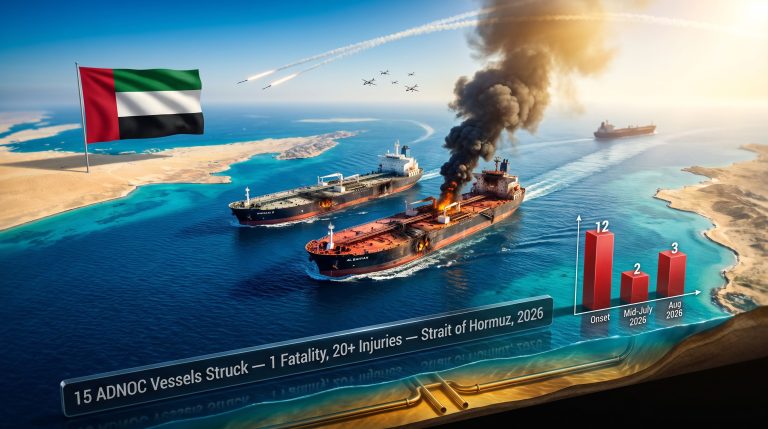
The diplomatic negotiations have not produced a corresponding reduction in physical pressure. ADNOC has formally reported 15 vessel attacks in the Hormuz region, a figure that underscores that kinetic harassment is already an operational reality rather than a hypothetical risk. Hormuz tanker traffic has fallen to two-month lows, with volumes remaining suppressed even during periods when US-Iran deal discussions were being publicly discussed by both parties.
A Gulf shipping halt was triggered following a Houthi ballistic missile strike claim on a Saudi oil tanker in the Red Sea, demonstrating a broader interconnection between the Hormuz situation and Houthi operations. These are not isolated pressure points — they form a layered coercive architecture in which multiple threat vectors reinforce each other. Furthermore, the oil market disruption risks stemming from compounding geopolitical pressures have made market conditions increasingly difficult to navigate.
Iran's dual-track approach creates deliberate strategic ambiguity. This ambiguity itself functions as a geopolitical instrument, keeping counterparties uncertain about whether a deal or an escalation is the more probable outcome. Markets cannot efficiently price an unknown probability distribution.
Can Iran Physically Enforce a Permanent Closure? An Honest Assessment
Iran's military capability to severely disrupt Hormuz shipping is well-documented and genuinely formidable. The available toolkit includes:
- Anti-ship ballistic missiles capable of targeting large tankers and naval vessels at extended range
- Fast-attack craft swarms operated by Revolutionary Guard naval units, trained specifically for asymmetric harassment
- Sea mine deployment — Iran demonstrated rapid mine-laying capability during the 1980s Tanker War and has maintained and expanded this capacity
- Shore-based coastal missile batteries providing overlapping coverage across the strait's navigable channels
- Drone and UAV strikes — a low-cost, high-frequency capability proven operationally effective in adjacent Red Sea operations
What Iran cannot sustain, however, is a permanent, total blockade without triggering consequences that threaten its own state structure. Three binding constraints define the ceiling of Iranian escalation:
1. Economic self-harm: Iran Heavy crude, currently priced at approximately $64.96 per barrel, is Iran's primary hard currency earner. A permanent Hormuz closure severs Iran's own principal export artery as comprehensively as it damages any other Gulf producer.
2. Military response ceiling: A sustained physical closure against US treaty allies would trigger naval intervention. The 1987-1988 Tanker War established the precedent — US naval assets forcibly neutralised Iranian harassment campaigns when economic stakes demanded it. Modern carrier strike groups in the region represent an escalation-response capability that Iran cannot match in a sustained confrontation.
3. Chinese economic pressure: China, Iran's largest crude customer, would face severe economic disruption from a Hormuz closure. Beijing sources a substantial share of its oil from Gulf producers and has both the leverage and the incentive to apply significant pressure on Tehran to preserve passage rights for non-designated vessels.
The analytically defensible conclusion is that Iran can create prolonged, costly, economically damaging disruptions. A permanent total closure is not operationally sustainable. The realistic threat model is selective, escalatory, and reversible access denial — designed to extract diplomatic concessions rather than achieve terminal strategic outcomes.
How Oil Markets Are Pricing Hormuz Risk Right Now
Current benchmark pricing reflects a risk premium that has become structurally embedded rather than episodic. The crude oil market dynamics at play extend well beyond the strait itself, with supply-chain uncertainty reshaping how traders and refiners price long-term contracts:
| Benchmark | Current Price | Weekly Change | Key Dynamic |
|---|---|---|---|
| ICE Brent Crude | ~$83.71/barrel | +1.48% | Hormuz risk premium sustained |
| WTI Crude | ~$78.40/barrel | +1.44% | US supply partially insulated |
| Murban Crude (UAE) | ~$81.10/barrel | +1.97% | Bypass capacity commands premium |
| Iran Heavy | ~$64.96/barrel | -1.16% | Sanctions plus self-closure risk discount |
| Basra Light (Iraq) | ~$71.69/barrel | -4.78% | Near-total Hormuz dependence repriced |
The divergence between Murban's outperformance and Basra Light's sharp decline encodes a sophisticated market judgement: UAE crude, backed by ADCOP bypass capacity and ADNOC's expanded supertanker fleet, commands a logistics resilience premium. Iraqi crude, with near-total dependence on Hormuz for export, is being discounted to reflect structural vulnerability.
Aramco's Grade-Differentiated Pricing: A Strategic Signal Worth Decoding
Saudi Aramco's September Official Selling Price adjustments contain more information than a surface reading suggests. The company cut its flagship Arab Light grade for Asian buyers by $0.50 per barrel to a $2.00 per barrel discount against Oman/Dubai benchmarks — a competitive move designed to defend market share against alternative suppliers gaining ground during the disruption period.
Simultaneously, Aramco raised Arab Medium and Arab Heavy grades by $1.25 per barrel. These are grades more amenable to processing by inland refineries with less direct exposure to Hormuz transit logistics. The differential pricing strategy signals that Aramco is positioning for a scenario in which Gulf output volumes increase while managing the supply-chain optics for Asian buyers navigating their own Hormuz exposure calculations.
Four Scenarios for Where This Goes Next
A rigorous scenario framework requires assigning probability weight to outcome pathways rather than treating all possibilities as equally plausible.
Scenario 1: Negotiated Corridor Agreement
Iran and Oman finalise corridor geography; Supreme Leader Khamenei approves the framework; US accepts indirect terms through back-channel arrangements. Market outcome: Brent retreats toward $75-78 per barrel as risk premium deflates; tanker freight rates normalise over 4-6 weeks. Key risk: Iranian officials have explicitly stated that a corridor deal alone would not guarantee security — suggesting even a signed agreement may not suppress kinetic activity.
Scenario 2: Selective Access Denial (Most Probable Near-Term Path)
Iran enforces the parliamentary bill against US and Israeli vessels while non-aligned nations negotiate separate passage arrangements. Market outcome: Brent sustains a $5-12 per barrel geopolitical premium for an extended period; tanker insurance surcharges add an effective $2-4 per barrel to delivered costs for affected buyers. Shadow fleet and flag-of-convenience vessel usage accelerates as a structural adaptation.
Scenario 3: Escalation to Sustained Disruption
A military incident triggers Iranian mine-laying; US naval response follows; 30-90 day closure results. Market outcome: Brent spikes to $110-130 per barrel within days; coordinated IEA Strategic Petroleum Reserve releases activate; global recession risk elevated within 60-90 days. Historical context: the 1973 Arab Oil Embargo produced a 400% oil price increase over four months in a supply environment less tight than today's.
Scenario 4: Permanent Legislative Closure
The parliamentary bill is codified and enforced indefinitely against all designated-hostile vessels. Assessment: Very low probability. Iran's own export revenues, Chinese economic pressure, and the military response ceiling all function as structural constraints against this outcome. It is more useful as a negotiating threat than an executable policy. Consequently, analysts tracking geopolitical commodity risks broadly treat this scenario as a tail risk rather than a base case.
The next major ASX story will hit our subscribers first
How Major Energy Importers Are Repositioning Right Now
The nations most exposed to Hormuz disruption are not waiting passively for diplomatic resolution.
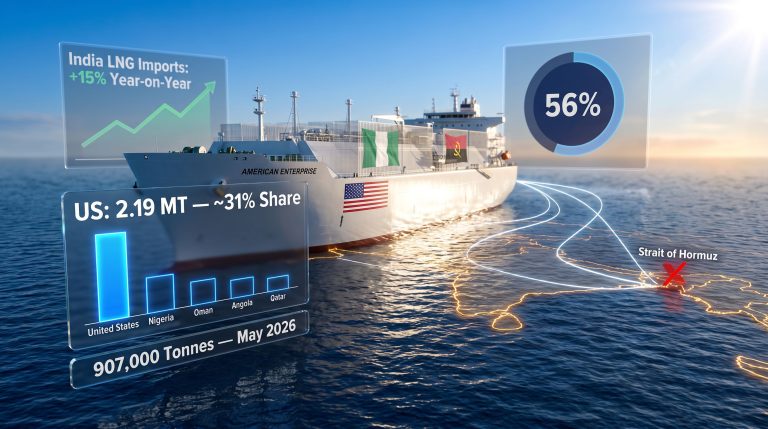
India presents the starkest vulnerability profile. The country imports approximately 90% of its crude oil requirements and has limited alternative supply routes. Indian state refiner HPCL has actively purchased Nigerian crude to reduce strait exposure, and Indian refiners more broadly have pivoted toward West African grades as a structural hedge. In parallel, India is weighing a gas levy to fund a $42 billion strategic fuel reserve — a direct policy response to the recognition that Hormuz vulnerability requires domestic buffer capacity.
Japan and South Korea are almost entirely dependent on Gulf crude routed through the strait, giving them limited short-term flexibility. Their primary adaptation options are SPR drawdowns and emergency supply arrangements, both of which are finite instruments.
China has greater supply diversification through Russian pipeline flows and has been actively deepening its relationship with Russian crude suppliers. China's top refiner has pivoted toward Russian grades as Hormuz uncertainty has intensified. Simultaneously, China's steel association CISA has been advancing calls for yuan-denominated iron ore pricing benchmarks — a move that gains strategic momentum as dollar-denominated energy trade faces structural disruption.
The Iraq-Syria Pipeline: A 2029 Solution to a 2026 Problem
Baghdad and Damascus have announced a target of reviving the Kirkuk-Baniyas pipeline by 2029, potentially carrying 1.5 to 2 million barrels per day to Mediterranean terminals. For Iraq, whose near-total dependence on Gulf export routes was brutally exposed by the current crisis, this represents the first meaningful long-term bypass option in decades.
The problem is the timeline. A three-year reconstruction window leaves Iraq fully exposed through the entire current crisis period. The pipeline also requires full reconstruction of sections damaged during Syria's decade of conflict — a technically complex undertaking that may face delays. Iraq is, in the near term, among the most structurally vulnerable of all Gulf producers to a sustained Hormuz disruption, a reality reflected in Basra Light's sharp price decline. The commodity price impacts flowing from this kind of prolonged supply-route uncertainty extend well beyond energy markets into mining and industrial supply chains.
The Broader Commodity Contagion Effect
The Hormuz situation is not evolving in isolation — it is accelerating structural shifts across multiple commodity markets simultaneously. Several interconnected developments illustrate how maritime chokepoint risk is propagating through the broader commodity system:
-
The Democratic Republic of Congo has banned copper concentrate and cobalt concentrate exports with immediate effect, forcing downstream processing onshore. This supply-chain nationalisation move is partly motivated by a desire to reduce dependence on maritime export routes for unprocessed commodities.
-
The UK has sanctioned six Russian tankers, six banks, and four companies involved in weapons-grade tantalum and niobium imports, tightening pressure on the alternative maritime supply chains that might otherwise absorb volumes displaced by Hormuz disruptions.
-
European gas storage levels are at their lowest point since 2011, creating a situation where any sustained disruption to Qatari LNG flows through Hormuz would immediately collide with already-stressed European winter supply buffers.
The Hormuz crisis is functioning as an accelerant for pre-existing structural transitions across energy, commodity, and monetary systems simultaneously. The strait's vulnerability is not merely an oil market story.
Frequently Asked Questions
Can Iran Legally Close the Strait of Hormuz?
Under the United Nations Convention on the Law of the Sea (UNCLOS), the Strait of Hormuz qualifies as an international strait subject to the right of transit passage for all nations. Iran is not a UNCLOS signatory but asserts its own maritime jurisdiction claims. A unilateral closure would carry no recognised standing under international law, though enforcing that legal position against Iranian action would ultimately require military intervention by affected parties.
What Would Happen to Oil Prices if Hormuz Closed for 30 Days?
Most energy security models project an immediate Brent spike of $30 to $50 per barrel above pre-closure levels within the first week of a confirmed, enforced closure. A 30-day sustained disruption could push Brent toward $120 to $140 per barrel, triggering coordinated IEA SPR releases and significant demand destruction across major importing economies. For further context on how a Hormuz blockade affects the US economy, independent analysis highlights the downstream consequences across consumer goods, transport, and manufacturing sectors.
Does Iran Use the Strait of Hormuz for Its Own Exports?
Yes. Iran exports crude oil through the Strait of Hormuz, with Iran Heavy currently priced at approximately $64.96 per barrel representing the country's principal hard currency earner. A permanent closure would sever Iran's own primary revenue source, creating a fundamental strategic contradiction that constrains the permanent-closure scenario to the realm of negotiating posture rather than executable policy. The notion that Iran would permanently block the Strait of Hormuz at the cost of its own export revenues stretches strategic credibility considerably.
Which Countries Are Most Economically Exposed to a Hormuz Closure?
Japan, South Korea, India, and China face the greatest economic exposure. India imports approximately 90% of its crude requirements with limited bypass alternatives. Japan and South Korea are almost entirely dependent on Gulf crude transiting Hormuz. China has greater diversification through Russian pipeline supply but remains a substantial Gulf crude importer.
What Is the Iran-Oman Corridor Arrangement?
Tehran and Muscat have agreed on geographic coordinates for a proposed shipping corridor that would give Iran effective control over routing decisions for Gulf-bound vessels. The arrangement represents an assertion of Iranian sovereign authority over transit management rather than a neutral international passage arrangement. It awaits approval from Supreme Leader Khamenei and leaves key operational, enforcement, and fee-structure questions unresolved.
Disruption as Doctrine: What Iran Is Actually Optimising For
Stepping back from the operational details, a coherent strategic logic emerges from Iran's behaviour. The parliamentary bill, the corridor negotiations, the ongoing kinetic attacks, and the simultaneous diplomatic engagement all point toward a single objective: maximum coercive leverage at minimum irreversible cost.
A permanent closure destroys Iran's own export revenues, triggers US military intervention, alienates China, and provides no reversible exit path. It is not a rational terminal strategy. What Iran is pursuing is something more sophisticated — the maintenance of a credible, legally-framed, selectively-applied threat that keeps counterparties uncertain, drives up their economic costs, and creates the negotiating pressure necessary to extract concessions on sanctions, recognition, or regional security arrangements.
The Hormuz crisis of 2026 is simultaneously a geopolitical confrontation, an energy security stress test, and an accelerant for structural transitions that were already underway. Bypass infrastructure is being built and expanded. Alternative supply routes are being developed and tested. Major importing nations are building strategic reserves and diversifying supply sources. The question of whether Iran will permanently block the Strait of Hormuz may ultimately matter less than what the world builds in response to the credible possibility that it might.
Disclaimer: This article is for informational purposes only and does not constitute financial, investment, or trading advice. Oil price forecasts, geopolitical scenario projections, and market outcome estimates involve significant uncertainty and should not be relied upon as the basis for investment decisions. Past geopolitical events are not necessarily indicative of future market outcomes.
Want to Stay Ahead of the Commodity Disruptions Reshaping Global Markets?
When geopolitical flashpoints like the Strait of Hormuz crisis send shockwaves through energy and commodity markets, Discovery Alert's proprietary Discovery IQ model scans ASX announcements in real time, instantly identifying significant mineral discoveries that offer actionable opportunities beyond volatile oil benchmarks — explore historic examples of what major discoveries can deliver and begin your 14-day free trial to position yourself ahead of the broader market.