July 27, 2026
The Geography of Power: How a 33-Kilometre Strait Controls the Global Energy System
Few physical features on Earth carry the geopolitical weight of the Strait of Hormuz. At its narrowest navigable point, the waterway measures roughly 33 kilometres across, yet within that compressed geography sit two shipping lanes of approximately 3 kilometres each, through which an estimated 17 to 21 million barrels of crude oil transit daily under normal operating conditions. That single corridor connects the Persian Gulf's vast hydrocarbon reserves to energy-hungry markets across Asia, Europe, and beyond, making it the most consequential maritime chokepoint on the planet.
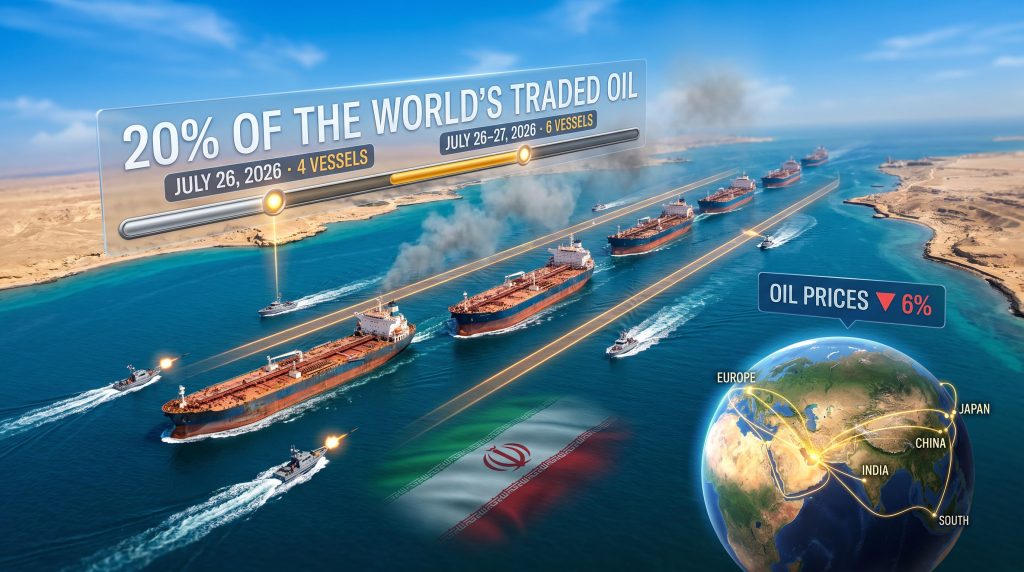
When Iran Guards turn back six vessels in Hormuz, as occurred during the overnight period of July 26 to 27, 2026, it is not merely a maritime enforcement incident. It is a demonstration that a single nation, through the deployment of patrol vessels and warning-shot protocols, can impose conditional access on a waterway that underpins the energy security of multiple major economies simultaneously.
When big ASX news breaks, our subscribers know first
Why Hormuz Is Structurally Impossible to Replace
Understanding the strait's leverage requires appreciating the asymmetry between its physical dimensions and its economic significance. Furthermore, the oil market dynamics at play here affect virtually every major importing nation. Consider the nations whose energy supply chains run directly through this corridor:
- Japan relies on Hormuz for the overwhelming majority of its crude oil imports, with virtually no viable overland alternative.
- South Korea routes a substantial portion of its petroleum imports through the strait, feeding one of Asia's most energy-intensive industrial economies.
- China, the world's largest crude importer, depends on Persian Gulf flows that are channelled exclusively through Hormuz.
- India sources a significant share of its energy requirements from Gulf producers, with Hormuz the only viable exit point.
- European importers accessing Qatari liquefied natural gas face a similar dependency, given that Qatar's LNG export terminals have no alternative maritime outlet.
Qatar's position is particularly worth examining. As the world's largest LNG exporter, its entire export infrastructure funnels through a waterway that Iran can restrict through enforcement operations. There is no pipeline alternative, no secondary strait, and no rerouting option that does not add thousands of kilometres to voyage distances.
"The Strait of Hormuz is unique among global chokepoints in that disruption cannot be mitigated through infrastructure diversification alone. It is the only exit point for the Persian Gulf's energy reserves, making it a structural vulnerability embedded into the global energy architecture."
Iran's Enforcement Architecture: How the Corridor System Operates
Is This a Blockade or Something More Nuanced?
What makes the current situation analytically distinct from a conventional naval blockade is the mechanism Iran has deployed. Rather than declaring a formal closure of the strait, which would constitute an act of war under the laws of naval warfare and trigger immediate international legal and military responses, Iran's Islamic Revolutionary Guard Corps Navy has implemented what can be described as conditional access control.
This system operates through IRGC-designated routing corridors. Vessels may transit the strait, but only via pathways approved by Iranian authorities. Ships that deviate from these corridors or attempt to use alternative routes face interception, warning shots, and forced turnaround. The practical effect closely resembles a blockade for non-compliant operators, however the legal framing allows Iran to maintain a position of regulatory enforcement rather than outright closure.
The legal tension this creates is significant. Under UNCLOS Part III, specifically Articles 37 through 44, all vessels enjoy the right of transit passage through straits used for international navigation. Iran is a signatory to UNCLOS but has historically contested its application to Hormuz, arguing the waterway falls within its territorial jurisdiction. No international tribunal has yet issued a definitive ruling on Iran's corridor designation authority, leaving the situation in a persistent legal grey zone.
Critically, commercial vessel operators cannot challenge IRGC enforcement in real time. When a patrol vessel fires warning shots and orders a ship to turn back, the practical options available to a merchant captain are compliance or rerouting, not legal contestation. Flag state governments retain the right to lodge diplomatic protests, but the enforcement mechanisms available to them are limited in the immediate term. According to reporting by Le Monde, Iran's Guards have consistently seized or turned back vessels attempting to cross the strait outside of designated corridors.
What Happened on July 27, 2026: The Operational Record
The sequence of events across the final weekend of July 2026 represents one of the most intensive periods of IRGC maritime enforcement recorded since the imposition of corridor restrictions began. Reported by AFP and confirmed through IRGC state television, the timeline unfolded as follows:
| Date | Location | Vessels Intercepted | IRGC Action |
|---|---|---|---|
| Late February 2026 | Strait of Hormuz | Multiple | Corridor restrictions imposed; effective access control begins |
| Saturday, July 26, 2026 | Southern strait | 4 vessels | Warning shots fired; vessels turned back |
| Overnight July 26–27, 2026 | Hormuz transit route | 6 vessels | Warning shots fired; vessels turned back |
The six vessels intercepted overnight on July 26 to 27 had attempted to transit via a route outside the IRGC-designated corridor. State television reporting initially referenced a single vessel incident before clarifying the full scope of the overnight operation. Combined with the four-vessel interception on the preceding Saturday, at least ten commercial vessels were prevented from completing their transit within a 48-hour window.
This operational tempo is significant. It suggests not a sporadic enforcement posture but a sustained, active monitoring operation capable of intercepting multiple vessels across different parts of the strait within short timeframes. In terms of oil trade and geopolitics, this level of enforcement activity represents a meaningful escalation in regional risk.
The Economic Calculus: What Restricted Hormuz Access Costs the Global Economy
How Do Shipping Operators Absorb These Costs?
The financial implications of sustained Hormuz access restrictions extend well beyond the immediate inconvenience to intercepted vessels. Shipping operators, cargo owners, insurers, and energy importers all absorb costs that cascade through supply chains in ways that are not always visible in headline commodity prices.
War-risk insurance premiums for vessels operating in the Persian Gulf have risen sharply since restrictions began in late February 2026. These surcharges, which can add meaningful per-voyage costs to tanker operations, are ultimately passed through to cargo buyers and reflected in delivered energy prices.
Cape of Good Hope rerouting represents the primary alternative for operators unwilling to accept IRGC corridor compliance. This alternative adds approximately 10 to 15 days to voyage times, significantly increasing fuel consumption, crew costs, and vessel utilisation rates. For time-sensitive LNG cargoes with specific delivery windows, this alternative is often operationally impractical.
Vessel utilisation compression occurs because longer voyages reduce the effective fleet capacity available to the market. If a meaningful percentage of tankers servicing the Gulf are spending additional days at sea on rerouted voyages, the effective supply of shipping capacity tightens, pushing freight rates higher across the broader market.
"The 1980s Tanker War, in which Iranian and Iraqi forces targeted commercial shipping across the Persian Gulf, serves as the closest historical parallel. During that period, insurance markets imposed similar war-risk surcharges, freight rates spiked, and several nations deployed naval escorts to protect flagged vessels. The current situation differs in mechanism but produces comparable economic friction."
Oil Markets and the Risk Premium Equation
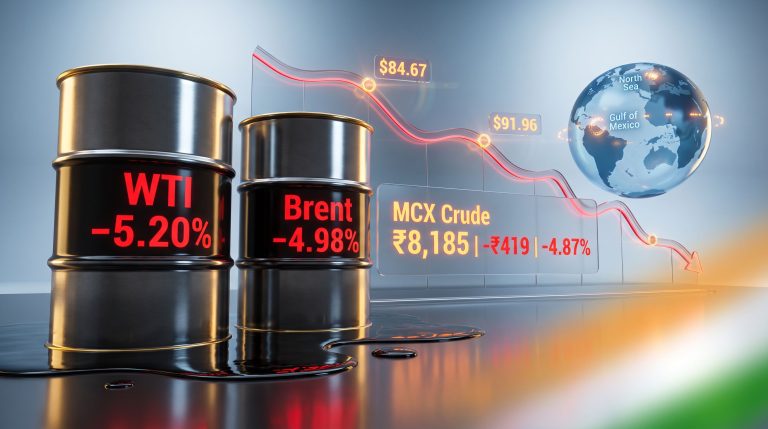
The relationship between Hormuz access and oil pricing is not linear, but it is deeply embedded in how energy markets price uncertainty. When the United States and Iran announced a pause in direct military exchanges on July 27, 2026, crude oil prices fell more than 6%, a movement that clearly reflected the unwinding of a conflict risk premium that markets had been pricing for an extended period.
The fact that oil prices fell so sharply on a ceasefire announcement illustrates the inverse: markets had been maintaining a significant upside risk premium to account for the possibility of full Hormuz disruption or escalatory closure. Furthermore, understanding this oil price impact on global supply chains helps contextualise why the ceasefire announcement triggered such a swift market response.
What the July 27 oil price movement also reveals is a potential disconnect between the ceasefire announcement and the continued maritime enforcement operations. Iran Guards turn back six vessels in Hormuz on the same day that oil markets were celebrating a pause in direct hostilities. This juxtaposition suggests that Hormuz access control may be functioning as a separable instrument from the broader military conflict, one that persists independently of ceasefires and diplomatic pauses. The broader oil price rally context from earlier in 2025 further illustrates how sensitive energy markets are to geopolitical shocks of this nature.
The next major ASX story will hit our subscribers first
Three Forward Scenarios for Hormuz Access
The trajectory of IRGC maritime enforcement through the second half of 2026 depends on factors that remain genuinely uncertain. Analysts tracking the situation should consider three plausible pathways:
Scenario 1: Diplomatic normalisation with corridor restoration
A comprehensive US-Iran diplomatic agreement incorporates provisions addressing Hormuz transit rights. IRGC enforcement operations wind down, war-risk premiums normalise, and energy markets release the residual conflict risk premium. This scenario is timeline-dependent on negotiation progress and would require verification mechanisms acceptable to both parties.
Scenario 2: Sustained conditional access (current trajectory)
The IRGC continues enforcing designated corridors, intercept operations remain frequent, and the global shipping industry adapts through a combination of compliance, selective rerouting, and elevated insurance costs. Energy markets maintain a moderate persistent risk premium. This is the scenario most consistent with observed behaviour through July 2026.
Scenario 3: Escalatory closure
A breakdown in the US-Iran pause triggers a more aggressive IRGC posture, including active interference with corridor-compliant vessels or attempts at full strait closure. This scenario would likely trigger emergency international naval response through the Combined Maritime Forces coalition and produce a sharp crude oil price spike. Consequently, Asian energy supply chains would face severe disruption. This is a tail-risk scenario but one with outsized market impact potential.
Important note: scenario projections involve inherent uncertainty and should not be treated as predictive statements. They represent analytical frameworks for understanding the range of possible outcomes rather than forecasts of specific events.
The Combined Maritime Forces Gap: Why Naval Presence Has Limits
The United States and allied navies maintain a significant operational presence in the Persian Gulf region through the Combined Maritime Forces coalition. However, the practical limits of this presence as a tool for protecting every commercial vessel from IRGC enforcement operations are substantial.
Providing naval escort to every tanker and LNG carrier transiting Hormuz would require a level of force deployment that exceeds realistic operational commitments. The sheer volume of vessels transiting the strait daily, combined with the geographic concentration of the enforcement zone, makes comprehensive escort protection logistically infeasible as a sustained operation. In addition, OPEC's market influence over production decisions further complicates how the international community can collectively respond to supply disruptions arising from the corridor restrictions.
This creates the operational reality that commercial vessel operators must navigate: institutional naval protection is available in general deterrence terms but not as a guarantee for any individual transit. The practical burden of compliance, rerouting decisions, and insurance cost absorption therefore falls on operators and cargo owners.
Frequently Asked Questions About the Hormuz Interceptions
Why Did Iran's Revolutionary Guards Stop the Six Vessels?
The IRGC intercepted the vessels because they attempted to use a transit route that had not been designated as an approved corridor under Iranian authorities' routing system. Warning shots were fired before the ships were ordered to turn back.
Is This Legally a Blockade?
Under international law, a formal blockade requires a declaration and constitutes an act of war. Iran has not declared a blockade. What it has imposed is conditional access control, requiring corridor compliance as a condition of transit. The practical effects on non-compliant vessels are similar to a blockade, but the legal and diplomatic framing is distinct.
How Does UNCLOS Apply?
UNCLOS Articles 37 through 44 guarantee transit passage rights through international straits. Iran contests the application of these provisions to Hormuz, and no international tribunal has adjudicated the dispute. This legal ambiguity is a core feature of the current enforcement environment.
What Happens to Vessels That Are Turned Back?
Turned-back vessels must either comply with corridor designations on a subsequent transit attempt, reroute entirely via the Cape of Good Hope, or await further developments. Cargo delivery timelines and contractual obligations are affected in all cases.
How Long Has This Enforcement Posture Been in Place?
Iran has maintained effective control over Hormuz transit routing since the broader Middle East conflict began in late February 2026. The enforcement intensity has increased progressively through July 2026.
Key Takeaways: Reading the Hormuz Enforcement Pattern
The events of July 26 to 27, 2026 deserve to be read not as isolated incidents but as data points within an accelerating enforcement pattern. The Washington Post's national security coverage has similarly highlighted the strategic dimensions of the US response to these developments. Several conclusions emerge from the accumulated evidence:
- At least ten commercial vessels were intercepted within 48 hours, representing a significant escalation in operational tempo compared to earlier enforcement periods.
- The continuation of interception operations on the same day that oil markets responded positively to a US-Iran ceasefire announcement suggests Hormuz access control is being maintained as a functionally independent instrument.
- The legal ambiguity surrounding Iran's corridor designation authority, combined with the practical impossibility of real-time legal contestation, means that commercial operators effectively face a binary compliance choice regardless of their flag state's legal position.
- The 6% oil price decline following the ceasefire announcement quantifies the risk premium markets had embedded for full Hormuz disruption, and by extension, the potential price movement if enforcement operations escalate further.
- Insurance markets, freight rates, and delivered energy prices across Asia are all absorbing costs that do not fully appear in headline crude benchmarks, meaning the true economic impact of corridor enforcement is broader than commodity price movements alone suggest.
Iran Guards turn back six vessels in Hormuz on the very day markets celebrated a diplomatic pause, and this juxtaposition may well define the central tension of the second half of 2026: whether maritime enforcement and diplomatic progress can coexist, or whether one must eventually give way to the other.
Want to Stay Ahead of the Market Disruptions Shaping ASX Resource Stocks?
Geopolitical events like the Hormuz corridor restrictions can trigger rapid repricing across energy and resources sectors, and Discovery Alert's proprietary Discovery IQ model scans ASX announcements in real time, delivering instant alerts on significant mineral discoveries so subscribers can act before the broader market catches up — explore historic discovery returns or start your 14-day free trial today.