May 19, 2026
The Energy Chokepoint at the Centre of a Geopolitical Storm
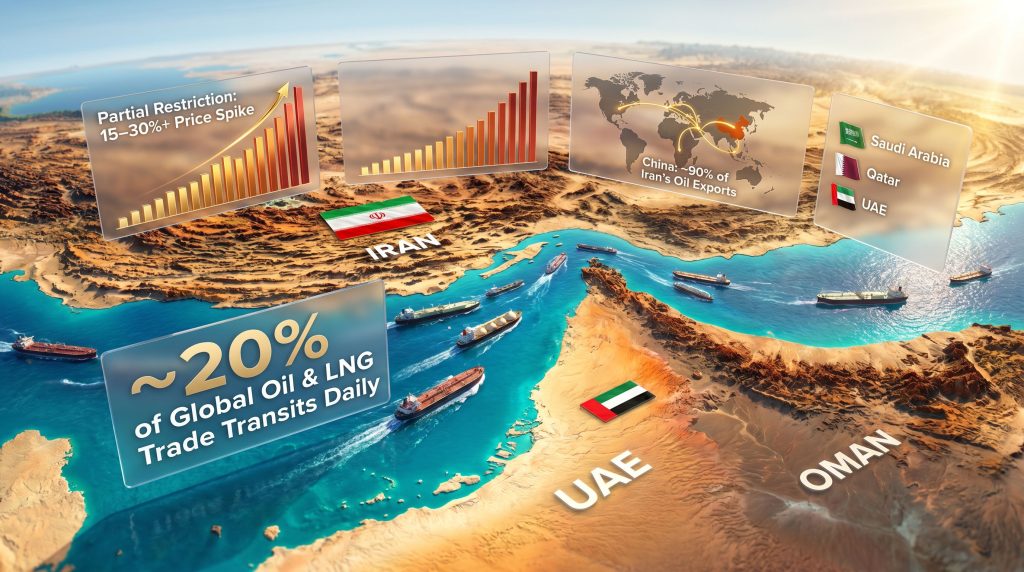
Trump delays Iran strike after Gulf allies push for diplomacy — and in doing so, has thrust the Strait of Hormuz back into the centre of global energy security debate. Roughly 21 miles wide at its narrowest navigable point, this stretch of water connecting the Persian Gulf to the Gulf of Oman carries approximately one-fifth of all global oil and LNG trade on any given day. The ongoing conflict involving Iran has forced energy markets, geopolitical strategists, and supply chain disruption planners to confront what happens when that corridor becomes contested territory.
The decision by President Donald Trump to delay a planned military strike against Iran, following direct appeals from Gulf state leaders, has added a new layer of complexity to an already fragile situation. Understanding why that decision was made, what it signals diplomatically, and what it means for global energy supply chains requires examining the interlocking pressures that shaped it.
When big ASX news breaks, our subscribers know first
Gulf State Diplomacy and the Architecture of the Pause
Why Saudi Arabia, Qatar, and the UAE Intervened
The postponement of military action did not emerge from Washington in isolation. Leaders from Saudi Arabia, Qatar, and the United Arab Emirates made direct appeals to the Trump administration, requesting that the U.S. allow additional time for diplomatic efforts to progress before any military escalation.
This intervention reflects the unique dual exposure these nations carry. They are simultaneously:
- U.S. security partners with deep defence cooperation agreements and American military infrastructure on their soil
- Major hydrocarbon exporters whose economies depend on stable energy price environments and uninterrupted shipping access
- Geographic frontlines in any regional escalation, meaning they bear the most immediate physical and economic consequences of conflict spillover
The collective diplomatic pressure from these Gulf partners illustrates a sophisticated understanding of the stakes involved. Any military action that triggers Iranian retaliation against Gulf shipping lanes, energy terminals, or desalination infrastructure creates existential economic risks for these nations, regardless of whether they are directly involved in the conflict.
The Strategic Logic Behind a Military Pause
A delay in military action should not be interpreted as a retreat from strategic objectives. In geopolitical conflict management, a tactical pause serves several simultaneous functions:
- It signals restraint to regional allies who are actively managing their own domestic and diplomatic pressures
- It preserves full military optionality without public commitment, maintaining leverage over the opposing party
- It creates space for back-channel negotiations to develop without forcing either side into a publicly declared position
- It allows time for economic pressure, including sanctions enforcement, to intensify before escalating to kinetic options
The distinction between a pause and a peace agreement matters enormously for market interpretation. A pause extends optionality; it resolves nothing. Markets that misread a delay as a diplomatic breakthrough tend to overcorrect on the downside, creating volatility that informed participants can navigate more effectively than reactive ones.
The White House has been explicit that military options remain fully available, characterising the postponement as a time-limited window tied to the progress of negotiations. Iranian officials, meanwhile, have characterised U.S. diplomatic outreach as a coercive pressure campaign rather than genuine engagement, reflecting the deep mutual distrust that continues to undermine the negotiating environment.
The Strait of Hormuz: Anatomy of the World's Most Consequential Chokepoint
Geography, Volume, and Strategic Exposure
The Strait of Hormuz functions as the single exit valve for the combined hydrocarbon output of Kuwait, the UAE, Qatar, Bahrain, and a significant portion of Saudi Arabian and Iraqi exports. Its strategic importance is not merely theoretical.
Roughly 17 to 20 million barrels of oil equivalent transit this corridor daily under normal conditions. Qatar, the world's largest LNG exporter by some measures, routes the overwhelming majority of its liquefied natural gas shipments through this waterway. Furthermore, any sustained disruption would tighten both crude oil and gas markets simultaneously. This dual commodity exposure is frequently underappreciated in coverage that focuses almost exclusively on crude price impacts.
Quantifying the Disruption Spectrum
The range of potential disruption scenarios carries meaningfully different market implications:
| Disruption Scenario | Estimated Daily Volume at Risk | Likely Market Response |
|---|---|---|
| Drone and tanker harassment | 2 to 5 million barrels/day | Insurance premium spikes, rerouting costs, modest price elevation |
| Partial flow restriction (30 to 50% reduction) | 5 to 10 million barrels/day | Crude price spike of 15 to 30%+ |
| Extended blockade or full closure | 17 to 20 million barrels/day | Supply shock exceeding 2022 levels, strategic reserve activation |
| Diplomatic resolution and full reopening | Restoration of normal flows | Price normalisation over 2 to 4 weeks |
The current environment sits somewhere between the first and second rows of this table, with restricted shipping creating a sustained risk premium that has contributed to sharp crude price increases since the conflict began earlier in 2026.
The LNG Dimension Markets Are Underpricing
A critical but often overlooked element of Hormuz risk is its disproportionate impact on LNG supply chains. European nations that shifted heavily toward LNG imports following the 2022 energy shock remain structurally dependent on Qatari supply. Concerns around global LNG supply are consequently intensifying, with Asian importers — particularly Japan, South Korea, and Taiwan — similarly exposed.
A prolonged closure would not merely tighten crude markets. It would simultaneously compress global LNG availability, push European spot gas prices significantly higher, and potentially force competitive bidding between European and Asian buyers in an already thin spot market. The cascading effects on industrial energy costs and consumer utility pricing would extend far beyond the immediate commodity price move.
Diplomatic Deadlock: Why Negotiations Keep Failing
The Core Technical and Political Sticking Points
Negotiations between Washington and Tehran have stalled over fundamental disagreements that go beyond political posturing. The key unresolved issues include:
- The enriched uranium stockpile question: Iran has accumulated a substantial stockpile of enriched uranium, and the U.S. is demanding verifiable constraints on both the existing stockpile and future enrichment activity. Tehran has resisted commitments it views as permanently capping its nuclear programme.
- Sanctions relief sequencing: Iran is demanding substantial sanctions relief upfront, while the U.S. prefers a phased approach tied to verified compliance milestones.
- Frozen asset access: Iranian demands include access to sovereign assets frozen under existing sanctions regimes, a politically sensitive concession for any U.S. administration to make publicly.
- Conflict-related compensation: Iran has linked certain financial demands to losses incurred during the current conflict, a claim Washington has shown no willingness to entertain.
Reports citing Axios indicate the White House rejected a proposal delivered through Pakistani intermediaries specifically because it did not provide sufficient verifiable commitments on uranium enrichment, highlighting how technically specific the sticking points have become.
Pakistan as Middle Power Mediator
Pakistan's role as a back-channel intermediary deserves more analytical attention than it typically receives. Pakistan shares a long border with Iran, maintains active diplomatic relationships across the Islamic world, and carries credibility as a nation that understands nuclear programme dynamics from direct experience. Its willingness to facilitate communication between Washington and Tehran reflects the broader engagement of middle powers in attempting to manage a crisis with direct regional spillover risks.
The involvement of Pakistani intermediaries also signals that the formal diplomatic channels between the U.S. and Iran remain too politically constrained for direct engagement, requiring insulated back-channel architecture to function at all.
G7 Coordination and Its Double-Edged Role
G7 foreign ministers have elevated the Iran crisis to a top-tier agenda item, reflecting its systemic significance for advanced economy energy security. Coordinated G7 positioning on sanctions enforcement could theoretically accelerate resolution. However, it carries an equally plausible risk: that unified Western pressure hardens Iranian domestic political dynamics and reduces the space for Iranian negotiators to present concessions as anything other than capitulation.
Oil Markets, Russian Waivers, and China's 90% Problem
How Energy Markets Are Pricing the Risk
Crude prices have incorporated a sustained geopolitical risk premium since the conflict escalated. Furthermore, the trade war impact on oil markets has compounded this pressure, making it harder for analysts to isolate individual drivers. Trump's announcement of a military pause produced an immediate partial reversal of earlier gains, consistent with typical market behaviour around de-escalation signals. However, the price floor has remained elevated because markets are distinguishing between a tactical pause and a structural resolution.
Professional energy traders and commodity analysts use a framework sometimes described as the risk premium decomposition, separating the price impact of:
- Supply disruption already realised (current Hormuz shipping restrictions)
- Forward risk premium (probability-weighted expectation of further escalation)
- Optionality value (cost of uncertainty itself in a thin-supply environment)
Each of these components has remained elevated, which is why crude prices have not fully retraced despite the diplomatic signalling.
The Russian Oil Sanctions Waiver: A Revealing Policy Trade-Off
The U.S. Treasury Department's decision to extend a sanctions waiver permitting temporary Russian oil sales to certain importing countries is one of the more analytically revealing policy moves of the current crisis. Treasury Secretary Scott Bessent cited supply disruption concerns as the direct rationale, effectively acknowledging that Iranian supply restrictions have created a global gap that cannot be immediately filled through conventional alternative sources.
This policy move exposes a fundamental tension in sanctions-based foreign policy: using energy supply as a geopolitical lever against one adversary while simultaneously relaxing restrictions on another adversary to prevent the lever from destabilising your own economy and those of your allies.
The waiver illustrates how tightly constrained U.S. policy options have become. Elevated oil price shock dynamics are creating domestic inflationary pressure and consumer energy cost headwinds that impose real political costs on the administration, consequently creating a feedback loop between geopolitical ambition and economic self-interest.
China's Role as Iran's Dominant Buyer
Prior to the conflict's escalation, China was purchasing approximately 90% of Iran's total oil exports, making Beijing not merely a significant buyer but effectively the financial lifeline sustaining Tehran's fiscal position under sanctions. This concentration gives China extraordinary leverage over Iranian economic resilience and, by extension, over Tehran's negotiating posture.
The US-China trade war context loomed large over Trump's discussions with Chinese President Xi Jinping in Beijing, which also included the subject of Iranian oil purchases and sanctions enforcement. Washington views Chinese demand as a critical variable in whether economic pressure on Iran can be made sufficiently painful to alter negotiating behaviour.
Whether Beijing views cooperation on Iranian oil sanctions as a useful concession to offer in the context of its own trade relationship with Washington remains one of the most consequential open questions in the current diplomatic environment.
Regional Security Deterioration: Infrastructure Under Threat
The Barakah Incident and the Psychology of Nuclear Infrastructure Strikes
The UAE's report of a drone strike in the vicinity of the Barakah nuclear power plant introduced a qualitatively different dimension to the security environment. Barakah is a civilian nuclear facility representing a major piece of Gulf energy infrastructure, and strikes near such installations — even unsuccessful ones — carry outsized psychological and market impacts.
Authorities confirmed no radiological impact occurred and that additional incoming drones were intercepted. However, the incident reinforced a critical point for risk managers: the geographic scope of conflict-related security incidents is expanding, and critical infrastructure across the Gulf is now within the operational range and apparent targeting logic of hostile actors.
Multi-Directional Spillover: The Iraq Vector
Saudi Arabia's interception of drones entering its airspace from the direction of Iraq highlights the multi-directional and geographically diffuse nature of the conflict's spillover. Iraq's fragmented security environment, with multiple non-state armed groups operating with varying degrees of independence from Baghdad's authority, means that hostile drone activity can be projected across the region without requiring direct Iranian military involvement in every incident.
This dynamic significantly complicates conflict attribution, escalation management, and the diplomatic signalling environment simultaneously.
Israel's Independent Escalation Track
Ongoing Israeli military operations inside Iranian territory constitute an independent escalation vector operating on a separate decision-making timeline from U.S.-Iran negotiations. Israeli strikes complicate Washington's diplomatic posture because Tehran may interpret them as coordinated U.S. policy even when they reflect independent Israeli strategic calculations. This perception risk, whether accurate or not, can harden Iranian negotiating positions and reduce the credibility of U.S. diplomatic assurances.
The next major ASX story will hit our subscribers first
Scenario Framework: Three Pathways Forward
Scenario 1: Partial Diplomatic Breakthrough
A negotiated framework addressing uranium enrichment constraints in exchange for limited, phased sanctions relief could produce a meaningful reduction in near-term conflict risk. Even a partial agreement that credibly reduces the probability of full military escalation would allow Hormuz shipping to partially normalise and bring the forward risk premium in crude prices down materially.
Market impact: Crude price normalisation, reduced LNG spot premiums, insurance premium compression on Gulf shipping routes. Probability assessment: Low to moderate in the near term, given the depth of current technical and political disagreements.
Scenario 2: Prolonged Stalemate with Managed Tensions
The most probable near-term trajectory involves a sustained standoff in which neither full military escalation nor diplomatic resolution occurs. Both sides maintain their stated positions while back-channel negotiations continue without producing binding commitments.
Market impact: Crude prices remain elevated with periodic volatility spikes driven by incident reporting, Gulf shipping insurance premiums stay elevated, and energy-importing economies face sustained above-trend energy costs with negative downstream implications for industrial competitiveness and consumer purchasing power.
Scenario 3: Diplomatic Collapse and Military Action
If negotiations fail entirely and the U.S. proceeds with military strikes, Iranian retaliation against Gulf energy infrastructure and shipping represents the baseline escalation scenario. This pathway carries the highest systemic risk for global energy markets.
Market impact: Acute supply shock, potential crude price surge well above current elevated levels, severe LNG market tightening globally, coordinated strategic petroleum reserve releases by consuming nations, and significant second-order effects on inflation, central bank policy, and equity market valuations.
Energy market participants, institutional investors, and corporate treasury functions with material energy cost exposure should be stress-testing portfolios and procurement strategies against Scenario 3 as a tail risk, even if it remains the least probable near-term outcome. The asymmetry of potential impact justifies disproportionate preparation relative to assigned probability.
The Structural Lesson: Energy Concentration Risk in a Multipolar World
The Iran crisis is delivering a forceful reminder of a structural vulnerability that energy security planners have documented for decades but policymakers have repeatedly failed to adequately address: the extraordinary geographic concentration of global oil and gas supply within a small number of politically fragile corridors.
The prolonged disruption to Hormuz flows is reinforcing investment cases for:
- Alternative LNG supply infrastructure in non-Gulf producing regions
- Expanded pipeline connectivity that bypasses maritime chokepoints
- Strategic petroleum reserve capacity expansion in major importing economies
- Long-term offtake agreements with geographically diversified producers
Nations that have relied heavily on Gulf crude are reassessing supply chain resilience in ways that could produce durable structural shifts in global energy trade patterns over the medium term. These shifts, once initiated, tend to be self-reinforcing as infrastructure investment locks in new supply relationships over multi-decade horizons.
The intersection of sanctions policy, energy market stability, and geopolitical leverage that the current crisis illustrates is not unique to Iran. It reflects a recurring dynamic in which the use of energy as a foreign policy instrument creates feedback loops that constrain the flexibility of the nation wielding that instrument. Elevated oil prices impose domestic economic costs that create political constraints on escalation, which in turn affects the credibility of military deterrence, which influences negotiating behaviour on all sides. In this sense, Trump delays Iran strike after Gulf allies push for diplomacy represents not merely a tactical pause, but a window into the deeper structural tensions of modern energy geopolitics.
Understanding that feedback loop — rather than focusing narrowly on any single diplomatic development — is the analytical lens most likely to produce durable insight into how this crisis resolves. As ongoing Iran-U.S. negotiations continue to evolve, the global energy system that emerges on the other side will almost certainly look different from the one that preceded the conflict.
This article is intended for informational purposes only and does not constitute financial or investment advice. Energy market forecasts, scenario analyses, and probability assessments involve significant uncertainty. Past geopolitical events are not reliable predictors of future outcomes. Readers should conduct independent research before making investment or commercial decisions based on geopolitical risk assessments.
Want to Track the ASX Mineral Discoveries Reshaping the Energy Transition?
As geopolitical disruption accelerates the global hunt for energy-critical and strategic minerals, Discovery Alert's proprietary Discovery IQ model delivers real-time alerts on significant ASX mineral discoveries the moment they are announced — transforming complex data across more than 30 commodities into clear, actionable insights for investors at every level. Explore why major mineral discoveries have historically generated extraordinary returns on Discovery Alert's dedicated discoveries page, and begin your 14-day free trial today to position yourself ahead of the market.