August 21, 2026
The Oil Market Is Not Resetting — It Is Rebooting Under Duress
Energy markets have a long history of confusing price recovery with fundamental recovery. When crude benchmarks return to familiar levels after a shock, investors tend to interpret the convergence as normalisation. But price is a lagging signal. The underlying machinery of supply — the tankers, the terminals, the transit corridors, the insurance frameworks — operates on an entirely different timeline. And right now, that machinery is being switched back on all at once, under conditions of lingering geopolitical uncertainty and structural imbalance that the headline price of $73 Brent entirely fails to communicate.
The Strait of Hormuz oil exports reopening has generated considerable market optimism. That optimism deserves to be interrogated carefully, particularly given the geopolitical oil market dynamics still at play across the broader region.
When big ASX news breaks, our subscribers know first
The Chokepoint That Cannot Be Bypassed
No other geographic feature in the global energy system carries the systemic weight of the Strait of Hormuz. Approximately one-fifth of all oil and liquefied natural gas traded globally transits this waterway, which narrows to roughly 33 kilometres at its most constrained navigable point. Despite this vulnerability, no large-scale bypass infrastructure exists for the majority of Gulf producers.
Saudi Arabia retains partial rerouting capacity via its East-West Pipeline, which connects eastern oilfields to the Red Sea port of Yanbu. However, this pipeline cannot accommodate anything close to the Kingdom's full export volume. For Kuwait, Iraq, Bahrain, and Qatar, there is effectively no alternative. Their production recovery is entirely contingent on the strait remaining open and commercially viable.
The disruption that preceded the current reopening was not a brief incident. The waterway was effectively non-functional for more than 100 days following the outbreak of conflict on February 28, 2026. Energy analysts and historians have described this as the most severe sustained oil supply shock in modern market history, surpassing previous geopolitical disruptions in both duration and aggregate volume impact.
"The Strait of Hormuz is not merely a transit route. It is the central valve of the global oil system. When that valve is closed for more than three months, the consequences do not reverse the moment it reopens."
Three Phases That Markets Are Treating as One
The critical analytical error being made across trading desks and financial media right now is the treatment of the Strait of Hormuz oil exports reopening as a single event rather than a multi-phase process. In reality, full supply normalisation unfolds across at least three distinct stages, each with its own constraints and timelines.
Phase One: The Tanker Exodus and the Data Opacity Problem
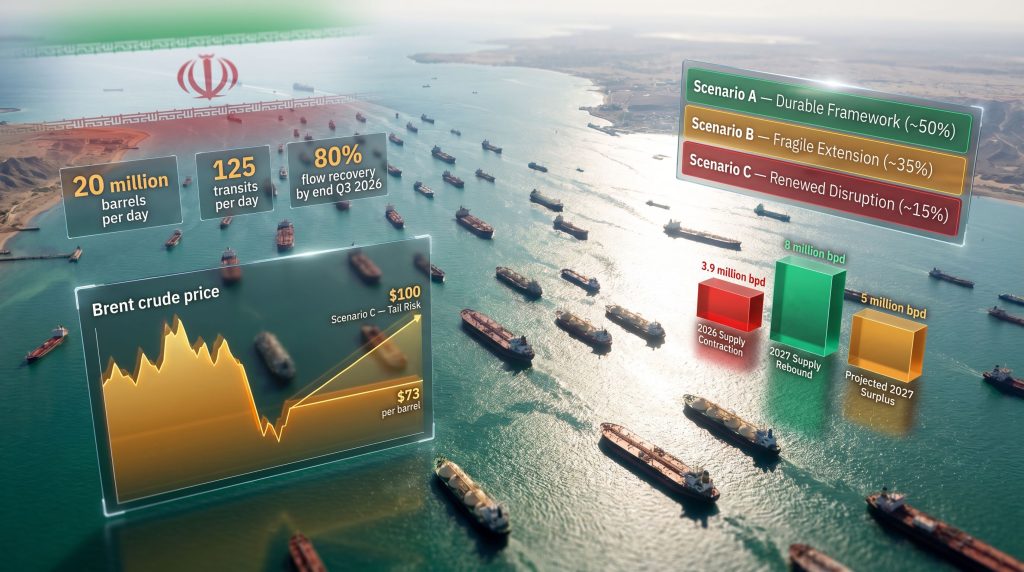
In the immediate aftermath of the reopening, dozens of vessels that had been stranded inside the Gulf during the conflict moved toward the exit simultaneously. U.S. Energy Secretary Chris Wright noted publicly that flows briefly exceeded pre-conflict levels of approximately 20 million barrels per day during this initial surge. However, ship-tracking data from LSEG tells a more complicated story: overall daily crossings remained substantially below the pre-war benchmark of approximately 125 transits per day.
A further complication has emerged. A portion of vessels transiting the strait appear to be disabling their automatic identification systems (AIS) during passage. AIS is the maritime equivalent of a flight transponder — its deactivation introduces significant opacity into real-time flow assessments and makes it genuinely difficult to determine actual throughput volumes during this early phase.
Perhaps the most telling data point from this initial period is the tanker ratio imbalance. According to LSEG tracking data, for every four tankers observed leaving the Gulf in the immediate post-reopening period, only one was entering. This 4:1 departure-to-arrival ratio is far below what is required to sustain a genuine recovery in export volumes.
Phase Two: The Inbound Vessel Deficit and the Storage Unlock Bottleneck
This is the phase that receives the least attention in mainstream market commentary, and it may be the most consequential. Clearing the backlog of outbound cargo addresses only half of the supply restoration equation.
For Gulf producers to actually restart shut-in oilfields and refineries, inbound tankers must enter the waterway to collect crude that has been accumulating in onshore storage during the disruption. Without that inbound vessel flow, producers cannot systematically unlock storage-held barrels, and field restarts remain bottlenecked regardless of how many tankers are leaving.
Rystad Energy data shows that shut-in Gulf production declined from approximately 11.7 million barrels per day to 9.6 million bpd by mid-June 2026 — a meaningful improvement, but one that still represents a substantial shortfall from pre-conflict output levels.
An additional hard constraint complicates this phase: mine clearance operations. Naval mines laid during the conflict must be located and neutralised before commercial shipping can transit with confidence. This process is estimated to require 40 to 50 days from the reopening date, meaning that genuine commercial normalisation of the strait cannot occur before that window closes. During this period, oil tankers and LNG carriers are expected to receive transit priority, extending delays for container and general cargo shipping significantly.
Phase Three: Full Production Restart and the Inventory Refill Requirement
Rystad Energy projects that Gulf production will return to pre-conflict output levels by December 2026. However, this timeline carries a significant caveat: Iran.
Under the interim U.S.-Iran agreement, most sanctions restricting Iranian oil exports have been suspended. With this relief in place, Iranian production could reach 3.3 million bpd by year-end — a level that would actually exceed pre-conflict Iranian output. This positions Iran as potentially the most consequential swing variable in the near-term supply outlook, adding incremental barrels to a market that is already absorbing a simultaneous cargo release from other Gulf producers.
Compounding the timeline uncertainty further, Qatar's LNG export infrastructure sustained damage during the conflict. Unlike crude oil loading terminals, LNG processing facilities require precise technical inspection and certification before restart. In addition, the global LNG supply outlook suggests full restoration of Qatar's LNG export capacity may extend the complete normalisation horizon well into 2027.
| Recovery Phase | Estimated Timeline | Primary Constraint | Volume Outcome |
|---|---|---|---|
| Tanker Exodus and Initial Surge | Weeks 1–2 | AIS opacity, 4:1 vessel ratio imbalance | Brief above-normal outbound flows |
| Inbound Vessel Deficit and Storage Unlock | Weeks 2–6 | Mine clearance (40–50 days), insufficient inbound tankers | Gradual and uneven production restart |
| Full Output Restoration | Months 2–6+ | Iran sanctions trajectory, infrastructure repairs | Approximately 80% flow recovery by end Q3 2026 |
| Complete Normalisation | 2027 and beyond | LNG facility repairs, insurance costs, geopolitical stability | Return to pre-crisis export architecture |
From the Largest Supply Shock in History Toward a Potential Glut
The scale of the preceding supply disruption is worth restating. Global oil supply is forecast to contract by 3.9 million bpd across 2026 as a direct consequence of the conflict. Refineries across Asia and Europe adapted by securing crude from alternative sources, drawing down strategic petroleum reserves, and modifying refinery configurations to process different feedstock grades.
Now those same refineries are largely covered for their July and August procurement requirements. The wave of released Gulf barrels is arriving into a market that does not immediately need them. Many tankers carrying this crude may therefore remain at sea for several weeks, effectively functioning as floating storage — a dynamic that temporarily suppresses the visible market impact of the volume surge while building an invisible physical overhang.
The futures market has already begun pricing this transition. August Brent futures flipped below the September contract following the reopening — the first shift into contango since the conflict began. Contango, in straightforward terms, means that near-term crude is priced below longer-dated contracts. This structure signals that physical supply in the immediate term is expected to exceed what refiners need right now.
"Contango following the Strait of Hormuz reopening is not a sign of permanent surplus. It is a transitional pricing configuration driven by the simultaneous release of trapped barrels into a market whose procurement cycles are already satisfied for the next two months."
Furthermore, the medium-term picture carries more structural concern. The International Energy Agency projects that global oil supply will rebound by approximately 8 million bpd in 2027, reaching roughly 110.3 million bpd. Demand recovery, by contrast, is expected to be considerably more modest. The resulting potential surplus of approximately 5 million bpd in 2027 represents a structural overhang that could keep Brent crude under sustained downward pressure through the medium term — assuming geopolitical conditions permit uninterrupted supply growth.
The Fiscal Pressure Hidden Behind the Price Recovery
Brent crude trading at approximately $73 per barrel may appear to represent a benign return to normalcy. For most Gulf sovereign producers, however, it represents something more uncomfortable: a price level that sits below their fiscal break-even requirements.
Saudi Arabia's fiscal break-even is estimated at approximately $80 to $85 per barrel, meaning the Kingdom's budget faces immediate pressure at current price levels. Iraq and Kuwait face similar dynamics, compounded by the additional costs of restarting production in fields that were shut-in for an extended period. Field restarts are not simply a matter of reopening a valve — reservoir pressure management, well integrity assessments, and pipeline recommissioning all carry meaningful costs.
Iran's fiscal calculus differs materially. With sanctions relief in place, even $70 Brent generates substantial incremental revenue on production that was previously constrained. Tehran is consequently the producer most economically motivated to maximise output in the near term, adding further downward pressure on prices at the exact moment when other Gulf producers need them to rise. This dynamic closely mirrors patterns seen in previous episodes of trade war impact on oil pricing, where competing national interests undermined collective price stabilisation efforts.
The Security Framework That Is Still Being Negotiated
The political reopening of the Strait of Hormuz should not be conflated with a durable security settlement. The U.S.-Iran interim agreement established a 60-day window of unimpeded, toll-free transit while Tehran engages in longer-term framework negotiations with Oman. The creation of Iran's Persian Gulf Strait Authority as the administrative body governing transit represents a structural assertion of sovereign control that has no direct precedent in the pre-conflict governance architecture.
The commercial implications of this new authority remain genuinely unresolved. Shipowners and marine insurers are being asked to commit capital to Gulf transits under a legal and institutional framework that is still being negotiated. War risk premiums and hull insurance costs for Gulf passages remain substantially elevated relative to pre-conflict levels, adding a persistent cost layer to every voyage.
A recent incident underscored the fragility of the current arrangement. Iranian forces fired on a Taiwanese cargo vessel transiting the strait, triggering a brief exchange with U.S. naval assets. Analysts interpreted this not as random escalation but as a deliberate demonstration that Tehran intends to actively exercise the authority of its newly established transit governance body. Traffic resumed relatively quickly, but the episode reinforced the caution already evident in the 4:1 departure-to-arrival tanker ratio.
Three Scenarios for Hormuz Stability Over the Next 12 Months
Scenario A: Durable Framework Achieved (Base Case, approximately 50% probability)
- Oman-brokered negotiations produce a binding multilateral transit governance framework within the 60-day window
- War risk insurance costs normalise over 3–6 months as commercial confidence returns
- Approximately 80% of pre-conflict energy flows resume by the end of Q3 2026
- Full normalisation achieved by mid-2027
Scenario B: Interim Arrangement Extended but Fragile (Moderate Risk, approximately 35% probability)
- Negotiations stall; the 60-day window is extended on a rolling basis without binding resolution
- Sporadic vessel incidents maintain elevated risk premiums and suppress shipping confidence
- Export recovery proceeds at a slower pace, with full normalisation delayed into late 2027
- Brent crude trades in a wide $65 to $85 range reflecting persistent uncertainty
Scenario C: Renewed Disruption (Tail Risk, approximately 15% probability)
- A significant escalatory incident triggers renewed transit restrictions before inventory levels have been rebuilt
- Gulf producers face a second supply shock compounding the existing production deficit
- Brent crude spikes above $100 per barrel; IEA member states activate strategic petroleum reserve releases
- Global recession risk increases materially
The next major ASX story will hit our subscribers first
What the Asian Demand Cycle Means for Price Stabilisation
Asia absorbs the majority of Middle Eastern crude exports. China, India, Japan, and South Korea together represent the primary demand counterpart to Gulf supply growth. The near-term demand gap created by the fact that Asian refiners have already secured July and August supply means the initial wave of released Gulf barrels faces a procurement vacuum of approximately four to eight weeks before new buying cycles begin.
India's position deserves particular attention. With middlemen already offering Iranian crude to Indian refiners following the U.S. sanctions waiver, India's import economics could shift materially in the second half of 2026. Indian refineries have historically demonstrated willingness to process Iranian grades at discounted prices, and the resumption of this trade flow could become a meaningful absorber of incremental Iranian production — partially offsetting the near-term supply overhang.
Once Asian procurement cycles resume in September and October, refiners will face the additional requirement of rebuilding strategic reserves depleted during the 100-plus days of disruption. This inventory refill demand could absorb the supply surplus more quickly than current IEA forecasts suggest — but only if the security situation in the strait remains stable enough to sustain consistent cargo flows. OPEC's market influence over production coordination during this refill period will also be a critical factor in determining whether prices find a durable floor.
Frequently Asked Questions: Strait of Hormuz Oil Exports Reopening
How long will Strait of Hormuz oil exports take to fully normalise?
Full normalisation is a multi-stage process. The initial tanker backlog is expected to clear within 10 to 15 days of the reopening, but mine clearance operations require an estimated 40 to 50 days. Rystad Energy projects that approximately 80% of pre-disruption energy flows will resume by the end of Q3 2026, while complete restoration of pre-crisis export architecture — including infrastructure repairs and insurance normalisation — may extend into 2027.
Why did oil prices fall back to pre-conflict levels if the supply shock was so severe?
Markets are pricing in the anticipated release of trapped Gulf barrels combined with the suspension of Iranian oil sanctions, creating a near-term supply signal that has overwhelmed the geopolitical risk premium. The shift into Brent contango reflects this near-term oversupply expectation. However, the physical constraints still impeding actual supply restoration suggest the price decline may be premature relative to underlying fundamentals. OPEC demand forecast revisions in the coming months will be closely watched for signs that the organisation is adjusting to this new supply reality.
What is the Persian Gulf Strait Authority?
The Persian Gulf Strait Authority is a body established by Iran to administer and govern commercial transit through the Strait of Hormuz. Its creation represents a structural change to the transit governance architecture that did not exist before the conflict. Its role in the longer-term framework being negotiated with Oman will be a critical determinant of whether commercial shipping confidence is fully and durably restored. As oil flows resume under this new governance model, markets will be watching closely for any signs of friction or enforcement action.
Could oil prices spike again despite the reopening?
Yes. Under the tail-risk scenario outlined above, a significant escalatory incident before inventory levels have been rebuilt could trigger a sharp price spike. Brent crude above $100 per barrel is a plausible outcome in this scenario, particularly given that strategic reserve buffers in several IEA member states have already been drawn down during the preceding disruption period.
Disclaimer: This article contains forward-looking projections and scenario analyses based on publicly available data from Rystad Energy, the International Energy Agency, LSEG, and Reuters. These projections involve significant uncertainty and should not be construed as investment advice. The geopolitical situation described is evolving rapidly, and actual outcomes may differ materially from those described. Readers should conduct their own due diligence before making any investment or commercial decisions based on this analysis.
Want to Know Which ASX Resource Stocks Could Benefit From Energy Market Volatility?
Discovery Alert's proprietary Discovery IQ model scans ASX announcements in real time, instantly identifying significant mineral discoveries and actionable investment opportunities across more than 30 commodities — including those directly exposed to shifting energy market dynamics. Explore historic examples of exceptional discovery returns and begin your 14-day free trial at Discovery Alert to position yourself ahead of the broader market.