June 29, 2026
The World's Most Fragile Energy Artery Is Under Pressure Again
Few mechanisms in the global economy carry as much systemic weight as a narrow body of water measuring just 33 kilometres at its most constricted point. The Strait of Hormuz oil tankers and Iran deal have dominated global energy headlines, and when that valve tightens, the consequences cascade through every oil-dependent economy on Earth. Understanding the current crisis requires looking beyond the immediate headlines and examining the structural vulnerabilities, the historical precedents, and the deeply asymmetric stakes involved for different regions and actors.
When big ASX news breaks, our subscribers know first
Why the Strait of Hormuz Remains Structurally Irreplaceable
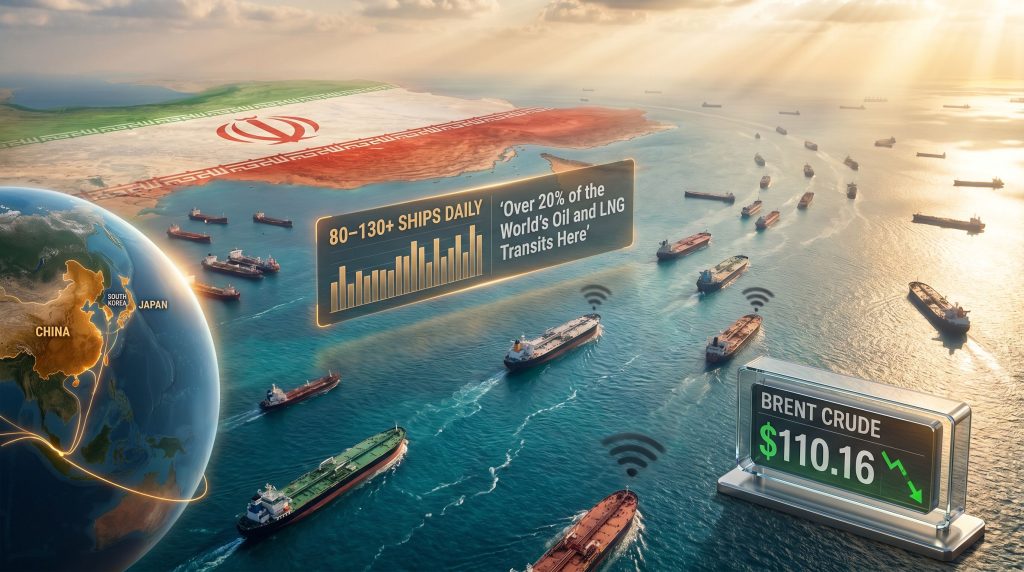
The numbers alone communicate the scale of dependency. More than 20% of the world's total oil and LNG exports pass through the Strait of Hormuz every single day. Under normal operating conditions, between 80 and 130 vessels transit this corridor daily, carrying crude from Iraq, Kuwait, the UAE, Qatar, and Iran into the broader global supply chain.
A complete closure of even 24 hours would remove an estimated 17 to 21 million barrels of crude from global circulation, an amount no strategic reserve system is designed to absorb sustainably over weeks or months.
What makes this chokepoint structurally irreplaceable is the absence of any viable full-volume alternative. Partial bypass infrastructure does exist:
- The Saudi Petroline (East-West Pipeline) carries a meaningful share of Saudi crude to Red Sea terminals, bypassing the Gulf entirely
- The UAE's Habshan-Fujairah pipeline offers additional routing capacity for Emirati crude
- However, neither pipeline system, nor both combined, can compensate for a complete Hormuz closure at current Gulf export volumes
Qatar's position is particularly exposed. As the world's largest LNG exporter, its entire liquefied natural gas trade flows through the strait with no overland alternative whatsoever. A Hormuz disruption is, furthermore, simultaneously a crude oil crisis and a global gas supply crisis, which explains the breadth and severity of current market dislocations.
The JCPOA's Long Collapse and What It Created
The current crisis did not emerge from a vacuum. Its roots trace back to the 2015 Joint Comprehensive Plan of Action, a multilateral agreement that constrained Iran's uranium enrichment activities in exchange for phased sanctions relief. When the United States unilaterally withdrew from the JCPOA in 2018, it reimposed sweeping sanctions on Iranian oil exports and financial institutions, effectively cutting Iran off from conventional crude markets.
The downstream effects were structural and lasting. Iranian crude exports, which had approached 2.5 million barrels per day during the JCPOA era, collapsed under sanctions pressure. The global shadow fleet — a network of vessels operating outside conventional tracking frameworks through AIS disabling, flag-of-convenience registrations, and ship-to-ship transfer techniques — expanded dramatically to absorb sanctioned Iranian barrels moving to buyers willing to circumvent the U.S.-led sanctions regime.
| Factor | Pre-2018 JCPOA Era | Post-2025 Expiry |
|---|---|---|
| Iranian crude exports | ~2.5 million bpd | Severely constrained |
| Tanker AIS compliance | Standard protocols | Widespread disabling |
| Shadow fleet activity | Minimal | Significant and growing |
| Brent crude risk premium | Low | Elevated |
The formal sunset provisions of the JCPOA expired on 18 October 2025, after which Iran declared it was no longer bound by any of the agreement's technical constraints. Iran's declared uranium enrichment levels subsequently escalated well beyond JCPOA thresholds, materially changing the proliferation calculus for the broader region. This escalation, in turn, has contributed significantly to oil market disruption across multiple trading regions.
How the Conflict Has Paralysed Global Tanker Operations
The U.S.-Israeli military conflict with Iran, now approaching its third month, has produced what analysts widely characterise as the most severe disruption to global energy supply flows in recorded history. Hundreds of laden crude tankers have been effectively immobilised within the Persian Gulf, unable to transit the strait under commercially or operationally acceptable risk conditions.
The behavioural response of vessel operators reveals the depth of the risk environment:
- Multiple fully-loaded crude carriers have been documented disabling their AIS transponders before approaching or exiting the strait, reducing targeting visibility but significantly complicating maritime traffic management and safety monitoring
- A growing number of supertankers have adopted floating storage positions within the Gulf, accumulating crude inventory while awaiting improved security conditions
- Energy infrastructure and port facilities across the broader Gulf region have sustained material physical damage, compounding supply-side constraints independently of the transit risk
Against this backdrop, a small number of vessels have managed to transit. According to recent reporting, two Chinese supertankers carrying Iraqi crude successfully exited the strait, with vessel tracking data from LSEG and Kpler indicating these ships collectively carried approximately 4 million barrels of crude. The selective nature of these transits — predominantly Chinese-flagged vessels carrying Iraqi rather than Iranian barrels — reflects a deliberate strategic calculation rather than a normalisation of conditions.
The shadow fleet dimension adds a further layer of opacity. Phantom fleet operations exploit AIS gaps, flag-of-convenience registrations, and ship-to-ship transfer techniques to obscure cargo origin. The proliferation of this activity complicates both sanctions enforcement and maritime safety monitoring in ways that have no historical precedent at current scale.
Oil Price Dynamics and Market Psychology Under Diplomatic Uncertainty
Brent crude eased to a session low of $110.16 per barrel following positive diplomatic signals from Washington, before recovering a significant portion of those losses. This price action is instructive. It confirms that a substantial geopolitical risk premium is embedded in current crude valuations, but it also reveals the limits of market responsiveness to rhetoric alone.
An analyst at Fujitomi Securities observed that market participants are actively trying to assess whether Washington and Tehran can find genuine common ground on a peace agreement, noting that the U.S. stance has been shifting on a near-daily basis. This assessment captures the core psychological challenge facing traders: distinguishing between diplomatic positioning and substantive, verifiable progress toward a binding framework.
However, the scenario matrix for crude pricing remains wide:
| Scenario | Probability Assessment | Brent Crude Outlook |
|---|---|---|
| Full ceasefire and Hormuz reopening | Moderate | Significant downward correction |
| Partial agreement, phased reopening | Higher probability near-term | Gradual price normalisation |
| Negotiations collapse, hostilities resume | Meaningful tail risk | Sharp spike beyond current range |
| Prolonged stalemate | Elevated | Sustained elevated pricing, high volatility |
What makes the current environment particularly challenging for price discovery is the asymmetry between upside and downside scenarios. A credible deal could trigger a sharp and disorderly price correction as floating storage inventory floods back into the market simultaneously. A breakdown in talks, by contrast, could push Brent toward levels that cause measurable demand destruction across price-sensitive Asian economies, compounding the oil price shock already reverberating through global supply chains.
The Domestic Political Pressure Driving U.S. Urgency
Understanding the pace of U.S. diplomatic engagement requires examining the domestic political arithmetic. Retail gasoline prices across the United States have remained persistently elevated throughout the conflict period, and the White House's approval ratings have declined materially. Congressional midterm elections are approaching in November, creating a powerful institutional incentive to pursue a negotiated resolution with urgency.
U.S. leadership has publicly signalled on multiple occasions that a resolution to the conflict is close, while simultaneously signalling that military options remain available if diplomatic progress stalls. This dual-track communication strategy reflects the tension between domestic political imperatives and the strategic complexity of negotiating with a counterpart whose internal governance structure is fragmented.
Vice President JD Vance acknowledged at a White House briefing that Iran's negotiating posture is complicated by internal divisions, with different power centres within the Islamic Republic not always presenting a consistent position. This acknowledgement carries significant implications: it means even a U.S. concession may not translate into a binding Iranian commitment, and that any agreement reached with one faction may face resistance from another.
The next major ASX story will hit our subscribers first
Iran's Negotiating Demands and the Gap Between the Parties
Iran's publicly stated peace conditions, as reported through Iranian state media and Deputy Foreign Minister Kazem Gharibabadi's statements cited by the IRNA news agency, include:
- A full cessation of hostilities across all active fronts, including Lebanon
- Withdrawal or significant repositioning of U.S. forces from areas proximate to Iran
- Reparations for destruction caused by U.S.-Israeli military operations
- Comprehensive lifting of economic sanctions
- Release of frozen sovereign funds held in foreign jurisdictions
- An end to the U.S. naval blockade
These terms appear to have changed little from a previous Iranian proposal that was rejected outright by U.S. leadership. The persistence of Iran's stated position suggests Tehran believes its core leverage — control of the Hormuz chokepoint and resilience under military pressure — remains intact despite months of conflict.
The original stated objectives of the U.S.-Israeli campaign included curtailing Iranian support for regional proxy forces, dismantling Iran's nuclear development programme, degrading its ballistic missile capabilities, and creating conditions for internal political change in Tehran. Furthermore, as analysts note, Iran has been treating Hormuz passage on a case-by-case basis, using it as a lever in ongoing negotiations. The current reality on the ground diverges substantially from those original objectives:
- Iran retains a stockpile of near-weapons-grade enriched uranium
- Its capacity to deploy missiles, drones, and proxy militia networks against regional neighbours remains functional
- The Islamic Republic's clerical leadership withstood both a mass domestic uprising earlier in the year and the sustained military campaign without organised internal opposition emerging
Regional Spillover and the Broader Conflict Ecosystem
The conflict has not remained contained within Iran's borders. Israel has conducted operations in Lebanon targeting Hezbollah infrastructure, displacing hundreds of thousands of civilians. Drone activity originating from Iraqi territory and attributed to Iran-aligned forces has continued to target Gulf states including Saudi Arabia and Kuwait.
A ceasefire framework agreed in early April has largely held but remains fragile. Periodic violations, particularly the drone activity from Iraq, continue to test its durability and complicate the broader negotiating environment. Any comprehensive peace settlement must, consequently, address these regional dimensions — not merely the bilateral U.S.-Iran dispute — which adds layers of complexity that purely bilateral frameworks cannot resolve.
Differential Regional Exposure to a Hormuz Disruption
Not all economies face the same vulnerability to a sustained Hormuz closure. The differential in exposure is stark and helps explain why some governments are more urgently engaged in diplomatic pressure than others.
| Region | Hormuz Dependency | Primary Risk Channel |
|---|---|---|
| East Asia (China, Japan, South Korea) | Extremely high | Supply volume and price shock |
| South Asia (India) | High | Import cost inflation, current account pressure |
| Europe | Moderate | LNG price contagion, refined product costs |
| United States | Lower direct dependency | Domestic price transmission, strategic reserve drawdown |
| Gulf Cooperation Council states | Existential | Revenue collapse, fiscal stress |
China's strategic position deserves particular attention. Chinese supertankers have been among the only commercial vessels successfully transiting the strait during the current disruption period, and China's continued engagement with Gulf crude suppliers reflects its strategic imperative to maintain energy security outside U.S.-led frameworks. The broader US-China trade tensions add a further dimension to Beijing's calculus, as its posture in any Iran negotiations carries structural weight given China's role as Iran's primary crude export destination and a key economic lifeline for Tehran.
Lessons the 1980s Tanker War Still Teaches
Historical precedent provides a useful calibration tool. During the Iran-Iraq War of 1980 to 1988, the so-called Tanker War saw over 500 commercial vessels attacked across the Persian Gulf, killing hundreds of mariners and triggering significant global oil supply disruptions. The United States ultimately deployed naval escorts through Operation Earnest Will to protect Kuwaiti-flagged tankers, demonstrating the degree to which Hormuz security has historically been treated as a matter of core U.S. strategic interest.
Several factors make the current environment structurally more complex than the 1980s precedent:
- Modern supertankers carry significantly larger cargo volumes, meaning individual vessel losses carry proportionally greater economic consequences
- AIS technology, satellite surveillance, and drone warfare have fundamentally transformed the threat environment for commercial shipping
- The shadow fleet phenomenon, largely absent during the Tanker War, introduces new dimensions of risk, opacity, and enforcement complexity that did not exist in the previous era
What Conditions Must Be Met Before the Strait Reopens
Even under an optimistic diplomatic scenario, reopening the strait to normal commercial traffic is not an instantaneous process. A minimum set of conditions would need to be satisfied:
- A verified and durable ceasefire framework accepted by all active parties to the conflict
- Withdrawal or significant repositioning of hostile naval and aerial assets from the strait's immediate operational environment
- Formal diplomatic agreement, or at minimum a credible interim arrangement, addressing core U.S.-Iran strategic disputes
- Restoration of port and terminal infrastructure sufficient to process the substantial backlog of immobilised vessels
- Reestablishment of maritime insurance underwriting at commercially viable premium levels
The timeline challenge is compounding. Even if all political conditions were resolved tomorrow, the logistical process of clearing hundreds of accumulated tankers, restoring damaged infrastructure, and normalising insurance markets would require weeks to months. The floating storage inventory built up during the blockade period would also need to be absorbed by markets without triggering a disorderly price collapse — a dynamic that poses its own set of risks for oil-dependent fiscal systems.
The Long-Term Strategic Consequence: Energy Security Rethinking
The Hormuz disruption has done something no policy paper or scenario exercise fully accomplished before it: it has transformed the theoretical vulnerability of concentrated Gulf dependency into a lived operational reality. Energy security planners across Asia, Europe, and the Americas are now urgently reassessing alternative supply corridors, strategic reserve adequacy, and demand-side resilience frameworks.
The crisis has simultaneously intensified debate about energy transition timelines. The argument that accelerating renewable energy solutions and improving storage capacity reduces long-term exposure to fossil fuel supply shocks has gained renewed momentum in policy circles. Whether that momentum translates into accelerated capital allocation remains an open question, but the directional pressure is unambiguous.
For the Gulf Cooperation Council states, the strategic stakes are existential rather than merely economic. Their fiscal sustainability is structurally dependent on oil export revenues that the current disruption is directly threatening. The longer the strait remains functionally closed to normal commercial volumes, the greater the pressure on sovereign wealth fund drawdowns and domestic fiscal positions across the region. In addition, the evolving geopolitical landscape is reshaping how nations reconsider their energy dependencies well beyond the immediate crisis surrounding Strait of Hormuz oil tankers and Iran deal negotiations.
This article is intended for informational purposes only and does not constitute financial or investment advice. All forecasts, scenario analyses, and projections involve inherent uncertainty and should not be relied upon as predictions of future market outcomes. Readers should conduct independent research and consult qualified advisers before making any investment decisions.
Want to Stay Ahead of the Next Major Resource Discovery Sparked by Global Energy Disruptions?
When geopolitical shocks like the Hormuz crisis reshape commodity markets, the most significant opportunities often emerge in the resources sector — and Discovery Alert's proprietary Discovery IQ model delivers real-time ASX mineral discovery alerts, transforming complex market signals into actionable investment insights before the broader market catches on. Explore how historic discoveries have generated substantial returns by visiting Discovery Alert's dedicated discoveries page, and begin your 14-day free trial today to position yourself ahead of the next major market move.