August 5, 2026
The World's Most Vulnerable Energy Corridor Is Back in Play
Few geographic features carry more economic consequence per square kilometre than a narrow stretch of water connecting the Persian Gulf to the Gulf of Oman. The Strait of Hormuz has long occupied a singular position in global energy architecture, not because of what flows through it on any given day, but because of what stops flowing when it closes. When diplomats, traders, and military planners talk about systemic energy risk, they are almost always, in some way, talking about this waterway.
As of early August 2026, the question of whether a Strait of Hormuz reopening deal with Iran can move from diplomatic rumour to operational reality is commanding attention across energy markets, geopolitical analysis desks, and commodity trading floors simultaneously.
When big ASX news breaks, our subscribers know first
Why the Strait of Hormuz Is Irreplaceable in Global Energy Infrastructure
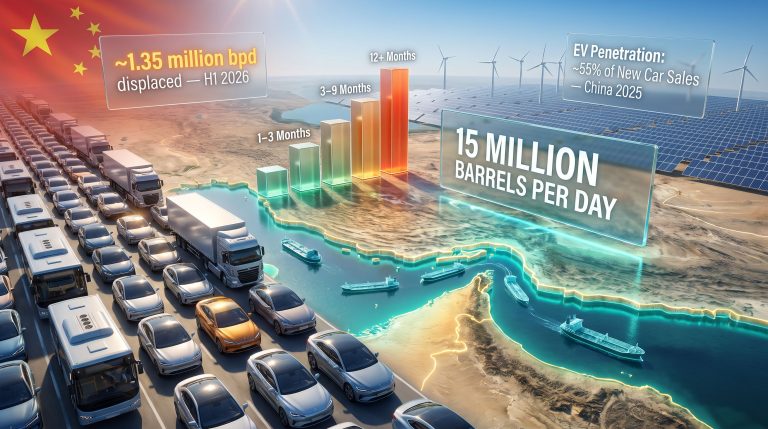
The strait connects the only maritime exit point for oil exports from six major producing nations: Iraq, Kuwait, the United Arab Emirates, Qatar, Saudi Arabia, and Iran itself. Roughly 20 to 21% of global petroleum liquids transit this corridor annually, making it the single most consequential energy chokepoint on the planet.
At its most constrained point, the navigable shipping lane measures approximately 3.2 kilometres in each direction, a physical geography that translates into extraordinary economic leverage. Any sustained disruption does not merely affect the nations bordering the strait. It propagates through global energy pricing, inflation indices, industrial supply chains, and emerging market currencies within days.
Historical Disruptions and Their Market Footprint
The historical record of Hormuz disruptions reveals a consistent pattern: markets respond to the threat of closure with almost the same intensity as they respond to actual closures.
| Event | Period | Approximate Oil Price Response | Duration |
|---|---|---|---|
| Tanker War (Iran-Iraq Conflict) | 1984-1988 | ~40% increase | Multi-year |
| Gulf War Threat | 1990-1991 | ~70% increase | Months |
| Iranian Closure Threats | 2011-2012 | ~15-20% increase | Weeks |
| 2026 Wartime Closure | 2026 | TBC | Ongoing |
Every major Hormuz disruption in modern history has generated immediate and disproportionate oil price responses, even in cases where actual shipping volumes were only partially affected. The credible threat of closure embeds its own premium into global energy pricing well before physical flows are interrupted.
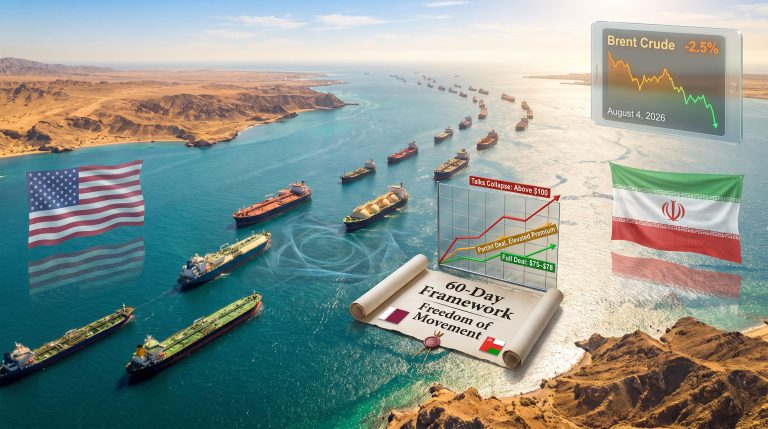
This dynamic explains why a single statement from a senior U.S. official about the prospect of a reopening deal was sufficient to move global oil benchmarks by more than five percent in a single trading session. Furthermore, understanding oil price volatility in this context helps explain why energy markets remain so sensitive to even preliminary diplomatic signals.
The Diplomatic Architecture Behind the Reported Deal
The emerging framework being described in diplomatic circles is not a straightforward bilateral agreement between Washington and Tehran. Its structure is considerably more layered, reflecting the political sensitivities on both sides of the negotiating table.
Oman as the Essential Intermediary
Oman occupies a unique position in Gulf diplomacy. Unlike other regional powers, Muscat has maintained functional diplomatic relationships with both the United States and Iran across decades of broader hostility between those two countries. This neutrality is not incidental; it is a deliberate strategic posture that Oman has cultivated and protected carefully.
Following remarks from U.S. Treasury Secretary Scott Bessent on August 4, 2026, that a deal with Iran could materialise within days, a senior Middle East diplomat with direct knowledge of the talks confirmed that significant pressure was being applied by both the United States and European countries on Oman to accept a temporary framework that would restore commercial shipping access through the strait. According to reports from Channel News Asia, the U.S. and Iran have since formally signed an agreement to end the conflict, marking a pivotal moment in the region's diplomatic landscape.
Pakistan's Facilitating Role
A senior Pakistani government official indicated in early August 2026 that a formal document on Hormuz reopening was close to being finalised. Pakistan's involvement introduces a South Asian diplomatic dimension into what had previously been characterised primarily as a Gulf security matter.
Pakistan shares a land border with Iran and maintains energy interdependencies with its neighbour, while simultaneously holding security cooperation arrangements with the United States. This dual positioning makes Islamabad a credible neutral voice in a negotiating environment where direct U.S.-Iran contact carries prohibitive political costs for both governments.
The talks are reported to be conducted between Iran and Oman, with Pakistan serving as a mediating facilitator and the United States participating indirectly. This architecture mirrors the back-channel diplomatic frameworks that preceded earlier U.S.-Iran engagement, including the groundwork laid before the 2015 JCPOA nuclear agreement. These geopolitical trade tensions have reshaped diplomatic engagement patterns well beyond the energy sector alone.
What the Interim Memorandum of Understanding Is Reported to Include
Based on multiple diplomatic and intelligence sources reported across major news organisations, the emerging framework is understood to encompass several key elements:
- Commercial shipping restoration: Iran would undertake mine clearance operations, while the U.S. would lift its naval blockade on Iranian ports
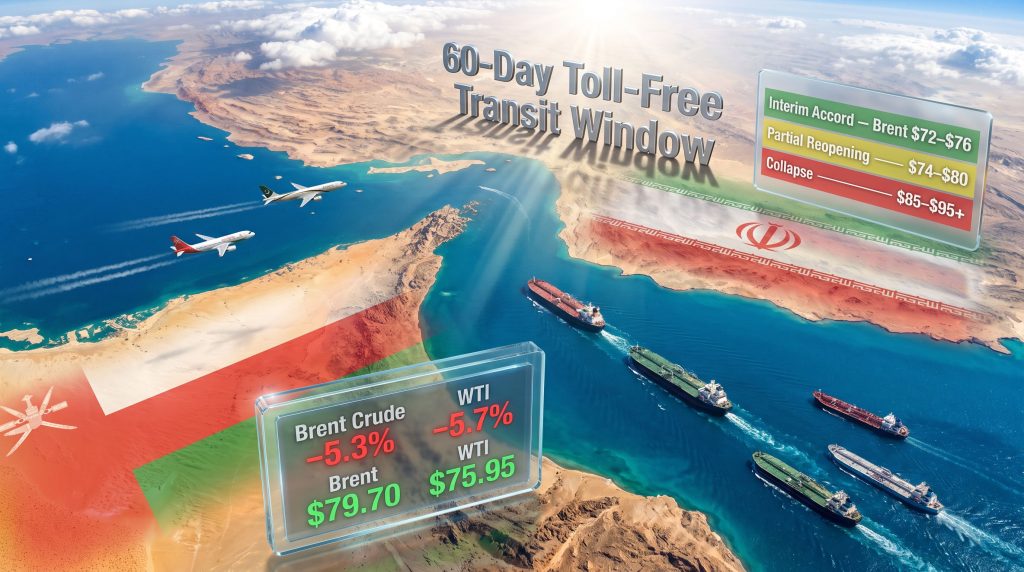
- Toll-free transit window: A reported 60-day passage period during which commercial vessels would transit without charges, while final terms are negotiated
- Ceasefire linkage: The Hormuz agreement is structurally connected to broader hostilities suspension, including reported discussions on other regional fronts
- Sanctions relief component: Some reporting indicates Iran would receive temporary oil export sanctions waivers contingent on demonstrable progress toward a final accord
- Nuclear program framework: Broader discussions on Iran's nuclear posture are embedded within the wider negotiating structure
Important caveat: This remains an interim memorandum of understanding, not a ratified long-term treaty. Key terms including the timeline for mine clearance, the permanence of sanctions relief, and any post-60-day toll arrangements remain under active negotiation and are disputed across reporting sources.
Key Unresolved Disputes in the Reported Deal Terms
| Issue | Position A | Position B |
|---|---|---|
| Timing of reopening | Immediate upon signing | After mine clearance, up to 30 days |
| Sanctions relief scope | Full waivers for Iranian oil sales | Temporary, contingent on final deal |
| Toll structure post-60 days | Not referenced in leaked text | Iranian officials signalled future charges |
| Ceasefire scope | Multi-front suspension | Hormuz-specific only |
How Oil Markets Are Interpreting the Diplomatic Signals
The market reaction to Bessent's public comments provides a precise read on how traders have been pricing geopolitical risk into energy benchmarks throughout the conflict period.
- Brent Crude fell 5.3% in a single session following his statement that a deal could come within days
- West Texas Intermediate (WTI) declined 5.7% in the same session, representing one of the sharpest single-day moves in recent months
- The following session saw partial recovery, with Brent climbing 0.43% to $79.70 per barrel and WTI edging up 0.21% to $75.95 per barrel
This pattern carries diagnostic value. The sharpness of the initial decline reveals that oil prices had been carrying a substantial conflict premium throughout the closure period. The partial recovery in the subsequent session signals that traders are not treating deal completion as a certainty. Instead, markets are pricing a probability-weighted outcome that discounts both the deal-success and deal-failure scenarios simultaneously.
The current market environment reflects what can be characterised as a deal probability discount regime. Prices represent a weighted average of multiple outcome scenarios rather than a confident directional bet. As diplomatic certainty increases, the residual geopolitical premium will compress further, with Brent potentially tracking toward the low-to-mid $70s range if a formal agreement is signed.
Secondary indicators worth monitoring alongside headline crude prices include tanker freight rates, marine insurance premiums, and energy futures volatility indices. These often provide earlier or more granular signals than benchmark prices alone. In addition, OPEC's market influence during this period has added another layer of complexity to how supply expectations are being factored into pricing.
CENTCOM's Declaration: What "Free and Open" Actually Means in Practice
U.S. Central Command confirmed in a post on its official X account that the southern route of the Strait of Hormuz, which passes through Omani territorial waters rather than the Iranian-controlled corridor, remains operational. CENTCOM reported having facilitated the transit of more than 1,000 commercial vessels through this route despite what it described as unwarranted Iranian aggression.
Why the Southern Route Is a Workaround, Not a Solution
While the southern route has kept some commercial flow intact, it is not a permanent substitute for full strait normalisation:
- It cannot accommodate the complete volume of tanker traffic that would normally transit the strait under peacetime conditions
- The route adds meaningful transit time and operational cost, contributing to elevated freight rates and supply chain friction for importers
- Iran retains the capacity to threaten even the southern corridor, meaning the risk premium has been reduced but not eliminated
- Omani cooperation is a prerequisite for the route's continued functioning, making that bilateral relationship a strategic variable in its own right
The U.S. Military Posture Debate and Its Strategic Significance
Alongside the diplomatic developments, a separate but strategically connected debate emerged regarding the state of U.S. military stockpiles following sustained combat operations.
Reports from Reuters indicated that the U.S. Army had depleted most of its stockpile of Army Tactical Missile Systems (ATACMS) and Precision Strike Missiles (PrSM). Separately, CNN reported that the U.S. military had exhausted approximately 80% of its THAAD interceptor inventory, the primary defensive system used against ballistic missile strikes.
The official response was unambiguous. President Trump stated publicly that the United States possesses more munitions than any other nation and that defence manufacturers were producing at record output levels. White House Deputy Press Secretary Anna Kelly affirmed that U.S. military stockpiles were more than sufficient to achieve all strategic objectives associated with Operation Epic Fury.
The Strategic Ambiguity Dynamic
Whether or not the munitions depletion reports are factually accurate, the public debate itself functions as a strategic variable. Adversaries monitoring U.S. military capacity will factor both the reported depletion claims and the categorical official denials into their own risk assessments. The resulting uncertainty creates a form of strategic ambiguity that may be influencing Iran's willingness to negotiate from a position of diplomatic pragmatism rather than continued military confrontation.
The next major ASX story will hit our subscribers first
What a Reopening Would Mean for Global Commodity Markets
Short-Term Oil Price Scenarios
| Scenario | Probability Assessment | Brent Crude Outlook |
|---|---|---|
| Full deal signed, immediate reopening | Moderate | Sharp decline toward $65-$70 range |
| Interim accord with phased implementation | Higher probability | Gradual compression to $72-$76 range |
| Negotiations collapse, closure continues | Lower but non-trivial | Rebound toward $85-$95+ range |
| Partial reopening with ongoing friction | Moderate | Range-bound $74-$80 |
Downstream Effects Across Global Supply Chains
The consequences of full strait normalisation extend well beyond headline crude prices. However, the oil market impacts of a successful agreement would ripple through multiple interconnected commodity systems simultaneously:
- Liquefied Natural Gas (LNG): European and Asian markets that redirected supply away from Gulf sources during the closure would experience pricing normalisation as supply corridors reopen. The broader LNG supply outlook suggests demand for alternative sources would ease considerably under a full reopening scenario
- Shipping and freight: Tanker rates that surged during the closure would face significant downward pressure as route normalisation reduces demand for alternative corridors and emergency rerouting
- Petrochemicals and manufacturing: Industries dependent on Gulf-sourced feedstocks, particularly across Asia, would benefit from restored supply access and reduced input cost volatility
- Emerging market economies: Nations across South and Southeast Asia that absorb a disproportionate share of Gulf oil exports stand to receive the most immediate relief from inflationary energy cost pressures
The Iranian Oil Re-Entry Variable
One of the most consequential and least fully priced elements of any deal scenario is the potential return of Iranian crude to global markets at scale. If Iran receives temporary or permanent sanctions waivers as part of the agreement framework, the volume impact would be significant.
Iran's pre-sanctions export capacity was estimated at approximately 2.5 million barrels per day. A return of even a portion of that volume would materially shift global supply-demand balances and could amplify the downward price pressure beyond what current market positioning anticipates.
The timing and pace of any Iranian oil re-entry is therefore a critical variable in determining how far oil prices ultimately travel post-agreement. Energy market participants should be monitoring sanctions relief language particularly carefully as deal terms emerge. Courthouse News reports that under the deal, Iran would be permitted to sell oil freely, a development that would materially reshape global supply dynamics if confirmed.
Frequently Asked Questions: Strait of Hormuz Reopening Deal with Iran
What is the current status of the Strait of Hormuz?
As of early August 2026, the southern route passing through Omani territorial waters has been confirmed as operational by CENTCOM, which has facilitated transit for over 1,000 commercial vessels. The main corridor remains subject to disruption risk pending a formal diplomatic agreement.
Is the deal finalised?
No. The Strait of Hormuz reopening deal with Iran is described as an interim memorandum of understanding that is close to finalisation but has not been formally signed. Key terms including mine clearance timelines, sanctions relief scope, and post-60-day arrangements remain under negotiation.
Who is mediating the negotiations?
Oman is the primary intermediary, with Pakistan playing a facilitating role. The United States is participating indirectly through allied partners rather than engaging in direct bilateral talks with Tehran.
How much did oil prices move on the deal news?
Brent Crude fell 5.3% and WTI fell 5.7% in the session following Treasury Secretary Bessent's public statement. Prices partially recovered in the subsequent session, with Brent reaching $79.70 and WTI trading at $75.95.
What is the 60-day toll-free period?
Multiple reports indicate the interim agreement includes a 60-day window during which commercial vessels would transit toll-free while negotiators pursue a comprehensive long-term settlement. Iranian officials have signalled interest in imposing transit fees after this period, though the leaked deal text reportedly does not reference toll structures.
Three Scenarios for the Hormuz Situation Through Late 2026
Scenario 1: Successful Interim Accord (Base Case)
A signed memorandum restores commercial shipping within 30 to 60 days. Oil prices compress toward the mid-$70s. Negotiations toward a comprehensive settlement continue, and the ceasefire holds across multiple fronts.
Scenario 2: Partial Agreement with Ongoing Friction (Elevated Risk Case)
A framework is announced but implementation stalls due to disputes over mine clearance, sanctions scope, or toll structures. Shipping partially resumes through the southern route but full normalisation is delayed. Oil prices remain range-bound with elevated volatility.
Scenario 3: Diplomatic Breakdown (Tail Risk Case)
Negotiations collapse, potentially triggered by domestic political pressures in either Washington or Tehran, or by a military incident during the sensitive negotiating window. The closure continues or intensifies, oil prices rebound sharply, and the geopolitical risk premium returns to peak levels.
For energy market participants, the current pricing environment appears to reflect a probability-weighted blend of Scenarios 1 and 2. A confirmed Strait of Hormuz reopening deal with Iran would likely trigger a further leg lower in oil prices, while a breakdown would produce a sharp reversal. This makes the Hormuz situation a high-conviction binary risk event with meaningful implications for energy portfolios in either direction.
Disclaimer: This article contains forward-looking analysis, scenario projections, and market commentary that involve significant uncertainty. Nothing in this article constitutes financial advice. Oil price scenarios are illustrative and not predictive. Readers should conduct independent research and consult qualified financial advisers before making investment decisions.
Want to Stay Ahead of Major ASX Mineral Discoveries Driven by Global Commodity Shifts?
When geopolitical events like the Strait of Hormuz disruption reshape energy and commodity markets, the flow-on effects can create significant discovery opportunities across the ASX — and Discovery Alert's proprietary Discovery IQ model delivers real-time alerts the moment significant mineral discoveries are announced, ensuring subscribers are positioned ahead of the broader market. Explore Discovery Alert's dedicated discoveries page to understand how historic ASX discoveries have generated substantial returns, and begin your 14-day free trial today to secure a meaningful market edge.