June 16, 2026
The Geopolitics of Chokepoints: Why Reopening Is Never as Simple as Opening a Door
Energy markets have long operated on an assumption so deeply embedded it rarely gets examined: that the world's most critical maritime corridors will remain open. That assumption has always been fragile. The Strait of Hormuz, a narrow passage roughly 33 kilometres wide at its tightest navigable point, sits at the intersection of Persian Gulf oil infrastructure and global energy demand. When that passage is disrupted, the shockwave travels instantly to crude benchmarks, freight insurance desks, and refinery input costs across three continents.
The current situation surrounding the Strait of Hormuz reopening is being discussed in diplomatic circles as though the hard part is already done. It is not. What exists as of mid-June 2026 is an announced framework, a reported memorandum of understanding between the United States and Iran, and a diplomatic calendar that includes a signing ceremony in Switzerland. What does not yet exist is a publicly available agreement text, verified mine clearance, a formal international mandate, or any confirmed return to normal commercial shipping volumes.
The gap between those two realities is where the genuine risk lies.
When big ASX news breaks, our subscribers know first
The Architecture of a Chokepoint: Why Hormuz Is Unlike Any Other Waterway
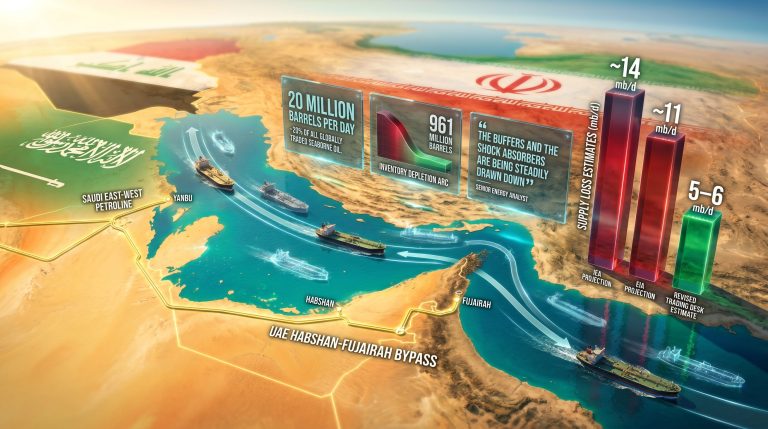
Approximately one-fifth of the world's combined oil and liquefied natural gas supply transits the Strait of Hormuz under normal operating conditions. That single statistic understates the strategic concentration risk. The strait is not merely a volume conduit; it is the sole maritime exit point for Saudi Arabia, the UAE, Kuwait, Iraq, and a substantial portion of Qatari LNG exports. Understanding the global LNG supply dynamics at play here is essential context for any serious market analysis.
Unlike other maritime chokepoints such as the Suez Canal or the Malacca Strait, Hormuz has no realistic bypass alternative for most Persian Gulf producers. The Saudi East-West Pipeline and the Abu Dhabi Crude Oil Pipeline provide partial overland diversion capacity, but neither is sufficient to replace full strait throughput. For Asian importers particularly, there is no practical rerouting option that does not involve significant cost, time, and logistical disruption.
This structural irreplaceability is what makes the strait uniquely powerful as a leverage point, and uniquely dangerous as a single point of failure in the global energy architecture.
Key Insight: The strait's value as a geopolitical instrument derives precisely from its irreplaceability. When free navigation through Hormuz becomes the subject of diplomatic negotiation rather than a baseline legal assumption, the entire framework of international maritime law governing energy trade is placed in question.
What the U.S.-Iran Interim Agreement Actually Establishes
The MOU: A Framework Full of Unanswered Questions
Both the United States and Iran have confirmed reaching an interim agreement, but without a public document, the two parties have offered materially different characterisations of its contents. This divergence is not a minor communications issue. It is a substantive problem that European allies are treating as a prerequisite for any commitment of military assets.
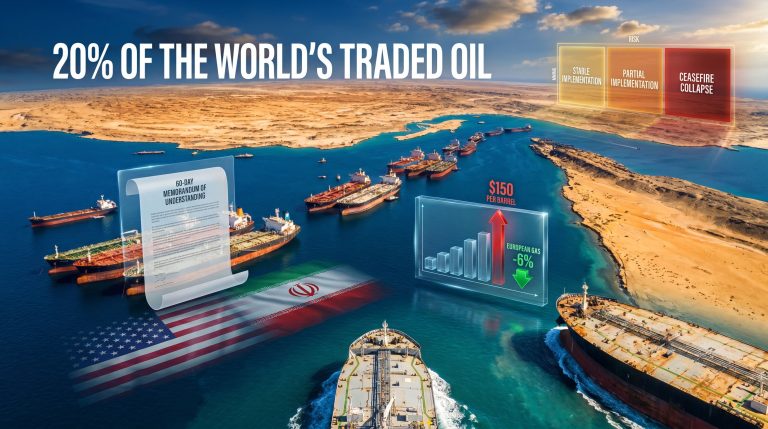
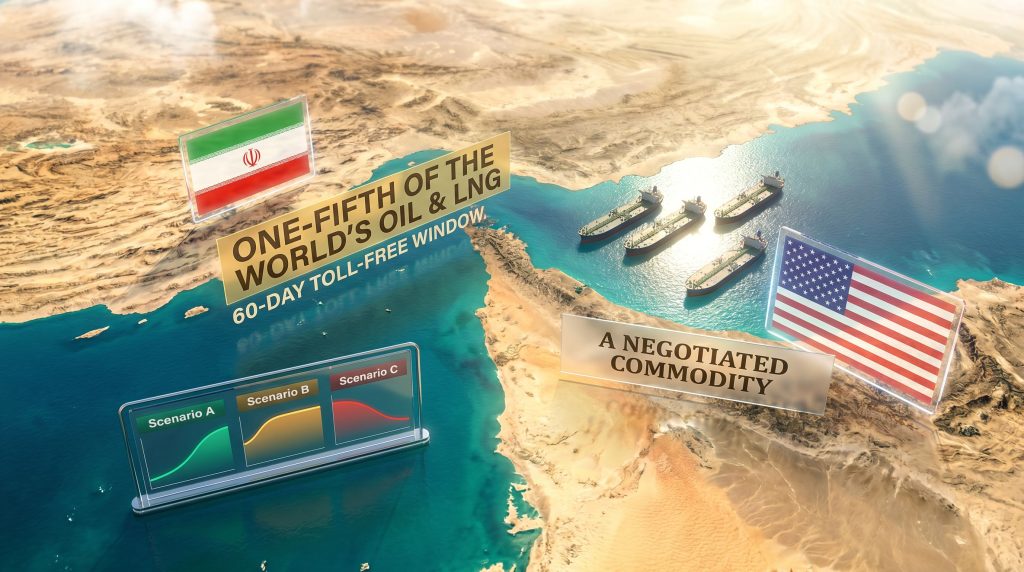
The reported memorandum of understanding includes a provision guaranteeing toll-free passage through the strait for an initial 60-day window. The formal signing is scheduled to take place in Switzerland, with U.S. Vice President JD Vance expected to represent the administration. The full agreement text has been promised by U.S. officials on varying timelines, with President Trump suggesting release by week's end and other senior officials indicating it could come within two days. Reuters reporting on the Iran-U.S. agreement confirms the scale of the market reaction that followed.
Senator Lindsey Graham, a Republican from South Carolina and close ally of President Trump, captured the fundamental uncertainty precisely. He acknowledged that Iran's characterisation of the deal sounded deeply problematic, while the American characterisation appeared reasonable, and concluded that the only way to resolve the contradiction was to read the actual document.
Divergent Timelines at a Glance
| Stakeholder | Stated Timeline | Key Conditions |
|---|---|---|
| U.S. President Trump | Fully open by Friday | Described as near-immediate |
| Senior U.S. Official | Up to two weeks for significant shipping increase | Risk tolerance varies by shipper |
| German Officials | Weeks, not days | Requires international mandate |
| Italian PM Meloni | Conditional | Cessation of hostilities in Lebanon |
| European Allies (broadly) | Unspecified | Final agreement text required first |
The 60-day toll-free window itself introduces a structural problem that oil industry stakeholders have flagged directly to the White House. Any arrangement permitting Iran to levy tolls on commercial vessels would conflict with the United Nations Convention on the Law of the Sea (UNCLOS), which enshrines the right of transit passage through international straits used for international navigation. That legal architecture has never previously required a bilateral memorandum to remain operative. The fact that it now does represents a fundamental shift in how energy trade security is structured.
Oil industry executives communicated to the White House over several months that toll arrangements on Hormuz passage would be commercially and legally untenable. The MOU's 60-day toll-free provision is designed as a bridge to a permanent agreement, but negotiations on that permanent framework have not yet begun.
Allied Fractures at the G7: More Than a Scheduling Disagreement
Why European Nations Are Not Moving as Fast as Washington Expects
The G7 leaders' dinner in Evian placed Iran at the top of the agenda, and the divergence between U.S. optimism and European caution became impossible to paper over. A G7 official, speaking without attribution, confirmed that finding a unified position among member states presents serious internal difficulties. A joint communiqué is not widely expected.
The European position is not obstructionism. It reflects the operational reality of what a de-mining mission actually requires:
- A publicly released, mutually agreed final agreement text that both the U.S. and Iran interpret consistently
- A formal international mandate, which German officials have indicated is legally necessary before committing any military assets
- Confirmed cessation of active hostilities, particularly on the Lebanon front
- A permissive operating environment for mine countermeasure vessels, which carry minimal self-defence capability
Italian Prime Minister Giorgia Meloni explicitly conditioned Italy's participation on a cessation of hostilities in Lebanon, where Israeli military operations continued in the days surrounding the G7 summit. This is not an isolated position. Multiple European governments share the view that deploying mine-clearance assets into a contested maritime environment before a formal peace architecture is in place would expose personnel and vessels to unacceptable risk.
Strategic Warning: Mine countermeasure vessels are purpose-built for permissive environments. They are not combat vessels. Deploying them into a waterway where the operational status of Iranian military assets remains unclear would place allied naval personnel in a position from which they cannot adequately defend themselves.
Despite these reservations, more than 15 countries have committed equipment and personnel to a potential de-mining and maritime patrol mission, led by French President Emmanuel Macron and UK Prime Minister Keir Starmer. Macron, hosting his final G7 as French head of state, framed the strait's reopening as integral to a broader regional peace architecture, encompassing both Hormuz and Lebanon.
The Technical Reality of Mine Clearance: Why This Cannot Be Rushed
What Mine Countermeasure Operations Actually Involve
One of the most underappreciated dimensions of the Strait of Hormuz reopening discussion is how technically demanding and time-intensive mine clearance operations genuinely are. Diplomatic announcements operate on political timescales. Mine clearance operates on physical ones.
Several critical uncertainties compound the challenge:
- Whether mines were placed at all remains officially unconfirmed. Iran has made statements at various points claiming it mined the waterway. As early as mid-March 2026, the United Kingdom assessed that Iran appeared to have done so. The United States contradicted that assessment at the time.
- The number of mines present, their type, their placement pattern, and their depth remain unknown to allied forces.
- Iranian cooperation is the single variable most likely to accelerate or delay clearance operations. If Tehran shares mine placement data with clearance teams, the pace of operations improves substantially.
- Dedicated mine countermeasure ships use highly specialised acoustic, magnetic, and mechanical sweep systems. These vessels are slow, methodical, and cannot be substituted with general naval assets.
Caitlin Talmadge of the Massachusetts Institute of Technology has noted that while European nations possess substantial mine-clearing capabilities, those vessels would be acutely vulnerable if hostilities resumed. The operational logic is straightforward: mine clearance is designed for post-conflict environments, not active ones. Furthermore, The Guardian's analysis of Maersk's position on the reopening underscores just how cautious major shipping operators remain.
Five Factors Governing the Speed of Hormuz Normalization
- Whether Iran provides mine placement data to clearance teams
- Whether a final, publicly available agreement text is released and accepted by all parties
- Whether European nations secure the international mandate required for deployment
- Individual shipping company risk assessments, which operate independently of diplomatic announcements
- Whether hostilities in Lebanon and elsewhere are formally concluded, satisfying conditionality from allied governments
How Energy Markets Are Pricing an Incomplete Reopening
The Gap Between Announcement and Physical Reality
Oil prices registered an immediate downward reaction when the Strait of Hormuz reopening was announced, reflecting market anticipation of restored Persian Gulf supply flows. This response is running ahead of operational reality. Only a small number of vessels had transited the waterway following the announcement, with the majority of commercial shipping operators adopting a wait-and-see approach pending clearer risk data.
This divergence between price signal and physical shipping data creates a specific vulnerability for market participants who have priced in a full reopening before clearance operations are verified. Understanding crude oil price trends in this context reveals why such a disconnect between diplomatic announcements and physical reality is so consequential. A senior U.S. official acknowledged it could take up to two weeks for shipping volumes to increase significantly, and potentially considerably longer to return to pre-disruption baselines.
Market Watch: The window between a diplomatic announcement and operational normalization is historically one of the highest-volatility periods in energy markets. Traders pricing in full resumption before physical shipping data confirms it risk a sharp correction if implementation stalls or conditionality triggers among allied governments.
Who Faces the Greatest Exposure
| Region / Sector | Nature of Exposure | Severity |
|---|---|---|
| Asian energy importers (India, China, Japan, South Korea) | Persian Gulf crude represents disproportionate share of import mix | High |
| European LNG buyers | Qatari LNG transit uncertainty compounds post-2022 diversification pressure | Moderate-High |
| Global freight and insurance markets | War risk premiums on Hormuz-adjacent routes remain elevated | High |
| Asian downstream refiners | Margin compression if crude input costs remain elevated vs. product prices | Moderate |
The next major ASX story will hit our subscribers first
Scenario Analysis: Three Trajectories for the Strait of Hormuz
Scenario A: Accelerated Resolution (Lower Probability, High Impact)
The full agreement text is released and accepted within days. Iran cooperates with mine placement data. European nations secure an expedited international mandate. Commercial shipping normalises within two to three weeks. Oil prices decline materially toward pre-disruption levels. This scenario requires a convergence of political, diplomatic, and operational factors that currently show no signs of aligning simultaneously.
Scenario B: Managed Gradual Reopening (Moderate Probability)
The accord is signed in Switzerland but full text release is delayed by several days. De-mining operations begin with a coalition of willing nations within two to four weeks. Shipping volumes increase incrementally as operator risk assessments improve. Oil prices remain elevated but compress gradually over a four-to-eight week period. The 60-day toll-free window creates a secondary pressure point as its expiry approaches before a permanent framework is negotiated.
Scenario C: Stalled Implementation (Elevated Tail Risk)
Allied nations fail to secure an international mandate before the MOU window creates urgency. Hostilities resume or continue in Lebanon, triggering conditional withdrawals by Italy and potentially others. The U.S. and Iran continue to offer conflicting interpretations, preventing a unified allied position. Commercial shipping remains largely diverted to alternative routes. Oil prices remain structurally elevated, with significant supply chain disruption concentrated among Asian importers. The broader oil market disruptions already reshaping trade flows would compound the pressure considerably.
The Structural Lesson: Energy Security Cannot Rest on Diplomatic Confidence
What This Episode Reveals About Global Energy Infrastructure
Beyond the immediate market implications, the Hormuz situation has exposed a deeper structural vulnerability in global energy security architecture. The assumption of free and unimpeded passage through international straits was so deeply embedded in peacetime planning that its disruption was treated as a tail risk rather than a planning scenario. That assumption has now been invalidated.
Several structural conclusions emerge from this episode:
- Supply diversification among major Asian importers will accelerate, though alternative routing infrastructure has multi-year development timelines
- Strategic reserve maintenance takes on renewed strategic value when a single waterway can remove 20% of global supply from accessible markets within days
- War risk premium pricing in maritime insurance is likely to remain structurally elevated on Persian Gulf routes regardless of the immediate outcome, reflecting a permanent reassessment of baseline risk
- The UNCLOS framework governing transit passage through international straits has demonstrated a practical fragility that legal theory did not anticipate
The 60-day toll-free provision in the reported MOU is, in one reading, a pragmatic bridge solution. In another reading, it is a concession that transit passage rights through Hormuz are now negotiable — which is a fundamentally different geopolitical baseline than existed before February 2026. The broader geopolitical landscape reshaping commodity markets in 2025 and 2026 makes this baseline shift all the more significant. Furthermore, OPEC's market influence over supply decisions adds yet another variable to an already complex picture.
Frequently Asked Questions: Strait of Hormuz Reopening
What percentage of global energy supply transits the Strait of Hormuz?
Approximately 20% of the world's combined oil and liquefied natural gas supplies flow through the strait under normal conditions, making it the single most consequential maritime energy corridor on the planet.
Has the Strait of Hormuz officially reopened as of mid-June 2026?
A reopening has been announced in principle through a reported U.S.-Iran memorandum of understanding. Physical implementation, including verified mine clearance and restoration of normal commercial shipping volumes, remains incomplete and contested as of the time of writing.
What is the 60-day toll-free provision and why does it matter?
The MOU reportedly guarantees toll-free passage through the strait for 60 days as a bridge measure while a permanent agreement is negotiated. Oil industry stakeholders have flagged that any toll regime on Hormuz passage would conflict with UNCLOS and be commercially untenable. The permanent negotiation has not yet formally commenced.
Why are European allies reluctant to commit to de-mining operations?
European nations require a publicly available final agreement text, a formal international mandate, and confirmation that regional hostilities have ceased before deploying mine countermeasure vessels, which are specialised assets with minimal self-defence capability and are designed exclusively for permissive environments.
How long could it realistically take for shipping to normalise?
Senior U.S. officials have indicated up to two weeks for significant shipping volume increases, with European assessments suggesting full normalisation could extend to several weeks depending on mandate acquisition, mine clearance progress, and the evolution of hostilities in the broader region.
What happens when the 60-day window expires without a permanent deal?
This is one of the most significant unresolved risks in the current framework. If a permanent agreement is not concluded within the MOU window, the legal and commercial basis for toll-free navigation lapses, creating a secondary pressure point that could trigger renewed market volatility and diplomatic friction.
This article is based on reporting from Bloomberg as published via ET EnergyWorld on June 16, 2026, and draws on publicly available geopolitical, legal, and energy market analysis. Forward-looking statements, scenario projections, and market assessments contained herein are analytical in nature and do not constitute financial advice. Energy market conditions and diplomatic developments can change rapidly.
Want to Stay Ahead of the Commodity Market Shifts Driven by Geopolitical Disruptions Like Hormuz?
When energy supply chains fracture and markets reprice in real time, the investors best positioned are those with the fastest access to actionable intelligence — Discovery Alert's proprietary Discovery IQ model scans ASX announcements instantly, delivering real-time alerts on significant mineral discoveries across more than 30 commodities so subscribers can act before the broader market catches up. Explore how historic mineral discoveries have generated substantial returns and begin a 14-day free trial today to secure a genuine market-leading edge.