June 15, 2026
The World's Most Critical Energy Corridor Sits at a Crossroads
Few geographic features carry the concentrated economic weight of a single narrow waterway. Throughout modern history, the chokepoints that shape global energy supply have repeatedly demonstrated their power to destabilise entire economies with little warning. The Strait of Hormuz, a roughly 33-kilometre-wide passage connecting the Persian Gulf to the Gulf of Oman, occupies a category entirely its own. When it functions normally, it is invisible to most of the world. When it does not, the consequences ripple through fuel prices, manufacturing costs, freight markets, and national security calculations simultaneously.
The announcement of a US-Iran peace deal on the morning of Monday, June 15, 2026, brought the question of Strait of Hormuz reopening after US-Iran peace deal into sharp focus for energy markets, shipping operators, and policymakers across Asia, Europe, and the Americas. Yet in the hours following that announcement, the strait itself told a very different story.
When big ASX news breaks, our subscribers know first
What Vessel Tracking Data Revealed on June 15, 2026
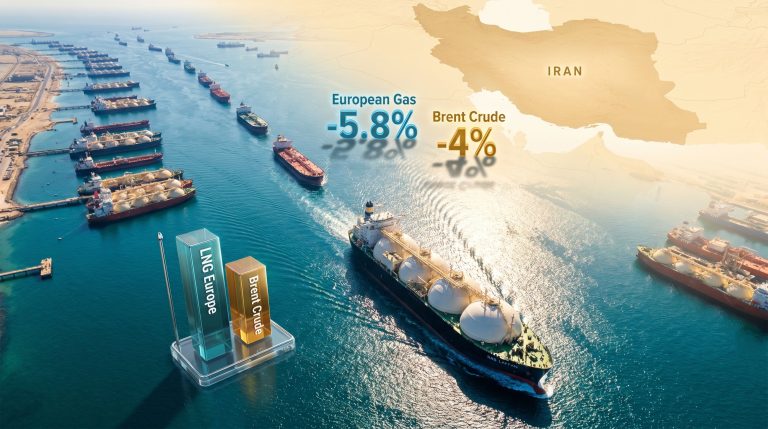
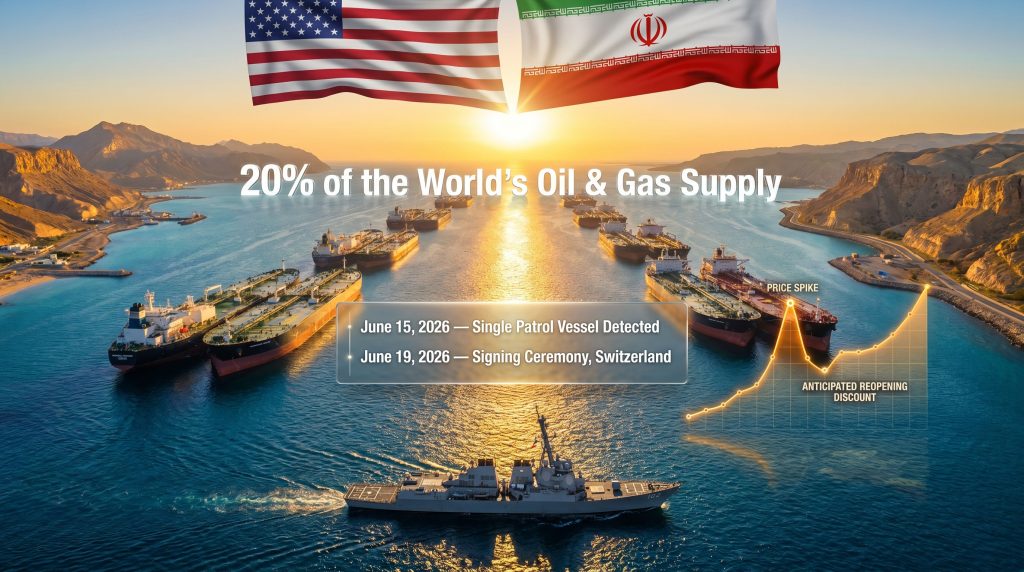
According to data from vessel tracking platform MarineTraffic, the Strait of Hormuz was operating in near-total stillness on Monday morning following the peace deal announcement. The only vessel actively transiting the waterway was broadcasting its identification as a patrol ship. Hundreds of commercial vessels remained anchored or holding position in the surrounding region, unable or unwilling to move.
This is not simply a matter of caution. It reflects how the commercial shipping industry actually operates in the aftermath of conflict. Furthermore, several layers of process must be satisfied before a tanker captain, a shipping company, or an insurer will commit to a transit:
- War risk insurance reclassification by underwriters at Lloyd's of London and Protection and Indemnity (P&I) clubs must formally reduce Hormuz risk ratings before vessels can obtain viable coverage
- Flag-state regulators must issue updated transit advisories based on independently verified ceasefire conditions
- Port authorities at origin and destination terminals require documentation confirming navigational safety
- Charterers and cargo owners must align on liability exposure before authorising departures
Each of these steps requires time, bureaucratic process, and verifiable evidence of stability. A political announcement, regardless of its significance, does not automatically satisfy any of them. As The Guardian reports on the Trump ceasefire and Strait of Hormuz, the gap between diplomatic progress and operational reality remains significant.
A peace announcement and an operational reopening are two structurally different events. The commercial shipping industry responds to verified, insurable conditions, not political declarations alone.
Breaking Down the Agreement: What Is Confirmed and What Remains Unclear
The United States and Iran confirmed the cessation of nearly four months of hostilities on June 15, 2026. US President Donald Trump posted on social media that the Strait of Hormuz would reopen following a formal signing ceremony scheduled for Friday, June 19, 2026, in Switzerland. However, a number of critical implementation details remain unresolved.
| Agreement Element | Status as of June 15, 2026 |
|---|---|
| Formal cessation of hostilities | Confirmed by both governments |
| Strait of Hormuz reopening | Announced; implementation pending |
| Signing ceremony | Scheduled for June 19 in Switzerland |
| Nuclear non-proliferation commitment | Reported as part of the framework |
| Sanctions relief and frozen asset release | Unresolved, no confirmed timeline |
| 60-day residual negotiation window | Reported across multiple sources |
Senior crude oil analysts at trade intelligence firms have flagged the agreement as carrying meaningful fragility, noting that the deal contains many unclear aspects and that potential disruptions could still emerge before the June 19 signing date. Critically, one of the unresolved sequencing questions involves whether the United States would need to lift its naval blockade and release frozen Iranian sovereign assets before the strait could formally reopen, or whether these steps would occur simultaneously with the signing ceremony.
This distinction matters enormously to energy markets, because it determines the actual timeline for physical oil flows resuming — which is the only variable that ultimately moves commodity prices and freight rates. Consequently, oil price movements in the short term are likely to remain highly sensitive to each incremental development in the implementation sequence.
Why the Strait of Hormuz Carries Irreplaceable Strategic Weight
Before the conflict-driven closure, the Strait of Hormuz facilitated the transit of approximately one-fifth of the world's total oil and gas supply. No alternative route exists at comparable scale or cost-efficiency. The key Persian Gulf producers dependent on this corridor include:
- Saudi Arabia (the world's largest oil exporter)
- Iraq (a major OPEC producer heavily reliant on Gulf export routes)
- Kuwait and the UAE (significant crude and LNG exporters)
- Iran itself (a major natural gas and crude producer)
- Qatar (the world's leading LNG exporter, with the majority of its output transiting Hormuz)
For these producers, an extended closure is not merely a geopolitical inconvenience. It is a direct revenue crisis with cascading effects on national budgets, infrastructure investment, and regional political stability. In addition, OPEC market influence over production decisions becomes considerably more complex when the primary export corridor remains functionally inaccessible.
Asia-Pacific Economies: Structurally the Most Exposed
Why Asia Bears the Greatest Risk
The economic geography of global oil demand means that the countries with the greatest exposure to a Hormuz disruption are overwhelmingly concentrated in Asia. China, Japan, South Korea, and India together account for a substantial portion of Gulf crude imports, and all four economies lack meaningful domestic hydrocarbon production sufficient to offset import disruptions at scale.
China's position is particularly acute. As the world's largest crude oil importer, Beijing's refineries, industrial energy consumers, and transportation networks are structurally tied to Gulf-origin barrels. During the closure period, Chinese state energy companies were compelled to source alternative supply from Russia, West Africa, and Latin American producers, typically at a significant cost premium above benchmark pricing.
The closure also stress-tested China's strategic petroleum reserve (SPR) drawdown capacity in ways that internal policy planners are unlikely to ignore. The longer-term policy implications include:
- Accelerated investment in pipeline diversification routes, including energy links through the China-Pakistan Economic Corridor (CPEC) and expanded Central Asian pipeline capacity
- Renewed political momentum behind domestic renewable energy and nuclear capacity expansion as structural hedges against import dependency
- Efforts by Chinese state energy companies to renegotiate long-term Gulf supply contracts to include force majeure provisions and alternative routing flexibility
Three Scenarios for What Happens Next
The path forward for the Strait of Hormuz reopening after the US-Iran peace deal is not a binary outcome. Three distinct scenarios are plausible depending on how the next two weeks unfold.
Scenario 1: Clean Reopening (Optimistic)
The June 19 signing ceremony proceeds as scheduled. The US blockade is lifted simultaneously with Iran's confirmation of nuclear commitments. War risk insurance premiums begin normalising within five to ten business days. Commercial tanker traffic resumes at partial capacity within two weeks, and Brent crude begins pricing in a supply recovery discount.
Scenario 2: Delayed Reopening (Base Case)
The signing ceremony occurs but sanctions sequencing and asset release disputes create a three-to-six-week implementation lag. Shipping operators hold position while awaiting formal insurance reclassification. Oil markets remain elevated but begin pricing in an eventual reopening, creating a gradual downward trajectory in both crude benchmarks and Asian LNG spot rates.
Scenario 3: Agreement Collapse (Tail Risk)
A triggering event — whether a military incident, a domestic political reversal in either country, or an irresolvable dispute over frozen asset sequencing — fractures the framework before June 19. The strait remains closed, oil prices surge toward multi-year highs, and China, Japan, and South Korea activate coordinated strategic petroleum reserve drawdowns. This scenario also intensifies long-term investment in alternative energy infrastructure across Asia. Such geopolitical trade tensions would represent a profound setback for global supply chain stability.
The next major ASX story will hit our subscribers first
Oil and Freight Market Dynamics: The Gap Between Politics and Physics
How Markets Are Responding
Energy traders and commodity analysts understand a critical asymmetry that general news coverage often misses. The political announcement of a peace deal and the physical resumption of tanker traffic are separated by a meaningful operational gap. It is in this gap that some of the most significant short-term commodity pricing opportunities tend to emerge.
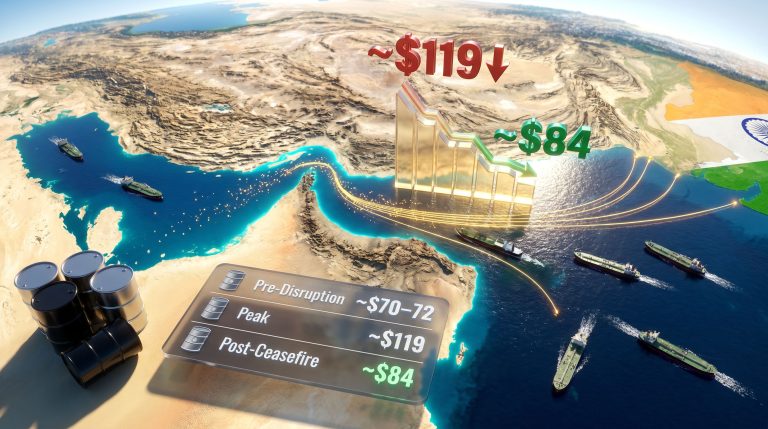
During the closure period, businesses across Asia and Europe faced a dramatic spike in shipping costs as tanker operators priced in war risk premiums, longer alternative routing distances, and acute supply scarcity. Freight rates on Gulf-to-Asia crude tanker routes surged considerably. A verified reopening would trigger a rapid correction in spot freight rates, though term contract repricing typically follows on a slower schedule.
Brent crude and WTI futures markets are expected to begin pricing in a reopening premium reversal as the deal progresses. However, analysts are clear that the pace of this normalisation depends entirely on the speed of physical vessel resumption, not the timing of political announcements. Furthermore, crude oil volatility is likely to remain elevated throughout the implementation window, regardless of which scenario materialises.
LNG buyers in Asia who secured emergency alternative supply during the closure now face a parallel repositioning challenge: reassessing spot contract exposure against a backdrop of potentially normalising Gulf supply. The LNG supply outlook for the second half of 2026 will hinge significantly on how quickly Qatari volumes can resume normal transit volumes through the strait. Reuters also reports that Iran is calling for actions, not words, underscoring that the deal's credibility remains contingent on verifiable implementation steps.
Key Milestones to Monitor in the Days Ahead
For investors, energy traders, and supply chain operators tracking the Strait of Hormuz reopening after US-Iran peace deal developments, the following indicators represent the most meaningful real-time signals:
- June 19, 2026 signing ceremony in Switzerland is the first critical verification milestone
- MarineTraffic and similar vessel tracking platforms will provide the earliest observable signal of commercial tanker movement resuming
- War risk insurance reclassification decisions by Lloyd's of London and major P&I clubs represent a leading operational indicator
- Frozen Iranian asset release remains the most significant unresolved variable in the implementation sequence
- China's crude import data for June and July 2026 will reveal the full structural cost of the disruption and the pace of supply normalisation
The commercial shipping industry's return to Hormuz transit will be governed not by geopolitical optimism, but by actuarial certainty. When underwriters reclassify the route, the tankers will follow.
Frequently Asked Questions
When Will the Strait of Hormuz Officially Reopen?
The formal signing of the US-Iran peace agreement is scheduled for June 19, 2026, in Switzerland. President Trump has indicated the strait will reopen following the signing ceremony. However, the physical resumption of commercial shipping traffic is expected to lag the political announcement by days to weeks, depending on insurance, regulatory, and operational clearance timelines.
What Percentage of Global Oil Passes Through the Strait of Hormuz?
Prior to the conflict-driven closure, the Strait of Hormuz facilitated the transit of approximately 20% of the world's total oil and gas supply, making it the single most consequential energy chokepoint on the planet.
Is the US-Iran Peace Deal Legally Binding?
As currently structured, the agreement appears to function as a framework memorandum of understanding, with a reported 60-day negotiation window remaining for unresolved provisions. It has not been characterised as a fully ratified treaty by either government as of June 15, 2026.
Why Is Shipping Traffic Still Stalled Despite the Announcement?
Commercial shipping operators require verifiable, insurable conditions before resuming transit through previously contested waterways. This includes formal war risk reclassification by insurance underwriters, regulatory clearance from flag states, and independent confirmation of ceasefire stability. None of these conditions are automatically triggered by a political announcement.
What Happens to Oil Prices If the Deal Collapses?
A collapse of the framework before the June 19 signing would likely trigger a sharp upward repricing in Brent crude and LNG spot markets. Analysts have pointed to the potential for multi-year price highs if the strait remains closed, with strategic petroleum reserve drawdowns by major Asian importers providing only a partial and temporary buffer.
Disclaimer: This article contains forward-looking analysis, scenario projections, and market commentary based on publicly available information as of June 15, 2026. Nothing in this article constitutes financial or investment advice. Commodity markets are subject to rapid change, and actual outcomes may differ materially from the scenarios described. Readers should conduct independent research before making any financial or operational decisions.
Want to Identify ASX Commodity Stocks Positioned Around Major Geopolitical Shifts?
Discovery Alert's proprietary Discovery IQ model delivers real-time alerts on significant ASX mineral discoveries, transforming complex commodity data into actionable insights at the moment they matter most — explore historic discoveries and their market returns to understand the scale of opportunity, then begin your 14-day free trial at Discovery Alert to position yourself ahead of the broader market.