August 2, 2026
How a Single Waterway Holds the Global Economy Hostage
Saudi oil tankers cross Strait of Hormuz after Iran deal — and in doing so, they have momentarily eased one of the most acute energy security crises in recent memory. There is a narrow strip of water, roughly 33 kilometres wide at its most constricted point, through which the modern world's energy dependency is threaded with extraordinary concentration. The Strait of Hormuz connects the Persian Gulf to the Gulf of Oman, and by extension to every major oil-importing economy on earth. When that corridor functions smoothly, it is invisible to most consumers. When it does not, the consequences ripple outward with alarming speed.
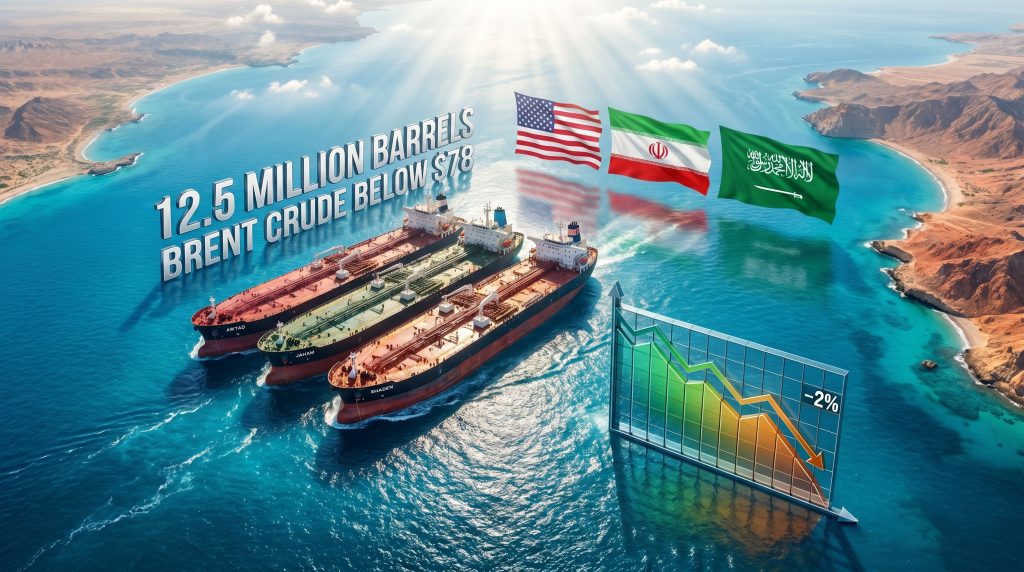
The events of June 2026 brought this vulnerability into sharp relief. Three Saudi-flagged supertankers carrying an estimated combined cargo of 6 million barrels of crude oil transited the Strait of Hormuz on June 19, hours after U.S. President Donald Trump signed a Memorandum of Understanding with Iran. The agreement was designed to end a conflict that had severely disrupted global energy flows. Their passage was simultaneously a commercial event, a diplomatic signal, and a barometer of how much uncertainty still lingers in one of the world's most consequential geographic bottlenecks.
Understanding what this moment means requires stepping back from the headline and examining the structural mechanics of Hormuz dependency, the fragile architecture of the agreement itself, and the very real possibility that current price relief could prove temporary.
When big ASX news breaks, our subscribers know first
Why the Strait of Hormuz Cannot Be Replicated
Approximately 20% of global oil trade passes through the Strait of Hormuz. That single statistic, routinely cited in energy security literature, understates the true concentration of risk. The figure encompasses not just crude oil but also liquefied natural gas exports from Qatar, making the waterway critical to both the oil and gas markets simultaneously. Furthermore, the LNG supply outlook for the region is closely tied to the stability of this passage.
What makes Hormuz uniquely irreplaceable is the absence of any infrastructure capable of substituting for it at scale. While Saudi Arabia has invested in the East-West Pipeline connecting its Eastern Province fields to the Red Sea port of Yanbu, its throughput capacity falls significantly short of total Saudi export volumes. The UAE has developed the Abu Dhabi Crude Oil Pipeline to the port of Fujairah on the Gulf of Oman, bypassing Hormuz entirely, but again, this handles only a fraction of total GCC export capacity.
The implications of this infrastructure gap are significant for investors and energy planners alike:
- No single alternative route can absorb the full volume of Hormuz-dependent crude flows
- Any prolonged disruption forces a cascade of spot market adjustments, strategic reserve drawdowns, and refinery run-rate reductions
- Insurance and freight markets react faster than physical supply chains, creating short-term price dislocations that exceed the actual supply shortfall
Historical Lessons From the Tanker War
The 1980s Tanker War, fought during the Iran-Iraq conflict, remains the most instructive precedent. Between 1984 and 1988, more than 400 merchant vessels were attacked in the Persian Gulf, and the U.S. Navy ultimately deployed to escort Kuwaiti tankers under the American flag in Operation Earnest Will. That episode demonstrated a crucial market dynamic: the threat of disruption consistently produces greater price volatility than the actual volume of oil withheld, because futures markets price in worst-case scenarios rather than central estimates.
"The architecture of modern energy security has never adequately resolved its structural dependency on Hormuz. Decades of diversification rhetoric have produced meaningful but insufficient alternatives, leaving the global economy exposed to a geographic chokepoint that geopolitical actors understand and can exploit."
What the U.S.-Iran Memorandum of Understanding Actually Established
The MoU signed in June 2026 is best understood as a framework for negotiation rather than a completed agreement. Its core function is to initiate a structured diplomatic process with defined parameters, not to resolve the underlying disputes that generated the conflict. Consequently, the market response has been cautious rather than euphoric.
Core Provisions at a Glance
| Provision | Detail |
|---|---|
| Negotiation window | 60 days from MoU signing to reach final settlement |
| Nuclear commitments | Iran to dilute stockpile of highly enriched uranium |
| Maritime access | Commitments toward restored safe commercial passage through Hormuz |
| U.S. Navy action | Blockade on Iranian ports lifted; more than a dozen vessels permitted to transit |
| Lebanon clause | MoU calls for permanent termination of Lebanon war and guarantees of territorial integrity |
| Implementation talks | VP JD Vance designated to lead Switzerland-based negotiations |
The Diplomatic Chronology
The process leading to the MoU stretched across several months, with the diplomatic groundwork laid by Trump and Israeli Prime Minister Benjamin Netanyahu in February 2026. The formal signing in June initiated the 60-day clock. By June 19, the U.S. Navy had already begun lifting its blockade of Iranian ports as part of early implementation, allowing more than a dozen vessels to reach Iranian destinations.
VP Vance confirmed at a White House press briefing that over 12.5 million barrels of oil passed through the Strait of Hormuz on the night of June 18 alone, presenting this figure as tangible early evidence that the agreement was producing real-world results.
What Remains Unresolved
The MoU contains a critical structural gap. Israel, which launched a military invasion of Lebanon in March 2026 and has since occupied a substantial portion of southern Lebanon in its pursuit of Hezbollah militants, was explicitly excluded from the negotiations. Iran has made clear that any comprehensive final settlement must address the Lebanon theatre.
The MoU itself acknowledges this by calling for the permanent termination of the Lebanon war and the restoration of Lebanese territorial integrity, yet these provisions carry no enforcement mechanism as of the agreement's signing date. This creates a peculiar diplomatic situation: the oil market is responding to a deal that explicitly requires outcomes it has not yet achieved.
How Oil Markets Responded: Price Mechanics and Market Psychology
Brent crude futures fell approximately 2% following the deal announcement, dropping below $78 per barrel, representing the lowest price level recorded since the onset of the conflict. This reaction warrants careful interpretation. In addition, the broader oil price rally that had built during the conflict period began to unwind as traders recalibrated their risk assumptions.
The Futures Market Is Pricing Expectations, Not Outcomes
Oil futures markets do not wait for physical supply to normalise before adjusting prices. Traders are pricing the probability distribution of future supply scenarios, not current volumes. A 2% decline on deal news reflects a meaningful but cautious shift in that probability distribution, not a market conviction that Hormuz is fully open.
Several factors explain why the price response was relatively modest:
- The 60-day negotiation window introduces ongoing uncertainty about whether a final deal will be reached
- Shipping industry operators indicated that tanker schedules remained largely unchanged immediately after the announcement, pending formal documentation
- War-risk insurance surcharges remain in place; underwriters require sustained incident-free transit before removing elevated premiums
- The Lebanon conflict was ongoing at the time of signing, with Israeli airstrikes continuing on the morning of June 19 itself
"Markets are not pricing the reopening of Hormuz. They are pricing the possibility of a reopening, discounted by the probability of diplomatic failure and the reality that shipping normalisation lags political announcements by weeks or months."
The AIS Signal Problem: A Telling Technical Detail
One of the most revealing technical details from the June 19 transit involves Automatic Identification System (AIS) transponders. Of the three Saudi supertankers that crossed Hormuz, two completed their passage with AIS signals disabled. This behaviour carries significant operational and analytical implications.
AIS is a real-time vessel tracking system mandated by the International Maritime Organization for vessels above certain tonnage thresholds. Disabling it is technically permissible in circumstances where operators believe it creates security vulnerabilities, but it also removes the vessel from publicly accessible tracking databases. The fact that two of the three vessels chose to transit dark signals clearly that their operators had not yet assessed the security environment as fully normalised.
For commodity analysts and shipping intelligence firms that rely on AIS data to track crude oil flows, this behaviour introduces a data gap that complicates real-time volume tracking — an often-overlooked consequence of geopolitical tension in major shipping lanes.
The Three Saudi Supertankers: Vessel-Level Analysis
| Vessel | Estimated Cargo | Destination | AIS Status |
|---|---|---|---|
| Awtad | ~2 million barrels of Saudi crude | South Korea | Tracking data confirmed |
| Jaham | Saudi crude (volume estimated) | Undisclosed | AIS disabled during transit |
| Shaden | Saudi crude (volume estimated) | Undisclosed | AIS disabled during transit |
The Awtad, destined for South Korea, is the most symbolically significant of the three vessels. South Korea is one of the largest importers of Saudi crude in Northeast Asia, and its refineries had been managing supply anxiety throughout the conflict period. A confirmed cargo of approximately 2 million barrels heading to Korean buyers sends a direct commercial signal to one of the most Hormuz-dependent refinery systems in the world.
Saudi Arabia's decision to resume movements carries disproportionate weight relative to other producers. As the single largest exporter of crude through Hormuz, Saudi Aramco's export commitments to Asian buyers are structurally non-negotiable for the Kingdom's fiscal position. Saudi Arabia's budget breakeven oil price, estimated by the IMF to be in the range of $70–$80 per barrel in recent years, means that any prolonged disruption to export volumes creates direct sovereign fiscal pressure, giving Riyadh strong incentive to resume movements at the earliest defensible opportunity.
Lebanon: The Variable That Could Unravel Everything
The Lebanon dimension of this diplomatic architecture deserves more analytical attention than it typically receives in market commentary focused on crude oil price geopolitics and raw benchmark movements.
The Iran-Lebanon Linkage
Iran's insistence that any final peace settlement must address Lebanon is not a negotiating tactic in isolation. It reflects Iran's structural relationship with Hezbollah, which it has supported with financing, weapons, and training for decades. From Tehran's perspective, accepting a deal that leaves Hezbollah militarily degraded in Lebanon without any political settlement would represent a strategic concession with no compensating benefit.
The MoU's inclusion of Lebanon provisions is therefore not a diplomatic courtesy. It is a structural requirement Iran embedded as a condition of engagement, and its non-implementation as of the signing date means the agreement is already partially incomplete.
The U.S.-Israel Tension
VP Vance's public warning to members of the Israeli government represents an unusually direct form of diplomatic pressure from a sitting U.S. administration toward its closest regional ally. Vance framed the United States as Israel's sole remaining sympathetic major power ally at this geopolitical moment — a framing that simultaneously reasserts the relationship and makes explicit that it is conditional on Israeli compliance with the broader peace framework.
This creates a secondary market risk variable. If the U.S.-Israel relationship deteriorates to the point where Washington withdraws active diplomatic support for the MoU framework, the entire structure underpinning Hormuz normalisation could be destabilised. Furthermore, OPEC's market influence over production decisions in the Gulf region would become a critical stabilising factor in such a scenario.
The next major ASX story will hit our subscribers first
Scenario Analysis: Three Pathways Over the 60-Day Window
| Scenario | Key Conditions | Brent Price Range | Probability Assessment |
|---|---|---|---|
| Full Settlement | Iran enrichment verifiably scaled back; Lebanon ceasefire holds; full Hormuz normalisation | $70–$74 | Lower probability given Lebanon complexity |
| Partial Agreement | 60-day window expires without comprehensive deal; functional but reduced Hormuz traffic | $78–$85 | Most likely near-term outcome |
| Diplomatic Breakdown | Switzerland talks collapse; Iran restricts passage; Lebanon conflict escalates | $90+ | Tail risk with meaningful probability |
Disclaimer: The price scenarios above are illustrative projections based on available information and structural analysis. They do not constitute investment advice. Oil markets are subject to a wide range of variables beyond those discussed here, and actual outcomes may differ materially from any scenario presented.
What Asian Energy Importers Need to Watch
Asian economies represent the dominant destination for Gulf crude exports, making them the primary stakeholders in Hormuz normalisation. However, the exposure is not uniform across markets.
Country-Level Dependency Profiles
- China sources a substantial share of its crude imports from the Gulf, with Saudi Arabia and Iraq consistently among its top suppliers
- India has significantly increased its Gulf crude dependency as domestic production has stagnated; Indian refiners were among those facing the most acute pricing pressure during the conflict period
- South Korea operates large, complex refineries configured around specific Gulf crude grades; switching to alternative supplies mid-cycle is technically and commercially costly
- Japan maintains strategic petroleum reserves in part as a Hormuz disruption buffer, but reserve drawdowns are a finite tool
The resumption of Saudi tanker movements directly addresses the supply anxiety that had accumulated among Northeast Asian refiners. Spot market premiums for non-Hormuz crude grades, including West African, North Sea, and U.S. Gulf Coast oils, are expected to ease as Gulf supply returns to normal channels. For Asian refiners, this normalisation is not merely about price — it is about the ability to run the specific crude slates their equipment is designed to process.
The Strategic Reserve Adequacy Question
The Hormuz disruption has added fresh urgency to a policy debate that was already active before the conflict began: whether major Asian importers hold sufficient strategic petroleum reserves to manage a prolonged chokepoint closure. The International Energy Agency recommends member countries maintain reserves equivalent to at least 90 days of net imports.
The practical lesson from June 2026 is that reserve adequacy is a necessary but not sufficient hedge. Supply chain reconfiguration, refinery flexibility, and long-term contract diversification all require sustained policy attention independent of reserve levels.
Frequently Asked Questions
Why did Saudi oil tankers stop crossing the Strait of Hormuz?
The U.S.-Iran military conflict created acute security risks for commercial shipping through Hormuz. Saudi Arabia and other Gulf exporters suspended or substantially reduced tanker movements as insurance complications, security threats, and operational uncertainty made transit commercially and practically unviable.
How many barrels did the three Saudi tankers carry?
The three Saudi-flagged supertankers — identified as the Awtad, Jaham, and Shaden — carried a combined estimated cargo of approximately 6 million barrels of crude oil through the Strait of Hormuz on June 19, 2026.
What is the 60-day window in the U.S.-Iran MoU?
The Memorandum of Understanding initiates a structured 60-day negotiation period for the parties to work toward a comprehensive final settlement covering Iran's nuclear enrichment programme, commercial access through Hormuz, and the Lebanon conflict.
Why did two of the three tankers disable their AIS tracking signals?
The Jaham and Shaden transited Hormuz with their Automatic Identification System transponders switched off, indicating that their operators retained residual security concerns despite the diplomatic agreement. While disabling AIS is permissible under international maritime rules in defined circumstances, it signals that the security environment had not yet been assessed as fully normalised.
What happened to Brent crude prices after the deal was announced?
Brent crude futures declined approximately 2%, falling below $78 per barrel, reaching the lowest price level since the conflict began. This reflected market anticipation of improved supply conditions rather than confirmed volume normalisation.
Is the Strait of Hormuz fully operational again?
Not completely. While Saudi oil tankers cross Strait of Hormuz after Iran deal, broader traffic normalisation is expected to be gradual, contingent on the outcome of the 60-day negotiation period and the resolution of ongoing Lebanon conflict dynamics. Shipping industry sources indicated that a return to pre-conflict transit volumes remains dependent on sustained diplomatic progress.
Want to Track the Next Major Resource Discovery Before the Market Moves?
Discovery Alert's proprietary Discovery IQ model scans ASX announcements in real time, instantly identifying significant mineral discoveries and turning complex data into actionable investment insights — much like the supply disruptions explored above, the biggest opportunities often emerge from moments of acute market uncertainty. Explore how historic discoveries have delivered substantial returns on Discovery Alert's dedicated discoveries page, and begin your 14-day free trial today to position yourself ahead of the broader market.