
June 22, 2026
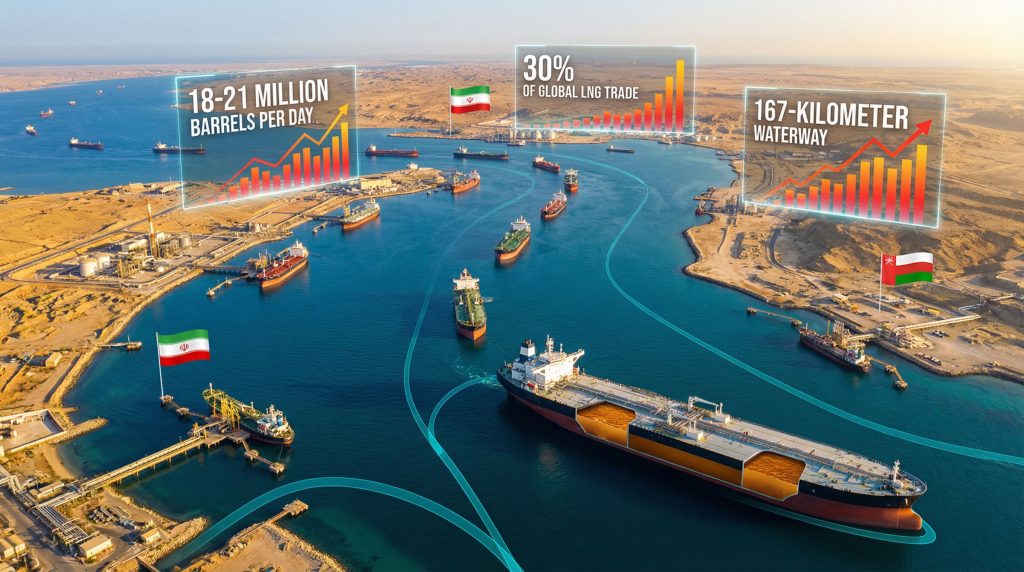
The global energy landscape faces an unprecedented challenge as the Strait of Hormuz shipping crisis continues to disrupt traditional supply chains and force a fundamental reassessment of maritime energy security. This narrow waterway, which normally handles approximately one-fifth of worldwide crude oil and liquefied natural gas flows, has become the epicentre of a crisis that demonstrates the extreme vulnerability of interconnected global energy systems to strategic chokepoint disruption.
Understanding the Strategic Importance of Maritime Energy Chokepoints
The concentration of global energy flows through narrow maritime passages represents one of the most critical vulnerabilities in the modern economic system. These strategic waterways have evolved from simple shipping lanes into the circulatory arteries of the global economy, where disruption creates immediate and far-reaching consequences across multiple sectors and continents.
The Strait of Hormuz exemplifies this vulnerability, functioning as a 167-kilometre passage between the Persian Gulf and Indian Ocean. This narrow waterway has become the single most strategically important maritime route for energy security, with its operational status directly influencing global commodity prices, supply chain stability, and macroeconomic conditions worldwide.
Geographic Constraints and Operational Vulnerabilities
The physical characteristics of critical energy chokepoints create inherent limitations that compound during crisis situations:
- Narrow passage width: The minimum navigable width of 21 nautical miles creates natural bottleneck conditions
- Deep-water channel requirements: Large tankers require specific routing through designated shipping lanes
- Weather dependency: Seasonal conditions affect transit capacity and safety margins
- Infrastructure limitations: Port facilities and navigation aids concentrate risk at specific geographic points
Alternative routing options demonstrate the strategic importance of primary passages. The Cape of Good Hope diversion adds approximately 3,500 nautical miles and 15-20 days to typical crude oil shipments, whilst increasing voyage costs by $2-4 per barrel and raising emissions by 40% compared to direct routing through the Strait of Hormuz.
Current Crisis Magnitude and Operational Impact
Recent developments in the Strait of Hormuz shipping crisis have created an operational environment unlike any previous energy supply disruption. According to maritime tracking data from the Guardian's analysis, only 10 vessels successfully transited the waterway following recent ceasefire arrangements, with approximately 800 ships remaining stranded since the crisis began on February 28, 2026.
The scale of disruption becomes clear through specific metrics:
- Stranded cargo volume: 172 million barrels of crude and refined products on 187 tankers were at sea in the region as of April 8, 2026
- Traffic reduction: Current passage rates remain 90 percent below normal levels
- Attack frequency: Thirty commercial ships, including 13 tankers, have been attacked or reported incidents since March 1, 2026
- Post-ceasefire limitations: Maximum expected traffic of 10-15 passages per day, compared to normal operational capacity
The International Energy Agency has characterised this situation as the most severe supply disruption ever to affect the global oil market, indicating the unprecedented nature of current conditions compared to historical energy crises.
When big ASX news breaks, our subscribers know first
Comparative Analysis of Historical Energy Supply Disruptions
Understanding the current crisis requires examining how it differs from previous major energy supply disruptions in terms of duration, market impact, and recovery patterns. Each historical crisis provides insights into how energy markets respond to various types of supply constraints.
Crisis Evolution Patterns
| Crisis Event | Primary Cause | Duration | Peak Price Impact | Recovery Mechanism |
|---|---|---|---|---|
| 1973 Oil Embargo | Political embargo | 5 months | +300% | Diplomatic resolution |
| 1979 Iran Revolution | Political upheaval | 14 months | +250% | Alternative suppliers |
| 1990 Gulf War | Military conflict | 7 months | +150% | Strategic reserves |
| 2026 Hormuz Crisis | Asymmetric warfare | Ongoing | +50%+ | Unknown |
The current crisis demonstrates unique characteristics that distinguish it from historical precedents. Furthermore, the effectiveness of implied threats rather than physical blockade represents a sophisticated approach to supply disruption. Iranian Revolutionary Guard warnings have achieved blockade-like effects without requiring direct military enforcement or permanent physical obstacles.
However, unlike previous crises where physical destruction or political embargo created supply constraints, the current situation stems primarily from war risk coverage withdrawal and uncertainty about safe passage protocols. Additionally, real-time vessel tracking and maritime intelligence provide unprecedented transparency into crisis impact.
Market Response Mechanisms
Current market dynamics reveal sophisticated understanding of both physical supply constraints and psychological components affecting energy pricing. The price structure demonstrates several key characteristics:
- Physical delivery premiums: $15-20 per barrel for immediate delivery reflects actual supply shortage
- Contango market structure: Future prices trading $10-15 below spot indicates market expectation of crisis resolution
- Volatility expansion: Options markets pricing 60-80% annual volatility compared to historical 25-35%
- Regional price differentials: Asian crude premiums reaching $25-30 per barrel above traditional benchmarks
Strategic Petroleum Reserve utilisation has provided partial market stabilisation, with coordinated releases of approximately 1 million barrels per day from United States and International Energy Agency member nations. However, this represents a temporary buffer rather than a sustainable solution to ongoing supply constraints, particularly given the complex oil price movements affecting global markets.
Sector-Specific Economic Disruption Analysis
The ripple effects of maritime energy chokepoint closure extend far beyond direct energy markets, creating cascading impacts across interconnected economic sectors that depend on stable energy pricing and reliable supply access.
Energy-Intensive Manufacturing Impact
Industrial sectors with high energy consumption face immediate cost pressures that compress operating margins and force operational adjustments. Consequently, aluminum production requires consistent electricity supply and faces 15-25% cost increases due to elevated energy pricing. The industry's high electricity intensity makes it particularly vulnerable to energy price volatility.
Steel manufacturing experiences dual pressure from elevated coking coal transport costs and increased electricity pricing. Production margins compress as energy costs represent 20-30% of total operating expenses, forcing mills to prioritise high-margin specialty products over commodity steel grades.
Asian refiners face 40% reduction in feedstock availability as normal supply chains disrupted. The integrated nature of petrochemical complexes means that upstream crude oil constraints create downstream effects throughout the chemical supply chain, affecting everything from plastics production to pharmaceutical intermediates.
For instance, energy costs represent 60-80% of ammonia production expenses, creating immediate pressure on global food security. Fertiliser price increases directly translate to higher agricultural input costs, with delayed effects on food pricing appearing 6-12 months after initial energy price spikes.
Transportation and Logistics Transformation
The crisis has fundamentally altered global logistics networks, forcing rapid adaptation of transportation routes and cargo handling procedures. Container shipping rates increase 200-400% on affected routes as carriers implement war risk surcharges and seek alternative routing.
Aviation fuel supply creates immediate availability constraints and pricing pressure for Middle East hub airports. Dubai, Doha, and Abu Dhabi airports experience reduced connecting flight capacity as airlines adjust route networks to minimise fuel exposure.
European energy security faces particular challenges as heating oil stocks approach critically low levels whilst winter demand coincides with supply constraints. The European Union's gradual reduction of Russian energy dependence has increased reliance on Middle East supplies, creating additional energy exports challenges for alternative suppliers.
Financial Market Transmission Mechanisms
Energy supply disruption creates immediate financial market effects that amplify economic impact beyond direct energy costs. Oil-importing nations experience current account deterioration as energy import costs surge, with emerging market currencies facing particular pressure.
Financial firms experience extreme volatility and margin calls as energy price swings create marked-to-market losses on existing positions. The concentration of energy trading among relatively few major firms means that individual company stress can affect market liquidity.
Moreover, war risk coverage withdrawal represents the most immediate transmission mechanism from geopolitical risk to operational paralysis. The insurance industry faces unprecedented claims exposure whilst simultaneously reducing coverage availability, creating a self-reinforcing cycle of risk aversion that affects the broader tariff impact on markets.
Alternative Transportation Route Development
The crisis has accelerated fundamental changes in global energy transportation infrastructure, forcing rapid development of alternative routes that bypass traditional chokepoints and reduce strategic vulnerability.
Overland Pipeline Alternatives
Pipeline infrastructure offers the most viable long-term alternative to maritime transport through vulnerable chokepoints. Russian pipeline network provides potential capacity of 4.5 million barrels per day through various routes connecting Central Asian and Russian production to European and Asian markets.
The Kazakhstan-China pipeline represents successful overland alternative development, with expansion projects accelerated in response to maritime chokepoint vulnerability. Current capacity of 1.2 million barrels per day with expansion potential to 2.5 million barrels per day by 2028.
Additionally, the Iraq-Turkey pipeline offers potential for rehabilitation and expansion, providing alternative routing for Iraqi crude oil exports. Current capacity limitations and security concerns require substantial investment, but the route offers strategic value for reducing Strait dependence.
Saudi Arabia's East-West crude oil pipeline operates at maximum capacity of 5 million barrels per day, connecting Persian Gulf production to Red Sea terminals. Recent capacity utilisation increases demonstrate the strategic value of alternative routing within producing countries.
Maritime Route Diversification
Despite longer transit times and higher costs, alternative maritime routes provide essential backup capacity during chokepoint closure.
Cape of Good Hope Utilisation
The traditional alternative route around Africa has experienced unprecedented utilisation as vessels avoid Middle East passages:
- Additional transit time: 15-20 days for crude oil shipments to Asian markets
- Infrastructure constraints: Limited bunkering and maintenance facilities in South Africa
- Cost implications: $2-4 per barrel additional shipping costs
- Environmental impact: 40% increase in voyage emissions due to extended routing
Port infrastructure in South Africa has become a critical bottleneck as increased traffic strains existing capacity. Durban and Cape Town ports report cargo handling delays as vessel arrivals exceed normal scheduling patterns.
Northern Routing Development
Arctic shipping routes offer potential alternatives, though seasonal limitations and infrastructure requirements limit immediate viability. The Northern Sea Route provides Russian-controlled Arctic passage offering summer access for ice-class tankers, reducing Asia-Europe transit time compared to Cape routing.
However, seasonal limitations, environmental concerns, and geopolitical considerations limit practical utilisation. The Northwest Passage remains largely undeveloped for commercial energy transport, with sovereignty issues and environmental protection requirements creating regulatory barriers.
Strategic Infrastructure Acceleration
The crisis has compressed typical infrastructure development timelines as governments and companies prioritise energy security over traditional economic evaluation criteria. The UAE-Oman Pipeline Project, originally scheduled for completion by 2030, has received accelerated funding and expedited permitting to achieve operational status by 2027.
Feasibility studies for Qatar-Kuwait LNG Pipeline have received renewed attention as countries seek to reduce maritime transport vulnerability for LNG supplies. Furthermore, Saudi Arabia's Red Sea terminal capacity expansion at Yanbu has received doubled investment allocation to enhance alternative export capability.
What Role Does Insurance Play in Maritime Energy Crisis?
The role of maritime insurance in crisis escalation demonstrates how financial risk management mechanisms can effectively achieve strategic objectives without requiring direct military enforcement or physical blockade.
War Risk Premium Evolution
Insurance market response has proven to be the decisive factor creating operational paralysis throughout the affected region. War risk coverage rates have increased from pre-crisis levels of 0.05-0.1% of cargo value to current rates of 5-10% for vessels with connections to certain flag states.
Complete withdrawal of coverage for vessels flagged in certain states has created operational impossibility regardless of premium pricing. Lloyd's of London and other major insurance markets have implemented blanket exclusions that prevent vessel operation rather than simply increasing cost.
Minimum exposure requirements have increased to $10-50 million, placing coverage beyond the financial capability of smaller shipping companies and effectively concentrating operations among the largest international carriers.
Reinsurance Market Stress
The concentration of maritime insurance risk among relatively few major reinsurance companies has created systemic vulnerability. Lloyd's of London faces estimated potential claims exposure of $15-25 billion, representing a significant portion of the market's annual capacity.
Munich Re's suspension of new Middle East maritime policies has reduced market capacity and forced remaining insurers to increase premiums substantially. Consequently, major oil companies have begun establishing captive insurance entities to maintain operational capability when commercial coverage becomes unavailable.
Operational Control Mechanisms
Iran's ability to influence global energy flows demonstrates sophisticated application of asymmetric power projection. Mandatory passage requirements near Iranian territorial waters enable monitoring and control of vessel movements without requiring formal blockade declaration.
Selective passage permissions based on political alignment create de facto economic sanctions that achieve foreign policy objectives through commercial pressure. Additionally, Oxford research indicates that Iran could potentially charge one dollar per barrel of oil passing through the strait, to be paid in cryptocurrency.
Requirements for Iranian Revolutionary Guard coordination enable monitoring of all commercial traffic and provide leverage for political negotiations with vessel operators and flag states.
How Will This Crisis Transform Global Energy Trade Permanently?
The current crisis is catalysing fundamental changes in global energy trade patterns that will reshape international energy architecture for decades, accelerating trends toward regionalisation and supply chain resilience that were previously developing gradually.
Regional Energy Security Bloc Formation
Countries are establishing coordinated response mechanisms that reduce dependence on vulnerable chokepoints. Japan, South Korea, and India have developed joint strategic reserve management and emergency response protocols, including coordinated petroleum reserve releases and shared LNG supply agreements.
The European Union has accelerated programmes to reduce Middle East energy dependence, including expanded renewable energy deployment and enhanced North African supply relationships. Enhanced Canada-US-Mexico energy cooperation has created more integrated continental markets that reduce exposure to global chokepoint vulnerability.
Increased investment in West African oil production and export infrastructure provides alternative supply sources that utilise Atlantic shipping routes rather than Middle East chokepoints.
Technology and Infrastructure Investment Patterns
Crisis response has accelerated technology adoption and infrastructure development across multiple sectors. Strategic reserve capacity has increased 200% through deployment of floating storage vessels that provide buffer capacity during supply disruptions.
Global pipeline investment has reached $200-300 billion annually as countries prioritise overland transport capacity development. This investment level represents a 150% increase compared to pre-crisis infrastructure spending patterns.
Accelerated deployment of small-scale and floating LNG terminals enables more flexible supply arrangements that reduce dependence on traditional large-scale import facilities. Digital monitoring enhancement improves supply chain transparency through enhanced satellite monitoring and artificial intelligence-enabled risk assessment systems.
Future Scenario Development
Long-term planning requires consideration of multiple potential resolution pathways and their structural implications, particularly given the broader context of the US‑China trade war affecting global trade patterns.
Optimistic Resolution Scenario (3-6 months)
Gradual traffic normalisation accompanied by enhanced security protocols could achieve partial restoration of traditional shipping patterns. However, even optimistic scenarios anticipate permanent structural changes:
- 15-20% permanent increase in alternative route capacity as insurance requires redundancy
- Strengthened international maritime security cooperation frameworks
- Enhanced strategic reserve requirements for energy-importing nations
- Diversified supplier relationships to reduce single-source dependence
Extended Crisis Scenario (6-18 months)
Prolonged disruption would accelerate fundamental rewiring of global energy trade networks, including 40-60% reduction in Strait dependence by major energy importers and complete alternative infrastructure development for Asia-Pacific energy security.
Furthermore, this scenario would drive accelerated renewable energy adoption as crisis highlights fossil fuel vulnerability and regional energy bloc consolidation with reduced global market integration.
Permanent Structural Change Scenario
The most transformative outcome would establish the Strait as a secondary route for non-Iranian energy flows, leading to development of new global energy hub locations outside the Persian Gulf region.
Complete transformation of energy security planning frameworks away from chokepoint dependence would fundamentally shift toward regional energy self-sufficiency and reduced global trade integration. Additionally, this would accelerate the transition to renewable energy sources as a strategic security imperative, potentially contributing to an oil price rally as markets adjust to new supply realities.
The next major ASX story will hit our subscribers first
Investment and Policy Implications for Energy Security
The structural changes emerging from this crisis create new investment opportunities and policy requirements across multiple sectors.
Infrastructure Investment: Pipeline development, alternative port facilities, and strategic storage expansion represent multi-decade investment opportunities with government support and guaranteed demand. These projects offer stable returns backed by energy security imperatives rather than traditional market dynamics.
Technology Development: Enhanced maritime security monitoring, alternative fuel technologies, and supply chain management systems offer commercial opportunities driven by permanent security requirements. The integration of artificial intelligence and blockchain technology in supply chain management represents particular growth areas.
Geographic Reallocation: Energy production and refining capacity may shift toward regions with more secure transportation access, creating investment opportunities in previously marginal locations. West African production facilities and North American pipeline infrastructure represent key beneficiaries.
Regulatory Framework Evolution: International maritime law, insurance regulation, and energy security planning frameworks require substantial updates to address asymmetric threat scenarios and chokepoint vulnerability. These changes will drive demand for specialised legal and consulting services.
The current Strait of Hormuz shipping crisis represents more than a temporary supply disruption. It demonstrates the vulnerability of globalised energy systems to asymmetric threats and the speed with which alternative infrastructure and relationships can develop when traditional systems fail.
The permanent changes emerging from this crisis will reshape energy security planning and international trade patterns for the remainder of the century. Consequently, current developments represent a defining moment in global economic history, forcing fundamental reassessment of energy infrastructure vulnerability and strategic planning assumptions.
Important Disclaimer: This analysis involves forecasting and speculation about complex geopolitical and economic developments. Market conditions, political situations, and technological developments can change rapidly. Readers should conduct independent research and consult qualified advisors before making investment or policy decisions based on this analysis.
Ready to Navigate Energy Market Disruptions?
Energy crises like the Strait of Hormuz shipping disruption create significant ripple effects across global markets, yet they also generate exceptional opportunities for astute investors who can identify companies positioned to benefit from infrastructure developments and alternative supply solutions. Discovery Alert's proprietary Discovery IQ model delivers real-time alerts on significant ASX mineral discoveries, instantly empowering subscribers to identify actionable opportunities in energy-related commodities and infrastructure plays ahead of the broader market. Begin your 14-day free trial today and secure your market-leading advantage during these transformative times.