
August 14, 2026
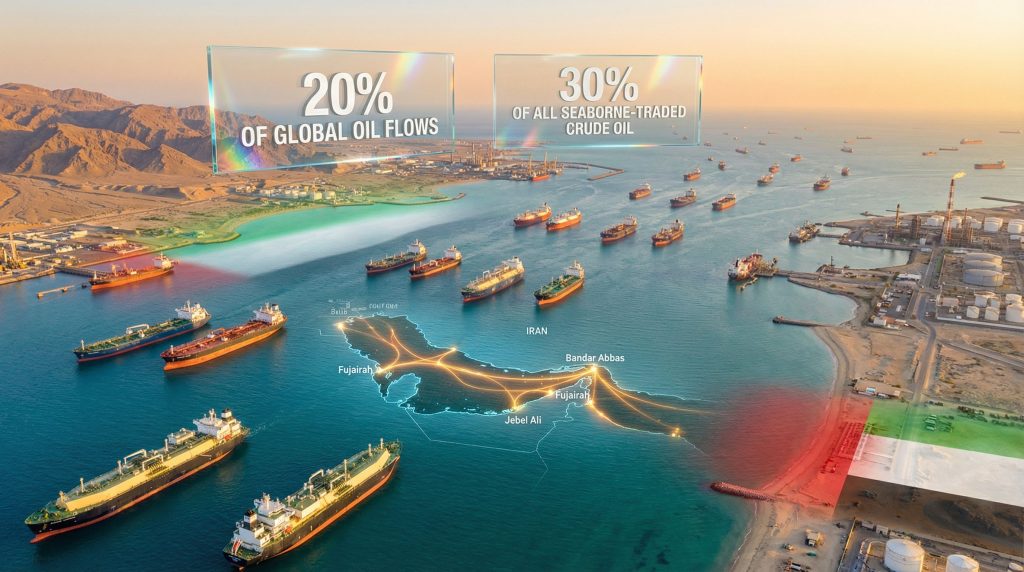
Strait of Hormuz tensions have historically demonstrated the profound vulnerability of global energy markets to geopolitical chokepoint risks. Strategic chokepoints have historically determined the fate of empires, trade routes, and global economic stability. Modern energy markets operate within a framework where geographic bottlenecks can instantly transform theoretical risks into cascading financial crises. The concentration of critical resources through narrow maritime passages creates systemic vulnerabilities that extend far beyond immediate supply disruptions. Furthermore, these vulnerabilities are often amplified by oil price rally insights that reveal deeper market sensitivities.
Understanding the Strategic Chokepoint Crisis
The Strait of Hormuz operates as more than a shipping corridor – it functions as a critical control point where geopolitical tensions translate directly into global market volatility. This 21-mile-wide waterway at its narrowest point accommodates the world's largest oil tankers while serving as the primary gateway for energy exports from the Gulf region. In addition, the OPEC market influence in this region creates additional layers of complexity for global energy security.
Recent March 2026 tensions demonstrated the rapid transmission mechanism between geopolitical events and market responses. Within hours of Iranian threats to close the strait, Brent crude oil prices surged 4% to $80 per barrel, while tanker rates exceeded $400,000 per day, illustrating the immediate financial impact of chokepoint vulnerability. Iran's escalating threats have become a significant concern for global shipping markets.
The waterway's strategic importance stems from its unique geographic position and the absence of alternative routes capable of handling equivalent volumes. Unlike diversified manufacturing supply chains, energy transportation requires physical passage through fixed maritime corridors, creating structural dependencies that cannot be easily substituted. However, trade war oil impacts suggest that geopolitical tensions extend beyond regional conflicts.
Geographic Constraints and Naval Architecture
The strait's shipping lane configuration reveals the technical limitations that amplify risk during disruptions:
- Inbound shipping lane: 2 nautical miles wide
- Outbound shipping lane: 2 nautical miles wide
- Traffic separation zone: 2 nautical miles
- Maximum vessel capacity: 500,000 deadweight tons
These narrow passages require vessels to transit through territorial waters of littoral states, creating asymmetric defensive challenges for maintaining open navigation. Maritime traffic monitoring systems operated by regional authorities contain documented blind spots, particularly in central channels during adverse weather conditions.
When big ASX news breaks, our subscribers know first
What Makes the Strait of Hormuz So Economically Vital?
The strait's economic significance derives from the concentration of global energy resources that must transit through this single passage point. Approximately 21% of global oil supply and 30% of seaborne-traded crude oil depend on Hormuz passage, with daily throughput reaching 21 million barrels according to recent OPEC data. Consequently, any disruption in this critical waterway can trigger immediate global supply chain vulnerabilities.
Regional Export Dependencies
| Country | Daily Export Capacity (Million Barrels) | Hormuz Dependency |
|---|---|---|
| Saudi Arabia | 10.5 | 95% |
| United Arab Emirates | 3.0 | 90% |
| Kuwait | 2.7 | 100% |
| Iraq | 4.5 | 65% |
| Iran | 2.5 | 100% |
The absence of viable large-scale alternatives creates structural vulnerability for both producers and consumers. Saudi Arabia's Trans-Arabian Pipeline to the Red Sea provides only 5 million barrels per day capacity – insufficient for total export requirements. Iraq's northern export route through Turkey handles approximately 600,000 barrels daily, representing a fraction of Iraqi production capacity. Furthermore, Saudi exploration impact demonstrates how regional developments can affect global energy security.
Qatar's liquefied natural gas operations, producing 77 million tonnes annually, face similar constraints with nearly complete dependence on Hormuz transit routes. This concentration creates cascade effects where single-point disruptions impact multiple energy commodity markets simultaneously.
Historical Precedent Analysis
The September 2019 Abqaiq-Khurais drone attacks demonstrated market sensitivity to Gulf energy infrastructure. Despite no direct Hormuz closure, the disruption of 5.7 million barrels per day caused Brent crude to surge 19% in a single trading session. This response pattern illustrates how perceived threats to Gulf energy security create immediate price premiums regardless of actual supply interruptions.
How Do Market Forces React to Hormuz Disruptions?
Market responses to Strait of Hormuz tensions follow predictable patterns of risk premium injection followed by gradual normalisation as threats subside. The March 2026 escalation provides real-time data on modern market transmission mechanisms. Moreover, the US oil production decline has made global markets even more sensitive to Middle Eastern supply disruptions.
Immediate Price Response Mechanisms
| Market Segment | Response Magnitude | Timeframe |
|---|---|---|
| Brent Crude Oil | +4% single day, +6% weekly | Hours to days |
| Tanker Day Rates | +100-150% premium | Immediate |
| Asian Equity Markets | -2.9% (MSCI Asia-Pacific ex-Japan) | Same day |
| Regional Currencies | USD strength, JPY/EUR weakness | Concurrent |
The tanker market exhibits the most extreme volatility during disruptions. Very Large Crude Carriers (VLCCs) capable of handling 300,000+ deadweight tons typically command $150,000-$200,000 daily rates under normal conditions. During the March 2026 tensions, rates exceeded $400,000 per day, representing a 100-110% premium reflecting immediate supply-demand imbalances.
Insurance and Routing Economics
War risk insurance premiums increase by 2-5% of charter costs during elevated tensions, while alternative routing around the Cape of Good Hope adds:
- 18-22 additional transit days
- 25-30% higher fuel consumption
- 9,000 additional nautical miles versus direct Hormuz routing
These routing economics create binary decisions for shipping companies: accept elevated day rates or absorb extended delivery timelines and increased operational costs.
Regional Market Differentiation
Energy-importing Asian economies demonstrate heightened sensitivity to Hormuz disruptions. During March 2026 tensions, South Korea's KOSPI index declined 7.2% in a single session, while Japan's Nikkei 225 fell 3.1%. This disparity reflects varying degrees of energy import dependency and strategic reserve capacities.
European and Asian natural gas markets experienced concurrent price surges as crude oil increases translated into broader energy commodity inflation. Analysis suggests sustained 20% Brent crude increases could reduce regional corporate earnings by approximately 2% through margin compression and input cost escalation.
What Are the Cascading Economic Consequences?
Hormuz disruptions create multi-layered inflationary pressures that extend beyond immediate energy markets. The transmission mechanism operates through interconnected channels affecting transportation costs, manufacturing inputs, and consumer price indices.
Inflation Transmission Pathways
Primary Effects:
- Direct transportation fuel cost increases
- Industrial energy input price escalation
- Power generation cost adjustments
Secondary Effects:
- Manufacturing cost pass-through to finished goods
- Service sector operational cost increases
- Supply chain logistics premium adjustments
Tertiary Effects:
- Consumer discretionary spending reallocation
- Central bank monetary policy recalibration
- Currency valuation adjustments for energy importers
Central Banking Policy Complications
Energy price shocks create stagflationary conditions that complicate monetary policy responses. Central banks face conflicting pressures between:
- Growth concerns from elevated energy costs dampening economic activity
- Inflation pressures requiring potential interest rate responses
- Financial stability risks from market volatility and position liquidation
- Exchange rate impacts on energy-importing economies
The March 2026 market response shifted Federal Reserve rate cut expectations from March to September, illustrating how geopolitical energy disruptions alter monetary policy timelines and market expectations.
How Do Different Regions Adapt to Supply Disruptions?
Regional adaptation strategies reflect varying degrees of energy import dependency, strategic reserve capacities, and alternative supply access. The response patterns reveal structural vulnerabilities and resilience mechanisms across different economic zones.
Asia-Pacific Vulnerability Assessment
High-Risk Economies:
| Country | Gulf Oil Import Dependency | Strategic Response |
|---|---|---|
| Japan | 90% via Hormuz | Strategic reserve drawdown, US import increase |
| South Korea | 70% Gulf crude | Alternative supplier diversification |
| China | 40% Gulf imports | Enhanced Russia/Americas sourcing |
| India | 85% import dependency | Emergency rationing protocols |
Asian economies maintain strategic petroleum reserves ranging from 90-180 days of import coverage, providing temporary buffer capacity during supply disruptions. However, sustained closures exceeding 3-4 weeks would necessitate demand rationing and industrial production adjustments.
European Energy Recalibration
European markets demonstrate greater supply source flexibility through:
- North Sea production optimisation to replace Gulf crude
- Enhanced US shale oil imports via Atlantic shipping routes
- Strategic reserve coordination through International Energy Agency frameworks
- Accelerated renewable deployment to reduce fossil fuel dependency
The European Union's diversification efforts following 2022 geopolitical developments provide precedent for rapid supply source pivoting during crisis periods.
North American Market Positioning
North American producers benefit from Hormuz disruptions through:
- Domestic shale production acceleration capturing premium pricing
- Canadian oil sands export optimisation to Asian markets
- Strategic petroleum reserve management providing price stabilisation tools
- Refinery capacity utilisation maximising regional processing capabilities
What Investment Implications Emerge from Hormuz Tensions?
Strait of Hormuz tensions create distinct investment opportunities and risks across energy sectors, transportation infrastructure, and regional equity markets. The March 2026 response patterns provide insight into sector rotation dynamics during geopolitical energy crises.
Energy Sector Revaluation Patterns
Beneficiary Sectors:
- Non-Gulf oil producers (US shale, Canadian oil sands, North Sea operators)
- Alternative energy infrastructure companies
- Tanker operators with non-Gulf route capabilities
- Strategic storage facility operators and pipeline companies
Vulnerable Sectors:
- Gulf-exposed energy companies facing operational disruptions
- Energy-intensive manufacturing with limited hedging
- Airlines and transportation companies with fuel cost sensitivity
- Emerging market energy importers with currency pressures
Currency and Commodity Correlation Effects
Safe Haven Flows:
- US Dollar appreciation during risk-off periods
- Gold price advancement (fifth consecutive session gains during March 2026)
- Japanese Yen weakness due to energy import cost increases
- Oil-exporting currency volatility based on production disruption exposure
The US Dollar index approached six-week highs during March 2026 tensions, while Japanese authorities indicated intervention readiness if yen weakness accelerated beyond acceptable ranges.
Portfolio Construction Strategies
Defensive Positioning:
- Energy security infrastructure investments (pipelines, storage facilities)
- Diversified commodity exposure beyond Gulf-dependent sources
- Inflation-protected securities anticipating energy-driven price increases
- Currency hedging for energy-importing economy exposures
Opportunistic Approaches:
- Non-Gulf energy producer equity investments
- Alternative energy technology stocks benefiting from diversification mandates
- Shipping and logistics companies with route flexibility
- Strategic commodity storage facility Real Estate Investment Trusts
The next major ASX story will hit our subscribers first
How Do Geopolitical Risk Models Assess Hormuz Scenarios?
Professional risk assessment frameworks employ probability-weighted scenario modelling to evaluate potential Hormuz disruption impacts. These models consider escalation pathways, duration probabilities, and recovery timelines to guide strategic decision-making.
Escalation Probability Framework
Low-Intensity Disruption (30-40% probability):
- Selective vessel harassment and inspection delays
- Temporary shipping route modifications
- Insurance premium increases without supply interruption
- Limited production impact with rapid normalisation
Medium-Intensity Blockade (20-30% probability):
- Partial strait closure affecting specific vessel categories
- Military escort requirements for commercial shipping
- Significant oil price premiums lasting 2-4 weeks
- Alternative route activation and strategic reserve deployment
High-Intensity Conflict (10-15% probability):
- Complete commercial shipping suspension
- Direct military confrontation requiring international intervention
- Global recession risks from energy supply disruption
- Strategic reserve drawdowns and emergency rationing protocols
Corporate Risk Mitigation Strategies
Supply Chain Adjustments:
- Diversification of energy supplier base beyond Gulf producers
- Strategic inventory management increasing buffer stock levels
- Alternative sourcing agreements with non-Gulf suppliers
- Force majeure planning and contract renegotiation protocols
Financial Hedging Mechanisms:
- Energy price hedging through futures and options markets
- Currency hedging for energy import transactions
- Business interruption insurance covering geopolitical events
- Strategic commodity inventory financing arrangements
What Long-Term Structural Changes Result?
Repeated Hormuz tensions accelerate fundamental shifts in global energy architecture, creating permanent changes in supply chain design, infrastructure investment priorities, and geopolitical alliance structures.
Energy Security Architecture Evolution
Infrastructure Development Priorities:
- Alternative pipeline routes bypassing traditional chokepoints
- Strategic petroleum reserve expansion in import-dependent regions
- LNG terminal construction enabling supply source diversification
- Renewable energy deployment reducing fossil fuel import requirements
Supply Chain Diversification Imperatives:
- Long-term purchase agreements with non-Gulf producers
- Investment in unconventional resource development (shale, oil sands)
- Enhanced regional refinery capacity reducing import dependency
- Strategic stockpiling facilities in consuming regions
Geopolitical Realignment Dynamics
Regional Power Balance Adjustments:
- Enhanced naval presence by consuming nation coalitions
- Energy security alliance formation among import-dependent economies
- Technology transfer agreements for alternative energy development
- Diplomatic engagement frameworks for chokepoint security coordination
Economic Integration Pattern Changes:
- Reduced energy trade concentration through single corridors
- Regional energy market integration reducing external dependencies
- Alternative currency arrangements for energy transactions
- Investment flows toward energy security infrastructure
How Should Investors Position for Hormuz Uncertainty?
Investment positioning for Strait of Hormuz uncertainty requires sophisticated scenario planning, portfolio diversification, and risk management protocols addressing both immediate volatility and structural market changes.
Scenario-Based Portfolio Construction
Base Case Positioning (60% probability weighting):
- Periodic tensions with minimal sustained supply disruption
- Moderate energy price volatility requiring tactical hedging
- Gradual diversification trends benefiting alternative suppliers
- Stable long-term energy security investment themes
Stress Case Positioning (30% probability weighting):
- Extended disruptions lasting 4-8 weeks
- Significant energy price increases and supply rationing
- Accelerated alternative energy adoption and infrastructure investment
- Regional recession risks in energy-importing economies
Crisis Case Positioning (10% probability weighting):
- Complete strait closure lasting months
- Global recession triggered by energy supply collapse
- Emergency government intervention and strategic reserve deployment
- Fundamental restructuring of global energy trade patterns
Risk Management Protocol Framework
Diversification Requirements:
- Geographic exposure across multiple energy-producing regions
- Sector allocation balancing energy security and efficiency themes
- Currency hedging for international energy investments
- Duration management for energy-related fixed income securities
Liquidity Management:
- Maintaining higher cash allocation during elevated tension periods
- Access to credit facilities for opportunistic investment deployment
- Position sizing limits preventing concentration in volatile sectors
- Exit strategy planning for crisis scenario portfolio adjustments
Tactical Allocation Adjustments
Overweight Recommendations:
- North American energy producers with Gulf-independent operations
- Energy infrastructure companies with strategic corridor positions
- Alternative energy technology with policy support tailwinds
- Precious metals and inflation-protected securities during active tensions
Underweight Considerations:
- Gulf-exposed energy companies with operational vulnerability
- Energy-intensive manufacturing without adequate hedging programmes
- Emerging market assets with energy import sensitivity
- Duration-sensitive fixed income during inflationary energy shocks
The complexity of Strait of Hormuz tensions requires continuous monitoring, flexible positioning, and recognition that energy security has evolved into a primary driver of both geopolitical strategy and investment performance in the modern interconnected economy.
Successful navigation of these challenges demands sophisticated risk assessment capabilities, scenario-based planning frameworks, and acknowledgement that traditional portfolio construction methods may prove inadequate during periods of energy chokepoint instability.
This analysis is provided for educational purposes and does not constitute investment advice. Past performance does not guarantee future results, and all investments carry risk of loss. Readers should conduct their own research and consult qualified financial advisors before making investment decisions.
Looking for Investment Opportunities Beyond Traditional Energy Markets?
Discovery Alert's proprietary Discovery IQ model delivers real-time alerts on significant ASX mineral discoveries, instantly empowering subscribers to identify actionable opportunities ahead of the broader market. With global energy markets facing increasing geopolitical uncertainty, diversifying into mineral exploration companies offers alternative exposure to resource sectors whilst maintaining growth potential during volatile periods.
Begin your 14-day free trial today to position yourself ahead of the market and explore opportunities in Australia's dynamic mining sector.