July 10, 2026
The Asymmetric Trap: Why Military Force Cannot Resolve the Strait of Hormuz Standoff
There is a class of geopolitical problem that conventional military power is structurally ill-equipped to solve. It arises when a weaker actor possesses geographic, logistical, or asymmetric advantages that allow it to impose disproportionate costs on a stronger opponent without requiring outright victory. The Strait of Hormuz has become precisely this kind of problem, and US strikes fail to break Iran's grip on the Strait of Hormuz not because of tactical inadequacy, but because of a fundamental strategic misalignment between the instrument being applied and the objective being pursued.
Understanding why this dynamic persists requires a clear-eyed analysis of what Iran is actually trying to achieve, what military force can and cannot accomplish, and why the economic stakes for the rest of the world make a clean resolution extraordinarily difficult. Furthermore, the oil price shock that has rippled through global markets underscores just how consequential this standoff has become.
When big ASX news breaks, our subscribers know first
The Geography That Makes Hormuz Irreplaceable
Why 33 Kilometres Shapes Global Energy Markets
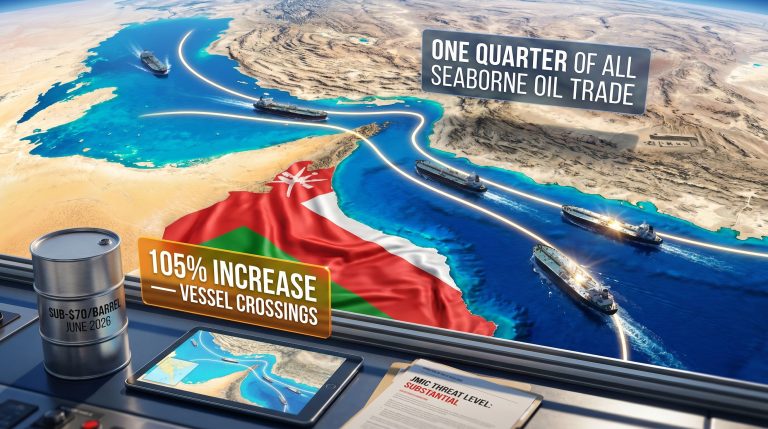
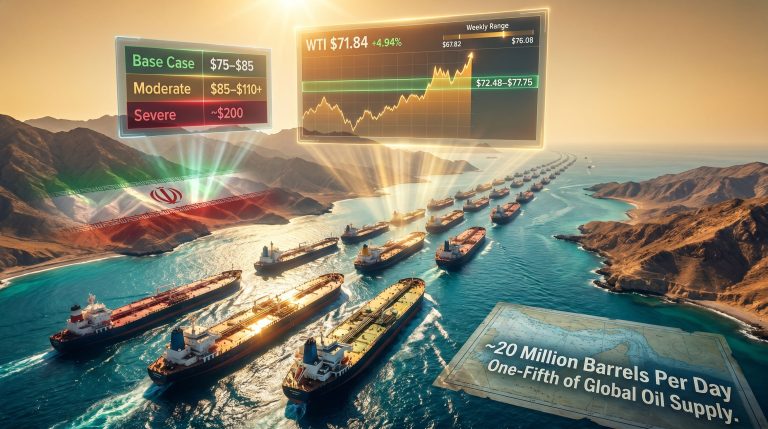
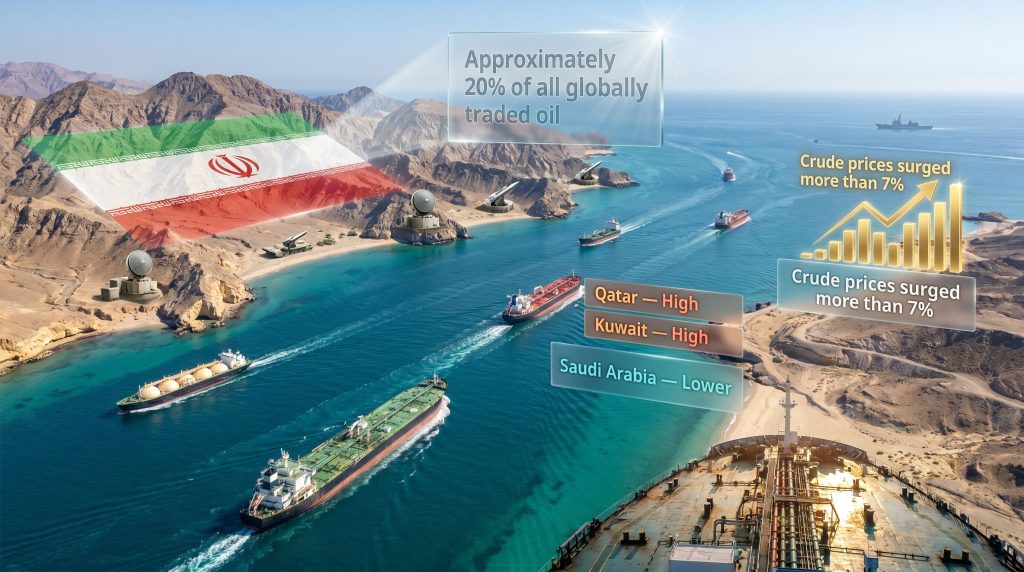
At its narrowest point, the Strait of Hormuz measures approximately 33 kilometres across, yet this sliver of water functions as the central artery of the global oil system. Roughly 20% of all globally traded oil transits this corridor daily, a volume that dwarfs every other maritime energy chokepoint on the planet. The Persian Gulf producers collectively dependent on this passage include Saudi Arabia, Iraq, Iran, Kuwait, the UAE, Qatar, and Bahrain.
What makes Hormuz uniquely consequential is not merely its volume throughput but the absence of adequate substitutes for most producers using it. When transit slows, stalls, or becomes economically unviable due to elevated insurance premiums, the downstream consequences ripple instantly into crude benchmarks, refining margins, and ultimately consumer prices across Asia, Europe, and beyond. The crude price geopolitics at play here are unlike anything seen in recent memory.
Iran's Structural Leverage Through Proximity
Iran's northern coastline runs the entire length of the strait on one side, giving Tehran a positional advantage that no amount of offshore naval presence can neutralise. Iranian territory sits directly adjacent to the navigable shipping lanes, meaning coastal missile batteries, radar installations, and fast attack craft can be positioned with minimal warning times and maximum operational efficiency. This is not a vulnerability that air strikes resolve permanently.
Infrastructure destroyed today can be rebuilt, repositioned, or duplicated within weeks using dispersed, distributed, and partially underground architecture.
Under the United Nations Convention on the Law of the Sea (UNCLOS), the Strait of Hormuz falls under transit passage rights, meaning no single nation can legally restrict commercial navigation. However, Iran's ability to operationally enforce a selective blockade creates a de facto control dynamic that legal frameworks alone cannot resolve.
The distinction between legal sovereignty and operational dominance is critical. Tehran does not need to formally close the strait to extract strategic leverage. It only needs to maintain sufficient residual capability to periodically target individual commercial vessels, keeping insurance premiums elevated and signalling that access ultimately depends on Iranian consent.
What US Military Operations Have Actually Targeted
A Breakdown of the Roughly 90 Sites Struck
The most recent round of US strikes targeted approximately 90 Iranian military sites, spanning a wide range of infrastructure categories across the coastal defence architecture.
| Target Category | Strategic Purpose | Assessed Outcome |
|---|---|---|
| Coastal radar installations | Degrade maritime surveillance | Partially replaced by Iran |
| Anti-ship missile batteries | Reduce strike capability against vessels | Hundreds repaired or recovered |
| Drone launch positions | Eliminate aerial attack vectors | Operational capacity partially restored |
| IRGC fast attack craft | Neutralise naval harassment capability | Over 60 vessels destroyed |
| Command and control nodes | Disrupt operational coordination | Degraded but not eliminated |
The scope of these operations is significant. However, the outcomes column tells the essential story. Each category of capability that has been degraded has been partially or substantially reconstituted, reflecting Iran's deliberate, distributed, and hardened military architecture.
Why Kinetic Degradation Has Not Changed Iranian Behaviour
The core fallacy in assuming that sufficient military force will alter Tehran's Hormuz posture lies in a misunderstanding of what Iran actually requires to maintain leverage. Iran does not need a fully operational, symmetric naval force to control commercial access to the strait. It needs only enough surviving capability to strike individual vessels with sufficient regularity that the market risk premium remains elevated.
This is an exceptionally low threshold. Even a substantially degraded Iranian coastal defence network retains the capacity to launch periodic attacks against commercial shipping. And periodic attacks, rather than a sustained naval blockade, are all that Tehran's strategy demands. Consequently, this oil market disruption continues to reverberate far beyond the strait itself.
Iran's strategy does not depend on sustained naval superiority. Periodic attacks against individual ships are sufficient to raise commercial costs, reinforce Iranian leverage, and preserve uncertainty across Gulf energy exports.
Iran's Rapid Military Reconstitution Capability
How Tehran Rebuilds After Each Strike Wave
One of the most consequential and underappreciated dimensions of this conflict is the speed with which Iran reconstitutes damaged military capacity. US intelligence assessments have now concluded that Tehran has regained access to more than 50% of its pre-conflict missile inventory, recovered or repaired hundreds of damaged launchers, and rebuilt significant portions of the coastal surveillance network targeted in earlier strike campaigns.
This reconstitution capacity reflects several structural features of Iranian military organisation:
- Distributed storage: Missile systems and launcher components are dispersed across multiple sites, ensuring that strikes on any single location do not eliminate systemwide capability
- Underground infrastructure: Hardened underground facilities protect a substantial portion of Iran's strategic assets from even precision munitions
- Domestic production capacity: Iran's defence industrial base, developed over decades of sanctions pressure, can manufacture replacement components at a pace that outpaces the degradation rate from periodic strike campaigns
- Redundant communication architecture: Command and control systems are structured to remain partially functional even when individual nodes are destroyed
The Strategic Implication of Distributed Architecture
The distributed nature of Iran's military infrastructure creates a fundamental asymmetry in the cost calculus of this conflict. Each US strike sortie consumes expensive munitions, incurs political costs, and requires significant intelligence preparation. Each Iranian replacement component costs a fraction of that, can be produced domestically, and can be moved to a new location before the next strike cycle arrives.
This is the core logic behind why US strikes fail to break Iran's grip on the Strait of Hormuz. The exchange rate is simply not favourable for the attacker when the defender has distributed assets, domestic production, and a strategic objective that requires only minimal residual capability to achieve.
The Ceasefire Collapse and What Triggered It
Iran's Counter-Strike Strategy
Following the most recent US strike package, US Central Command confirmed that Tehran responded within hours by launching missile and drone attacks against US military installations in Bahrain, Kuwait, and Qatar. This rapid counter-escalation demonstrates that Iran retains meaningful offensive capability despite degradation operations, and signals that any further US pressure will be met with costs imposed on US allies throughout the Gulf.
The ceasefire arrangement that had been in place was subsequently declared effectively nullified after Iran attacked three commercial vessels, prompting Washington to characterise Tehran's conduct as a fundamental failure to meet the agreed conditions. The breakdown of that arrangement has removed a critical diplomatic off-ramp, pushing both parties toward a sustained attrition dynamic.
Why Hormuz Became Tehran's Primary Strategic Focus
Iran had previously attempted to formalise its navigation regime through diplomatic channels, proposing arrangements that Gulf states and Washington rejected outright. Having lost that diplomatic pathway, Tehran shifted to operational enforcement: targeting vessels that decline to follow designated transit routes while maintaining enough ambiguity to avoid triggering a full-scale military response.
This approach is calibrated with considerable strategic sophistication. Iran is not closing the strait, which would trigger an overwhelming international response. It is, however, selectively attacking vessels whilst maintaining the legal fiction of open passage.
GCC Economic Exposure and the Insurance Premium Spiral
Which Gulf Economies Are Most Vulnerable?
The economic consequences of sustained Hormuz disruption are distributed unevenly across Gulf producers, with vulnerability determined primarily by the availability of alternative export routes.
| GCC Economy | Hormuz Dependency | Alternative Export Route Available | Assessed Risk Level |
|---|---|---|---|
| Saudi Arabia | Moderate | Yes, East-West Pipeline and Red Sea | Lower |
| Oman | Moderate | Yes, direct Gulf of Oman access | Lower |
| Qatar | High | No viable alternative for LNG | Elevated |
| Kuwait | High | No significant bypass route | Elevated |
| UAE | High | Partial, Habshan-Fujairah pipeline | Moderate-High |
Qatar faces the most structurally acute exposure. As the world's largest LNG exporter, Qatar has no meaningful alternative to Hormuz transit for its liquefied natural gas shipments. The Habshan-Fujairah pipeline provides partial bypass capacity for crude oil but has no equivalent for LNG.
The Insurance Premium Cascade
Beyond direct physical disruption, the Hormuz standoff is generating a sustained insurance premium spiral that cascades through global supply chains in ways that are less visible but economically significant. War risk insurance for vessels transiting the strait has increased sharply, with some vessel operators reporting premium multiples several times higher than pre-conflict rates.
These elevated costs are passed through to cargo charterers, then to importing refiners, and ultimately to end consumers. Even when vessels are physically transiting the strait, elevated insurance costs represent a persistent economic friction functioning as an invisible tax on every barrel of oil and cubic metre of LNG that moves through the passage. In addition, the broader geopolitical risk landscape is amplifying these pressures across multiple commodity markets simultaneously.
The next major ASX story will hit our subscribers first
The Israel-Lebanon Variable and Its Impact on Diplomacy
Why Iran Holds a Continuous Justification for Escalation
A dimension of this conflict that receives insufficient analytical attention is the role the Israel-Lebanon situation plays in sustaining Iran's escalatory posture. Tehran has positioned Israeli military presence in southern Lebanon as a standing justification for continued confrontation, and this framing is not without diplomatic traction in the broader regional context.
The Washington-Tel Aviv divergence on Lebanese security creates a structural gap that Iran is actively exploiting. The United States has been advancing a political transition framework under which Lebanese Armed Forces gradually assume security responsibilities, whilst Israel has maintained that Hezbollah must be fully dismantled before any withdrawal can occur. This misalignment weakens US diplomatic leverage at precisely the moment when a unified Western position would be most valuable.
Israeli Domestic Politics and Regional Stability
The Israeli domestic political landscape is adding another layer of complexity. Tens of thousands of Israeli citizens remain displaced from communities along the Lebanese border, representing acute domestic political pressure on the Netanyahu government to deliver a durable security outcome.
Recent polling from Channel 13 has shown former IDF Chief of Staff Gadi Eisenkot's Yashar party leading Likud in voter preference for the first time. Eisenkot has also emerged as voters' preferred candidate for prime minister ahead of elections expected by late October. This electoral pressure further constrains Netanyahu's strategic flexibility on the Lebanon question, making a clean diplomatic resolution with Iran more difficult to engineer.
Bypass Infrastructure: Real Alternatives or Strategic Illusions?
Saudi Arabia's Red Sea Pipeline Expansion
Saudi Arabia's East-West Pipeline currently represents the most functional Hormuz bypass for crude oil, connecting the Eastern Province oil fields to the Red Sea port of Yanbu with a capacity of approximately 5 million barrels per day. However, meaningful additional throughput requires both physical pipeline upgrades and expanded terminal infrastructure at Yanbu, neither of which can be completed on a timeline relevant to the current crisis.
The Habshan-Fujairah Pipeline Limitations
The UAE's Habshan-Fujairah pipeline provides a partial crude oil bypass with capacity of approximately 1.5 million barrels per day, routing Abu Dhabi crude directly to the Indian Ocean port of Fujairah without passing through the strait. However, this capacity represents only a fraction of UAE total export potential, and the pipeline serves crude oil exclusively, with no LNG bypass equivalent available.
For Qatar, Kuwait, and portions of Iraqi production, no viable bypass infrastructure exists at any scale relevant to the current crisis. This structural reality means that for a significant portion of Gulf energy exports, Hormuz transit is simply not optional.
Global Economic Consequences and Market Repricing
How Financial Markets Initially Underestimated the Crisis
Crude prices surged more than 7% following the collapse of ceasefire conditions, a move that reflected a belated recognition by financial markets that the Iran-Hormuz dynamic is structurally resistant to diplomatic resolution. Analysts across major financial institutions noted that positioning had been skewed toward an overly optimistic resolution scenario, leaving portfolios exposed when the ceasefire breakdown confirmed that no near-term off-ramp was available.
Goldman Sachs and other major financial institutions have subsequently revised their supply risk assessments upward. Furthermore, the IMF has revised its global growth outlook in the context of sustained Middle East conflict, reflecting the broader economic drag from energy price elevation and supply chain friction. In parallel, gold safe-haven demand has surged as investors seek refuge from the escalating uncertainty.
Scenario Analysis: Three Pathways Forward
The range of plausible outcomes for the Hormuz standoff can be organised into three broad scenarios, each carrying distinct implications for energy markets and global growth:
-
Negotiated navigation framework (low probability near-term): A diplomatically brokered arrangement that provides Iran with some form of recognised role in strait governance whilst preserving commercial transit rights. This outcome would require a degree of US-Iran diplomatic engagement that currently appears politically infeasible for both parties.
-
Sustained attrition with periodic escalation (most likely trajectory): Neither full closure nor diplomatic resolution, but a prolonged dynamic in which Iran periodically targets commercial vessels whilst the US conducts ongoing degradation operations. This scenario sustains elevated risk premiums, insurance costs, and market uncertainty indefinitely.
-
Full Hormuz closure and global energy shock (tail risk): A scenario in which Iranian capability or political calculus shifts toward formal strait closure, triggering a supply shock of historic proportions. Most analysts assign this a low but non-trivial probability, with crude price projections under this scenario ranging from $130 to over $150 per barrel depending on duration and strategic petroleum reserve deployment.
The most analytically credible near-term trajectory involves neither full closure nor diplomatic resolution, but rather a protracted attrition dynamic in which Iran periodically targets commercial vessels to maintain leverage while the US conducts ongoing degradation operations, creating a sustained environment of elevated risk premiums, insurance costs, and market uncertainty without a decisive resolution.
Frequently Asked Questions: US Strikes and Iran's Hormuz Strategy
Does Iran Have the Legal Right to Control the Strait of Hormuz?
Under UNCLOS, no. The strait falls under the transit passage regime, which guarantees commercial navigation rights regardless of the geopolitical status of the bordering states. However, legal frameworks do not translate automatically into operational outcomes. Iran's ability to selectively attack vessels creates a de facto compliance dynamic that international law cannot resolve through declaration alone.
Why Haven't US Military Strikes Stopped Iranian Attacks on Commercial Shipping?
Because Iran's strategy requires only minimal residual capability to remain effective. Even a substantially degraded coastal defence network can periodically strike individual commercial vessels. The threshold for maintaining leverage is far lower than the threshold for military defeat, and US strikes fail to break Iran's grip on the Strait of Hormuz precisely because they have not crossed that critical threshold despite extensive operational scope.
What Would a Full Hormuz Closure Mean for Global Oil Prices?
A sustained closure would remove approximately 20% of global oil supply from the seaborne market simultaneously. The resulting price shock would be severe, with most analyst projections suggesting crude prices well above current levels. Strategic petroleum reserve releases from IEA member nations would partially offset the shock but could not substitute for the volume over an extended period.
Which Countries Are Most Exposed to Prolonged Hormuz Disruption?
Asian importers carry the highest structural exposure. Japan, South Korea, India, and China collectively source a dominant share of their crude imports from Persian Gulf producers dependent on Hormuz transit. European markets carry secondary exposure. US domestic production capacity provides a partial structural buffer for American consumers that most Asian importers lack.
Is There a Diplomatic Pathway to Resolving the Strait of Hormuz Standoff?
Theoretically yes, but the conditions for such a pathway are not currently in place. A negotiated resolution would require US willingness to engage Iran on navigation governance arrangements, Israeli compliance with a framework satisfying Tehran's Lebanon-related conditions, and GCC acceptance of a formula providing Iran with some recognised role in strait management. None of these conditions are currently being met simultaneously.
Key Takeaways: The Strategic Reality of Iran's Hormuz Position
- Iran does not need to permanently close the Strait of Hormuz to extract strategic leverage. Selective, periodic attacks against commercial vessels achieve the same coercive effect at far lower operational cost
- US military operations have degraded Iranian capabilities but have not altered Tehran's fundamental strategic behaviour, as Iran has demonstrated a rapid reconstitution capacity across radar, missile, and naval assets
- The ceasefire collapse has removed a key diplomatic off-ramp, pushing both parties toward a sustained attrition dynamic with no clear resolution mechanism
- Gulf economies face asymmetric exposure to Hormuz disruption, with Qatar, Kuwait, and the UAE carrying the highest structural vulnerability
- The Israel-Lebanon dimension is providing Iran with a continuous political justification for maintaining its escalatory posture, further complicating US diplomatic leverage
- Financial markets have begun repricing the depth and duration of this crisis, with oil price surges reflecting a belated recognition of the structural nature of Iran's Hormuz strategy
- Full bypass infrastructure cannot replace Hormuz for LNG exporters, meaning the most vulnerable producers have no short-term technical solution available
This article is intended for informational and analytical purposes only. It does not constitute financial, investment, or legal advice. Energy market conditions and geopolitical developments referenced herein are subject to rapid change, and forward-looking scenarios involve significant uncertainty. Readers should conduct independent research before making any investment or commercial decisions based on information contained in this article.
Want to Stay Ahead of the Commodity Market Shifts Driven by Geopolitical Disruption?
When events like the Strait of Hormuz standoff send shockwaves through global energy and commodity markets, identifying the right investment opportunities quickly becomes critical — Discovery Alert's proprietary Discovery IQ model delivers real-time alerts on significant ASX mineral discoveries, helping investors capitalise on market-moving developments as they unfold. Explore how historic mineral discoveries have generated substantial returns by visiting Discovery Alert's dedicated discoveries page, and begin your 14-day free trial today to position yourself ahead of the broader market.