July 9, 2026
The Hidden Tax on Gulf Metal: How Marine War Premiums Are Rewriting the Economics of GCC Aluminium
Few industrial supply chains reveal geopolitical fragility as starkly as the movement of aluminium through the Persian Gulf. The Strait of Hormuz war-risk insurance and GCC aluminium industry are now inextricably linked, as when shipping lanes tighten, the costs do not simply affect the companies operating vessels. They cascade through smelter economics, regional premiums, downstream manufacturing costs, and ultimately the price of the metal itself. Understanding how marine war-risk insurance functions, and why its recent trajectory matters so profoundly, requires looking at the full architecture of a supply chain that has quietly become one of the most concentrated and strategically exposed commodity corridors on earth.
When big ASX news breaks, our subscribers know first
What War-Risk Insurance Actually Is and Why the Gulf Has Become Its Defining Test Case
Marine war-risk insurance is a specialised class of coverage that protects shipowners and operators against losses arising from acts of war, including hostile attacks on vessels, seizure, and damage caused by weapons. Unlike standard hull or cargo insurance, war-risk cover is not an annual, fixed-rate product. It is priced dynamically, often reassessed within 24 to 48 hour windows, and issued on rolling seven-day policies. This structure means that during periods of active conflict, operators face compounding cost uncertainty rather than a single, manageable premium.
The Lloyd's of London market, through its Joint War Committee, maintains a list of high-risk zones that informs underwriter pricing decisions. When the committee designates or reconfirms an area as elevated risk, rates across the market respond rapidly. The Persian Gulf, and specifically the waters surrounding the Strait of Hormuz, sits at the centre of this designation during the current period of US-Iran hostilities.
The cost trajectory since conflict escalation began illustrates just how severe this repricing has been:
| Insurance Rate Period | War-Risk Premium (% of Vessel Value) | Estimated Hull Premium (USD 250M Vessel) |
|---|---|---|
| Pre-conflict baseline | 0.25% | ~USD 625,000 |
| Early conflict phase | 1.0–2.0% | ~USD 2.5M–USD 5.0M |
| Mid-conflict escalation | ~3.0% | ~USD 7.5M |
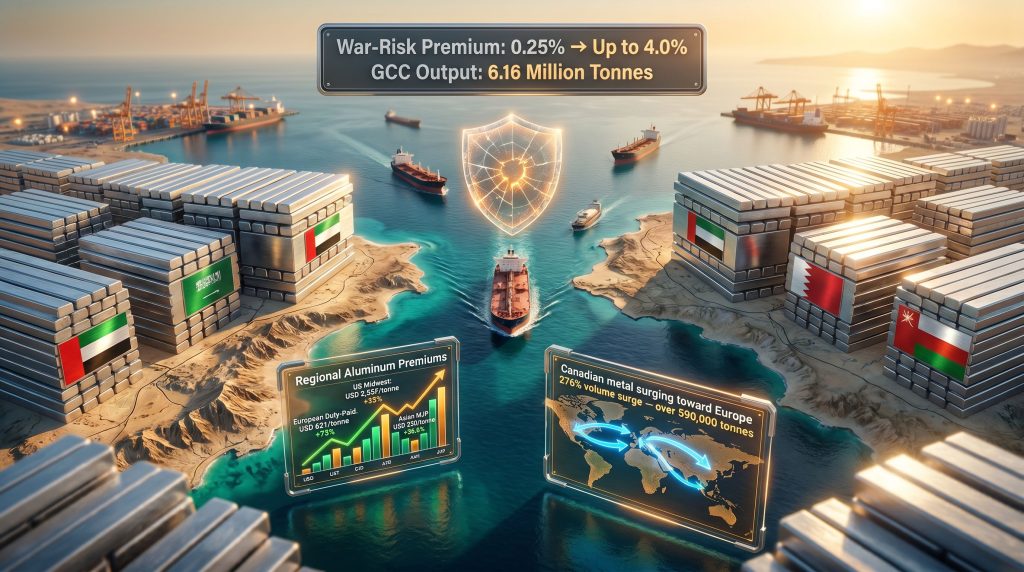
| Peak reported rate | Up to 4.0% | ~USD 10.0M |
War-risk cover is typically issued for seven-day windows and reassessed every 24 to 48 hours, meaning that cost exposure for operators can shift dramatically within a single week of escalation.
How Dramatically Have Costs Risen?
Moving from a baseline of 0.25% to nearly 3% of vessel value represents up to a twelvefold increase in insurance costs for a single transit. On a vessel valued at USD 250 million, this means the difference between paying roughly USD 625,000 and paying approximately USD 7.5 million for coverage on a comparable hull. Even marginal movements within these elevated bands, such as a shift from 2% to 3%, translate into millions of dollars per vessel per policy period. According to Gulf war risk premium reporting, across the roughly 329 commercial vessels estimated to be operating in the region, the aggregate financial impact of these premium movements is measured in the hundreds of millions of dollars.
How the Insurance Market Has Responded: Private Retreat and Government-Backed Capacity
The scale of the premium surge reflects something more fundamental than price adjustment. It signals a partial withdrawal of private market appetite for Gulf shipping risk. Several marine war insurers advised clients to pause voyages through Hormuz entirely during the most intense escalation phases, rather than simply pricing the risk at a higher rate. Private insurers are estimated to have withdrawn approximately USD 352 billion in coverage across the roughly 329 commercial vessels operating in the region.
Two major government-backed initiatives moved to fill the resulting coverage vacuum:
- The US International Development Finance Corporation (DFC) established a reinsurance facility with capacity of up to USD 40 billion, providing backstop coverage for operators that could not obtain adequate private market protection.
- A Lloyd's-market consortium led by Chubb assembled approximately USD 400 million in syndicated capacity specifically targeted at Gulf shipping exposure during the peak disruption period.
Neither facility eliminates the underlying risk. They represent attempts to maintain functional shipping insurance markets in a corridor where private capital alone has proved insufficient to sustain normal commercial operations. The gap between what these facilities can provide and the estimated USD 352 billion in withdrawn private coverage illustrates why shipping conditions in the Gulf remain structurally fragile even when active hostilities temporarily pause.
The Dark Fleet Dimension
One underappreciated dimension of this insurance crisis is its relationship to vessel transparency. Some commercial ships operating in the region have done so without broadcasting their automatic identification system (AIS) positions, a practice commonly associated with sanctions evasion but increasingly observed among operators seeking to reduce their profile as a conflict-risk mitigation strategy. Vessels operating without position broadcasts, sometimes described as operating within the so-called dark fleet, create compounding problems: they are harder for rescue services to locate, harder for insurers to track and price, and harder for market participants to account for in real-time supply assessments. Furthermore, this opacity compounds the challenges already facing underwriters trying to assess exposure across a volatile corridor. A detailed breakdown of how these dynamics affect coverage pricing is explored in this analysis of Hormuz insurance mechanics.
Why the GCC's 6.16 Million Tonne Output Makes Hormuz a Global, Not Regional, Problem
The Strait of Hormuz war-risk insurance and GCC aluminium industry exposure intersect at a single structural reality: more than 80% of the region's primary aluminium output is exported, and virtually all of that export trade passes through or near the Strait. This is not a marginal supply story. The GCC produced 6.16 million tonnes of primary aluminium in 2025, against installed capacity of 6.23 million tonnes per year, making the region one of the most productive and export-reliant primary aluminium zones on earth. In addition, the top aluminium companies operating across the Gulf face concentrated exposure that their counterparts in other regions simply do not.
The dual exposure problem compounds the severity. Gulf smelters are simultaneously:
- Dependent on seaborne alumina imports as feedstock (alumina is the refined intermediate product processed from bauxite that smelters convert into primary aluminium)
- Dependent on seaborne metal exports to deliver finished product to customers in Europe, Asia, and North America
Both directions of this trade flow through the same chokepoint. A disruption to inbound alumina supply starves smelters of raw material. A disruption to outbound metal shipments leaves producers unable to sell. When both occur simultaneously, as they did during the earlier phase of the US-Iran conflict, the consequences for capacity utilisation are severe.
Key producers including Aluminium Bahrain (Alba), Emirates Global Aluminium (EGA), and Qatalum all experienced disruptions to alumina deliveries during the earlier conflict phase. EGA's Al Taweelah alumina refinery, which processes seaborne bauxite into alumina for direct supply to EGA's smelting operations, faced specific vulnerability as bauxite supply chains were interrupted. By April, GCC-wide primary aluminium output had fallen to 330,000 tonnes for the month, against a monthly capacity equivalent of approximately 520,000 tonnes, implying a utilisation rate of roughly 64% at the trough. Estimated curtailments across the region during the disruption period reached between 500,000 and 600,000 tonnes.
| Metric | Figure |
|---|---|
| GCC installed primary aluminium capacity | |
| GCC primary aluminium output (2025 full year) | 6.16 million tonnes |
| Monthly output by April (IAI data) | ~330,000 tonnes |
| Implied utilisation rate at trough | ~64% |
| Share of GCC output that is exported | >80% |
| Estimated curtailments from instability | 500,000–600,000 tonnes |
EGA announced meaningful progress in restoring Al Taweelah operations, with 89 reduction cells restarted by late June following the earlier shutdown. However, the renewed escalation of Hormuz tensions emerged before the Gulf aluminium supply chain had fully returned to its pre-conflict operating pattern, meaning the region entered this latest episode of instability from a position of diminished resilience.
The USD 100 to 160 Per Tonne Logistics Detour: What Emergency Alumina Routing Actually Costs
One of the most instructive dimensions of the Hormuz disruption is the operational creativity it forced upon Gulf aluminium producers, and the significant cost that creativity carries. Unable to rely on direct seaborne alumina deliveries through normal routes, producers and traders developed alternative feedstock corridors during the earlier disruption phase.
Ports outside the standard Hormuz-dependent supply route gained critical importance:
- Sohar (Oman): An established industrial port with existing aluminium infrastructure, positioned to receive seaborne alumina deliveries that could then be transported overland or coastally into the GCC
- Duqm (Oman): A deepwater port with growing strategic significance for commodity logistics, offering access to Gulf industrial centres without requiring Hormuz transit
- Fujairah (UAE): Located on the Gulf of Oman, outside the Strait, serving as an important transshipment and re-entry point for cargoes destined for UAE and wider GCC smelters
From these entry points, alumina moved via road haulage and intra-GCC transshipment in what industry participants effectively describe as an operational patchwork. The combined cost of freight, handling, re-export logistics, and trucking for these rerouted movements reached USD 100 to 160 per tonne above standard routing costs.
Cost Comparison Snapshot:
- Standard FOB Australia alumina price: USD 300–350/tonne
- Additional rerouting cost burden: USD 100–160/tonne
- Implied landed cost premium above standard freight economics: up to 53% above baseline
A particularly unusual feature of the rerouting strategy was the apparent packaging of alumina in China. At least 220,000 tonnes of alumina imported into the region is suspected to have been bagged in China after initially being sourced from Australia and Indonesia. Bagging alumina, which is typically handled as a dry bulk commodity, allows it to be shipped on general cargo vessels rather than bulk carriers, expanding the pool of available vessels and enabling delivery through ports with more limited bulk handling infrastructure. This practice adds cost and complexity but demonstrated that Gulf smelters were willing to absorb both to maintain feedstock continuity.
Seaborne alumina imports into GCC countries, excluding intra-regional movements, recovered to 520,000 tonnes in May, with approximately 440,000 tonnes estimated to have ultimately reached Gulf smelters after accounting for regular requirements of Oman's Sohar operation.
LME Pricing, Regional Premiums, and the True All-In Cost for End Consumers
The physical disruption translated rapidly and powerfully into financial market pricing. London Metal Exchange aluminium reached USD 3,707.50 per tonne on 1 June, its highest level since March 2022, reflecting both genuine physical supply tightening and forward market repricing of ongoing Gulf supply risk.
Regional premium divergence told different stories across consuming markets, shaped both by Hormuz disruption and by pre-existing trade policy frameworks:
| Market | Premium Level | Change Since Conflict Onset |
|---|---|---|
| European Duty-Paid P1020 | USD 621/tonne | +73% |
| US Midwest Premium | USD 2,557/tonne | Record high (compounded by 50% Section 232 tariffs) |
| Asian Spot MJP (CIF Japan) | USD 230/tonne | +36.9% |
The US Midwest premium requires specific context. The Section 232 tariff framework, which applies a 50% duty on aluminium imports into the United States from multiple origins, compounded the GCC supply disruption effect. The broader consequences of US aluminium tariffs have been felt well beyond the Gulf, amplifying regional premiums in ways that were not fully anticipated. With LME aluminium trading around USD 3,670 per tonne at the time, US consumers faced an approximate all-in cost of USD 6,200 per tonne, while European buyers faced approximately USD 4,300 per tonne. The gap between these figures reflects the tariff multiplier applied in the US market rather than purely the Hormuz risk premium.
This premium divergence has direct implications for downstream industries. Automotive manufacturers, aerospace component producers, packaging companies, and construction material suppliers all absorb aluminium at these all-in prices. A sustained period of elevated premiums at the levels recorded during the disruption compresses margins across value chains that assumed more stable input cost structures.
The next major ASX story will hit our subscribers first
How the Disruption Has Permanently Altered Global Aluminium Trade Flows
Perhaps the most structurally significant consequence of the Hormuz disruption is not its immediate pricing effect but its acceleration of trade flow realignment. GCC suppliers accounted for approximately 16% of US aluminium imports in 2025, representing roughly 1.95 million tonnes. When GCC supply became unreliable, US buyers needed alternative sources, and the global market responded accordingly. Consequently, the ripple effects of tariffs and supply chains have accelerated structural shifts that may prove difficult to reverse even once the immediate conflict subsides.
Canada emerged as the most visible pivot point, though the direction of its pivot was unexpected. Rather than simply increasing shipments to the US to fill the GCC gap, Canadian producers shifted substantially toward European buyers:
- Canadian exports to Europe rose more than 276% year-on-year to over 590,000 tonnes
- Canadian exports to the US declined approximately 25% to around 2 million tonnes
Trade Flow Shift in Numbers:
- Canadian exports to Europe: rose more than 276% year-on-year to over 590,000 tonnes
- Canadian exports to the US: fell approximately 25% to around 2 million tonnes
- GCC share of US imports in 2025: ~16%, or approximately 1.95 million tonnes
This reorientation reflects the combined effect of steel and aluminium tariffs making Canadian metal relatively less attractive for US buyers and European buyers becoming more eager to diversify away from GCC supply. Australia and Turkey have emerged as discussed alternatives for expanding feedstock and metal supply, though neither offers a short-term substitute at equivalent scale to the GCC's integrated production base.
Three Scenarios for the GCC Aluminium Industry as Hormuz Tensions Persist
The forward trajectory for Gulf aluminium producers depends heavily on how the geopolitical situation evolves. Three distinct scenarios frame the range of outcomes:
Scenario 1: Prolonged Disruption (12+ Months)
If war-risk insurance premiums remain elevated and emergency logistics persist as the operating norm, the cost compression facing Gulf smelters compounds over time. Alumina rerouting costs of USD 100 to 160 per tonne, sustained across hundreds of thousands of tonnes of monthly feedstock requirements, erode the energy-cost advantage that makes GCC smelting economics attractive in the first place. Producers operating on thin margins would face decisions about whether to maintain output, curtail further, or accelerate investment in alternative logistics infrastructure.
Scenario 2: Ceasefire Restoration
A return to stable Strait transit would allow war-risk premiums to normalise relatively quickly, as insurers reprice risk downward in response to reduced threat assessments. Smelter utilisation rates could recover toward installed capacity within a quarter or two, assuming alumina supply chains reconsolidate through standard routes. However, the structural changes to trade flows driven by the disruption, particularly Canada's European pivot, may prove more durable than the pricing spike itself.
Scenario 3: Escalation to Full Strait Closure
A full closure of the Strait of Hormuz would place approximately 9% of global unwrought aluminium supply in immediate jeopardy. No alternative sourcing solution at equivalent scale exists in the short term. This scenario represents a tail risk with systemic implications for global manufacturing supply chains, extending well beyond the aluminium sector. Furthermore, China's steel market outlook suggests that broader metals markets across Asia would face compounding pressure under such a scenario.
Strategic Risk Framing: A full closure of the Strait of Hormuz would place approximately 9% of global unwrought aluminium supply in immediate jeopardy, a concentration risk with no short-term substitute sourcing solution at equivalent scale.
Frequently Asked Questions: Strait of Hormuz War-Risk Insurance and GCC Aluminium
What Is War-Risk Insurance and Why Is It Critical for Shipping Through the Strait of Hormuz?
War-risk insurance covers vessels against losses caused by acts of war, including attacks, seizure, and weapons damage. It is distinct from standard hull and cargo insurance and is priced dynamically rather than on fixed annual terms. For the Strait of Hormuz war-risk insurance and GCC aluminium supply chains, this coverage is essential for any operator whose vessel transits the area during periods of military tension. Without it, a single attack on an uninsured vessel worth hundreds of millions of dollars represents an unrecoverable loss.
How Much Have War-Risk Premiums Increased Since Escalation Began?
Premiums have risen from a pre-conflict baseline of approximately 0.25% of vessel value to rates approaching 3% and reportedly up to 4% at peak. This represents a potential twelvefold to sixteenfold increase in insurance cost per transit, adding millions of dollars to the operating cost of individual voyages.
Which GCC Aluminium Producers Are Most Exposed?
EGA (UAE), Alba (Bahrain), and Qatalum (Qatar) are the largest primary producers in the region and all experienced supply chain disruption during the earlier conflict phase. EGA carries additional exposure through its Al Taweelah alumina refinery, which depends on seaborne bauxite supply, creating a two-stage vulnerability in its raw material chain.
What Alternative Routes Are Being Used to Supply Gulf Smelters With Alumina?
Ports at Sohar, Duqm, and Fujairah have been used as entry points for rerouted alumina shipments. From these locations, material moves via road haulage and intra-GCC transshipment to reach smelter sites. At least 220,000 tonnes of alumina was suspected to have been bagged in China to enable delivery on general cargo vessels rather than bulk carriers.
How Are Global Aluminium Prices Likely to Move If the Strait Remains Restricted?
Sustained Strait restriction would maintain upward pressure on LME aluminium prices and regional premiums, particularly in Europe and Asia where GCC metal competes directly. US prices are additionally amplified by the Section 232 tariff framework, meaning US consumers face a compounded cost exposure that extends beyond the Hormuz risk premium alone.
What Role Did Government Reinsurance Facilities Play in Keeping Shipping Viable?
The DFC's USD 40 billion reinsurance facility and the Chubb-led Lloyd's consortium of approximately USD 400 million provided backstop capacity when private insurers withdrew or paused coverage. These facilities helped maintain minimum shipping viability but could not fully replace the estimated USD 352 billion in private coverage withdrawn from the region.
Key Takeaways: What the Hormuz Insurance Crisis Means for the Global Aluminium Market
- War-risk premiums have surged from a pre-conflict baseline of 0.25% to nearly 3 to 4% of vessel value, representing a cost increase of up to 12 to 16 times for operators transiting the Gulf
- The GCC's 6.16 million tonne primary aluminium industry, with over 80% of output destined for export, sits almost entirely behind the Hormuz chokepoint
- Emergency rerouting logistics have added USD 100 to 160 per tonne to alumina delivery costs, compressing smelter margins even before the most recent escalation
- Global aluminium premiums have reached historic levels across all major consuming regions, with the US Midwest, European, and Asian markets all repricing simultaneously
- Trade flow realignment, particularly Canada's 276% surge in European exports, signals that the disruption is already producing durable structural changes in global metal sourcing patterns
- The path from supply chain vulnerability to resilience requires multi-route logistics infrastructure, feedstock diversification, and government-backed insurance capacity that the private market alone cannot sustain
- A full Strait closure would place approximately 9% of global unwrought aluminium supply at immediate risk, a concentration with no short-term equivalent substitute
Readers seeking further context on GCC aluminium production trends and regional shipping developments can explore primary aluminium coverage at alcircle.com, which tracks production data and trade flows across the Gulf region.
This article contains forward-looking analysis and scenario projections based on data available at the time of writing. Insurance rates, production figures, and trade flows are subject to rapid change in response to geopolitical developments. Nothing in this article constitutes financial or investment advice.
Want to Know Which ASX Mineral Discoveries Could Deliver the Next Major Market Return?
Discovery Alert's proprietary Discovery IQ model scans ASX announcements in real time, instantly identifying significant mineral discoveries across more than 30 commodities and converting complex data into clear, actionable opportunities — explore Discovery Alert's discoveries page to see how historic finds have generated exceptional returns, and begin your 14-day free trial at Discovery Alert to position yourself ahead of the broader market.