May 13, 2026
Global energy markets face unprecedented complexity as major shipping chokepoints increasingly determine not just commodity flows, but the fundamental architecture of economic power. While traditional supply-demand analysis focuses on production capacity and consumption patterns, the vulnerabilities embedded within maritime transit corridors create cascading effects that reshape everything from monetary policy to industrial planning. When critical waterways face disruption, the resulting Strait of Hormuz oil disruption creates transmission mechanisms that extend far beyond immediate price volatility, triggering structural adaptations across entire financial systems.
Understanding Critical Maritime Energy Transit Dependencies
The global energy system relies heavily on narrow maritime passages that concentrate enormous economic value within geographically constrained areas. These chokepoints represent far more than simple transportation routes, functioning as critical nodes where geopolitical tensions, technical limitations, and economic pressures converge to create systemic vulnerabilities.
Geographic Constraints and Strategic Positioning
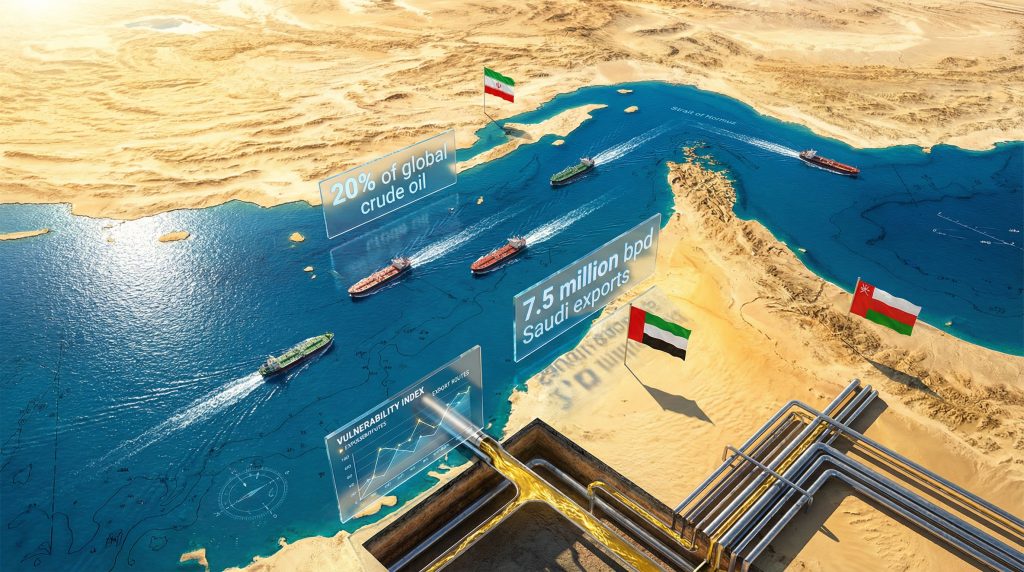
The Strait of Hormuz represents perhaps the most strategically significant energy transit corridor globally, facilitating approximately 20% of all internationally traded crude oil and liquefied natural gas flows. This narrow waterway, positioned between the Persian Gulf and Gulf of Oman, creates an unavoidable dependency for major energy-exporting nations throughout the Middle East region. Furthermore, recent geopolitical tensions have highlighted how an oil price rally can develop rapidly when maritime security concerns escalate.
The physical dimensions of such corridors create inherent bottlenecks that limit alternative routing options. Navigation through these waters requires precise coordination between vessels, with limited capacity for simultaneous large-scale tanker movements. These constraints become particularly acute during periods of heightened regional tension or when weather conditions reduce visibility and safe passage parameters.
Control dynamics within these areas involve complex territorial considerations spanning multiple national jurisdictions. Iran maintains significant influence over northern approaches, while the UAE and Oman control southern shipping lanes. This distributed authority structure creates potential coordination challenges during crisis periods, as demonstrated during recent disruptions when Iranian authorities announced closure intentions while other regional powers maintained different operational positions.
Regional Production Dependencies and Export Vulnerabilities
Recent analysis by major financial institutions reveals stark differences in how various producing nations can withstand transit disruptions. Iraq faces the most immediate constraints, with storage capacity limitations forcing potential production cuts within approximately three days if export routes remain blocked. This represents more than 3 million barrels per day of crude oil production at risk of immediate shutdown.
Kuwait's vulnerability timeline extends to roughly 14 days, during which the nation can continue pumping crude into storage facilities before facing similar production halt decisions. However, Kuwait's complete dependence on Hormuz transit means no meaningful alternative export capacity exists to offset these constraints.
Saudi Arabia demonstrates considerably more flexibility, maintaining operational capacity to redirect approximately 35% of its crude exports through Red Sea terminals via the East-West Pipeline system. Recent operational evidence shows Saudi Aramco actively instructing buyers to load cargoes from Yanbu rather than Persian Gulf terminals, demonstrating real-time utilization of this alternative infrastructure. Moreover, Saudi exploration licenses continue expanding to strengthen the nation's production flexibility.
The UAE benefits from dual-route capabilities, including the Abu Dhabi Crude Oil Pipeline system that bypasses Hormuz entirely through Fujairah terminal operations. Abu Dhabi Ports Group has confirmed business continuity across all operations and indicated capacity to handle increased maritime traffic volumes from rerouted crude flows.
Qatar's position remains more complex, with QatarEnergy announcing downstream production halts as a precautionary measure. This decision suggests strategic preference for supply management over forced alternative routing, potentially indicating limitations in LNG shipping alternatives despite significant infrastructure investments.
When big ASX news breaks, our subscribers know first
Economic Disruption Mechanisms and Timeline Analysis
When major energy transit routes face closure, the resulting economic impacts follow predictable patterns based on storage depletion rates, production ramping constraints, and financial pressure timelines. Understanding these mechanisms enables more accurate assessment of potential economic consequences and policy response requirements.
Immediate Market Response Patterns
Oil markets demonstrated typical initial reactions during recent Strait of Hormuz oil disruption concerns, with crude prices rising 3% within the first trading session as supply uncertainty created immediate risk premium adjustments. This response pattern reflects automated trading systems and commodity futures market mechanisms rather than actual supply shortfalls. In addition, global oil price movements during trade war tensions have shown similar volatility patterns.
Insurance markets represent another critical transmission channel, with maritime coverage providers rapidly reassessing risk premiums for tanker traffic through disputed waters. Historical precedent suggests insurance withdrawal can effectively halt commercial shipping even when physical passage remains technically possible.
Tanker rerouting decisions occur within hours of announced closures, with shipping companies immediately calculating alternative route economics and transit time implications. These operational adjustments create the first tangible supply chain impacts before any actual production cuts occur.
Production Loss Escalation Timeline
Financial institution analysis provides detailed projections for how supply disruptions escalate over time based on operational realities rather than theoretical scenarios:
Days 1-3: Iraq reaches critical storage thresholds, potentially requiring production cuts exceeding 3 million barrels per day. This represents the steepest initial supply reduction, driven by limited storage infrastructure and complete dependence on Hormuz transit.
Days 4-8: Combined Iraq and partial Kuwait impacts could remove 3.3 million barrels per day from global markets. Kuwait's slightly longer operational window reflects better storage management but similar fundamental constraints.
Days 15-18: Cumulative supply losses potentially reach 3.8 to 4.7 million barrels per day as storage depletion forces additional production decisions across multiple producing nations. This timeline assumes no successful alternative route activation or political resolution.
Beyond 30 days: Structural market reorganization becomes necessary, with alternative infrastructure activation, strategic petroleum reserve coordination, and potential industrial demand destruction offsetting continued supply constraints.
Alternative Infrastructure and Bypass Capacity Assessment
When primary energy transit routes face disruption, the global market's resilience depends heavily on alternative infrastructure capacity and operational flexibility. Recent events provide real-time evidence of how these backup systems function under actual stress conditions rather than theoretical planning scenarios.
Pipeline Infrastructure Utilization
Saudi Arabia's East-West Pipeline system represents the most significant alternative routing capacity, with design capability approaching 5 million barrels per day through Red Sea terminal access. Current operational evidence shows active utilization, with Saudi Aramco directing buyers to load cargoes from Yanbu rather than Persian Gulf terminals.
Egypt's SUMED Pipeline has emerged as an additional alternative routing option, with the Egyptian Petroleum Ministry offering capacity to facilitate Saudi crude transit through Suez Canal connections. This cooperation demonstrates regional coordination mechanisms for alternative energy routing during crisis periods.
UAE's bypass infrastructure through the Abu Dhabi Crude Oil Pipeline provides 1.8 million barrels per day capacity directly to Fujairah terminals on the Gulf of Oman. This infrastructure enables UAE production to avoid Strait of Hormuz entirely while maintaining export capabilities.
Strategic Petroleum Reserve Considerations
Strategic petroleum reserve systems represent critical buffer mechanisms during supply disruptions, though coordination challenges often limit their effectiveness. The International Energy Agency maintains protocols for coordinated release programs, though activation typically requires consensus among major consuming nations.
United States Strategic Petroleum Reserve contains substantial crude oil stocks, though release rates face technical limitations based on infrastructure capacity and crude quality matching requirements. Recent administrations have utilized SPR releases for market stabilization, though effectiveness varies based on disruption scale and duration.
Asian strategic reserves maintained by Japan, China, and India provide regional buffer capacity, though coordination mechanisms remain less developed compared to IEA protocols. China's strategic reserve system has expanded significantly in recent years, providing substantial buffer capacity for domestic consumption.
European strategic stocks face additional complexity due to multiple national reserve systems with varying release authorities and coordination mechanisms. Integration challenges can delay coordinated response efforts during rapidly evolving crisis situations.
Maritime Route Diversification Challenges
Alternative shipping routes face significant economic and logistical constraints that limit their effectiveness as immediate substitutes for disrupted primary corridors. Cape of Good Hope routing adds approximately 10-15 days to delivery timelines while increasing transportation costs substantially through additional fuel consumption and charter rate impacts. Consequently, the current oil & gas downturn has made these additional costs particularly challenging for operators.
Suez Canal capacity constraints become apparent when large volumes of redirected crude flows attempt to utilize alternative routing simultaneously. Port congestion and scheduling conflicts can create additional delays beyond normal transit time extensions.
Insurance premium adjustments for alternative routing often reflect perceived security risks and operational complexity, potentially doubling coverage costs for redirected cargoes. These financial impacts affect overall economics of alternative routing strategies.
Economic Scenario Analysis and Market Impact Projections
Analyzing potential economic outcomes from prolonged energy transit disruptions requires consideration of multiple variables including disruption duration, alternative capacity utilization, and policy response effectiveness. Different timeline scenarios produce dramatically different economic consequences and adaptation requirements.
Short-Term Disruption Impact Assessment
1-4 Week Closures typically produce manageable economic impacts through strategic reserve utilization and alternative routing activation. Oil price increases generally remain within $85-100 per barrel ranges based on historical precedent and current market conditions.
GDP impact estimates for major economies suggest relatively contained effects during short-term disruptions, with energy-intensive industries facing the most immediate pressure. Transportation sector costs increase substantially, though consumer price transmission typically requires several weeks to develop fully.
Central bank responses during short-term disruptions generally focus on monitoring inflation expectations rather than immediate policy adjustments. Emergency coordination mechanisms between monetary authorities help prevent unnecessary policy overreactions during temporary supply constraints.
Extended Closure Economic Modeling
1-6 Month Disruptions create substantially different economic dynamics, requiring structural demand destruction and significant alternative infrastructure development. Industrial production adjustments become necessary as energy costs make certain manufacturing processes economically unviable.
Geopolitical alliance reshuffling often occurs during extended disruptions, with energy-importing nations developing closer relationships with alternative suppliers. These diplomatic adjustments can have lasting impacts beyond the immediate crisis period.
Long-term supply chain reorganization becomes inevitable during extended closures, with companies investing in alternative sourcing strategies and transportation infrastructure. These adaptations often persist after primary routes reopen, permanently altering global energy trade patterns.
Permanent Closure Scenario Planning
Hypothetical permanent closure scenarios would require complete restructuring of global energy markets and trade relationships. Investment flows would redirect toward alternative pipeline infrastructure, renewable energy acceleration, and strategic reserve expansion on unprecedented scales.
Regional economic power distribution would shift significantly, with nations controlling alternative transit routes gaining substantial strategic influence. Russia, North America, and West Africa would likely benefit from reduced Middle Eastern market share and increased pricing leverage.
Climate policy acceleration could occur through necessity rather than voluntary commitment, with high energy costs forcing rapid adoption of renewable alternatives and energy efficiency improvements across all economic sectors. However, energy transition challenges remain significant for many nations attempting rapid infrastructure shifts.
Regional Economic Adaptation Strategies and Investment Patterns
Different regions demonstrate varying approaches to managing energy transit vulnerabilities, with adaptation strategies reflecting both immediate security concerns and long-term economic planning objectives. These responses provide insight into how global energy architecture may evolve under continued geopolitical pressure.
Gulf State Diversification Initiatives
UAE strategic positioning through Fujairah terminal development and Abu Dhabi Ports expansion demonstrates proactive infrastructure investment aimed at reducing Hormuz dependency. Recent statements from Abu Dhabi Ports Group indicate confidence in handling increased maritime traffic volumes from rerouted energy flows.
Saudi Arabia's Red Sea development represents the most substantial alternative routing investment, with East-West Pipeline capacity and Yanbu terminal infrastructure providing meaningful bypass options. Current operational utilization during Strait of Hormuz oil disruption tensions validates this strategic infrastructure investment.
Kuwait's infrastructure limitations highlight the vulnerability of nations without significant alternative routing capacity. Investment in northern pipeline connections or expanded storage infrastructure could reduce future disruption risks, though geographic constraints limit available options.
Qatar's strategic response through downstream production management rather than alternative routing suggests different risk tolerance approaches. LNG shipping flexibility may provide more operational options compared to crude oil export constraints.
Consumer Nation Energy Security Frameworks
China's Belt and Road energy initiatives increasingly focus on overland pipeline connections that bypass maritime chokepoints entirely. Recent infrastructure investments in Central Asian pipeline systems and Russian energy connections reflect strategic diversification away from Middle Eastern maritime dependencies.
European Union strategic autonomy programs emphasise renewable energy development and alternative supplier relationships as primary strategies for reducing energy transit vulnerabilities. Recent policy frameworks prioritise energy independence over cost optimisation in supply chain decisions.
Japan's energy diversification policies combine strategic reserve expansion with renewable energy acceleration and alternative supplier development. Island geography creates unique vulnerabilities that require comprehensive adaptation strategies across multiple supply sources.
India's renewable energy acceleration represents perhaps the most ambitious consumer nation response, with massive solar and wind capacity development aimed at reducing overall hydrocarbon import dependencies rather than simply diversifying supply sources.
Historical Precedent Analysis and Market Resilience Lessons
Previous energy transit disruptions provide valuable insight into market adaptation mechanisms, policy response effectiveness, and long-term economic consequences. Understanding these historical patterns helps inform current risk assessment and preparation strategies.
Iran-Iraq War and Tanker War Impact Assessment
The 1980s Tanker War demonstrated both market resilience and vulnerability during prolonged shipping disruption periods. Oil price volatility reached extreme levels, with prices fluctuating between $10-40 per barrel based on weekly shipping incident reports and convoy coordination effectiveness.
International naval escort operations proved essential for maintaining commercial shipping operations, with coordinated military protection enabling continued energy flows despite ongoing regional conflict. These operations established precedent for international cooperation in maintaining critical energy transit security.
Insurance market adaptation during this period created lasting changes in maritime coverage provisions and premium calculation methodologies. War risk exclusions and specialised coverage products developed during this period continue influencing current insurance market structures.
Long-term shipping route modifications included permanent increases in Cape of Good Hope routing and expanded strategic petroleum reserve utilisation. Many of these adaptations persisted beyond the immediate conflict period, creating lasting changes in global energy trade patterns.
Gulf War Disruption Case Study Analysis
The 1990-1991 Gulf War provided different lessons regarding rapid supply disruption and recovery patterns. Strategic petroleum reserve coordination proved more effective than during previous crises, with coordinated international releases helping stabilise markets during peak uncertainty periods.
OPEC spare capacity utilisation demonstrated the importance of production flexibility for market stabilisation. Saudi Arabia's ability to rapidly increase production helped offset Kuwait and Iraqi production losses more effectively than many analysts anticipated.
Economic recession correlation during this period highlighted the relationship between energy price shocks and broader economic performance. However, rapid conflict resolution limited long-term economic adaptation requirements compared to more prolonged disruption scenarios.
Recovery timeline analysis showed markets normalising within 6-12 months of conflict resolution, though some supply chain adaptations and alternative routing investments persisted much longer, creating permanent changes in global energy infrastructure utilisation.
Modern Vulnerability Assessment and Current Capabilities
Increased global energy interdependence since historical precedent events creates both greater vulnerability and enhanced coordination capabilities. Modern communication systems enable more rapid policy coordination, though financial market integration can amplify price volatility compared to historical periods.
Reduced spare production capacity in current global oil markets limits available buffer mechanisms compared to historical periods when substantial unused capacity provided market stability during disruption events. This constraint increases the importance of alternative routing and strategic reserve coordination.
Enhanced financial market integration means energy price shocks transmit more rapidly across global economic systems, potentially accelerating both disruption impacts and recovery mechanisms. Modern derivative markets provide hedging capabilities but can also amplify volatility during extreme events.
Accelerated policy response capabilities through improved international coordination mechanisms may enable more effective crisis management, though political complexity in current geopolitical environment could limit cooperative policy implementation during actual crisis periods.
The next major ASX story will hit our subscribers first
Investment Strategy Framework and Risk Management Approaches
Strait of Hormuz oil disruption risks create specific investment considerations that extend beyond traditional energy sector exposure. Understanding these dynamics enables more sophisticated portfolio positioning and risk management strategies across multiple asset classes and geographic regions.
Energy Security Infrastructure Investment Opportunities
Pipeline infrastructure development represents a primary investment theme, with projects enabling energy transit route diversification likely to receive increased funding during periods of heightened chokepoint risk. Recent evidence of Egypt offering SUMED pipeline capacity for Saudi crude demonstrates commercial viability of alternative routing investments.
Strategic petroleum reserve expansion creates opportunities in storage infrastructure and related logistics systems. Government policies promoting energy security often support private sector investment in commercial storage capacity that can serve dual strategic and commercial purposes.
Alternative energy source acceleration benefits from energy security concerns beyond climate policy drivers. Renewable energy projects gain additional investment justification through energy independence benefits rather than purely environmental considerations.
Maritime security technology development attracts both government and private sector investment during periods of heightened shipping lane security concerns. Navigation systems, vessel protection equipment, and port security infrastructure represent growing market segments.
Geographic Risk Diversification Strategies
Non-Middle Eastern oil production investments gain strategic premium during Strait of Hormuz oil disruption periods. North American shale production, West African offshore developments, and South American conventional resources provide geographic diversification away from Persian Gulf chokepoint dependencies.
Renewable energy project prioritisation in major consuming nations reduces long-term dependence on imported hydrocarbons regardless of source region. Investment themes include distributed solar systems, offshore wind development, and grid infrastructure modernisation supporting renewable integration.
Energy storage technology development becomes critical for renewable energy systems and provides backup capabilities during supply disruption periods. Battery storage, pumped hydro systems, and emerging storage technologies represent expanding investment opportunities.
Grid infrastructure modernisation requirements increase substantially when energy systems must accommodate both renewable integration and supply disruption management. Smart grid technologies, transmission capacity expansion, and distribution system upgrades represent substantial investment requirements.
Portfolio Hedging and Risk Management Mechanisms
Energy commodity futures positioning provides direct exposure to oil price movements resulting from supply disruption risks. However, contango/backwardation patterns and storage cost considerations complicate long-term hedging strategies using futures markets.
Currency hedging considerations become important for investors in energy-importing nations where Strait of Hormuz oil disruption could create substantial currency depreciation pressure. Oil-importing nation currencies typically face pressure during energy price spike periods.
Infrastructure REIT exposure adjustments may benefit from increased investment in alternative energy transportation and storage infrastructure. Pipeline companies, storage facility operators, and energy transportation infrastructure often receive increased investment during energy security concerns.
Geopolitical risk insurance products provide specialised coverage for investment exposure to energy-dependent sectors and regions. These products help manage tail risk scenarios while maintaining investment exposure to potentially affected markets and sectors.
The complex interplay between maritime chokepoints, energy security, and global economic stability creates both significant risks and substantial opportunities for prepared investors and policymakers. Understanding these dynamics enables more sophisticated risk management and strategic positioning as global energy markets continue evolving under increasing geopolitical pressure. Furthermore, the implications of prolonged Gulf tensions continue to reshape investment strategies across multiple sectors.
Investment Disclaimer: The analysis presented in this article is for educational purposes only and should not be considered personalised investment advice. Energy market investments involve substantial risk, and past performance does not guarantee future results. Readers should consult qualified financial advisors before making investment decisions based on geopolitical risk assessments or commodity market analysis.
Looking to Navigate Energy Market Volatility and Geopolitical Risks?
Discovery Alert's proprietary Discovery IQ model delivers real-time alerts on significant mineral discoveries across the ASX, helping investors identify opportunities that often emerge during global energy transitions and commodity market disruptions. With major energy chokepoints creating unprecedented market volatility, savvy investors are positioning themselves in mineral exploration companies that could benefit from supply chain diversification and energy security priorities. Begin your 14-day free trial today at Discovery Alert to gain a market-leading advantage in identifying actionable investment opportunities ahead of the broader market.