May 14, 2026
Strategic Capital Allocation in Modern Mining: Understanding Investment Return Dynamics
Mining companies across the globe face unprecedented challenges in capital allocation as traditional commodity investments struggle to generate competitive returns against emerging technologies and future-focused materials. The intersection of regulatory pressures, operational cost escalation, and shifting market dynamics creates a complex environment where established mining operations must fundamentally reassess their value propositions to attract investment capital.
BHP Australian coal investment challenges exemplify broader industry trends where traditional fossil fuel assets compete against investment strategy 2025 approaches that prioritise sustainable returns. Investment decisions in the resources sector increasingly depend on rigorous return thresholds that reflect both immediate profitability potential and long-term sustainability considerations.
Companies operating in traditional commodity spaces find themselves competing not only against other mining ventures but against technology investments, renewable energy projects, and critical minerals operations that promise higher returns with lower regulatory risks. Furthermore, the mining industry evolution demonstrates how established operators must adapt to survive.
When big ASX news breaks, our subscribers know first
Regulatory Framework Evolution and Cost Implications
Australia's mining sector exemplifies how regulatory changes can fundamentally alter project economics. The enhanced royalty regime introduced across various jurisdictions demonstrates how government policy shifts create immediate impacts on operational profitability and long-term investment viability.
According to recent analysis from Bloomberg, major mining operators have explicitly stated that their Australian coal operations cannot compete for capital allocation against alternative investment opportunities.
Queensland's Enhanced Royalty Structure:
• Base tier: Standard rates for normal commodity pricing scenarios
• Progressive escalation: Higher percentages activate during price upswings
• Revenue capture mechanisms: Government participation in commodity price benefits
• Cost recovery challenges: Reduced margins during operational optimization periods
The tiered royalty system creates a ceiling effect on profitability, where operators cannot fully capitalise on favourable market conditions. This mechanism fundamentally changes investment return calculations, as traditional models assumed full price upside participation.
Cost Escalation Patterns in Mining Operations
Modern mining operations face systematic cost increases across multiple operational categories. Labour markets in specialised mining regions experience significant wage inflation due to skills shortages and competitive recruitment practices. Equipment maintenance costs have risen substantially as supply chain disruptions affect parts availability and service delivery timelines.
Environmental compliance requirements continue expanding, requiring substantial capital investments in monitoring systems, emissions control technology, and remediation planning. Energy costs particularly impact processing-intensive operations, where electricity and fuel represent significant operational expense categories.
Operational Cost Escalation Factors:
• Specialised labour premiums: 15-25% wage increases in technical roles
• Equipment maintenance: 30-40% cost increases for critical components
• Environmental compliance: Additional 10-15% operational expense allocation
• Energy price volatility: 20-35% increases in processing-related power costs
Commodity Market Dynamics and Price Forecasting
Metallurgical Coal Market Evolution
Steelmaking coal markets reflect fundamental shifts in global steel production patterns and technological advancement in steel manufacturing processes. Chinese steel output optimisation represents a significant demand variable, as production efficiency improvements reduce total coal requirements per unit of steel produced.
Indian market diversification strategies focus on supplier risk reduction, leading to procurement spread across multiple geographic sources rather than concentration in traditional supply regions. European steel industry contraction results from energy cost pressures and increased competition from regions with lower production costs.
Alternative steelmaking technologies present long-term demand destruction risks for traditional coking coal. Hydrogen-based steel production, electric arc furnace expansion, and recycled steel content increases all contribute to reduced metallurgical coal intensity in global steel production.
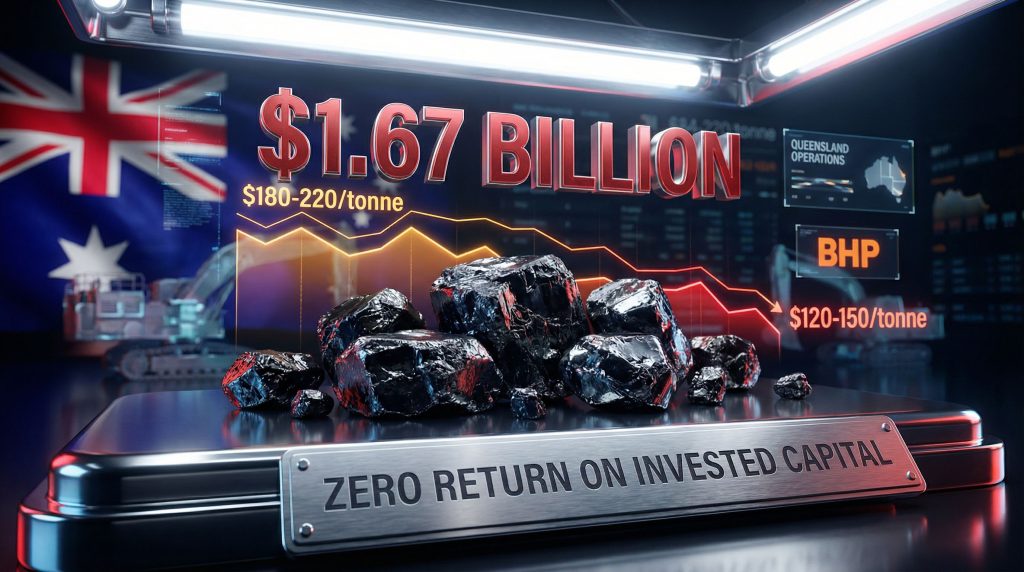
Met Coal Price Trajectory Analysis:
| Time Period | Price Range (USD/tonne) | Primary Market Drivers |
|---|---|---|
| 2024-2025 | $180-220 | Stable steel demand, inventory cycles |
| 2025-2026 | $160-190 | Chinese production optimisation |
| 2026-2027 | $140-170 | Technology substitution acceleration |
| 2027+ | $120-150 | Structural demand transformation |
Energy Coal Demand Destruction Mechanisms
Thermal coal faces accelerated demand erosion through multiple simultaneous market forces. Renewable energy cost competitiveness has reached grid parity in most major markets, eliminating the economic rationale for new coal-fired power generation capacity.
Natural gas transition policies in developed economies create regulatory frameworks favouring cleaner-burning alternatives to coal-fired power generation. Nuclear capacity expansions, particularly in Asian markets, provide baseload power alternatives that directly substitute thermal coal demand.
Battery storage technology advancement eliminates traditional arguments for coal-fired power as baseload capacity. Grid-scale storage systems increasingly provide the reliability and dispatchability previously associated exclusively with fossil fuel generation.
Investment Return Analysis and Capital Competition
Competing Investment Opportunities
Mining companies face intense capital competition from sectors offering superior return profiles with reduced regulatory risks. Future-facing commodities, particularly those supporting energy transition infrastructure, command premium valuations and attract preferential financing terms.
The critical minerals demand surge demonstrates how market preferences have shifted dramatically. Investment Return Comparison Framework:
• Copper projects: 18-25% IRR supporting electrification infrastructure
• Lithium operations: 22-30% IRR enabling battery manufacturing scale-up
• Nickel developments: 20-28% IRR for electric vehicle production chains
• Traditional coal: 5-12% IRR facing regulatory and market headwinds
The return differential creates clear capital allocation preferences, as mining companies maximise shareholder value through investment in commodities with favourable long-term demand prospects and regulatory support. Moreover, BHP Australian coal investment challenges reflect this broader industry trend toward higher-return alternatives.
Risk-Adjusted Return Calculations
Modern investment analysis incorporates stranded asset risks, regulatory change probability, and demand destruction scenarios into return calculations. Coal investments face particular scrutiny regarding asset life assumptions and terminal value projections.
Risk Assessment Matrix:
High-Risk Factors: Regulatory policy changes, accelerated technology adoption, financing availability constraints, insurance cost escalation
Medium-Risk Factors: Commodity price volatility, operational cost inflation, labour availability challenges, infrastructure bottlenecks
Low-Risk Factors: Currency fluctuations, general economic cycles, weather-related production impacts
Investment committees increasingly apply higher discount rates to coal projects, reflecting elevated risk profiles and shorter effective asset lives compared to traditional mining investment models.
Financing Market Evolution and Capital Availability
Banking Sector Transformation
Financial institutions systematically reduce coal sector exposure through multiple mechanisms. Environmental, Social, Governance (ESG) investment mandates create institutional frameworks that explicitly exclude or limit fossil fuel financing.
Regulatory pressure from climate-focused policies influences bank lending decisions, as financial regulators increasingly incorporate climate risk assessments into prudential supervision frameworks. Investor activism targeting fossil fuel exposure creates additional pressure for financial institutions to demonstrate alignment with climate objectives.
Financing Availability Assessment:
• Major commercial banks: Restricting new coal project financing
• Development finance institutions: Eliminating coal from eligible sectors
• Private equity funds: Selective participation in operational optimisation opportunities
• Sovereign wealth funds: Implementing coal exclusion policies across portfolios
Insurance Market Constraints
Coal operations face escalating insurance costs and coverage limitations as underwriters reassess climate-related risks and long-term environmental liabilities. Environmental liability policies incorporate more restrictive terms and higher deductibles for coal-related operations.
Climate-related risk assessments increasingly influence premium calculations, as insurers develop sophisticated models linking extreme weather events to operational disruption risks. Coverage gaps emerge for long-term environmental remediation obligations, creating additional financial risk for coal operators.
Reinsurance markets demonstrate reduced appetite for coal sector exposure, limiting primary insurers' capacity to provide comprehensive coverage for large-scale coal operations. Consequently, operators face additional capital requirements to self-insure against previously covered risks.
Workforce Transition and Skills Redeployment
Training Program Evolution
Mining companies must develop comprehensive workforce transition strategies as traditional coal-focused training programs lose relevance. Skills redeployment initiatives focus on transferable capabilities applicable across multiple mining sectors and emerging industries.
Transferable Skills Framework:
• Equipment operation: Heavy machinery skills applicable across mining sectors
• Safety management: Comprehensive safety protocols transferable to construction and manufacturing
• Project management: Large-scale project coordination relevant to infrastructure development
• Technical maintenance: Mechanical and electrical skills supporting renewable energy operations
Cross-training programs enable workforce transition toward renewable energy construction, where many mining skills directly apply to large-scale infrastructure projects. Equipment operation expertise translates effectively to wind farm construction, solar installation projects, and grid infrastructure development.
Regional Economic Development
Coal-dependent communities require comprehensive economic diversification strategies that leverage existing infrastructure and workforce capabilities. Regional transition planning must address both immediate employment needs and long-term economic sustainability.
Infrastructure Repurposing Opportunities:
• Rail networks: Supporting renewable energy component transportation
• Port facilities: Handling critical minerals exports for battery supply chains
• Power transmission: Connecting renewable generation to consumption centres
• Industrial sites: Suitable for battery manufacturing and clean technology production
Manufacturing hubs utilising existing mining infrastructure can support clean energy supply chains while maintaining employment in traditional mining regions. Critical minerals processing facilities leverage established mining expertise while serving growing battery and renewable energy markets.
The next major ASX story will hit our subscribers first
Are Mining Operations Adapting to Technology Integration?
Operational Efficiency Through Automation
Coal operations can extend economic viability through strategic technology deployment focused on operational cost reduction and productivity enhancement. The integration of AI in mining operations enables autonomous systems that reduce labour dependency while improving safety performance and operational consistency.
Predictive maintenance programs minimise unplanned downtime through advanced monitoring systems that identify equipment failure patterns before critical breakdowns occur. These systems generate substantial cost savings by optimising maintenance scheduling and reducing emergency repair expenses.
Efficiency Enhancement Technologies:
• Autonomous equipment: Reducing labour costs and improving operational precision
• Real-time monitoring: Optimising processing parameters for maximum recovery rates
• Logistics coordination: Minimising transportation costs through route and timing optimisation
• Selective mining: Targeting highest-grade deposits to maximise revenue per tonne processed
Asset Life Extension Strategies
Mining operations can implement selective extraction strategies focusing on the most economically viable ore bodies while avoiding marginal deposits that generate insufficient returns. This approach maximises cash generation during the remaining viable operational period.
Processing optimisation can increase recovery rates from existing ore bodies, effectively extending reserve life without additional exploration or development capital investment. Advanced beneficiation technologies enable economic extraction from previously marginal deposits.
Infrastructure sharing arrangements with other operators can reduce individual operational costs while maintaining production capacity. Joint ventures for transportation, processing, or port facilities distribute fixed costs across multiple operations.
How Are Markets Responding to Investment Sentiment Changes?
Investor Behaviour Patterns
Institutional investors demonstrate clear preferences for investments aligned with environmental sustainability objectives, creating systematic capital flow patterns away from traditional fossil fuel investments toward clean energy and critical minerals sectors.
Market sentiment increasingly incorporates long-term sustainability considerations into valuation models, creating discount factors for assets with uncertain long-term demand prospects. BHP Australian coal investment challenges particularly highlight how coal investments face scrutiny regarding stranded asset risks and regulatory change probability.
Investment Sentiment Indicators:
• ESG fund growth: Representing $35+ trillion in managed assets with fossil fuel exclusions
• Proxy voting patterns: Institutional investors supporting climate-focused shareholder resolutions
• Credit rating assessments: Incorporating climate risks into corporate credit evaluations
• Insurance underwriting: Reflecting long-term environmental risks in coverage decisions
Capital Market Evolution
Financial markets increasingly differentiate between traditional commodity investments and future-facing mineral projects, creating distinct valuation methodologies and financing terms for each category.
Green bonds and sustainability-linked financing provide preferential terms for projects supporting clean energy transition, while traditional fossil fuel projects face higher borrowing costs and shorter financing terms. For instance, companies following an investing guide 2025 approach increasingly favour sustainable alternatives.
Climate risk disclosure requirements create additional compliance costs and reputational risks for companies with significant fossil fuel exposure, influencing investor allocation decisions toward cleaner commodity portfolios.
What Does Strategic Planning Look Like Moving Forward?
Scenario Planning and Decision Frameworks
Coal asset investment decisions require comprehensive scenario analysis incorporating multiple potential future pathways. Base case assumptions must account for gradual demand decline while preparing for accelerated transition scenarios.
Scenario Framework Analysis:
Base Case Scenario (10-15 year horizon):
• Moderate carbon pricing implementation across major markets
• Steady renewable energy adoption following current trajectories
• Existing policy frameworks maintained with incremental adjustments
• Steel industry demand patterns showing gradual efficiency improvements
Accelerated Transition Scenario (5-7 year horizon):
• Aggressive climate policies implemented globally following international agreements
• Breakthrough energy storage technologies enabling rapid renewable deployment
• Carbon border adjustment mechanisms creating competitive disadvantages for coal-dependent industries
• Alternative steel production methods achieving commercial viability
Extended Demand Scenario (15-20 year horizon):
• Slower renewable energy deployment due to grid integration challenges
• Continued industrial steel demand supporting metallurgical coal requirements
• Geopolitical disruptions affecting alternative energy supply chains
• Technology development delays extending fossil fuel dependency periods
Capital Allocation Optimisation
Mining companies must balance short-term cash generation requirements with long-term strategic positioning in evolving commodity markets. Operational efficiency improvements can extend asset viability while companies develop capabilities in future-facing minerals.
Strategic Positioning Framework:
- Immediate priorities: Maximise cash generation from existing operations through efficiency optimisation
- Medium-term strategy: Develop technical capabilities in critical minerals exploration and processing
- Long-term vision: Complete portfolio transition toward energy transition commodities
- Risk management: Maintain diversified commodity exposure during transition periods
Investment committees increasingly evaluate coal projects against opportunity costs of alternative commodity investments, requiring exceptional returns to justify capital allocation away from future-facing minerals. Reports from Mining Weekly confirm that major operators acknowledge these competitive dynamics.
Furthermore, BHP Australian coal investment challenges demonstrate how even industry leaders must confront fundamental shifts in capital allocation priorities and market expectations.
Modern mining companies must navigate complex capital allocation decisions balancing immediate profitability requirements with long-term strategic positioning in evolving commodity markets. Success requires comprehensive risk assessment, scenario planning, and stakeholder engagement while maintaining operational excellence in existing assets.
Organisations that proactively address transition challenges while developing capabilities in future-facing commodities will be best positioned for sustainable value creation in a rapidly changing industry landscape.
Disclaimer: This article contains forward-looking statements and market projections that involve inherent risks and uncertainties. Commodity price forecasts, investment return estimates, and regulatory predictions are based on current market conditions and may vary significantly from actual future outcomes. Readers should conduct independent research and consult qualified professionals before making investment decisions.
Looking for the Next Major Mineral Discovery?
Discovery Alert instantly identifies significant ASX mineral discoveries using its proprietary Discovery IQ model, transforming complex geological data into clear, actionable investment insights for both short-term traders and long-term investors. Understand why historic discoveries can generate substantial returns by exploring major finds like De Grey Mining and WA1 Resources, then begin your 14-day free trial to position yourself ahead of the market.