July 8, 2026
Strategic Capital Architecture in Nevada's Lithium Sector
The transformation of North America's critical mineral landscape increasingly hinges on large-scale capital deployment strategies that can reshape entire supply chains. Understanding how billion-dollar investments create competitive moats and influence market dynamics becomes essential as the continent seeks independence from Asian lithium processing dominance. This examination of strategic capital allocation patterns reveals how infrastructure-intensive mining projects, particularly the lithium americas thacker pass project, position themselves to capture first-mover advantages during critical market transitions.
When big ASX news breaks, our subscribers know first
Peak Construction Investment Framework
Financial Scale and Regional Impact
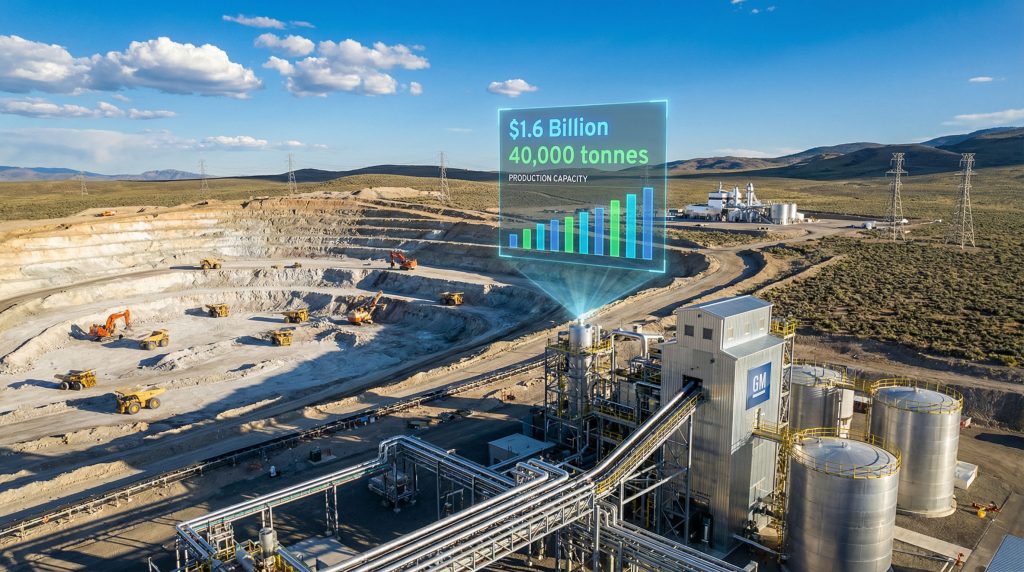
The $1.3 to $1.6 billion annual capital expenditure represents one of the most substantial single-year mining investments in Nevada's history. This aggressive deployment strategy positions companies to capture first-mover advantages in domestic lithium production, with additional capitalised development costs of $30 to $40 million and DoE loan interest of $45 to $55 million creating comprehensive funding frameworks that extend beyond immediate construction needs.
The workforce economics demonstrate significant regional multiplier effects, with targets reaching 1,800 skilled craftspeople by peak construction periods. This employment scale exceeds most Nevada mining operations and creates substantial indirect employment across northern Nevada's service sectors. Furthermore, this development aligns with broader critical minerals strategy initiatives across the continent.
Construction Capital Efficiency
Modern mining construction employs systematic approaches to capital deployment that reduce execution risks:
- Prefabricated module delivery systems accelerating on-site assembly
- Phased infrastructure development enabling parallel construction streams
- Strategic procurement timing for long-lead equipment items
- Weather-resistant construction methodologies adapted for Nevada conditions
The emphasis on nearly 100 prefabricated pipe rack modules demonstrates advanced project management techniques that factory-fabricate complex assemblies before site delivery. Consequently, this approach reduces weather delays and improves quality control through controlled manufacturing environments.
Market Positioning Through Production Scale
Domestic Supply Chain Transformation
The targeted 40,000 tonnes annual battery-grade lithium carbonate capacity represents a fundamental shift in North American supply chain dynamics. This production level could supply approximately 800,000 electric vehicles annually, representing roughly 8 times current US lithium production capacity. Such scale positions operations among the world's largest lithium facilities, comparable to major South American and Australian operations.
Battery-grade lithium carbonate requires 99.5%+ purity specifications, demanding sophisticated refining processes that have historically concentrated in Asian markets. In addition, this development complements other battery-grade lithium refinery projects emerging globally. The sulfuric acid leaching technology employed represents proven methodologies adapted for Nevada's clay-based deposits, differing significantly from traditional South American brine extraction methods.
Strategic Timing Advantages
The late 2027 production timeline aligns with projected North American EV scaling phases. Industry analysis suggests this timing captures peak demand growth as domestic automakers transition away from Asian supply dependencies. Current US lithium production of approximately 4,500 to 5,000 tonnes annually creates substantial supply gaps that large-scale domestic production can address.
| Production Metric | Current US Baseline | Projected Thacker Pass Phase 1 | Market Impact |
|---|---|---|---|
| Annual Capacity | 4,500-5,000 tonnes | 40,000 tonnes | 8x capacity increase |
| EV Supply Potential | ~90,000 vehicles | ~800,000 vehicles | Regional supply transformation |
| Market Position | Import-dependent | Domestic production leader | Supply chain localisation |
Infrastructure Development Execution Strategy
Critical Path Management
Advanced project scheduling demonstrates systematic milestone sequencing designed to minimise construction delays. The 93% detailed engineering completion and 60% procurement completion status indicates comprehensive preparation phases that reduce regulatory and execution risks. For instance, this contrasts with many international projects where engineering completion often lags procurement activities.
Key infrastructure milestones include:
- Q1 2026: Prefabricated pipe rack module installations beginning systematic on-site assembly
- Q2 2026: High-voltage power line commissioning establishing grid connectivity
- Q3 2026: Main concrete works completion providing structural readiness
- Q4 2026: Early plant commissioning validation of production capabilities
Regional Grid Enhancement Strategy
The six regional substation upgrades represent infrastructure investment extending beyond immediate mine operations. These enhancements create distributed electrical capacity improvements benefiting the entire northern Nevada industrial corridor. Moreover, lithium carbonate production requires 15 to 25 MW continuous consumption, necessitating high-voltage transmission connections likely involving 230 kV power transmission systems.
Process Technology Integration
Foundation and structural works progress across multiple specialised facilities:
- Filter building housing solid-liquid separation systems
- Magnesium sulfate building for byproduct processing
- Primary leaching vessels for clay ore processing
- Precipitation and crystallisation circuits for purification
This distributed facility design enables parallel equipment installation while ongoing construction continues. Consequently, it optimises critical path scheduling during peak activity periods when resource coordination becomes most challenging.
Financial Architecture and Risk Distribution
Debt-to-Equity Optimisation Framework
The $2.23 billion DoE loan facility provides substantial leverage while maintaining manageable debt service through capitalised interest structures. This financing approach reduces dilutive equity requirements during peak construction phases, protecting shareholder ownership while concentrating capital risk on government backing. However, companies must also develop effective capital raising strategies to supplement major debt facilities.
Capitalised interest provisions defer cash payments during construction, improving near-term cash flow management. Typical DoE loan programs for critical minerals feature interest rates approximately 100 to 150 basis points above 10-year US Treasury rates, creating predictable debt service costs post-production ramp-up.
Strategic Partnership Economics
General Motors' 38% joint venture stake creates multiple value streams beyond traditional equity investment:
"Fixed or preferential pricing arrangements for significant production volumes provide revenue certainty while GM's equity contribution reduces Lithium Americas' capital requirements by an estimated $400 to $600 million."
This partnership model reduces merchant market exposure compared to uncontracted production strategies. Furthermore, it provides guaranteed offtake security during critical ramp-up periods when operational risks remain elevated.
Operational Readiness and Technical Systems
Pre-Commissioning Strategy
The systematic expansion of operations and business-readiness teams indicates comprehensive preparation for complex lithium carbonate production processes. Pre-commissioning activities beginning in late 2026 suggest confidence in meeting mechanical completion targets while allowing extensive testing and optimisation phases.
Process commissioning throughout 2027 reflects the technical complexity of lithium extraction and purification systems, particularly for clay-based ores requiring sulfuric acid leaching. Unlike brine operations with simpler evaporation processes, clay extraction demands precise temperature control, chemical addition sequencing, and multi-stage purification.
Technology Performance Benchmarks
Advanced extraction methodologies represent proven technology adapted for Nevada's geological conditions:
- Sulfuric acid leaching optimised for clay mineral processing
- Multi-stage filtration systems removing impurities
- Crystallisation circuits producing battery-grade specifications
- Environmental controls addressing water and energy consumption
The low-carbon and low-water operational design addresses growing environmental scrutiny in lithium production. Additionally, this approach potentially establishes new industry performance standards that influence future project permitting and financing.
The next major ASX story will hit our subscribers first
Competitive Landscape Transformation
Production Capacity Benchmarking
The 40,000 tonnes annual capacity positions operations among global lithium production leaders, comparable to:
- Greenbushes, Western Australia: ~50,000 tonnes annually via spodumene processing
- SQM, Chile: ~70,000 tonnes annually from brine operations
- Albemarle, Chile: ~65,000 tonnes annually from established brine fields
Nevada's geographic advantages include proximity to California battery manufacturing facilities and established mining infrastructure. Consequently, these factors provide logistical advantages over international competitors facing complex export/import procedures.
Market Price Dynamics
Current lithium carbonate pricing of approximately $13,000 to $15,000 per tonne supports project economics, though breakeven analysis should stress-test scenarios at $8,000 to $12,000 per tonne. This assessment helps evaluate financial resilience during potential price corrections that could impact profitability.
The substantial capital commitment assumes sustained pricing levels throughout production ramp-up periods. However, this creates exposure to lithium market volatility that has historically demonstrated significant cyclical variation, as seen in lithium brine market insights from South American operations.
Long-Term Strategic Implications
Domestic Critical Mineral Independence
This investment signals broader strategic government support for domestic critical mineral production. The scale and timing suggest coordinated policy initiatives aimed at reducing North American dependence on Asian lithium processing, creating national security benefits beyond commercial returns.
Advanced processing facilities being constructed could serve as templates for additional North American lithium operations. For instance, these developments generate knowledge spillover effects across the mining sector and establish domestic technical capabilities in lithium refinement. Additionally, they complement lithium industry innovations emerging in other regions.
Regional Development Catalyst Effects
Success could accelerate permitting and financing for other North American lithium projects, creating sector-wide opportunities and competitive pressures. The lithium americas thacker pass project demonstrates effectiveness of strategic government financing in developing critical mineral supply chains, providing models for future domestic resource development initiatives.
Phase 2 Expansion Scenarios
The joint venture structure provides clear pathways for capacity expansion, with established partnerships creating demand certainty for additional development phases. Furthermore, regional infrastructure investments create shared-use capabilities that reduce expansion capital requirements for subsequent projects.
What Are the Primary Investment Risks?
Construction Execution Challenges
The aggressive 2026 capital deployment timeline creates execution pressure, particularly given skilled labour constraints in remote Nevada locations. Weather-related delays could impact tight commissioning schedules, with northern Nevada experiencing seasonal snow conditions affecting outdoor construction activities.
Long-lead equipment procurement represents critical path vulnerabilities:
- High-voltage transformers: typically 12 to 18 months procurement and delivery
- Specialised filtration systems: 8 to 12 months manufacturing timelines
- Process control instrumentation: 6 to 10 months depending on specifications
- Crystallisation equipment: 10 to 15 months for custom-designed vessels
Regulatory and Environmental Compliance
Changes in federal critical mineral policies or environmental regulations could impact operational parameters or expansion plans beyond Phase 1. However, the comprehensive approach to regional infrastructure upgrades indicates broader community impact considerations that address stakeholder concerns proactively.
Market Demand Sustainability
While lithium market conditions show strengthening trends, substantial capital commitments assume sustained demand growth throughout the 2027-2030 production ramp period. Consequently, EV adoption rates, battery technology evolution, and recycling capabilities could influence long-term demand projections significantly.
Strategic Investment Recommendations
For Equity Investors
Monitor construction milestone achievement and workforce deployment metrics as leading indicators of project execution quality. The 2026 capital deployment represents peak risk exposure before revenue generation begins, requiring careful tracking of:
- Monthly construction progress against critical path schedules
- Skilled labour recruitment and retention in remote locations
- Equipment delivery timing for long-lead items
- Weather impact mitigation during winter construction periods
For Industry Stakeholders
Project success could establish precedents for North American lithium development, influencing permitting timelines, financing structures, and technical approaches across the sector. Companies planning similar developments should evaluate:
- Construction methodologies and modular approaches
- Financing structures combining government loans with strategic partnerships
- Community engagement strategies addressing environmental concerns
- Technology selection for clay-based versus brine-based deposits
Furthermore, lessons from the lithium americas thacker pass project could inform Lithium Americas' latest project developments and similar initiatives across North America.
For Policy Development
The project demonstrates strategic government financing effectiveness in developing critical mineral supply chains. Policy makers should consider expanding similar financing mechanisms while evaluating:
- Domestic supply chain resilience improvements
- Regional economic development multiplier effects
- Environmental performance benchmarks for future projects
- Strategic partnership frameworks encouraging private sector participation
In conclusion, the lithium americas thacker pass project represents a pivotal moment for North American lithium independence. However, success requires careful execution of complex construction timelines and sustained market conditions throughout the production ramp period.
Disclaimer: This analysis contains forward-looking assessments based on current market conditions and project timelines. Actual results may vary due to construction delays, market price volatility, regulatory changes, or technical challenges inherent in large-scale mining operations. Investors should conduct independent due diligence and consider professional financial advice before making investment decisions.
Looking to Capitalise on Critical Mineral Opportunities?
Discovery Alert's proprietary Discovery IQ model delivers instant notifications on significant ASX mineral discoveries, including lithium and critical mineral announcements that could generate substantial market opportunities. With North America's growing focus on domestic supply chains and Australia's position as a major lithium producer, subscribers gain rapid insights into actionable trading and investment opportunities ahead of the broader market. Begin your 14-day free trial today to secure your market-leading advantage in the evolving critical minerals sector.