August 9, 2026
Strategic Chokepoint Vulnerabilities in Global Energy Architecture
Modern energy markets face unprecedented systemic risks as concentrated maritime corridors create cascading vulnerabilities across international supply chains. The Iran oil shipping crisis demonstrates how geopolitical tensions, advanced enforcement technologies, and asymmetric warfare capabilities transform traditional shipping routes into critical stress points for global economic stability. Furthermore, current disruptions in Persian Gulf petroleum logistics reveal how single chokepoints can trigger widespread market volatility, forcing immediate reassessment of energy security frameworks worldwide.
Traditional risk models underestimated the speed at which maritime conflicts could escalate into global supply crises. Advanced satellite surveillance, artificial intelligence-powered vessel tracking, and coordinated international sanctions create enforcement mechanisms that operate far beyond conventional naval interdiction capabilities. Consequently, these technological advances fundamentally alter the economics of sanctions evasion while simultaneously enabling more precise targeting of critical infrastructure.
When big ASX news breaks, our subscribers know first
How Maritime Bottlenecks Amplify Global Energy Security Risks
Critical Waterway Dependencies
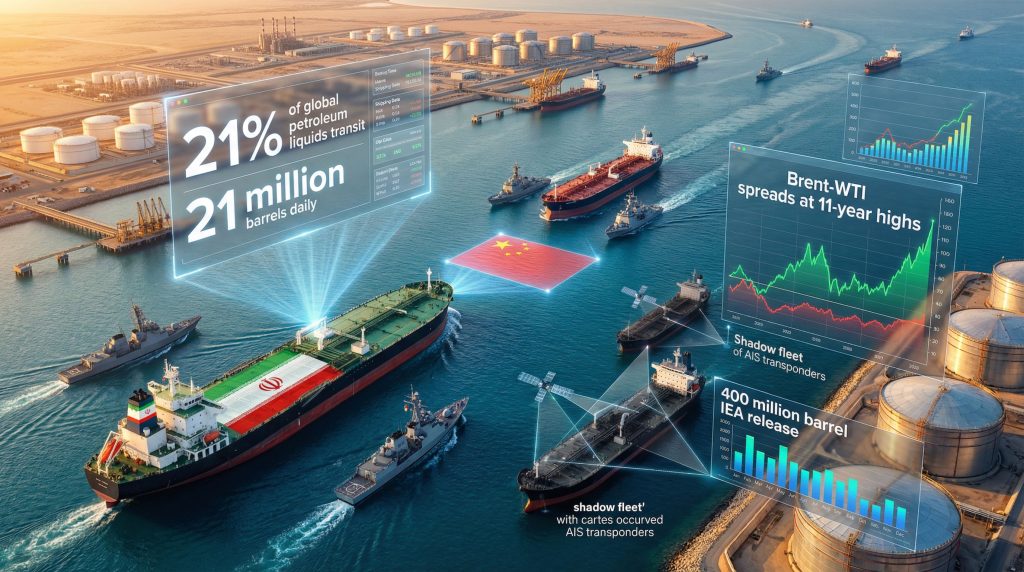
The Strait of Hormuz crisis represents the most significant chokepoint in global energy transport, handling approximately one-fifth of worldwide oil and gas supplies according to maritime security assessments. This concentration creates vulnerability scenarios where regional conflicts immediately translate into global supply disruptions. The strait's narrow 34-kilometre width at its most restricted point makes it particularly susceptible to mining operations, naval blockades, and asymmetric warfare tactics.
Current crisis dynamics reveal how quickly normal shipping patterns can collapse under military pressure. Since conflict escalation began, only 90 vessels have successfully transited Hormuz waters, representing a dramatic reduction from typical daily traffic volumes of 15-20 tankers. This disruption pattern illustrates the fragility of energy supply chains dependent on single transit routes.
Advanced Interdiction Technology Impact
Modern enforcement capabilities operate through multi-layered surveillance systems that identify sanctions violations with unprecedented accuracy. However, satellite imaging now tracks vessel-to-vessel transfers in real-time, while machine learning algorithms detect route anomalies indicating potential evasion attempts. These systems create persistent monitoring coverage that traditional shadow fleet operations cannot effectively circumvent.
Modern Maritime Surveillance Capabilities:
| Technology Layer | Detection Range | Response Time | Accuracy Rate |
|---|---|---|---|
| Satellite Imaging | Global Coverage | 2-6 hours | 92-97% |
| AIS Tracking | Regional Seas | Real-time | 85-95% |
| Radar Networks | Coastal Waters | Minutes | 98-99% |
| AI Pattern Recognition | Data Integration | 24-48 hours | 88-94% |
Financial enforcement mechanisms operate parallel to physical interdiction, targeting insurance coverage, banking relationships, and vessel registration systems. In addition, insurance premiums for high-risk voyages have increased dramatically, with specialised war risk coverage reaching unprecedented levels that make many operations economically unviable.
Shadow Fleet Operational Economics
Iran's covert tanker network operates under increasingly challenging economic conditions as enforcement pressure intensifies. Operational costs have escalated significantly since enhanced sanctions implementation, with vessel modification expenses, crew hazard pay, and specialised insurance creating substantial overhead burdens. For instance, these economic pressures force operational compromises that increase detection risks.
Traditional evasion strategies including flag switching, ownership obfuscation, and transponder manipulation face enhanced scrutiny from coordinated international monitoring efforts. Furthermore, multi-jurisdiction enforcement creates overlapping compliance requirements that complicate traditional sanctions avoidance methods.
Strategic Response Mechanisms in Energy Crisis Management
Emergency Reserve Deployment Strategies
The International Energy Agency coordinated the largest emergency reserve release in organisational history, with 32 member countries contributing 400 million barrels to global markets. This release includes 172 million barrels from U.S. Strategic Petroleum Reserves, representing a coordinated response mechanism designed to stabilise prices during supply disruptions.
Historical comparison data indicates this deployment exceeds previous emergency responses in both scale and coordination level. The synchronised release demonstrates enhanced international cooperation capabilities for managing energy supply shocks, though questions remain about sustained effectiveness during prolonged disruptions.
Emergency Reserve Release Breakdown:
- United States: 172 million barrels from Strategic Petroleum Reserve
- European Union: Combined 145 million barrels across member states
- Japan: 35 million barrels from national reserves
- South Korea: 28 million barrels strategic stockpile
- Other IEA Members: 20 million barrels collective contribution
International Maritime Security Coordination
The Group of Seven industrial nations announced exploration of coordinated ship escort operations through Persian Gulf waters, marking a significant escalation in international maritime security cooperation. This initiative represents multinational commitment to maintaining energy supply chain continuity through military protection of commercial vessels.
Regional allies are simultaneously developing independent maritime security capabilities to reduce dependence on external naval protection. Consequently, Gulf Cooperation Council members are expanding their coastal defence systems and maritime patrol capabilities, creating redundant security layers for energy export operations.
Alternative Supply Route Development
Asian energy importers are accelerating infrastructure investments to reduce Gulf dependency, including expanded pipeline capacity from alternative suppliers and increased terminal facilities for Western Hemisphere crude imports. These long-term adaptations reflect strategic recognition that the Iran oil shipping crisis requires permanent mitigation strategies beyond conventional approaches.
China's strategic positioning demonstrates sophisticated supply diversification approaches, maintaining multiple import sources while building strategic storage capacity to weather supply disruptions. This approach provides market stability during crisis periods while preserving long-term energy relationships across multiple regions.
Economic Warfare Through Logistics Disruption
Price Volatility Mechanisms
Current market conditions demonstrate how supply chokepoint risks translate into immediate price volatility across global energy markets. Brent crude prices jumped 7% to $114 per barrel while the Brent-WTI spread widened to 11-year highs, reflecting market assessment of Middle Eastern supply risks versus North American production security.
These price movements occur independently of actual supply reductions, indicating how chokepoint vulnerabilities create risk premiums that persist throughout crisis periods. Furthermore, market psychology amplifies physical supply concerns, creating feedback loops that sustain elevated pricing even during periods of adequate global production capacity.
Currency and Payment System Impacts
Traditional dollar-denominated energy trading faces challenges as sanctions enforcement targets financial transaction mechanisms. Alternative currency arrangements, particularly yuan-based trading systems, experience accelerated adoption as market participants seek sanctions-resistant payment methods. However, these adaptations often create complications for traditional banking relationships.
These payment system adaptations create lasting changes in global energy trade architecture, reducing dollar dominance in international petroleum markets while establishing alternative clearing mechanisms that operate outside traditional Western financial oversight. Consequently, the trade war oil impact becomes increasingly significant for long-term market structures.
Regional Economic Adaptation Strategies
Major energy importing economies are implementing emergency measures to manage supply disruption impacts. Germany announced fuel price stabilisation mechanisms while Asian refiners suspended credit programs due to feedstock cost volatility. These responses illustrate how chokepoint disruptions force immediate policy interventions across multiple economic sectors.
India's refiners faced particular challenges as traditional Middle Eastern crude sources became unreliable, forcing rapid procurement from alternative suppliers at premium pricing. This adaptation demonstrates the speed at which energy importers must adjust supply chains during maritime crises involving the Iran oil shipping crisis.
Geopolitical Realignment Through Energy Security
China's Strategic Energy Buffer
Intelligence assessments indicate China built substantial strategic petroleum reserves ahead of current crisis developments, suggesting anticipatory planning for Persian Gulf supply disruptions. This strategic stockpiling provides Beijing with significant market influence during global supply shortages while maintaining energy security for domestic consumption.
Chinese crude import strategies demonstrate sophisticated risk management approaches that balance sanctions compliance with energy security requirements. These policies position China as a stabilising market force during supply crises while preserving strategic relationships with multiple supplier nations.
Regional Alliance Formation Dynamics
Gulf Cooperation Council members are developing enhanced maritime security cooperation agreements that reduce dependence on external naval protection while maintaining export capacity. These regional security arrangements create alternative frameworks for protecting energy infrastructure without relying solely on traditional alliance structures.
Middle Eastern producers simultaneously diversify export routes through expanded pipeline networks and alternative shipping arrangements that bypass traditional chokepoints. For instance, these infrastructure investments create long-term supply resilience while reducing vulnerability to maritime interdiction efforts.
Technology Solutions for Supply Chain Transparency
Blockchain-based cargo verification systems are being deployed to establish tamper-proof documentation of petroleum origin and ownership throughout the supply chain. These technological solutions potentially eliminate advantages of shadow fleet operations while creating compliance frameworks that facilitate legitimate trade under sanctions regimes.
Smart contract mechanisms enable automated compliance verification that reduces administrative costs while ensuring sanctions adherence. Furthermore, these systems create transparent trading environments that benefit legitimate market participants while complicating illicit operations.
Market Adaptation Strategies for Long-Term Uncertainty
Infrastructure Investment Priorities
Global energy security requires fundamental infrastructure adaptations that reduce chokepoint dependencies while maintaining supply flexibility. Strategic petroleum reserve capacity is being recalibrated from traditional 90-day coverage models toward extended 120-180 day stockpiling to manage prolonged supply disruptions.
Refining capacity investments focus on crude grade flexibility that enables processing of diverse petroleum types as traditional supply patterns shift. These technological upgrades allow refiners to maintain operations regardless of specific crude availability, reducing dependence on particular supplier nations or transport routes.
Investment Framework Analysis:
| Infrastructure Type | Risk Level | Time Horizon | Capital Requirements |
|---|---|---|---|
| Alternative Pipelines | Medium-High | 5-10 years | $50-150 billion |
| Strategic Storage | Low-Medium | 2-4 years | $15-30 billion |
| Tanker Fleet Expansion | Medium | 2-3 years | $25-45 billion |
| Refinery Upgrades | Medium | 3-7 years | $35-75 billion |
Financial Market Mechanisms
Energy futures markets are developing new contract specifications that account for sanctions-affected crude grades and alternative supply sources. These financial instruments create hedging mechanisms for supply chain disruptions while establishing price discovery for non-traditional petroleum products. In addition, natural gas forecasts incorporate similar risk assessment methodologies.
Insurance markets are similarly adapting coverage options for high-risk shipping operations, creating specialised products that balance risk exposure with coverage availability. These financial adaptations enable continued energy trade during elevated geopolitical tensions while managing extreme risk scenarios.
Supply Chain Resilience Frameworks
Modern energy supply chains require redundant systems that function effectively regardless of individual chokepoint availability. This resilience approach involves geographic diversification, technological flexibility, and strategic stockpiling that collectively reduce vulnerability to concentrated risks. However, the oil price rally demonstrates how quickly markets respond to supply concerns.
Scenario planning exercises now incorporate multiple simultaneous chokepoint closures, extreme weather events, and coordinated cyberattacks on energy infrastructure. These comprehensive risk assessments drive investment decisions that prioritise system-wide resilience over cost optimisation in traditional supply chain models.
The next major ASX story will hit our subscribers first
Long-Term Implications for Global Energy Architecture
Structural Market Changes
The Iran oil shipping crisis represents a fundamental shift in global energy security paradigms, where concentrated chokepoints create systemic vulnerabilities requiring coordinated international responses. Traditional supply relationships are being restructured through technological, financial, and geopolitical pressures that extend far beyond the immediate conflict zone. Consequently, energy transition challenges become increasingly complex.
Market participants must prepare for extended periods of elevated volatility and supply chain complexity as new enforcement mechanisms, alternative payment systems, and regional security arrangements create permanent changes in energy trade patterns. Success requires developing resilient operational frameworks that function effectively regardless of specific geopolitical developments.
Policy Framework Evolution
Energy security policies are evolving toward strategic autonomy models that reduce dependence on vulnerable supply chains while maintaining international trade relationships. This evolution involves substantial infrastructure investments, diplomatic realignments, and technological innovations that collectively reshape global energy governance structures. Furthermore, global food crisis implications demonstrate interconnected supply chain vulnerabilities.
International cooperation mechanisms for managing energy crises demonstrate enhanced capabilities for coordinated responses, though sustained effectiveness requires continued policy coordination among major consuming nations during extended crisis periods. However, the green transition dynamics add additional complexity to traditional energy security planning.
Disclaimer: This analysis contains forward-looking assessments of geopolitical developments and energy market conditions that involve substantial uncertainty. Readers should conduct independent research and consult qualified professionals before making investment or policy decisions based on these projections. Energy market volatility and geopolitical tensions can create rapid changes in market conditions that may not reflect the scenarios discussed in this analysis.
The resolution timeline for current maritime tensions remains highly uncertain, but energy markets and policymakers must develop comprehensive adaptation strategies that account for multiple potential outcomes. Effective preparation requires acknowledging that traditional energy security models face fundamental challenges that demand innovative solutions across technological, financial, and diplomatic domains.
Looking to Capitalise on Energy Market Volatility?
Discovery Alert's proprietary Discovery IQ model delivers real-time alerts on significant ASX mineral discoveries, including critical energy transition materials that are driving today's volatile commodity markets. With geopolitical tensions reshaping global supply chains, subscribers gain instant insights into actionable investment opportunities that position them ahead of market disruptions. Begin your 14-day free trial today to secure your market-leading advantage during these unprecedented times.