July 28, 2026
Understanding the Strategic Chokepoint Vulnerability
Maritime energy security operates within a complex web of geographic constraints, technological dependencies, and geopolitical risks that can rapidly transform localised incidents into global market disruptions. The concentration of energy transit through narrow waterways creates systemic vulnerabilities where single points of failure cascade across international supply chains, forcing market participants to continuously reassess risk scenarios and contingency strategies.
Geographic Significance of the Strait of Hormuz
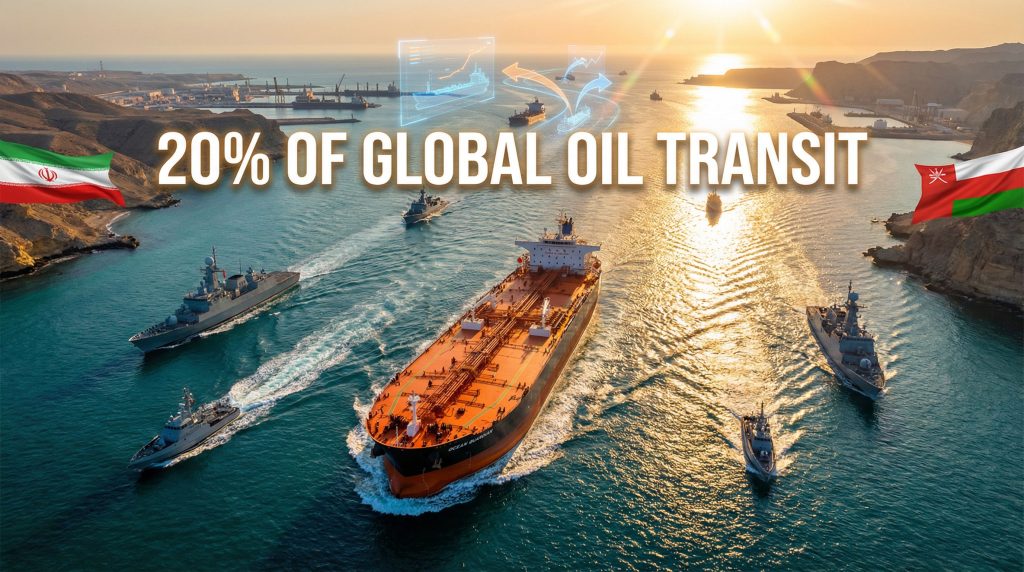
The Strait of Hormuz represents one of the world's most critical energy transit chokepoints, facilitating the movement of approximately 20% of global crude oil through its narrow channels. Before recent disruptions, this strategic waterway handled roughly 14 million barrels per day of crude oil alongside 6 million barrels per day of refined petroleum products, according to industry data.
The geographical dimensions of this chokepoint create inherent operational constraints. At its narrowest point, the strait measures only 21 nautical miles (39 kilometres) in width, with actual shipping lanes considerably more restricted than the overall waterway breadth. These confined traffic corridors concentrate vessel movements into predictable patterns, limiting routing flexibility and creating concentrated exposure zones.
Key Geographic Characteristics:
• Shipping traffic confined to designated Traffic Separation Schemes established by the International Maritime Organisation
• Narrow shipping lanes that restrict vessel routing flexibility and increase encounter rates
• Seasonal monsoon patterns that further constrain operational windows
• Limited alternative routing options with substantially increased distances and costs
Historical precedent demonstrates the waterway's vulnerability during times of regional conflict. During the Iran-Iraq War's "Tanker War" phase (1980-1988), attacks on 430 merchant vessels created sustained shipping insurance rate increases and prompted the establishment of international naval presence frameworks. These events established the blueprint for understanding how localised maritime conflicts can escalate into global energy security crises.
Maritime Security Architecture in the Gulf Region
The current security environment reflects an escalation in maritime threats that has fundamentally altered commercial shipping patterns. UK Maritime Trade Operations (UKMTO) documented 17 incident reports involving vessels in the Mideast Gulf, Strait of Hormuz, and Gulf of Oman region since conflict escalation began on February 28, 2026. These comprised 13 attack reports and 4 reports of suspicious activity, indicating a systematic pattern of maritime security deterioration.
The recent escalation reached a critical point when three vessels attacked near strait of hormuz occurred on March 11, 2026, within a compressed timeframe:
| Time (GMT) | Location | Vessel Type | Details |
|---|---|---|---|
| 02:05 | 50 miles NW of Dubai | Bulk carrier | Struck by unknown projectile |
| 01:58 | 25 miles NW of Ras al-Khaimah | Container vessel | Damaged by suspected projectile |
| 04:35 | 11 miles north of Oman | Cargo vessel (Mayuree Naree) | Hit by projectile, resulting fire |
U.S. Energy Secretary Chris Wright provided assessment on March 8, 2026, indicating expectations for temporary disruptions. Wright's analysis suggested that whilst traffic resumption might require time, the worst-case scenario would span weeks rather than months for normal operations to return.
Naval Response Framework:
• U.S. President Donald Trump announced potential naval convoy protection for crude oil and LNG tankers on March 10, 2026
• Military commanders indicated preliminary planning stages for escort operations
• U.S. military focus shifted to mitigating mining threats, though actual attacks involved drones and missiles
• International coalition maritime security arrangements under development
When big ASX news breaks, our subscribers know first
Immediate Operational Impacts of Recent Maritime Attacks
Vessel Damage Assessment and Recovery Timelines
The attacks demonstrated the vulnerability of diverse vessel categories, affecting bulk carriers, cargo vessels, and container ships without apparent targeting preference. Furthermore, the Mayuree Naree incident involved a 30,197 deadweight tonnage bulk carrier operated by Precious Shipping, which suffered projectile strike resulting in onboard fire and crew evacuation procedures.
Damage assessment protocols reveal the complexity of maritime incident response in hostile environments. All crew members were reported safe across the three vessels attacked near strait of hormuz, though the necessity for crew evacuation from the Mayuree Naree suggests fire severity exceeded onboard suppression capabilities.
Critical Infrastructure Impact:
The Fujairah Oil Industry Zone (FOIZ) sustained damage from intercepted drone debris, creating cascading effects on terminal loading operations and bunker delivery capabilities. Major storage terminals and bunker suppliers declared force majeure, compounding recovery challenges by limiting available repair and berthing options in the immediate region.
Recovery Timeline Variables:
• Projectile strike patterns suggest either unidentified anti-ship missile systems or drone-delivered ordnance
• Different threat types require distinct vulnerability mitigation approaches
• Regional port repair capacity metrics show significant stress under current security conditions
• Major repairs typically range 2-6 weeks in optimal conditions, substantially extended under current constraints
Traffic Flow Disruption Metrics
The transformation from normal operations to effective traffic halt occurred within a remarkably compressed timeframe, suggesting that security threat perception drove traffic cessation more than absolute infrastructure destruction. Commercial vessel operators responded to accumulated incident reports by voluntarily rerouting or suspending transits rather than waiting for mandatory restrictions.
Current Traffic Status:
"The retaliatory strikes by Iran have effectively halted shipping through the Mideast Gulf and Strait of Hormuz," representing a complete disruption of the waterway's commercial function.
Rerouting Distance Impact:
Alternative routing around the Arabian Peninsula adds approximately 3,000-4,000 nautical miles to typical routes, extending transit times by 7-10 days and substantially increasing fuel costs and logistics complexity. This distance penalty creates significant economic pressure on energy supply chains and end-user pricing.
Alternative Route Analysis:
• Cape of Good Hope (southern Africa): Adds approximately 4,000 nautical miles
• Saudi Arabian pipeline infrastructure (Petroline): Limited capacity constraints
• Northern routes through Russia: Substantially extended distances, seasonally constrained
• Red Sea and Suez Canal routing: Moderate distance increases but elevated security concerns
Energy Market Cascade Effects
Oil Price Volatility Mechanisms
Crude oil pricing has experienced extreme volatility as markets attempt to price both actual supply reductions and forward-looking risk premiums. Recent price swings saw crude futures surge near $120 per barrel before correcting to approximately $90 per barrel, reflecting the market's struggle to establish equilibrium under uncertainty conditions.
The price movement mechanisms operate through futures markets first, creating immediate price responses, followed by physical market adjustments involving cargo rerouting and inventory drawdown decisions. This two-stage transmission creates opportunities for both overreaction and correction phases in pricing cycles. Analysts have conducted detailed oil price rally analysis to understand these market dynamics.
OPEC Production Response:
Major OPEC+ producers including Saudi Arabia, Iraq, Kuwait, and UAE began shutting in crude output due to limited storage capacity and alternative export outlet constraints. This represents genuine supply reductions beyond market perception risk, providing fundamental support for elevated pricing levels. The OPEC production response has been crucial in determining global supply levels.
Supply Shock Characteristics:
• Initial spike to $120/barrel reflected maximum uncertainty scenario pricing
• Subsequent correction to $90/barrel represents partial risk mitigation pricing
• Market structure supported by firm physical fundamentals alongside supply outages
• Strategic petroleum reserve activation discussions emerging among multiple countries
International Energy Agency Chief Executive Fatih Birol stated on March 10, 2026, that supply constraints in the Middle East were creating significant and growing risks for the market, emphasising the structural nature of current disruptions rather than temporary market sentiment effects.
LNG Supply Chain Vulnerabilities
Liquefied natural gas export operations face compound vulnerabilities as the strait blockade affects both crude oil and LNG vessel transits simultaneously. This creates dual energy security risks for developed economies in Europe and developing Asian markets heavily dependent on Gulf LNG supplies.
Asian Market Exposure:
Asian LNG importers represent the largest end-market for Gulf LNG supplies, though current supply chains from Australia and other Pacific sources provide partial substitution capabilities at higher delivered costs. The structural reliance on Hormuz transits limits supply diversification options for major importing nations.
Alternative LNG Supply Sources:
| Source Region | Annual Capacity | Primary Markets | Limitations |
|---|---|---|---|
| Australian Projects | 48-50 million tonnes | Asian markets | Capacity constraints |
| U.S. Gulf Coast | Growing volumes | European focus | Distance penalties |
| Russian Arctic | Under sanctions | Limited availability | Political restrictions |
Infrastructure Vulnerabilities:
• Major LNG liquefaction facilities in Qatar, UAE, and Saudi Arabia require continuous feedstock delivery
• Upstream production fields concentrated in potentially vulnerable territories
• LNG carriers must transit Strait of Hormuz to reach Asian markets via standard routing
• Single-point-of-failure vulnerability affects entire supply chain
Strategic Response Implementation
Commercial Shipping Risk Mitigation Strategies
Maritime operators have implemented comprehensive risk mitigation frameworks addressing both immediate security concerns and longer-term operational continuity. Fleet rerouting represents the primary immediate response, though this creates substantial cost implications and capacity constraints across alternative shipping routes.
Enhanced Security Protocols:
• Improved voyage planning incorporating real-time threat intelligence
• Enhanced vessel hardening specifications and defensive system installations
• Crew safety protocol improvements and rapid evacuation procedure development
• Communication system upgrades for coordination with naval authorities
Insurance markets have responded with unprecedented premium adjustments. The high-sulphur fuel oil (HSFO) delivered-on-board bunker premium between Fujairah and Mideast Gulf 380cst HSFO cargo reached $244 per tonne on March 10, 2026, compared to a 12-month average of approximately $16 per tonne.
However, the economic implications extend beyond immediate insurance costs. The broader US tariffs impact on global trade patterns compounds these challenges, whilst the tariffs impact on markets creates additional volatility layers affecting energy pricing structures.
Naval Escort and Protection Frameworks
International coalition maritime security arrangements are under active development, though implementation timelines remain subject to military planning constraints and diplomatic coordination requirements. The U.S. military's current focus on eliminating mining threats represents a strategic mismatch with actual attack methodologies encountered, which have primarily involved drones and missiles.
Coordination Challenges:
• Real-time threat intelligence sharing systems require enhanced integration
• Commercial convoy formation strategies demand significant naval resource allocation
• Emergency response coordination protocols need rapid deployment capabilities
• International maritime law enforcement authority jurisdictional frameworks require clarification
Long-Term Strategic Implications
Infrastructure Resilience Investment Priorities
The current crisis highlights structural weaknesses in global energy infrastructure that extend beyond immediate security concerns. Port security enhancement programmes require substantial capital investment, whilst alternative transportation corridor development presents long-term strategic opportunities for supply chain diversification.
Investment Framework Priorities:
• Advanced threat detection systems including radar and surveillance technology deployment
• Drone-based perimeter monitoring capabilities for critical infrastructure protection
• Satellite tracking integration for comprehensive vessel protection coverage
• Strategic commodity stockpiling expansion to buffer against future disruptions
Regional Economic Impact Assessment
The maritime services industry faces unprecedented operational cost increases as security requirements escalate and alternative routing becomes necessary. Shipping companies encounter elevated insurance premiums, extended voyage times, and increased fuel consumption from longer routes. Furthermore, studying oil price movements provides insights into how regional conflicts affect global energy markets.
Sector-Specific Vulnerabilities:
| Industry Sector | Primary Risk | Impact Magnitude |
|—|—|—|—|
| Maritime Services | Operational cost increases | High |
| Petrochemical Production | Supply chain disruption | Critical |
| Fertilizer Manufacturing | Feedstock availability | Severe |
| Industrial Manufacturing | Energy cost escalation | Moderate to High |
Energy-dependent manufacturing sectors face compound risks from both supply availability and cost escalation scenarios. Petrochemical production facilities and fertiliser manufacturing operations experience particular vulnerability due to their reliance on Gulf-sourced feedstocks and energy inputs.
Investment Strategy Implications
Energy Sector Portfolio Risk Management
Current market conditions necessitate fundamental reassessment of energy sector investment strategies, particularly regarding geographic diversification and supply chain resilience priorities. Traditional risk models require updating to account for prolonged chokepoint disruptions and their cascading economic effects.
Portfolio Diversification Strategies:
• Geographic risk distribution across multiple production regions
• Alternative energy infrastructure investment themes gaining prominence
• Maritime security technology investment opportunities expanding
• Strategic reserve storage capacity development projects
The current crisis demonstrates that energy security investments extend beyond traditional upstream and downstream operations to encompass transportation infrastructure, security technology, and alternative supply route development.
Supply Chain Resilience Investment Framework
Transportation network redundancy development has emerged as a critical investment priority, with projects focusing on pipeline capacity expansion, alternative port facility development, and overland transportation infrastructure enhancement.
Technology Solutions Integration:
• Advanced threat detection systems for maritime environments
• Communication and coordination improvement platforms
• Real-time threat reporting networks for industry-wide information sharing
• Emergency response coordination protocol automation
The next major ASX story will hit our subscribers first
Scenario Planning and Future Pathways
Short-Term Stabilisation Scenarios (1-3 months)
Diplomatic resolution pathway probabilities remain uncertain, though U.S. energy officials have indicated expectations for traffic resumption within weeks rather than months. Naval security enhancement effectiveness depends on resource allocation and international coordination success.
Stabilisation Timeline Factors:
• Military capability assessments for sustained escort operations
• Commercial traffic normalisation requirements including insurance market adjustments
• Regional diplomatic negotiation progress indicators
• Infrastructure repair completion for damaged facilities
Extended Disruption Contingencies (3-12 months)
Alternative supply route establishment requires substantial infrastructure investment and logistics coordination. Global energy market rebalancing mechanisms would necessitate demand destruction in some regions and accelerated alternative supply development in others.
Long-Term Adaptation Requirements:
• Pipeline capacity expansion through alternative regional corridors
• Strategic storage capacity increases in key consuming regions
• Economic adaptation strategies for sustained higher energy costs
• Technology deployment for enhanced maritime security coverage
Frequently Asked Questions
How Long Could Strait of Hormuz Disruptions Continue?
Historical analysis of similar conflicts suggests resolution timelines vary significantly based on diplomatic engagement success and military capability sustainability. The Iran-Iraq War's Tanker War phase lasted several years, though current international involvement patterns suggest different dynamics may apply.
Current diplomatic negotiation progress remains limited, whilst military capability assessments indicate both sides possess resources for sustained operations. Resolution likely depends more on political will than military capacity constraints.
What Alternative Routes Exist for Energy Exports?
Several alternative transportation options exist, though each carries capacity limitations and cost penalties:
Pipeline Alternatives:
• Saudi Arabian Petroline system provides limited crude oil export capacity
• Potential expansion of trans-Arabian pipeline infrastructure
• Regional pipeline networks through Iraq and Turkey with capacity constraints
Maritime Alternatives:
• Cape of Good Hope routing adds 7-10 days transit time and substantial fuel costs
• Red Sea and Suez Canal routing with elevated security considerations
• Northern routes through Russian territory with seasonal and political limitations
How Are Insurance Markets Responding to Maritime Risks?
War risk insurance premiums have experienced unprecedented increases, with some coverage categories seeing premiums rise by several hundred percent. Coverage exclusion policy modifications are becoming standard, whilst captive insurance programme developments allow companies to manage risks internally.
Insurance Market Adaptations:
• Premium adjustments reflecting elevated threat environments
• Policy exclusions for specific geographic regions and vessel types
• Enhanced due diligence requirements for coverage approval
• Development of specialised maritime security insurance products
Strategic Recommendations for Stakeholders
Immediate Risk Mitigation Actions
Energy market participants should prioritise enhanced voyage planning incorporating real-time threat intelligence and improved communication protocols with naval authorities. Crew training programmes for high-risk transit areas require immediate implementation alongside strengthened emergency response capabilities.
Operational Enhancements:
• Route optimisation systems incorporating security threat data
• Enhanced vessel tracking and communication capabilities
• Crew safety protocol updates for hostile environment operations
• Emergency evacuation procedure rehearsal and equipment verification
Medium-Term Strategic Adaptations
Supply chain diversification initiatives should accelerate alternative energy source development and regional storage capacity expansion programmes. These investments create resilience against future disruption scenarios whilst potentially providing competitive advantages during normal operating conditions.
Infrastructure Development Priorities:
• Alternative supply route establishment and capacity enhancement
• Strategic storage facility development in key regional hubs
• Technology integration for improved supply chain visibility and control
• Regional partnership development for supply security cooperation
The current crisis demonstrates that energy security requires comprehensive approaches extending beyond traditional supply and demand dynamics to encompass transportation security, geopolitical risk management, and infrastructure resilience investment.
In addition to regional developments, international experts are closely monitoring the situation. According to BBC's live coverage of the maritime incidents, naval authorities continue coordinating response efforts whilst commercial operators assess long-term security requirements.
Furthermore, Reuters reporting on the cargo ship incidents provides detailed analysis of the projectile strikes and subsequent crew evacuation procedures, highlighting the immediate operational challenges facing maritime operators in the region.
Disclaimer: This analysis involves forecasting and speculation regarding geopolitical developments, market conditions, and security scenarios. Actual outcomes may differ significantly from projections discussed. Investment and operational decisions should incorporate comprehensive risk assessment and professional consultation appropriate to specific circumstances.
Ready to Navigate the Next Energy Security Crisis?
Geopolitical disruptions like the Strait of Hormuz attacks create immediate investment opportunities across energy sectors, but identifying actionable positions requires real-time intelligence. Discovery Alert's proprietary Discovery IQ model delivers instant notifications on significant ASX mineral discoveries, helping investors capitalise on market volatility and supply chain disruptions before broader markets react. Begin your 14-day free trial today to position yourself ahead of energy sector developments and secure your market-leading advantage in uncertain times.