June 11, 2026
Strategic Diversification in Raw Material Supply Chains Transforms Global Steel Industry Dynamics
Supply chain resilience has emerged as the defining strategic imperative across metallurgical industries worldwide. Steel producers face mounting pressure to reduce dependency on concentrated supplier networks while maintaining cost competitiveness and quality standards. This challenge becomes particularly acute in coking coal markets, where geographic concentration of high-grade deposits creates vulnerability to trade disruptions, price volatility, and geopolitical tensions.
The convergence of expanding industrial capacity, evolving trade relationships, and infrastructure development creates new opportunities for previously underutilised coal resources. Furthermore, industry transformation trends indicate that landlocked suppliers with historically limited market access now find themselves positioned to serve rapidly growing steel sectors through emerging transport corridors and bilateral partnerships.
When big ASX news breaks, our subscribers know first
India's Strategic Imperative for Coking Coal Supply Diversification
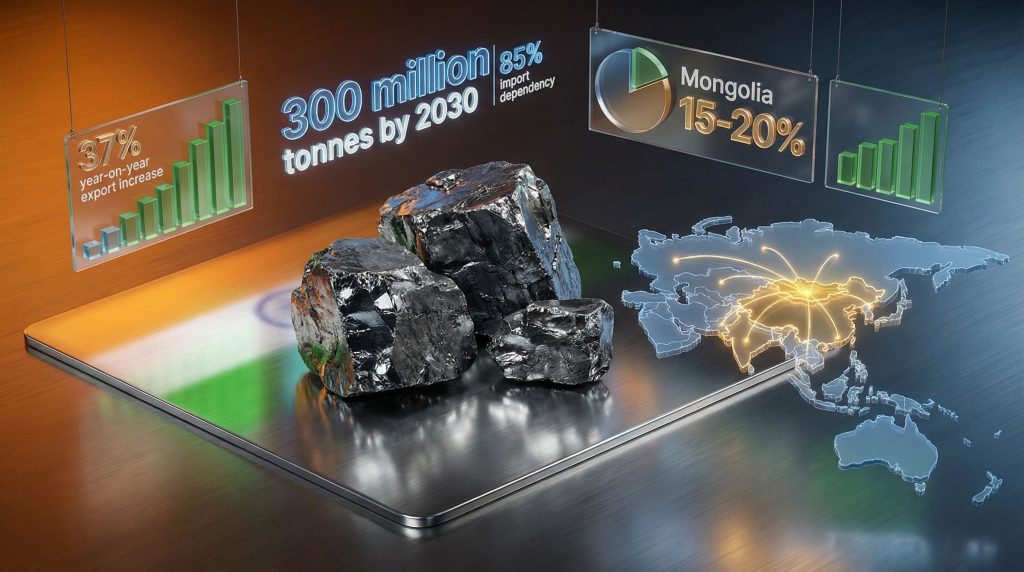
India and Mongolian coking coal imports represent a critical strategic initiative as India's position as the world's second-biggest crude steel producer creates substantial raw material requirements that strain traditional supply relationships. The country's dependency on coking coal imports reaches 85% of total requirements, exposing the steel sector to external supply disruptions and price fluctuations that directly impact manufacturing competitiveness.
Current import concentration presents significant strategic risks:
- Australia supplies more than 50% of India's coking coal requirements
- Russia accounts for approximately 15% of imports
- United States provides roughly 15% of India's coking coal supply
- Remaining suppliers contribute less than 20% collectively
Demand Growth Pressures Accelerate Sourcing Strategy
According to government sources, demand is expected to climb in coming years, creating urgency around supplier diversification initiatives. Major steelmakers and government agencies recognise that over-reliance on Australian suppliers creates vulnerability to trade disruptions, shipping delays, and price manipulation in concentrated markets.
The strategic imperative extends beyond immediate cost considerations. India's steel sector expansion requires secure access to consistent coking coal supplies that can support sustained production growth without creating bottlenecks in the supply chain. Consequently, this necessitates developing relationships with multiple suppliers across different geographic regions to ensure continuous availability during regional disruptions.
Geopolitical Risk Assessment Drives Strategic Planning
India's approach to coal supplier diversification reflects broader concerns about economic dependency on single-country suppliers. The 2020 border clash between India and China demonstrated how quickly trade relationships can deteriorate during diplomatic tensions, creating supply chain vulnerabilities that extend far beyond immediate bilateral issues.
Steel industry planners recognise that major steelmakers are looking at tapping new suppliers to reduce concentration risk while maintaining access to high-quality metallurgical coal. However, us–china trade tensions and tariffs impact markets demonstrate how trade disputes can rapidly affect global supply chains. This strategic shift represents a fundamental change in procurement philosophy from cost optimisation toward supply security prioritisation.
Mongolia's Emerging Position in Global Coking Coal Markets
Mongolia's coal resources have gained attention from international steel producers seeking alternatives to established suppliers. Industry officials have identified Mongolian coking coal as a potential source of high-grade coal at relatively lower prices, creating compelling economic incentives for supply chain diversification.
Quality Profile and Competitive Positioning
The quality characteristics of Mongolian coking coal compare favourably with established international suppliers, offering metallurgical properties suitable for steel production processes. Lower pricing relative to premium Australian grades creates cost advantages that could improve steel sector margins while maintaining technical specifications required for blast furnace operations.
Key competitive advantages include:
- High-grade coal quality suitable for metallurgical applications
- Pricing competitiveness compared to seaborne coal benchmarks
- Significant unexplored reserves offering long-term supply potential
- Government support for export market development
However, technical validation remains essential for large-scale commercial adoption. Steel producers require extensive testing to verify consistency, coke strength reactivity, ash content, and volatile matter levels across different Mongolian mining operations.
Production Capacity and Export Infrastructure Development
Mongolia's coal export capacity has expanded significantly, though infrastructure constraints limit full market potential. The country's landlocked geography creates dependency on neighbouring countries for export route access, complicating logistics planning for international buyers.
Despite infrastructure challenges, Mongolia has demonstrated capacity to increase export volumes when market conditions justify investment in transport solutions. Government initiatives aimed at developing mining sector exports suggest political commitment to expanding international market access.
Critical Transport Infrastructure Analysis for Mongolian Coal Imports
Logistics remain the biggest hurdle for establishing viable Mongolian coal supply chains to India, according to industry sources. The landlocked geography creates fundamental constraints that require sophisticated transport solutions and international cooperation agreements.
Dual Corridor Assessment: Russia versus China Routes
Mongolia's export infrastructure depends on two trade corridors for exports: a longer route via Russia and another through China. Each corridor presents distinct advantages and vulnerabilities that affect long-term supply reliability for Indian steel producers.
Russia Corridor Characteristics:
- Longer transport distances to Indian ocean ports
- Dependence on Russian railway infrastructure capacity
- Political stability concerns affecting long-term reliability
- Potential sanctions complications impacting payment systems
China Corridor Characteristics:
- More direct routing to Chinese ports for India shipment
- Higher infrastructure capacity and efficiency
- Strategic vulnerability due to Chinese government control
- Potential for supply disruption during bilateral tensions
Strategic Route Viability Concerns
India's assessment concludes that the China route is not expected to be viable in the long term due to strategic considerations. Government sources express concern about Mongolia's strategic importance to Beijing as a coal supplier and the potential for Beijing to block access during periods of diplomatic tension.
This assessment reflects broader concerns about supply chain dependency on countries that may prioritise domestic interests over international trade commitments. Furthermore, critical minerals strategy considerations highlight the importance of resource security in an increasingly complex geopolitical landscape. China's control over Mongolia's primary export corridor creates chokepoint vulnerability that could disrupt supply during critical periods.
Logistics Cost Structure and Delivery Economics
Transport costs represent a significant component of delivered coal pricing, potentially offsetting quality and extraction cost advantages. Multi-modal transport requirements involving rail, port handling, and ocean shipping create complexity that affects pricing predictability and supply reliability.
Key cost components include:
- Rail freight rates from mining locations to port facilities
- Port handling charges and transshipment costs
- Ocean freight rates from loading ports to Indian destinations
- Insurance and financing costs for landlocked supply chains
- Currency exchange risk management expenses
Indian Steel Companies Leading Mongolian Coal Assessment
Steel Authority of India Limited (SAIL) serves as the primary state-run enterprise conducting Mongolian coal feasibility assessments. The company has engaged directly with Mongolian suppliers to evaluate technical and logistical requirements for establishing supply relationships.
SAIL's Technical Evaluation Program
SAIL's assessment program focuses on ascertaining technical and logistical feasibility for sourcing from Mongolia, according to the company's official statements. This comprehensive evaluation includes metallurgical testing, logistics pathway analysis, and cost competitiveness assessment relative to existing suppliers.
The company previously sought 1 metric ton of Mongolian coal for initial testing purposes, though India has yet to receive trial shipments of Mongolian coal that were planned earlier this year. This delay indicates ongoing challenges in establishing practical supply chain connections between Mongolian producers and Indian steel companies.
Private Sector Engagement Strategy
While SAIL leads government-backed assessment efforts, private steel producers are also evaluating Mongolian coal opportunities as part of broader supply diversification strategies. In addition, India's ongoing evaluation of Mongolian coking coal demonstrates the scale of this initiative. The involvement of both public and private sector companies suggests industry-wide recognition of the strategic importance of developing alternative supply sources.
Key evaluation criteria include:
- Metallurgical quality consistency across different suppliers
- Long-term supply contract availability and pricing terms
- Infrastructure development timelines for scalable imports
- Risk mitigation strategies for landlocked supply dependency
- Integration requirements with existing procurement systems
Timeline Challenges and Implementation Delays
The delayed receipt of trial shipments highlights practical challenges in establishing Mongolian coal supply chains. Despite initial planning for 2024 trial imports, logistical complexities and infrastructure constraints have prevented implementation of even small-scale testing programs.
These delays suggest that commercial-scale imports require substantial infrastructure development and bilateral cooperation agreements before becoming viable alternatives to established suppliers.
Geopolitical Factors Shaping Supply Chain Strategy
India and Mongolian coking coal imports must navigate complex geopolitical considerations that extend beyond commercial relationships. India's approach to Mongolian coal imports reflects broader strategic considerations about economic relationships with neighbouring countries. The assessment of transport corridor viability incorporates geopolitical risk analysis that extends beyond immediate commercial considerations.
China Transit Route Dependency Assessment
India's conclusion that Chinese transit routes lack long-term viability stems from concern about Beijing's potential to block access during diplomatic tensions. This assessment reflects lessons learned from previous trade disruptions that demonstrated how quickly commercial relationships can become casualties of political disputes.
The strategic importance of coal to China's domestic economy creates additional concerns about supply prioritisation. During periods of domestic shortage or international tension, China might restrict Mongolia's coal exports through Chinese territory to ensure adequate domestic supplies.
India-China Economic Relations Impact
New Delhi and Beijing are cautiously rebuilding economic ties after a deadly clash along their contested border in 2020 triggered a prolonged military standoff. This context influences India's assessment of supply chain vulnerabilities that depend on Chinese cooperation and infrastructure access.
The border tensions demonstrated how quickly economic relationships can deteriorate during security disputes, creating supply disruptions that extend far beyond the immediate conflict areas. Consequently, us economic tariff effects and similar trade policy developments shape current planning for critical material sourcing that minimises dependency on potentially unstable bilateral relationships.
Strategic Autonomy Considerations
India's evaluation of Mongolian coal imports reflects broader policy objectives around strategic autonomy in critical material sourcing. Reducing dependency on any single supplier or transit country aligns with goals of maintaining economic independence while securing essential industrial inputs.
This approach prioritises supply chain resilience over immediate cost optimisation, recognising that long-term industrial capacity depends on reliable access to raw materials even during international tensions or trade disruptions.
The next major ASX story will hit our subscribers first
Investment Requirements for Scalable Import Operations
Establishing viable Mongolian coal supply chains requires substantial infrastructure investments across multiple countries and transport modes. These requirements extend beyond traditional commodity trading relationships to include comprehensive logistics development and risk management systems.
Port and Transport Infrastructure Development
Indian ports require capacity expansion and specialised handling equipment for Mongolian coal grades. Different coal characteristics may necessitate modified storage, blending, and handling procedures compared to existing Australian and other supplier arrangements.
Critical infrastructure requirements include:
- Dedicated coal terminal capacity for landlocked supplier shipments
- Specialised storage facilities for different coal grade segregation
- Rail and road transport optimisation from ports to steel production centres
- Quality testing and certification facilities for import verification
Financial Framework Development
Long-term supply contracts with landlocked suppliers require sophisticated financing mechanisms that address extended supply chains and multiple country transit requirements. Currency hedging becomes more complex when involving multiple countries' financial systems and exchange rate fluctuations.
Risk management products must address unique vulnerabilities associated with landlocked suppliers, including transit country political stability, infrastructure maintenance, and cross-border payment systems. These financial instruments may command premium pricing compared to traditional seaborne coal transactions.
Integration with India's Steel Sector Growth Strategy
Mongolian coal imports must align with broader steel sector expansion plans and government industrial development objectives. Supply diversification serves multiple strategic purposes beyond immediate cost and quality considerations.
Steel Production Capacity Planning
India's steel sector expansion requires coordinated raw material supply development that can support sustained growth without creating bottlenecks. India and Mongolian coking coal imports represent one component of a diversified sourcing strategy designed to eliminate single-supplier dependencies.
Strategic portfolio considerations include:
- Geographic diversification across multiple continents
- Transport route diversification reducing chokepoint vulnerabilities
- Supplier relationship development with different political systems
- Quality grade diversification for various steel production applications
Competitive Advantage Development
Successful implementation of Mongolian coal imports could provide Indian steel producers with cost advantages and supply security benefits relative to competitors dependent on traditional supplier relationships. This competitive positioning becomes increasingly important as global steel markets face capacity constraints and raw material price volatility.
Access to alternative suppliers also strengthens negotiating positions with established suppliers, potentially improving contract terms and pricing arrangements across the entire coking coal supply portfolio.
Implementation Timeline and Commercial Development
The development of Mongolian coal supply chains requires phased implementation that addresses technical validation, infrastructure development, and commercial scaling in coordinated stages.
Phase 1: Technical and Commercial Validation
Initial implementation focuses on completing delayed trial shipments and conducting comprehensive metallurgical testing. This phase must address logistical pathway optimisation and establish baseline cost competitiveness relative to existing suppliers.
Key validation requirements:
- Successful completion of trial shipment programs
- Metallurgical testing verification across different coal qualities
- Transport corridor reliability assessment under various scenarios
- Commercial terms negotiation for larger volume commitments
Phase 2: Infrastructure Development and Scaling
Commercial scaling requires coordinated infrastructure investments across the entire supply chain, from Mongolian mining operations through transport corridors to Indian port and inland distribution systems.
Long-term supply agreements provide the foundation for infrastructure investment justification, creating mutually dependent relationships between suppliers, transport providers, and Indian steel companies.
Risk Assessment and Mitigation Strategies
Multiple risk factors could disrupt or prevent successful development of Mongolian coal supply chains. Comprehensive risk assessment addresses operational, strategic, and financial vulnerabilities that affect long-term viability.
Operational Risk Management
Logistics remain the biggest hurdle for establishing reliable supply chains, encompassing transport infrastructure limitations, weather-related disruptions, and cross-border coordination challenges.
Primary operational risks include:
- Rail infrastructure capacity constraints limiting volume scalability
- Seasonal weather impacts affecting transport reliability
- Quality consistency variations across different mining operations
- Cross-border documentation and regulatory compliance delays
Strategic Risk Considerations
Geopolitical factors create strategic risks that extend beyond immediate operational challenges. Changes in bilateral relationships, trade policies, or regional security situations could disrupt established supply arrangements.
Mongolia's domestic political stability and policy continuity affect long-term export commitment reliability. Resource nationalism or changing government priorities could impact export availability and pricing terms.
Financial Risk Mitigation
Currency exchange rate volatility across multiple countries creates financial risk that requires sophisticated hedging strategies. Extended supply chains increase financing costs and working capital requirements compared to traditional seaborne coal transactions.
Credit risk assessment becomes more complex when evaluating counterparties across different legal and financial systems. Insurance products must address unique vulnerabilities associated with landlocked supply chains and multiple country transit requirements.
Market Development Implications and Strategic Outlook
The successful development of India and Mongolian coking coal imports could establish precedents for other landlocked resource suppliers seeking access to growing Asian steel markets. Infrastructure development and risk management solutions create templates for similar supply chain arrangements.
Broader market implications include:
- Demonstration of alternative transport corridor viability for landlocked suppliers
- Development of financial instruments for complex multi-country supply chains
- Establishment of quality standards and testing protocols for new supplier relationships
- Creation of bilateral trade frameworks that could serve as models for other resource partnerships
The strategic importance extends beyond immediate India-Mongolia bilateral trade to encompass broader principles of supply chain diversification and economic relationship development in an increasingly multipolar global economy. Furthermore, recent analysis of coking coal market developments suggests that diversification efforts are gaining momentum across the region.
Disclaimer: This analysis is based on publicly available information and industry assessments. Steel industry supply chain development involves complex technical, financial, and geopolitical considerations that may evolve rapidly. Readers should conduct independent research and consult qualified professionals before making investment or strategic decisions related to coal supply chain development.
Looking to capitalise on opportunities in the rapidly evolving steel and coking coal sector?
Discovery Alert's proprietary Discovery IQ model delivers real-time alerts on significant mineral discoveries across the ASX, including companies positioned to benefit from global supply chain diversification trends like those reshaping the coking coal market. Stay ahead of market developments by exploring how historic discoveries have generated substantial returns for early investors, then begin your 30-day free trial today to secure your competitive advantage in identifying actionable investment opportunities.