June 20, 2026

Strategic Energy Alliances Reshape International Trade Architecture
Modern economies increasingly recognise that traditional bilateral trade frameworks require fundamental restructuring to address contemporary challenges including supply chain vulnerabilities, energy security imperatives, and strategic competition dynamics. The India-US energy partnership exemplifies this evolution, demonstrating how major powers are developing comprehensive economic relationships that extend beyond conventional commodity exchanges toward integrated strategic cooperation models.
This transformation reflects broader shifts in global economic architecture where energy security considerations drive trade policy decisions, creating new frameworks for international cooperation that prioritise long-term strategic alignment alongside immediate commercial benefits. Such partnerships emerge from recognition that energy dependencies create systemic vulnerabilities requiring diversified, politically stable supply relationships.
When big ASX news breaks, our subscribers know first
Understanding the Strategic Framework Behind $500 Billion Trade Ambitions
The comprehensive trade restructuring between India and the United States encompasses multiple interconnected components designed to create sustainable economic integration while addressing geopolitical pressures. This framework represents a departure from traditional trade negotiations by explicitly linking energy procurement commitments to tariff relief mechanisms, creating performance-based incentives for sustained cooperation.
The partnership's foundation rests on immediate tariff adjustments from elevated 27% levels down to 18%, representing a 33% reduction that provides substantial cost relief for Indian exporters. This adjustment occurred alongside threats of escalation to 50% tariffs, with additional 25% penalties linked to Russian crude purchases, demonstrating the high-stakes negotiating environment that shaped the final agreement.
Key Partnership Components:
- Structured tariff reduction from 27% to 18% effective immediately
- $500 billion bilateral trade target through diversified commodity flows
- Energy procurement commitments replacing traditional supplier relationships
- Critical minerals cooperation addressing strategic material supply chains
- Performance-linked incentives ensuring sustained partnership momentum
The agreement emerged from months of intensive negotiations aimed at resolving trade tensions while establishing frameworks for long-term economic cooperation. Furthermore, Union Minister Piyush Goyal emphasised the collaborative nature of bilateral engagement, noting that both countries prioritise rapid conclusion of comprehensive trade arrangements with each agreement evaluated independently on its strategic and economic merits.
This approach differs substantially from conventional free trade agreements by establishing conditional benefits tied to specific performance metrics, particularly regarding energy sourcing diversification and procurement volume commitments. The structure creates incentives for India to scale back Russian oil purchases while expanding imports of American energy, agricultural commodities, and coal products.
What Are the Key Components Driving This Energy Alliance?
Tariff Reduction Mechanisms and Trade Flow Optimisation
The partnership's immediate impact centres on comprehensive tariff restructuring that provides Indian exporters with enhanced market access while establishing reciprocal frameworks for American energy and agricultural products. This structured approach creates measurable benefits for both economies while addressing strategic concerns about supply chain dependencies.
The tariff adjustment from 27% to 18% generates immediate cost savings for Indian manufacturers and exporters, potentially improving their competitive positioning in American markets. In addition, this reduction occurred against a backdrop of threatened escalation to 50% tariffs, highlighting the significant stakes involved in successful negotiation outcomes.
Trade Framework Elements:
| Component | Previous Level | New Framework | Strategic Impact |
|---|---|---|---|
| Indian Goods Tariffs | 27% | 18% | 33% cost reduction |
| Escalation Threats | 50% potential | Eliminated | Certainty restoration |
| Russian Oil Penalties | 25% additional | Conditional removal | Sourcing flexibility |
| Trade Target | Historical levels | $500 billion | Expansion pathway |
The agreement structure demonstrates linkage between tariff relief and energy procurement commitments, distinguishing it from traditional trade negotiations that typically separate these elements. This approach creates performance incentives while providing both countries with measurable outcomes tied to strategic objectives.
President Trump's announcement of immediate tariff implementation reflects the urgency both sides placed on resolving trade tensions that had significantly narrowed India's trade surplus with the United States. However, the resolution provides stability for businesses planning long-term investment and sourcing strategies.
Energy Security Through Diversified Supply Chains
The partnership's energy component addresses India's supply security concerns while providing American energy companies with access to Asia's fastest-growing major economy. This strategic diversification extends across multiple energy categories including LPG, crude oil, LNG, and civil nuclear cooperation.
Structured LPG Agreement Details:
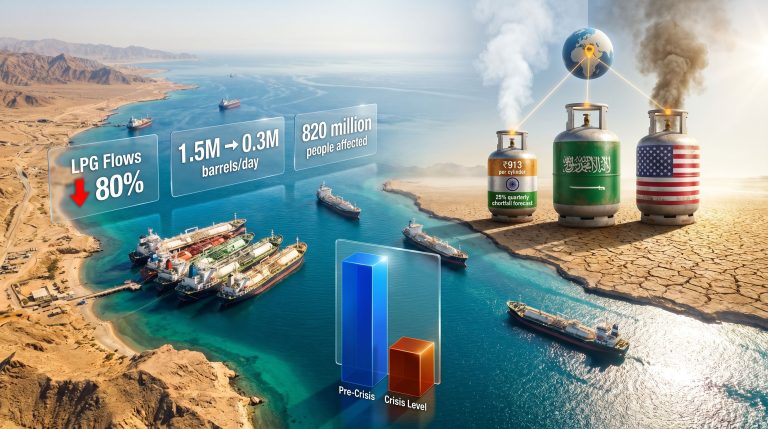
The partnership's most concrete achievement involves a one-year structured contract for 2.2 million tonnes per annum (MTPA) of LPG from US Gulf Coast facilities. This agreement represents India's first major structured energy deal with the United States.
Contract Specifications:
- Volume: 2.2 MTPA representing approximately 10% of India's annual LPG imports
- Duration: One-year initial commitment with expansion potential
- Suppliers: Chevron Corporation, Phillips 66, and TotalEnergies SE
- Purchasers: Indian Oil Corporation (IOCL), Bharat Petroleum Corporation (BPCL), Hindustan Petroleum Corporation (HPCL)
- Target Expansion: 15-20% of India's LPG requirements projected
The involvement of three major public sector oil marketing companies suggests governmental coordination to distribute supply risk while ensuring stable demand. Consequently, this approach provides American suppliers with predictable purchase commitments while giving India diversified sourcing options.
Supply Chain Diversification Strategy:
| Energy Category | Current US Share | Expansion Target | Strategic Benefit |
|---|---|---|---|
| LPG | 10% (2.2 MTPA) | 15-20% projected | Supply resilience |
| Crude Oil | Minimal | Structured discussions | Risk mitigation |
| LNG | Limited | Long-term exploration | Industrial support |
| Civil Nuclear | Technology partnerships | Enhanced cooperation | Clean transition |
The agreement timeline demonstrates systematic progression from high-level political engagement to operational implementation:
- February 2025: Modi-Trump bilateral discussions establish framework
- July 2025: Indian delegation visits US Gulf Coast facilities for technical assessments
- November 2025: First structured LPG contract finalisation and announcement
- February 2026: Comprehensive trade agreement public announcement
This progression reflects careful technical and commercial evaluation processes that support sustainable long-term cooperation rather than purely political arrangements.
How Does This Partnership Address Global Geopolitical Pressures?
Strategic Realignment in Energy Sourcing
The India-US energy partnership emerges from complex geopolitical dynamics where traditional energy sourcing strategies faced increasing pressure from Western allies concerned about strategic dependency on volatile suppliers. The agreement provides India with alternative supply options while offering the United States strategic influence in South Asian energy markets.
India's reliance on discounted Russian crude supplies created tensions with US strategic objectives, particularly regarding sanctions compliance and alliance coordination. President Trump publicly indicated dissatisfaction with India's energy sourcing strategy, while both sides utilised diplomatic channels to explore de-escalation pathways.
The partnership represents a pragmatic response to volatile global geopolitical conditions that required India to balance its energy security needs with strategic relationship management. This balancing act demonstrates how middle powers navigate competing pressures while maintaining policy autonomy.
Timeline of Strategic Pressure and Resolution:
- Pre-negotiation tensions: Sharp tariff increases to 27% with 50% escalation threats
- Additional penalties: 25% surcharges linked to Russian crude purchases
- Diplomatic engagement: February 2025 Modi visit to Washington establishing dialogue framework
- Technical cooperation: July 2025 delegation visits to US Gulf Coast facilities
- Operational agreement: November 2025 structured LPG contract announcement
- Comprehensive resolution: February 2026 trade agreement finalisation
Critical Minerals Cooperation Framework
Beyond traditional energy commodities, the partnership extends to critical minerals energy essential for renewable energy infrastructure and advanced manufacturing capabilities. This cooperation addresses supply chain vulnerabilities in strategic materials while supporting both nations' clean energy transition goals.
External Affairs Minister S. Jaishankar's scheduled visit to the United States specifically focuses on critical minerals cooperation, indicating the strategic importance both countries place on securing reliable access to materials essential for technological competitiveness and energy transition.
Critical minerals cooperation addresses several strategic objectives:
- Supply chain resilience: Reducing dependency on single-source suppliers for essential materials
- Technology development: Joint research and development in mineral processing and utilisation
- Strategic stockpiling: Coordinated approaches to maintaining adequate strategic reserves
- Third-country cooperation: Collaborative frameworks for engaging other mineral-rich nations
What Are the Economic Implications for Regional Trade Patterns?
Market Access and Competitive Positioning
The tariff restructuring creates immediate competitive advantages for Indian manufacturers in US markets while establishing preferential access for American energy companies in India's expanding industrial sector. This reciprocal arrangement generates measurable economic benefits while supporting strategic cooperation objectives.
The 33% tariff reduction provides Indian exporters with significant cost advantages over competitors from nations without similar preferential arrangements. For instance, this improvement could accelerate Indian market share growth in sectors where price sensitivity influences purchasing decisions.
Competitive Impact Analysis:
- Manufacturing exports: Improved competitiveness through reduced tariff burden
- Energy imports: Access to reliable, high-quality American energy supplies
- Agricultural trade: Enhanced market access for both countries' agricultural products
- Technology cooperation: Accelerated knowledge transfer in strategic sectors
Investment Flow Acceleration
The agreement catalyses increased bilateral investment in energy infrastructure including LNG terminals, pipeline networks, and renewable energy projects. American companies gain enhanced market access while Indian firms secure technology transfer opportunities and supply chain partnerships.
Investment acceleration occurs across multiple dimensions:
- Infrastructure development: Port facilities, storage capacity, and distribution networks
- Technology partnerships: Joint ventures in clean energy and advanced manufacturing
- Financial services: Enhanced banking and insurance cooperation supporting trade expansion
- Research collaboration: Joint development programmes in strategic technologies
How Will This Partnership Influence Global Energy Markets?
Supply Chain Diversification Trends
The India-US energy partnership signals broader trends toward supply chain regionalisation and strategic partner prioritisation. Other nations may pursue similar arrangements to reduce dependency on volatile suppliers while securing long-term energy access through politically stable relationships.
This trend reflects growing recognition that energy security requires political stability alongside commercial competitiveness. Nations increasingly evaluate suppliers based on strategic reliability rather than purely economic factors.
Regional Impact Considerations:
- Middle Eastern suppliers: Potential market share reduction as buyers diversify sourcing
- Russian energy exports: Decreased influence in major Asian markets
- Australian resources: Opportunities for triangular cooperation in LNG and critical minerals
- ASEAN nations: Possible template for similar partnerships with major economies
Technology Transfer and Innovation Acceleration
The partnership facilitates knowledge exchange in advanced energy technologies including smart grid systems, carbon capture utilisation, and next-generation nuclear technologies. This cooperation could accelerate innovation cycles while reducing deployment costs for clean energy infrastructure.
Technology cooperation encompasses several strategic areas:
- Smart grid integration: Advanced distribution and management systems
- Carbon management: Capture, utilisation, and storage technologies
- Nuclear safety: Next-generation reactor designs and safety systems
- Renewable integration: Grid stability solutions for variable energy sources
The next major ASX story will hit our subscribers first
What Challenges Could Affect Partnership Implementation?
Pricing Competitiveness and Market Dynamics
Partnership success requires US energy suppliers to maintain competitive pricing against traditional suppliers, particularly during periods of global market volatility. Price differentials could impact the partnership's sustainability and India's commitment to scaled procurement targets, with the natural gas forecast playing a crucial role.
Pricing Challenge Factors:
- Global commodity cycles: Fluctuating international energy prices affecting competitiveness
- Transportation costs: Shipping expenses from US Gulf Coast to Indian markets
- Currency fluctuations: Exchange rate impacts on long-term contract economics
- Market competition: Alternative suppliers maintaining aggressive pricing strategies
Infrastructure Development Requirements
Expanding energy trade requires significant infrastructure investments including port facilities, storage capacity, and distribution networks. Coordination between public and private sector investments will determine the partnership's operational effectiveness and scalability.
Infrastructure Investment Priorities:
- Port capacity expansion: Facilities capable of handling increased LNG and LPG volumes
- Storage infrastructure: Strategic reserves and commercial storage capabilities
- Distribution networks: Pipeline and truck transport capacity for inland delivery
- Processing facilities: Refineries and processing plants supporting diverse energy imports
Regulatory Harmonisation Needs
Different regulatory frameworks between the two nations require ongoing harmonisation efforts to facilitate seamless trade flows. Standardisation of quality specifications, safety protocols, and environmental compliance measures will be essential for operational success.
Regulatory coordination involves multiple areas:
- Quality standards: Harmonised specifications for energy commodities
- Safety protocols: Coordinated approaches to transportation and storage safety
- Environmental compliance: Aligned standards for emissions and environmental protection
- Financial regulations: Banking and insurance frameworks supporting trade expansion
What Does This Mean for Future Bilateral Economic Relations?
Template for Comprehensive Economic Partnerships
The India-US energy agreement could serve as a model for future bilateral arrangements that link trade access to strategic cooperation commitments. This approach may influence how other nations structure economic partnerships with major powers seeking both commercial benefits and strategic alignment.
Partnership Model Characteristics:
- Performance-based benefits: Trade advantages linked to specific cooperation commitments
- Strategic integration: Energy security considerations driving commercial relationships
- Conditional arrangements: Ongoing benefits tied to sustained cooperation performance
- Comprehensive scope: Multiple sectors integrated within single strategic frameworks
The US tariffs impact on global trade patterns demonstrates the importance of structured arrangements that provide predictability in uncertain economic environments.
Long-term Strategic Integration
Beyond immediate trade benefits, the partnership establishes frameworks for deeper economic integration across multiple sectors including technology, defence, and advanced manufacturing. This comprehensive approach reflects evolving global economic relationships that prioritise strategic alignment alongside commercial benefits.
Integration Pathway Elements:
- Technology cooperation: Joint development programmes in strategic technologies
- Defence partnerships: Enhanced cooperation in defence manufacturing and technology transfer
- Financial integration: Expanded banking, insurance, and investment cooperation
- Research collaboration: Joint university and corporate research initiatives
Measuring Success: Key Performance Indicators
The partnership's effectiveness will be measured through multiple quantifiable metrics including trade volume growth, energy security improvements, and strategic objective achievement. These indicators provide objective assessment criteria for partnership performance and adjustment needs.
Success Measurement Framework:
| Indicator Category | Specific Metrics | Target Outcomes |
|---|---|---|
| Trade Performance | Volume growth toward $500B target | Annual progress tracking |
| Energy Security | Supplier diversification percentages | Reduced single-source dependency |
| Investment Flows | Bilateral infrastructure investment | Enhanced cooperation capacity |
| Technology Transfer | Joint development projects | Innovation acceleration |
| Strategic Alignment | Coordination on global initiatives | Enhanced partnership effectiveness |
Quantitative Assessment Metrics:
- Trade volume expansion: Annual bilateral trade growth rates and sectoral distribution
- Energy diversification: Percentage reduction in traditional supplier dependency
- Investment acceleration: Infrastructure and technology investment flow increases
- Strategic cooperation: Joint initiative success rates and coordination effectiveness
These metrics provide objective frameworks for evaluating partnership performance while identifying areas requiring adjustment or enhanced cooperation focus. The India lithium strategy demonstrates similar approaches to strategic resource security that inform broader partnership evaluation.
Reshaping Global Economic Architecture
The India-US energy partnership represents more than bilateral trade expansion; it demonstrates how major economies are restructuring international relationships to address contemporary challenges including supply chain resilience, energy security, and strategic competition dynamics.
This comprehensive approach to economic cooperation, linking immediate commercial benefits with long-term strategic objectives, may become the standard framework for international economic partnerships in an increasingly multipolar global economy where traditional trade relationships require fundamental restructuring to address complex strategic challenges.
The partnership's success could influence global trade patterns and encourage similar strategic economic alignments between other major powers seeking to balance commercial opportunities with strategic security requirements. Analysis of tariff impacts suggests that such developments signal broader trends in international economic cooperation that could affect global supply chains, energy markets, and strategic material access for years to come.
Furthermore, the agreement represents a significant development in India-US strategic cooperation that extends beyond immediate trade benefits to encompass long-term technology transfer and infrastructure development. According to recent diplomatic discussions, both countries view this partnership as foundational to broader strategic alignment in the Indo-Pacific region.
Investment Consideration: The partnership's performance-based structure and strategic integration approach may signal broader trends in international economic cooperation that could affect global supply chains, energy markets, and strategic material access for years to come.
Seeking Your Next Strategic Investment Opportunity?
Discovery Alert's proprietary Discovery IQ model delivers real-time alerts on significant ASX mineral discoveries, instantly empowering subscribers to identify actionable opportunities ahead of the broader market. Explore how major mineral discoveries can generate substantial returns by examining historic examples of exceptional outcomes, then begin your 14-day free trial today to position yourself ahead of the market.