August 14, 2026
Strategic Energy Chokepoint Crisis Disrupts Global Markets
Maritime energy chokepoints have historically served as critical pressure valves in global economic systems, with the capacity to transform regional conflicts into worldwide crises within weeks. When strategic waterways face disruption, the ripple effects extend far beyond immediate shipping routes, fundamentally altering commodity pricing structures, supply chain dependencies, and geopolitical power balances across interconnected markets. The ongoing Strait of Hormuz blockade exemplifies this vulnerability, demonstrating how regional tensions can rapidly escalate into global economic disruption.
When big ASX news breaks, our subscribers know first
Geographic Significance and Strategic Value
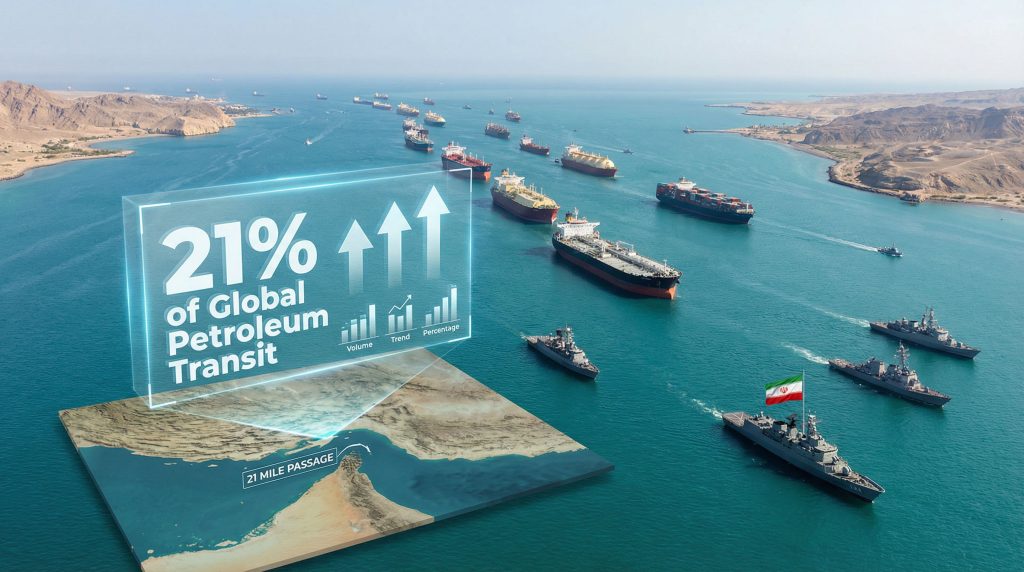
The Strait of Hormuz represents the world's most concentrated energy transit corridor, channeling approximately 21% of global petroleum liquids through a narrow passage measuring just 21 nautical miles at its narrowest navigable point. This geographic bottleneck processes roughly 21 million barrels per day of oil and petroleum products, creating systemic vulnerability for energy-importing nations worldwide.
Beyond crude oil transport, the strait handles significant volumes of liquefied natural gas shipments, with Qatar routing the majority of its LNG exports through these waters. Current global LNG trade exceeds 400 million tonnes annually, with an estimated 20-25% transiting through Hormuz, making this corridor essential for both oil and gas supply chains serving Asian and European markets.
Key Transit Statistics:
• Daily oil flow: 21 million barrels per day
• Global petroleum share: 21% of worldwide seaborne trade
• LNG volumes: 80-100 million tonnes annually
• Vessel transits: Approximately 15,000-17,000 commercial vessels per year
• Strategic width: 21 nautical miles at narrowest shipping channel
The strait comprises three distinct navigation channels: inbound lanes for northbound traffic entering the Persian Gulf, outbound lanes for southbound departures, and a centerline buffer zone monitored by international maritime traffic management systems. This configuration requires vessels to pass through either Iranian or Omani territorial waters, creating dual sovereignty considerations under the United Nations Convention on the Law of the Sea.
Physical Characteristics Creating Vulnerability
The strait's physical geography creates multiple vulnerability points that compound during crisis periods. The shipping lanes follow predetermined routes through relatively shallow waters, with limited maneuvering space for large tankers and LNG carriers. During peak traffic periods, vessels often queue for hours before entering the confined waterway, creating concentrated targets during potential military actions.
Operational Constraints:
• Maximum vessel beam: 200 meters for safe passage
• Draft limitations: 25 meters maximum depth in shipping channels
• Traffic separation: Mandatory two-mile separation between opposing lanes
• Speed restrictions: 12 knots maximum in confined waters
• Pilot requirements: Mandatory for vessels over 150 meters length
Historical Context of Maritime Chokepoint Control
Historical precedents demonstrate how Strait of Hormuz disruptions create cascading economic effects that extend far beyond regional boundaries. The most significant modern example occurred during the Iran-Iraq War period of 1987-1988, when direct attacks on commercial shipping triggered international intervention and dramatic energy price increases.
During the Tanker War phase, approximately 544 merchant vessels suffered attacks over the broader conflict period, with the majority occurring during the intensified 1987-1988 timeframe. This sustained maritime warfare pushed crude oil prices from approximately $13 per barrel in 1986 to over $40 per barrel by 1990, demonstrating the strait's capacity to amplify regional conflicts into global economic crises.
| Historical Crisis Period | Duration | Price Impact | International Response |
|---|---|---|---|
| Iran-Iraq Tanker War | 1987-1988 | 300% price increase | Operation Earnest Will (US Navy escorts) |
| 2011 Iranian Closure Threat | 6 weeks | 100-150% insurance premium spike | Diplomatic pressure, sanctions |
| 2019 Tanker Attacks | 3 months | 15-20% crude price volatility | Enhanced naval patrols |
The resolution of the 1987-1988 crisis established important precedents for international intervention in chokepoint security. The United States implemented Operation Earnest Will, reflagging Kuwaiti tankers under American registry and providing direct naval escort protection. This operation demonstrated how military intervention could maintain commercial shipping flows despite ongoing regional hostilities.
International Maritime Law Framework
The Strait of Hormuz operates under United Nations Convention on the Law of the Sea (UNCLOS) Articles 37-44, which establish the right of "transit passage" for all vessels through straits used for international navigation. This legal framework distinguishes transit passage from slower "innocent passage" rights, permitting continuous movement of commercial and military vessels regardless of coastal state preferences.
Legal Protections for Navigation:
• Transit passage rights: Continuous navigation without coastal state interference
• No suspension authority: Coastal states cannot suspend transit passage
• Military vessel inclusion: Naval ships retain full transit rights
• International arbitration: Disputes subject to international maritime tribunals
• Customary law protection: Rights recognised even by non-UNCLOS signatories
However, practical enforcement of these legal protections depends on international willingness to deploy naval forces and maintain freedom of navigation through potential combat zones. The gap between legal rights and practical enforcement capabilities creates uncertainty during crisis periods.
Current Crisis Dynamics and Market Disruption
The ongoing Strait of Hormuz blockade, now extending into its sixth consecutive week as of April 2026, has triggered precisely the type of energy market disruption that analysts have long anticipated. Furthermore, the US-China trade war impact has compounded these supply chain vulnerabilities. Current crude oil futures have reached ₹9,284 per barrel on the Multi Commodity Exchange, approaching the record high of ₹9,407 per barrel established on March 23, 2026.
International benchmark pricing reflects the sustained supply disruption, with West Texas Intermediate crude trading at $111 per barrel and Brent crude for June delivery reaching $110.43 per barrel, representing a 1.3% daily increase as markets assess the prolonged crisis duration. In addition, concerns about potential US oil production decline have further pressured energy markets.
Current Price Escalation Pattern:
| Commodity Type | Current Price | Pre-Crisis Baseline | Percentage Increase |
|---|---|---|---|
| MCX Crude Oil | ₹9,284/barrel | ₹6,200-6,500/barrel | 42-50% |
| WTI Crude | $111/barrel | $75-80/barrel | 39-48% |
| Brent Crude | $110.43/barrel | $77-82/barrel | 35-43% |
Supply Disruption Mechanisms
The sustained blockade has created multiple layers of supply constraint extending beyond the immediate closure of shipping lanes. Geopolitical tensions have intensified following President Trump's threats of military strikes against Iranian power plants and infrastructure, creating additional uncertainty about conflict escalation and potential infrastructure damage.
OPEC+ announced plans to increase production by 206,000 barrels per day for May 2026, but market analysts express scepticism about delivery capabilities amid damaged infrastructure and ongoing conflict conditions. The organisation faces constraints in actually delivering announced production increases to global markets when primary export routes remain blocked or compromised.
Critical Supply Chain Vulnerabilities:
• Floating storage depletion: Tanker-based inventory buffers becoming constrained
• Alternative route saturation: Suez Canal and pipeline alternatives near capacity
• Infrastructure damage: Port and loading facilities experiencing reduced throughput
• Insurance market disruption: Maritime coverage costs increasing 150-200%
• Force majeure declarations: Contract suspensions affecting long-term supply agreements
Market analysts note that declining floating inventories and tightening marginal storage capacity could drive further price escalation if the Hormuz situation persists without diplomatic progress. Physical tightness in Southeast Asian markets is gradually shifting westward, potentially pushing Brent crude prices toward $130 per barrel within coming weeks.
Military Escalation and Diplomatic Scenarios
The current crisis has evolved beyond economic disruption into direct military confrontation threats, with President Trump warning of potential strikes against Iranian power generation and industrial infrastructure. This escalation represents a significant departure from previous diplomatic approaches that emphasised negotiated resolution and economic pressure rather than direct military action.
The ongoing US-Israel-Iran negotiations have failed to produce measurable progress after six weeks of sustained blockade, suggesting that traditional diplomatic mechanisms may prove insufficient for rapid crisis resolution. Historical precedents indicate that successful maritime chokepoint reopening typically requires simultaneous economic incentives, face-saving diplomatic solutions, and credible security guarantees for all stakeholders.
Naval Force Deployment Capabilities
Modern naval intervention capabilities have evolved significantly since the 1987-1988 Tanker War, with enhanced force projection platforms and international coalition frameworks. The U.S. Fifth Fleet, based in Bahrain, maintains rapid deployment capabilities through amphibious ready groups and carrier strike forces specifically positioned for Persian Gulf contingencies.
Current Naval Assets (Estimated):
• Carrier Strike Groups: 1-2 deployed in Arabian Sea/Persian Gulf region
• Amphibious Ready Groups: 3-4 Marine Expeditionary Units available
• Allied Naval Forces: 34+ nations participating in Combined Maritime Forces
• Regional Partners: Saudi, UAE, and Omani naval cooperation agreements
• Patrol Assets: Enhanced surveillance and interdiction capabilities
The Combined Maritime Forces framework enables rapid coalition building for freedom of navigation operations, potentially involving European, Asian, and regional partners in escort and security operations. However, military intervention carries escalation risks that could extend conflict duration and geographic scope beyond the strait itself.
Regional Power Broker Involvement
Saudi Arabia, the United Arab Emirates, Qatar, and Oman possess unique diplomatic leverage as both major energy exporters and regional actors with direct economic interests in maintaining shipping lane security. These nations face dual pressures from energy revenue dependency and regional stability requirements, creating potential mediation opportunities.
Regional Broker Capabilities:
• Economic leverage: Alternative supply arrangements for global markets
• Diplomatic channels: Established communication frameworks with all parties
• Infrastructure alternatives: Pipeline and port facilities for supply routing
• Security cooperation: Joint naval operations and intelligence sharing
• Financial incentives: Investment and aid packages for conflict resolution
Alternative Route Development and Constraints
The sustained Strait of Hormuz blockade has exposed critical limitations in alternative energy transport infrastructure, forcing rapid assessment of backup routing capabilities that were previously considered adequate for emergency scenarios. Current alternative routes collectively cannot absorb the full 21 million barrels per day that typically transit through Hormuz, creating fundamental supply shortfalls regardless of pricing adjustments.
Maritime Alternative Routes
The Suez Canal route adds approximately 3,000-4,000 nautical miles to journey distances between Persian Gulf production areas and Asian or European consumption markets. Transit fees range from $300,000-$600,000 per vessel, depending on size and cargo type, while the canal already operates near maximum capacity with 12,000-14,000 annual transits.
The Cape of Good Hope route represents the most extreme alternative, adding 6,000-7,000 nautical miles and 2-3 additional weeks per voyage. Fuel consumption increases by an estimated 30-40%, while historical piracy risks off East Africa create additional security and insurance costs despite improved international naval patrol coverage.
Route Comparison Analysis:
| Alternative Route | Added Distance | Extra Transit Time | Additional Costs | Capacity Constraints |
|---|---|---|---|---|
| Suez Canal | 3,000-4,000 nm | 10-14 days | $300,000-$600,000 per vessel | Near maximum capacity |
| Cape of Good Hope | 6,000-7,000 nm | 14-21 days | 30-40% fuel increase | Weather/piracy risks |
| Red Sea Routes | 2,500-3,500 nm | 8-12 days | 20-30% cost increase | Political instability |
Pipeline Infrastructure Limitations
Existing pipeline bypass infrastructure can handle only a fraction of Hormuz transit volumes, with combined capacity totalling approximately 9.5 million barrels per day across all major alternative routes. This represents less than half of typical Hormuz throughput, creating an 11.5 million barrel per day shortfall that cannot be absorbed through pipeline alternatives alone.
The Saudi Arabian Oil Pipeline (SADPLINE) provides 5 million barrels per day capacity to the Red Sea terminal at Yanbu, while Egypt's Sumed Pipeline offers 2.5 million barrels per day capacity with approximately 40% historical underutilisation. The UAE's Fujairah terminal handles roughly 2 million barrels per day through various pipeline connections.
Pipeline Capacity Analysis:
• SADPLINE (Saudi Arabia): 5M bpd to Yanbu Red Sea terminal
• Sumed Pipeline (Egypt): 2.5M bpd, 60% current utilisation
• Fujairah Terminal (UAE): 2M bpd multiple pipeline feeds
• Total Alternative Capacity: 9.5M bpd versus 21M bpd Hormuz volume
• Supply Shortfall: 11.5M bpd cannot be rerouted
Strategic Reserve Utilisation
International Energy Agency member nations maintain strategic petroleum reserves totalling approximately 1.5 billion barrels, designed to provide 90-day import coverage during supply emergencies. However, current consumption patterns and the scale of Hormuz disruption would exhaust these reserves within 60-75 days if alternative supplies cannot be secured.
The United States Strategic Petroleum Reserve contains roughly 650 million barrels, while China's strategic reserves are estimated at 300-400 million barrels. European Union collective reserves total approximately 140 million barrels, with Japan maintaining 240 million barrels in government and commercial stockpiles.
Strategic petroleum reserves were designed for temporary supply disruptions lasting weeks to months, not sustained blockades extending beyond quarterly timeframes that challenge fundamental supply route assumptions.
The next major ASX story will hit our subscribers first
Industry Vulnerability Assessment and Economic Impact
Energy-intensive manufacturing sectors face disproportionate disruption risk during extended Strait of Hormuz blockades, with input cost pressures creating cascading effects throughout industrial supply chains. Petrochemical and plastics manufacturing operations represent the highest vulnerability category, given direct feedstock dependencies and limited substitution options for specialised petroleum derivatives.
Manufacturing Sector Vulnerability Rankings
Critical Impact Industries (Ranked by Disruption Risk):
-
Petrochemical and plastics manufacturing: 90-95% petroleum feedstock dependency
-
Steel and aluminium production: 60-70% energy cost component
-
Cement and construction materials: 40-50% fuel cost exposure
-
Automotive assembly and components: 25-35% energy and materials impact
-
Food processing and packaging: 15-25% energy and transportation costs
Steel production facilities face particular challenges due to coking coal and natural gas requirements for blast furnace operations, while aluminium smelting operations consume enormous electricity quantities often generated from natural gas power plants. These energy-intensive processes cannot easily adjust production levels without significant economic losses from fixed infrastructure investments.
Transportation Network Strain Patterns
Aviation fuel supply chains experience immediate pressure from blocked Hormuz transit routes, given that many Persian Gulf refineries produce jet fuel specifications required for international air travel. Regional airports in Asia and Europe face potential fuel shortage scenarios if alternative supply arrangements cannot be established within 30-45 days.
Maritime shipping networks confront dual pressure from both increased demand for alternative routing services and higher fuel costs for vessel operations. Container shipping rates have increased 150-200% on routes requiring Cape of Good Hope diversions, while bulk commodity shipping faces similar cost escalations.
Transportation Impact Assessment:
| Transport Mode | Cost Increase | Service Disruption | Recovery Timeline |
|---|---|---|---|
| Aviation | 40-60% fuel costs | Route cancellations | 6-8 weeks |
| Maritime | 150-200% shipping rates | Delayed deliveries | 10-12 weeks |
| Land freight | 25-35% fuel surcharges | Capacity constraints | 4-6 weeks |
| Pipeline | Limited impact | Increased utilisation | 2-3 weeks |
Regional Power Dynamics and Economic Coercion
The extended Strait of Hormuz blockade has created opportunities for selective passage regimes that transform energy access into diplomatic leverage, enabling economic coercion through controlled shipping lane management. Regional powers can theoretically implement toll payment mechanisms or preferential treatment protocols that favour allied nations while imposing additional costs or delays on neutral or unfriendly countries.
Economic Leverage Through Energy Control
Iran's strategic position allows potential implementation of differential treatment policies for vessels from various nations, creating economic incentives for diplomatic alignment or neutrality during the crisis period. Such selective access policies could include expedited passage for friendly nations, standard processing for neutral countries, and enhanced scrutiny or delays for adversarial states.
Potential Selective Treatment Framework:
• Allied nations: Expedited passage, reduced inspection requirements
• Neutral countries: Standard processing, moderate delays
• Economic partners: Negotiated toll arrangements, guaranteed access
• Adversarial states: Enhanced inspection, extended processing times
• Strategic exemptions: Humanitarian supplies, medical equipment
This approach transforms traditional military blockade concepts into economic warfare tools that create political pressure without direct military confrontation. Countries heavily dependent on Persian Gulf energy imports face difficult choices between political positioning and economic necessity.
Market Adaptation Strategies
Asian nations with high energy import dependencies have activated emergency supply agreement protocols established following previous energy crises. Japan has triggered strategic reserve drawdown procedures while simultaneously accelerating negotiations with alternative suppliers including Australia, Canada, and the United States.
South Korea has implemented energy rationing measures for non-essential industrial activities while prioritising critical manufacturing operations. China has increased domestic coal production and activated emergency natural gas imports from Russia through existing pipeline infrastructure.
Asian Energy Emergency Response:
• Japan: 60-day strategic reserve drawdown initiated
• South Korea: Industrial energy rationing, 15% consumption reduction
• China: Increased coal output, enhanced Russian gas imports
• India: Accelerated renewable deployment, alternative supplier agreements
• Singapore: Regional distribution hub optimisation, inventory management
Financial Market Behaviour and Risk Pricing
Commodity futures markets have exhibited distinctive patterns during the extended Strait of Hormuz blockade, with crude oil contracts displaying steep backwardation as near-term supply constraints drive spot prices significantly above longer-dated delivery contracts. This price structure reflects market expectations that diplomatic resolution or military intervention will eventually restore normal shipping patterns within 6-9 months.
Futures Market Structure Analysis
Current crude oil futures curves show $15-20 per barrel price differences between prompt month contracts and six-month forward deliveries, indicating severe near-term supply tightness combined with medium-term optimism for crisis resolution. Options markets have simultaneously experienced dramatic volatility increases, with implied volatility readings reaching 80-90% compared to normal levels of 20-30%.
Futures Curve Analysis:
| Contract Month | Brent Price | WTI Price | Implied Volatility |
|---|---|---|---|
| May 2026 (Prompt) | $110.43 | $111.00 | 87% |
| July 2026 | $98.50 | $99.25 | 72% |
| September 2026 | $92.75 | $93.50 | 58% |
| December 2026 | $88.25 | $89.00 | 45% |
| March 2027 | $85.50 | $86.25 | 38% |
Energy sector equity performance has diverged significantly between upstream producers and downstream refiners, with oil and gas exploration companies experiencing 25-40% share price increases while airlines and transportation companies face 15-25% declines due to fuel cost pressures.
Currency and Bond Market Reactions
Oil-importing nations have experienced currency depreciation pressures as trade balance deficits widen due to higher energy import costs. The Japanese yen has weakened 8-12% against the U.S. dollar, while the South Korean won and Indian rupee have declined 6-10% as markets price increased current account deficits.
Government bond markets reflect divergent inflation expectations, with oil-importing nation yields rising as central banks face pressure to combat energy-driven price increases. Conversely, oil-exporting countries have experienced bond yield declines as improved fiscal positions reduce default risk perceptions.
Currency Impact Assessment:
• Japanese Yen: 8-12% depreciation versus USD
• South Korean Won: 6-10% decline, intervention threats
• Indian Rupee: 7-9% weakening, reserve utilisation
• European Euro: 4-6% decline versus USD
• Chinese Yuan: 3-5% depreciation, managed float adjustment
Central Bank Policy Responses
Central banks in energy-importing nations face challenging policy dilemmas between combating energy-driven inflation and supporting economic growth amid higher input costs. The Bank of Japan has maintained accommodative monetary policy while intervening in currency markets to prevent excessive yen depreciation.
The Federal Reserve faces reduced pressure given U.S. energy independence, while the European Central Bank confronts difficult decisions about interest rate adjustments as eurozone inflation accelerates due to energy cost pass-through effects.
Historical Crisis Resolution Mechanisms
Analysis of previous maritime chokepoint crises reveals consistent patterns in successful resolution mechanisms that combine economic incentives, diplomatic face-saving measures, and security guarantees for all stakeholders. The 1987-1988 Tanker War resolution provides the most relevant precedent for current Strait of Hormuz blockade scenarios.
Operation Earnest Will Lessons
The U.S. Navy's Operation Earnest Will demonstrated effective military intervention principles that maintained commercial shipping flows while avoiding direct confrontation with Iranian forces. Key success factors included international coalition building, clear rules of engagement, and graduated response protocols that escalated protection measures without triggering broader conflict.
Operation Earnest Will Framework:
• Duration: 14 months (July 1987 – September 1988)
• Vessels protected: 259 Kuwaiti tankers reflagged under U.S. registry
• Naval assets deployed: 30+ vessels, including cruisers and destroyers
• International participation: British, French, and other allied naval forces
• Incident management: Graduated response to mining and missile threats
The operation successfully maintained petroleum flows while providing diplomatic space for United Nations mediation efforts that ultimately produced ceasefire agreements. Military escort operations reduced shipping insurance costs and demonstrated credible security commitments to neutral commercial operators.
Diplomatic Mediation Frameworks
Successful chokepoint crisis resolution typically requires neutral third-party mediation combined with economic compensation packages for all affected parties. The United Nations Convention on the Law of the Sea provides legal frameworks for arbitration, while regional organisations offer cultural and political legitimacy for mediation efforts.
Effective Mediation Elements:
• Neutral mediators: UN, Arab League, or other respected international bodies
• Economic incentives: Trade agreements, investment commitments
• Security guarantees: International monitoring, peacekeeping forces
• Face-saving mechanisms: Mutual concessions, dignity preservation
• Implementation monitoring: Verification and compliance oversight
Previous successful resolutions have included economic development assistance, security cooperation agreements, and diplomatic recognition arrangements that address underlying conflicts while resolving immediate crisis symptoms.
Long-term Infrastructure and Investment Implications
The sustained Strait of Hormuz blockade has accelerated strategic infrastructure development programmes designed to reduce dependency on vulnerable maritime chokepoints, with both energy-importing and exporting nations implementing alternative route expansion projects. These investments represent fundamental shifts toward supply chain diversification that will persist beyond current crisis resolution.
Energy Security Infrastructure Development
Pipeline network expansion projects have received emergency funding authorisations across multiple regions, with particular emphasis on routes that bypass traditional maritime vulnerabilities. The Trans-Anatolian Natural Gas Pipeline (TANAP) and Southern Gas Corridor projects have secured additional European Union investment commitments totalling €15-20 billion for capacity expansion and extension programmes.
Major Infrastructure Acceleration Programmes:
• Arctic LNG pipelines: Russia-China connections, $25 billion investment
• Middle East pipeline expansion: Saudi-Jordan-Mediterranean routes
• African energy corridors: Nigeria-Europe subsea pipeline projects
• American hemisphere networks: Canada-U.S.-Mexico integration
• Asian overland routes: Central Asian pipeline development
LNG terminal capacity building has accelerated dramatically, with emergency permitting procedures reducing typical 5-7 year development timelines to 2-3 years for critical energy security projects. The United States has approved 12 additional LNG export terminals since the blockade began, while European nations have fast-tracked 18 import terminal expansions.
Renewable Energy Transition Acceleration
The crisis has provided political momentum for renewable energy deployment that previously faced resistance due to higher initial capital costs compared to fossil fuel alternatives. Government subsidies and emergency procurement programmes have reduced solar and wind project development timelines while guaranteeing long-term purchase agreements.
Renewable Energy Emergency Programmes:
| Technology | Capacity Additions | Investment Commitment | Timeline Acceleration |
|---|---|---|---|
| Solar photovoltaic | 150 GW globally | $180 billion | 40% faster deployment |
| Offshore wind | 75 GW globally | $225 billion | 35% timeline reduction |
| Energy storage | 200 GWh capacity | $150 billion | 50% faster installation |
| Green hydrogen | 25 GW electrolysis | $100 billion | 60% accelerated development |
Energy storage technology deployment has received particular emphasis as nations seek to manage intermittent renewable generation while reducing dependence on fossil fuel backup systems. Battery manufacturing capacity has expanded 300% since the crisis began, with emergency production facilities operating around-the-clock schedules.
Risk Management and Investment Strategies
The extended Strait of Hormuz blockade has fundamentally altered risk assessment frameworks for energy-dependent businesses and investment portfolios, requiring comprehensive hedging strategies that address both immediate supply disruption and long-term structural market changes. Traditional risk management approaches designed for temporary disruptions prove inadequate for sustained chokepoint closure scenarios.
Energy Cost Hedging Mechanisms
Sophisticated energy hedging requires multi-layered approaches combining financial derivatives, physical supply contracts, and operational flexibility investments. Companies with high energy exposure have implemented commodities hedging strategies using options contracts that limit both maximum costs and minimum prices over 12-24 month periods.
Advanced Hedging Strategy Framework:
• Financial derivatives: Crude oil and natural gas futures contracts
• Options strategies: Put and call combinations limiting cost volatility
• Physical contracts: Long-term supply agreements with price indexation
• Geographic diversification: Multi-region supplier relationships
• Operational flexibility: Fuel-switching capabilities, efficiency improvements
Currency hedging has become equally critical as energy import costs affect exchange rates, with companies implementing cross-hedging strategies that simultaneously manage energy price risk and currency exposure. This dual approach protects against both commodity cost increases and unfavourable currency movements that compound imported energy expenses.
Supply Chain Diversification Implementation
Manufacturing companies have accelerated supplier diversification programmes that reduce dependence on single-source critical materials and components. Dual-sourcing strategies now typically include primary suppliers from stable regions and backup suppliers from alternative geographic areas with different risk profiles.
Inventory management approaches have shifted toward higher strategic stockpile levels despite increased carrying costs, with companies accepting 15-25% higher working capital requirements to maintain operational continuity during supply disruptions. Just-in-time manufacturing models have been replaced by just-in-case approaches emphasising resilience over efficiency.
Supply Chain Resilience Investments:
• Alternative supplier development: 200-300% increase in supplier base diversity
• Strategic inventory levels: 30-45 day coverage versus previous 7-14 days
• Regional production capabilities: Nearshoring and reshoring investments
• Transportation flexibility: Multi-modal logistics capabilities
• Technology redundancy: Backup systems and alternative processes
Investment Opportunity Identification
Crisis periods create distinctive investment opportunities in sectors that benefit from structural market changes and emergency spending programmes. Alternative energy infrastructure companies have experienced 150-250% valuation increases as governments prioritise energy security investments through accelerated procurement and guaranteed revenue programmes.
Transportation and logistics companies specialising in alternative route optimisation have similarly benefited from emergency contracts and expanded service demand. Maritime shipping companies with Cape of Good Hope routing capabilities command 300-400% premium rates compared to pre-crisis levels.
Crisis-Period Investment Opportunities:
| Sector | Opportunity Type | Potential Return | Risk Assessment |
|---|---|---|---|
| Alternative energy | Infrastructure development | 200-400% | Moderate-High |
| Strategic commodities | Stockpiling operations | 150-300% | High |
| Transportation optimisation | Route technology | 250-350% | Moderate |
| Energy efficiency | Conservation technology | 100-200% | Low-Moderate |
| Security services | Maritime protection | 300-500% | High |
Commodity stockpiling operations have generated exceptional returns for investors with adequate capital and storage capabilities, particularly for refined petroleum products and specialty chemicals with limited substitution options. However, these investments carry significant storage costs and market timing risks that require sophisticated risk management capabilities.
Future Technological Solutions and Security Frameworks
Advanced maritime security technologies offer potential solutions for preventing future chokepoint disruptions through enhanced monitoring, automated threat detection, and coordinated international response capabilities. Autonomous vessel monitoring systems utilising satellite networks and artificial intelligence can provide real-time threat assessment and early warning capabilities for commercial shipping operations.
How Can Technology Prevent Future Maritime Disruptions?
Satellite-based monitoring networks now provide comprehensive coverage of global shipping lanes with resolution capabilities sufficient to identify individual vessels and cargo characteristics. These systems combine optical imaging, synthetic aperture radar, and automatic identification system (AIS) data to create integrated threat assessment platforms.
Advanced Monitoring Technologies:
• Satellite constellation coverage: 15-minute global refresh intervals
• AI-powered threat detection: Pattern recognition for anomalous behaviour
• Automated alert systems: Real-time notifications to naval commands
• Predictive analytics: Route optimisation and risk assessment
• Integrated communications: Secure channels for commercial-military coordination
Machine learning algorithms can analyse historical shipping patterns to identify potentially threatening activities before they escalate into active blockade scenarios. These systems enable proactive intervention rather than reactive crisis management, potentially preventing chokepoint closures through early diplomatic or security responses.
International Maritime Security Cooperation
Enhanced international cooperation frameworks could establish permanent multinational naval patrol systems for critical energy chokepoints, distributing security costs among beneficiary nations while reducing single-country intervention burdens. The Combined Maritime Forces model provides a template for expanded cooperation including Asian and European partners.
Proposed Security Architecture:
• Permanent patrol rotations: Multinational naval presence
• Cost-sharing agreements: Proportional financial contributions
• Intelligence sharing: Coordinated threat assessment
• Rapid response protocols: Pre-authorised intervention procedures
• Diplomatic integration: Security-linked trade agreements
Such frameworks could establish legal precedents for automatic security responses to chokepoint threats, reducing diplomatic delays and uncertainty during crisis development. However, implementation requires unprecedented levels of international cooperation and sovereignty-sharing arrangements.
What Lies Ahead for Global Energy Security?
The current Strait of Hormuz blockade represents a fundamental test of global energy security architecture and international crisis management capabilities. Furthermore, considering the oil price movement analysis and potential Trump tariff implications, the geopolitical complexity continues to evolve. As markets continue adapting to sustained supply disruptions, the long-term implications extend far beyond immediate price volatility to encompass structural changes in energy infrastructure, geopolitical relationships, and risk management frameworks that will influence global economic stability for decades to come.
Disclaimer: This analysis incorporates market data and geopolitical assessments that involve inherent uncertainties and speculative elements. Energy market forecasts, infrastructure development timelines, and crisis resolution scenarios should be considered preliminary estimates subject to rapid change based on evolving political, economic, and technological factors. Investors should conduct independent research and consult qualified professionals before making investment decisions based on energy market disruption scenarios.
Wondering How to Position Your Portfolio During Energy Market Volatility?
Discovery Alert's proprietary Discovery IQ model delivers real-time notifications on significant ASX mineral and energy discoveries, providing subscribers with actionable insights during market disruptions like the current Strait of Hormuz crisis. When energy chokepoints create investment opportunities in alternative resources and strategic commodities, Discovery Alert ensures you're positioned ahead of market movements with instant alerts on emerging discoveries. Begin your 14-day free trial today to gain a competitive edge during volatile energy market conditions.