July 25, 2026
Strategic Energy Chokepoints Under Attack
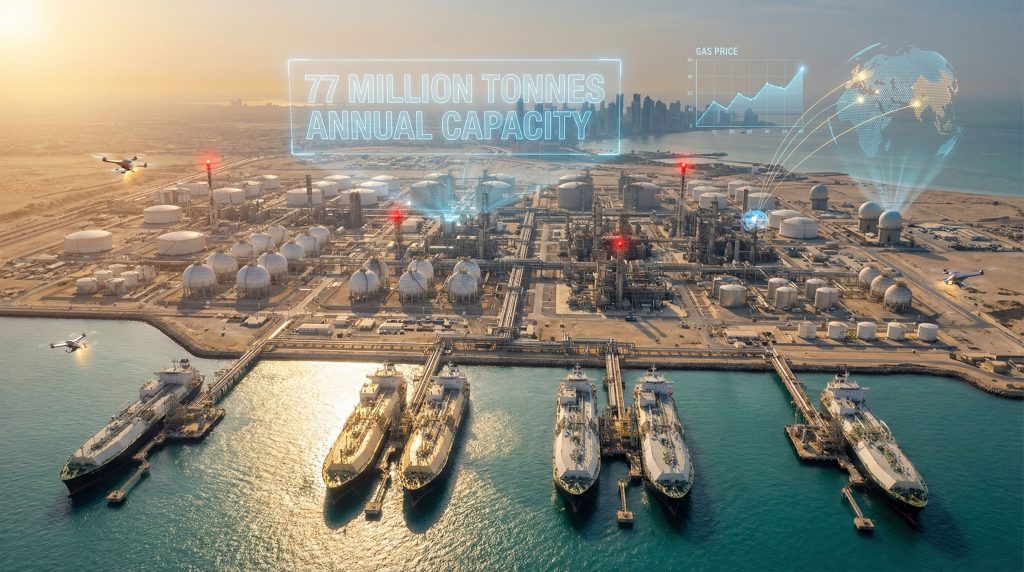
Qatar's position as the world's dominant LNG supplier represents a critical vulnerability in global energy security architecture. The nation's export infrastructure processes approximately 77 million tonnes of liquefied natural gas annually, making it the largest single source of LNG globally. This concentration creates what strategists term "single point of failure" risk across international energy markets.
The Ras Laffan Industrial City functions as the primary nerve center for Qatar's LNG operations, housing multiple liquefaction trains that convert natural gas into transportable liquid form. When drone attacks on Qatar LNG facilities disrupted operations at both Ras Laffan and Mesaieed terminals, the immediate impact cascaded through global supply chains with unprecedented speed.
Recent market analysis reveals that Qatar supplies approximately 22% of global LNG exports, with primary delivery corridors serving European and Asian markets. The disruption of these facilities removes substantial volumes from international markets instantaneously, triggering competitive bidding scenarios where Asian buyers redirect cargoes away from European utilities. Moreover, this situation amplifies the ongoing oil price rally while simultaneously impacting natural gas price trends across global markets.
Force Majeure Cascade Mechanisms
The contractual architecture of global LNG markets creates automatic transmission mechanisms for supply disruptions. When QatarEnergy halted production following infrastructure attacks, downstream effects propagated through multiple layers of commercial relationships:
- Primary traders like Shell and TotalEnergies purchase Qatari cargoes under long-term contracts
- These companies resell volumes to secondary buyers including European utilities and Asian industrial consumers
- Supply interruptions trigger force majeure declarations at each contractual level
- Spot market competition intensifies as remaining cargoes command premium pricing
According to energy market sources, Qatar's energy minister indicated that restoring LNG exports could require weeks or months even after conflict resolution. This establishes extended timelines for contractual delivery impacts beginning in April 2026, furthermore highlighting the US-China trade war impact on global supply chains.
When big ASX news breaks, our subscribers know first
Asymmetric Warfare Against Critical Infrastructure
The evolution of unmanned aerial vehicle technology has democratized precision strike capabilities against high-value targets. Small commercial drones, modified for military applications, can penetrate traditional air defense systems designed to intercept larger aircraft and missiles.
Drone Technology Cost-Effectiveness Analysis
| Attack Vector | Estimated Cost | Potential Damage | Cost-to-Impact Ratio |
|---|---|---|---|
| Modified Commercial Drone | $10,000 – $50,000 | $100M+ in infrastructure damage | 1:2,000 – 1:10,000 |
| Traditional Cruise Missile | $1M – $3M | Similar infrastructure impact | 1:100 – 1:300 |
| Manned Aircraft Strike | $50M+ (including aircraft loss risk) | Variable | 1:2 – 1:10 |
This cost-effectiveness differential explains why asymmetric actors increasingly favour drone-based attacks against energy infrastructure. The economic leverage gained from minimal investment creates disproportionate market impact, consequently exacerbating existing energy security challenges.
Defense System Inadequacies
Traditional air defence architectures struggle against small unmanned platforms for several technical reasons:
- Radar cross-section limitations: Small drones present minimal radar signatures
- Speed and altitude variables: Commercial drones operate below typical intercept thresholds
- Swarm coordination capabilities: Multiple simultaneous targets overwhelm point defence systems
- Electronic countermeasures: Advanced drones employ encrypted communications resistant to jamming
Saudi Aramco's procurement negotiations with Ukrainian defence manufacturers highlight these vulnerabilities. The company is acquiring specialised counter-drone systems from SkyFall, Wild Hornets, and Phantom Defense to supplement national air defence capabilities.
"The rapid shift toward private sector defensive procurement indicates that existing governmental air defence infrastructure proves insufficient against emerging drone threats targeting energy facilities."
Market Disruption Transmission Mechanisms
Supply chain disruptions in energy markets follow predictable propagation patterns, with initial shocks amplifying through interconnected trading networks. The Qatar LNG shutdown demonstrates how localised infrastructure attacks generate global price volatility.
Oil Price Response Patterns
Current market data reveals dramatic price movements following infrastructure attacks. These movements directly influence oil price movements across international markets:
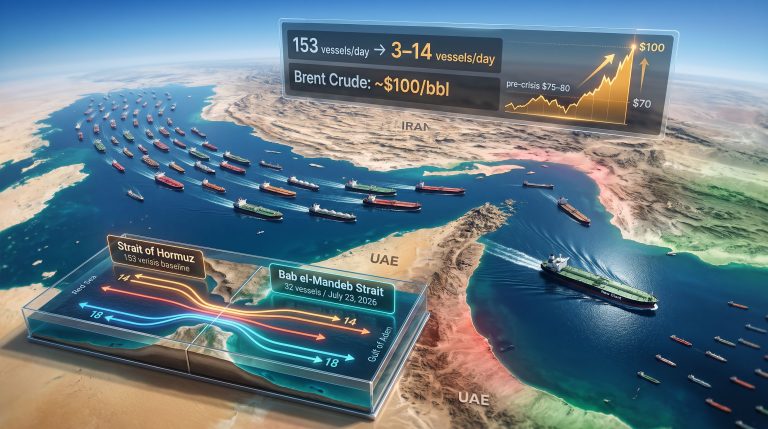
- Brent crude: Surged above $100 per barrel following Strait of Hormuz shipping disruptions
- Peak volatility: Oil briefly approached $120 during acute attack periods
- Sustained elevation: Prices maintained above $100 despite strategic reserve releases
- Regional differentials: Asian spot LNG prices commanding significant premiums over European markets
Goldman Sachs analysts revised Brent oil forecasts above $100 for March 2026, reflecting sustained supply disruption expectations rather than temporary price spikes.
Geographic Supply Reallocation
The competitive dynamics of LNG spot markets create immediate geographic redistribution of available cargoes. Asian buyers, typically paying premium prices for LNG imports, successfully bid volumes away from European utilities during supply constraints.
This reallocation mechanism reflects fundamental market structure where:
- Highest bidders secure remaining supplies during shortage periods
- Geographic arbitrage opportunities drive cargo redirection
- Contract flexibility varies between regions, affecting supply security
- Infrastructure constraints limit alternative routing options
Industrial Sector Vulnerability Assessment
Different industrial sectors exhibit varying exposure levels to natural gas supply disruptions:
| Sector | Gas Dependency | Production Flexibility | Vulnerability Rating |
|---|---|---|---|
| Power Generation | 40-60% of fuel mix | Limited short-term alternatives | High |
| Chemical Manufacturing | 70-80% feedstock requirement | Minimal substitution capability | Critical |
| Steel Production | 25-35% of energy input | Some fuel switching possible | Moderate |
| Residential/Commercial | 50-70% heating demand | Seasonal demand flexibility | Variable |
Corporate Crisis Response Strategies
Energy companies deploy multiple defensive frameworks when confronting infrastructure security threats. These approaches combine technological hardening, contractual risk management, and operational diversification strategies.
Infrastructure Hardening Investments
Saudi Aramco's defensive technology procurement illustrates industry-wide infrastructure protection trends. The company's negotiations with Ukrainian manufacturers focus on three primary defence categories:
Kinetic Interceptors: SkyFall and Wild Hornets produce drone-on-drone systems designed to physically destroy incoming threats before reaching target facilities.
Electronic Warfare Systems: Phantom Defense manufactures jamming platforms capable of disrupting drone communications, though effectiveness varies against encrypted control systems.
Integrated Detection Networks: Advanced radar and optical systems providing early warning capabilities across geographically dispersed facilities.
The competitive procurement environment reflects regional demand surge, with Gulf energy companies simultaneously seeking similar defensive capabilities. This creates potential supply constraints for specialised security technologies.
Contractual Risk Mitigation
Force majeure provisions in energy contracts provide legal frameworks for managing supply disruptions, though application varies significantly across different agreement structures:
- Long-term contracts: Typically include detailed force majeure definitions covering infrastructure attacks
- Spot market transactions: Limited contractual protection, full price risk exposure
- Government-to-government agreements: Enhanced legal protections but complex dispute resolution
- Utility supply contracts: Pass-through mechanisms transferring risk to end consumers
Shell and TotalEnergies' force majeure declarations following Qatar's production halt demonstrate standard industry practice for managing cascading contractual obligations during supply emergencies.
Geopolitical Escalation Scenarios
Regional conflict expansion possibilities create multiple pathways for energy market disruption beyond isolated infrastructure attacks. Iran's strategic positioning enables coordinated pressure across critical energy transportation corridors.
Strait of Hormuz Vulnerability Analysis
Approximately 20% of global oil exports transit through the Strait of Hormuz, creating systemic chokepoint risk for international energy markets. Current shipping disruptions demonstrate the strategic leverage available to regional actors:
- Shipping insurance premiums increased dramatically following attack reports
- Tanker routing alternatives via Red Sea/Cape of Good Hope add significant transit time
- Storage capacity constraints at alternative loading terminals limit supply flexibility
- Naval protection requirements strain military resources across multiple corridors
Reports indicate shipping through the Strait has "effectively stopped," forcing energy exporters to consider alternative routes with substantially higher transportation costs. Furthermore, this situation compounds existing drone attacks on Qatar LNG facilities, creating multiple pressure points across regional energy infrastructure.
Policy Response Coordination
Government intervention mechanisms reveal the strategic importance policymakers assign to energy security during crisis periods:
Strategic Reserve Releases: The IEA launched a record 400-million-barrel emergency oil release, representing the largest coordinated intervention in organisational history.
Regulatory Flexibility: Trump administration consideration of Jones Act waivers demonstrates willingness to suspend domestic shipping restrictions during energy emergencies.
Fiscal Intervention: Brazil's elimination of diesel import taxes illustrates how energy-importing nations shield domestic markets from international price volatility.
These coordinated responses suggest recognition that energy supply disruptions require multi-layered governmental intervention beyond traditional market mechanisms.
Long-Term Structural Market Evolution
Persistent infrastructure threats will likely accelerate fundamental changes in global energy market architecture. These changes have implications for investment patterns, contract structures, and geographic distribution strategies.
Infrastructure Diversification Imperatives
The concentration risk demonstrated by Qatar's LNG disruption highlights vulnerabilities in current export infrastructure design. Future development patterns may emphasise:
- Geographic distribution of processing facilities to minimise single-point failures
- Redundant transportation corridors reducing dependence on vulnerable chokepoints
- Enhanced defensive integration incorporating security considerations into facility design
- Modular capacity expansion enabling rapid production adjustment during disruptions
Investment Risk Recalibration
Energy infrastructure investment analysis must incorporate heightened security risks into financial modelling. Key considerations include:
- Insurance cost increases for facilities in high-threat regions
- Security infrastructure requirements adding capital expenditure burdens
- Operational continuity planning necessitating redundant systems investment
- Political risk assessment incorporating asymmetric warfare capabilities
The competitive advantage may shift toward energy producers with superior defensive capabilities rather than solely production efficiency metrics.
The next major ASX story will hit our subscribers first
Strategic Implications for Market Participants
Energy market stakeholders must adapt analytical frameworks and operational strategies to account for persistent infrastructure vulnerability. This adaptation becomes crucial in an era of accessible precision-strike technology.
Risk Assessment Framework Evolution
Traditional energy market risk models require substantial revision to incorporate asymmetric threat scenarios:
- Probability modelling for coordinated infrastructure attacks across multiple facilities
- Recovery timeline estimation considering both physical damage and security enhancement requirements
- Supply chain redundancy evaluation measuring alternative source availability during disruptions
- Price volatility forecasting incorporating non-linear market responses to security incidents
Portfolio Diversification Strategies
Investment strategies emphasising geographic and technological diversification gain importance when infrastructure concentration creates systemic vulnerabilities:
- Multi-region exposure reducing dependence on single production areas
- Technology hedge positions benefiting from defensive infrastructure demand
- Alternative energy acceleration as security considerations favour distributed generation
- Strategic commodity positioning capturing price volatility during supply disruptions
Future Monitoring Indicators
Several key metrics will signal escalating infrastructure security risks and market adaptation progress:
Conflict Escalation Signals:
- Drone attack frequency and sophistication levels
- Geographic expansion of infrastructure targeting
- Defensive technology deployment success rates
- Regional coalition formation for energy corridor protection
Market Adaptation Indicators:
- Insurance premium trends for energy infrastructure
- Capital allocation toward defensive technologies
- Contract structure evolution incorporating security provisions
- Alternative supply source development timelines
The intersection of accessible precision-strike technology with critical energy infrastructure represents a paradigm shift. This shift requires comprehensive strategic response across governmental, corporate, and investment decision-making frameworks. Market participants who successfully anticipate and adapt to this threat environment will likely outperform those relying on traditional risk assessment methodologies.
In addition, the ongoing drone strikes that shut Qatar's top LNG hub demonstrate how vulnerable modern energy systems have become to asymmetric warfare tactics.
Disclaimer: This analysis contains forward-looking assessments and speculative scenarios regarding energy market dynamics and geopolitical developments. Readers should conduct independent research and consider multiple perspectives when making investment or operational decisions. Past performance and current trends do not guarantee future outcomes in volatile energy markets.
Ready to Capitalise on Energy Market Volatility?
Discovery Alert's proprietary Discovery IQ model delivers real-time alerts on significant ASX mineral discoveries, including critical energy minerals that become increasingly valuable during global supply disruptions. With energy security concerns driving unprecedented demand for strategic commodities, start your 14-day free trial today to position yourself ahead of market-moving announcements in the energy transition space.