July 14, 2026
Strategic Energy Chokepoints and Modern Maritime Security Architecture
Global energy markets operate within an intricate web of interdependent supply chains, where single maritime corridors can determine the economic stability of entire regions. The convergence of geopolitical tensions, naval security protocols, and commercial shipping operations creates a complex risk matrix that demands sophisticated analysis. Recent maritime incidents demonstrate how quickly regional conflicts can escalate into global energy security concerns, affecting everything from crude oil pricing mechanisms to strategic petroleum reserve policies. These developments underscore the critical importance of understanding how USA flagged oil tanker hailed by armed ships in Hormuz incidents can reshape global energy dynamics.
When big ASX news breaks, our subscribers know first
The Strait of Hormuz: Critical Infrastructure for Global Energy Commerce
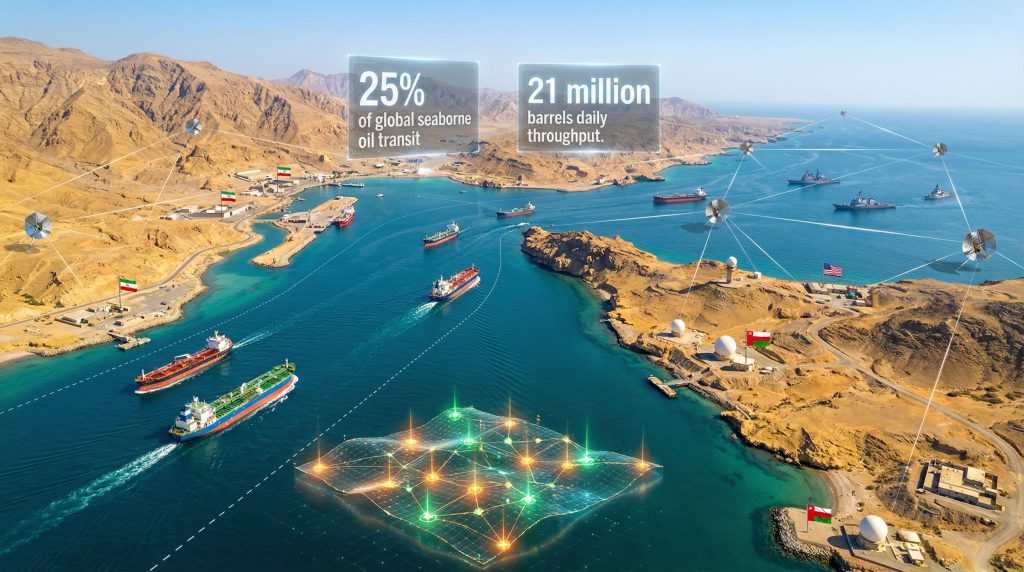
The narrow waterway connecting the Persian Gulf to international shipping lanes represents one of the world's most strategically vital maritime corridors. This 21-mile-wide passage serves as the primary gateway for approximately 25% of global seaborne oil transit, handling roughly 21 million barrels of crude oil daily. The geographic constraints of this chokepoint create unique vulnerabilities that ripple through international energy markets.
Geographic and Strategic Significance
The Strait operates through defined inbound and outbound maritime corridors, with structured traffic management protocols established by international maritime authorities. These corridors facilitate the movement of massive crude carriers and product tankers that supply refineries across Asia-Pacific markets, European distribution networks, and North American import terminals.
Recent incidents illustrate the operational realities of this critical passage. In February 2026, the USA flagged oil tanker Stena Imperative was hailed by Iranian gunboats while transiting the waterway, demonstrating the ongoing security challenges facing commercial vessels. The incident occurred within the inbound maritime corridor, highlighting how territorial water disputes can immediately impact global energy logistics.
Furthermore, these events directly influence oil price movements as markets react to perceived supply disruption risks. The concentration of energy transit through such narrow passages means that even minor incidents can trigger significant pricing volatility.
Economic Vulnerability Assessment
Alternative routing options through the Cape of Good Hope add approximately 15-20 days to transit times and increase transportation costs by $2-4 per barrel under normal market conditions. During periods of heightened tension, these premiums can escalate dramatically as insurance markets react to perceived risks.
The concentration of energy infrastructure around the Strait creates cascading effects throughout global supply chains:
- Asia-Pacific refineries depend on Persian Gulf crude for 60-80% of feedstock requirements
- European energy importers rely on the route for approximately 30% of crude oil supplies
- Strategic petroleum reserves in major consuming nations maintain buffer stocks specifically for Strait-related disruptions
- Regional refinery capacity constraints limit the ability to substitute alternative crude sources quickly
US Maritime Security Framework and Strategic Asset Management
The US Tanker Security Program Architecture
The United States maintains a dedicated fleet management system designed to ensure energy security during crisis periods. The US Tanker Security Program encompasses strategically positioned vessels that operate under military fuel procurement protocols, providing the Department of Defense with reliable access to American-flagged tankers.
This program involves approximately 60+ strategically positioned vessels with an estimated annual investment of $300 million. The initiative represents a deliberate approach to maintaining energy supply chain independence, particularly for high-risk maritime regions where commercial shipping faces elevated security threats.
Key operational components include:
- Dedicated fleet composition of product tankers and crude carriers
- Specialised crew training for high-risk transit zones
- Real-time coordination with naval liaison offices
- Emergency response protocols for security incidents
Maritime Domain Awareness Integration
Modern maritime security relies on sophisticated monitoring systems that integrate satellite surveillance, vessel tracking technologies, and allied naval coordination. The recent incident involving the USA flagged oil tanker hailed by armed ships in Hormuz demonstrates how multiple monitoring systems operate simultaneously to provide real-time situational awareness.
Automatic Identification System (AIS) protocols enable continuous vessel tracking, while maritime security companies maintain independent monitoring capabilities. The UK naval liaison actively reports incidents in the region, indicating established information sharing protocols between allied naval commands.
Critical technology integration includes:
- Synthetic Aperture Radar (SAR) satellite coverage for all-weather monitoring
- Real-time communication systems linking commercial vessels with naval authorities
- Automated threat assessment algorithms that analyse vessel behaviour patterns
- Emergency beacon networks for rapid distress signal transmission
Geopolitical Risk Translation in Maritime Operations
Iranian Naval Strategy and Operational Tactics
Iran's approach to maritime security enforcement demonstrates sophisticated asymmetric capabilities within confined waterways. Recent operational precedents illustrate sustained capacity for vessel interdiction, cargo diversion, and territorial water enforcement activities.
The November 2025 seizure of the tanker Talara provides insight into Iranian naval operational procedures. Iranian forces diverted the vessel to national waters, unloaded cargo contents, and subsequently released the ship after completing inspection protocols. This incident established a pattern of documentary verification requirements and territorial water enforcement claims.
Iranian maritime operations typically employ:
- Radio hailing protocols for initial vessel contact
- Documentation verification requirements for territorial water transit
- Cargo inspection capabilities for seized vessels
- Legal framework claims regarding territorial boundary interpretation
Allied Naval Response Coordination
Western naval responses operate through coordinated intelligence sharing and real-time incident monitoring rather than constant armed escort protocols. The February 2026 Stena Imperative incident demonstrates how commercial vessels maintain operational autonomy while benefiting from allied naval situational awareness.
However, these incidents highlight broader regional concerns about energy security transition challenges facing global markets. Greece, representing the world's largest tanker-owning nation, issued advisory guidance for vessels transiting the Strait during late January 2026, demonstrating how maritime risk information flows through multiple coordination channels.
This multi-layered approach includes:
- Flag state advisory systems for commercial vessel guidance
- Allied naval liaison reporting for real-time incident documentation
- Commercial maritime security company monitoring and analysis
- Inter-governmental communication protocols for crisis coordination
Risk Mitigation Strategies for Energy Market Participants
Operational Security Enhancement
Energy companies employ sophisticated risk assessment methodologies to evaluate transit security across different threat scenarios. Pre-transit evaluation processes incorporate real-time intelligence, alternative routing analysis, and insurance optimisation strategies.
Multi-layered security approaches typically include:
- Route optimisation algorithms that balance transit time with security risks
- Communication redundancy systems for emergency situations
- Insurance coverage enhancement during elevated threat periods
- Alternative supply sourcing arrangements to reduce dependency on single transit routes
Moreover, these strategies align with broader energy export challenges facing major producing nations as they navigate increasingly complex global security environments.
Supply Chain Diversification Implementation
Major energy importers maintain strategic diversification protocols designed to minimise exposure to single-chokepoint disruptions. These frameworks involve pipeline infrastructure development, alternative crude sourcing arrangements, and strategic petroleum reserve optimisation.
Strategic reserve utilisation during disruptions follows established protocols:
| Disruption Duration | Reserve Deployment | Market Impact | Recovery Timeline |
|---|---|---|---|
| 1-7 days | Commercial inventory | $5-10/barrel premium | 2-3 weeks |
| 1-4 weeks | Strategic reserve activation | $15-25/barrel spike | 1-2 months |
| 1-3 months | Alternative routing/sourcing | $30-50/barrel surge | 3-6 months |
Maritime Security Impact on Energy Market Dynamics
Price Discovery and Trading Response Mechanisms
Energy markets exhibit distinct behavioural patterns during maritime security events, with algorithmic trading systems programmed to respond to specific incident triggers. The recent hailing of the USA flagged oil tanker hailed by armed ships in Hormuz demonstrates how quickly security incidents translate into market volatility.
Brent crude pricing mechanisms incorporate risk premiums based on:
- Incident severity assessment (harassment vs. seizure vs. prolonged disruption)
- Vessel flag state significance (US-flagged vs. commercial vessels)
- Geopolitical escalation indicators (diplomatic tensions, military posturing)
- Alternative supply availability (spare capacity, strategic reserves)
Additionally, these dynamics are influenced by broader OPEC oil market influence on global pricing mechanisms and supply coordination strategies.
Market Psychology and Institutional Positioning
Institutional investors maintain sophisticated portfolio positioning strategies designed to capitalise on energy security volatility while hedging against prolonged disruptions. Hedge fund positioning during geopolitical events typically involves:
- Futures market speculation on crude oil price directions
- Volatility index correlation trading between energy and broader market indices
- Currency hedging strategies for oil-importing economy exposure
- Defence sector positioning for maritime security contract opportunities
The next major ASX story will hit our subscribers first
Technology Integration and Future Security Architecture
Advanced Monitoring System Implementation
Next-generation maritime security relies on artificial intelligence integration, blockchain-based cargo tracking, and predictive analytics for threat assessment. These technological advances enable more sophisticated risk evaluation and faster response coordination.
AI-powered threat assessment algorithms analyse multiple data streams:
- Historical incident patterns for specific geographic regions
- Vessel behaviour anomalies that indicate potential security threats
- Communication pattern analysis for early warning indicators
- Weather and operational condition correlation with incident probability
Emergency Response Protocol Evolution
Modern emergency response systems integrate automated distress beacon activation, secure satellite communication networks, and real-time coordination platforms. The ability to maintain communication during security incidents proves critical for successful crisis management.
Furthermore, developments in Saudi exploration licenses demonstrate how major producers are adapting to evolving security challenges through enhanced operational protocols.
Communication enhancement protocols include:
- Redundant satellite systems for continuous connectivity
- Encrypted communication channels for sensitive operational coordination
- Automated emergency broadcasting for rapid distress signal transmission
- Multi-language emergency procedures for international crew coordination
Strategic Investment Implications and Market Positioning
Energy Sector Equity Analysis During Security Events
Maritime security incidents create distinct investment patterns across energy-related equity sectors. Tanker company valuations typically increase during periods of elevated geopolitical risk, while oil services companies benefit from enhanced security spending requirements.
Sector performance correlations during security incidents:
- Tanker shipping companies experience 15-30% valuation increases during prolonged tensions
- Defence contractors with maritime security specialisation see contract pipeline expansion
- Insurance sector exposure to political risk underwriting creates both opportunity and liability
- Alternative energy infrastructure receives accelerated investment during supply security concerns
Strategic Asset Allocation Considerations
Portfolio managers increasingly incorporate maritime security risk assessment into energy sector allocation strategies. The frequency of incidents involving the USA flagged oil tanker hailed by armed ships in Hormuz and other commercial vessels demonstrates the need for sophisticated risk management approaches.
Investment strategy adaptation includes:
- Commodity futures positioning for institutional energy exposure
- Energy infrastructure REIT evaluation during supply chain disruptions
- Currency hedging requirements for oil-importing economy exposure
- Renewable energy acceleration investment as long-term security strategy
Building Resilient Global Energy Security Networks
Multi-Framework Defence Strategy Integration
Effective energy security requires coordinated diplomatic engagement, advanced naval deterrence capabilities, and sophisticated early warning systems. The recent incident involving armed ships hailing the USA flagged oil tanker illustrates how quickly individual security events can escalate into broader regional tensions.
Comprehensive security architecture encompasses:
- Diplomatic coordination between major energy consuming and producing nations
- Naval asset positioning for rapid response to maritime incidents
- Technology integration for enhanced situational awareness and threat assessment
- International legal framework development for maritime security standardisation
Future-Proofing Energy Infrastructure Networks
Long-term energy security strategy involves reducing dependency on single maritime chokepoints through infrastructure diversification, alternative transportation route development, and renewable energy transition acceleration. Strategic petroleum reserve optimisation across major consuming nations provides buffer capacity during extended disruptions.
Resilience enhancement priorities include:
- Pipeline infrastructure expansion to reduce maritime transit dependency
- Strategic reserve coordination between allied nations for crisis response
- Maritime law evolution to address modern security challenges and territorial disputes
- Renewable energy integration as fundamental long-term security strategy
The intersection of maritime security, geopolitical tensions, and global energy markets continues to evolve as technological capabilities advance and international relationships shift. Understanding these complex dynamics proves essential for energy market participants, policy makers, and investors navigating an increasingly interconnected yet vulnerable global energy infrastructure. Consequently, incidents where USA flagged oil tankers are approached by Iranian vessels serve as critical indicators of broader systemic vulnerabilities requiring comprehensive strategic responses.
This analysis is based on publicly available information and should not be considered investment advice. Energy market investments carry substantial risks, and maritime security incidents can create rapid and significant price volatility. Readers should conduct independent research and consult qualified professionals before making investment decisions.
Ready to Invest in the Next Major Energy Discovery?
Discovery Alert instantly alerts investors to significant ASX mineral discoveries using its proprietary Discovery IQ model, turning complex exploration data into actionable insights. Understand why major mineral discoveries can generate substantial returns by visiting Discovery Alert's dedicated discoveries page, and begin your 14-day free trial today to position yourself ahead of the market.