June 18, 2026
Strategic Energy Crisis Scenarios: Navigating Global Supply Uncertainty
The architecture of global energy security rests on fragile foundations that can shift dramatically when geopolitical tensions reach critical thresholds. Understanding how supply disruptions cascade through interconnected systems requires examining multiple strategic scenarios rather than linear cause-and-effect relationships. This analytical framework becomes essential when maritime chokepoints face operational constraints, regional production capacity encounters systematic threats, and diplomatic tensions escalate beyond conventional containment mechanisms. The recent developments where Trump threatens harsher strikes on Iran if global oil supply is disrupted exemplify how political statements can create immediate market volatility and long-term strategic uncertainty.
When big ASX news breaks, our subscribers know first
How Strategic Chokepoint Vulnerabilities Reshape Energy Markets
The Persian Gulf's Critical Infrastructure Under Stress
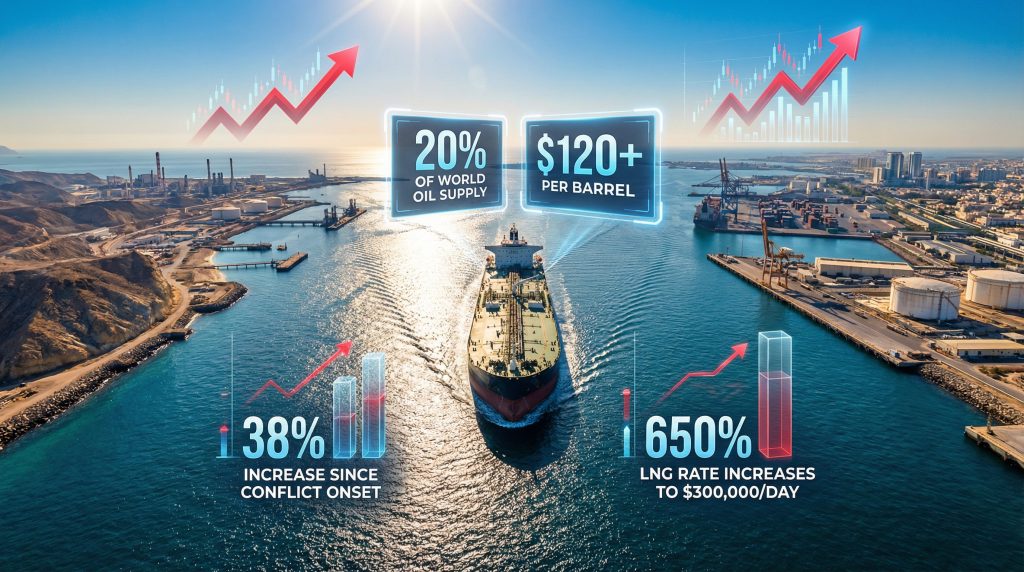
The concentration of global oil transit through narrow maritime corridors creates systemic vulnerabilities that extend far beyond regional conflicts. Current data reveals that approximately 20% of worldwide crude oil supplies pass through the Strait of Hormuz, representing one of the most strategically significant waterways for international energy commerce. Recent disruptions have demonstrated the fragility of this system, with daily vessel traffic plummeting from 138 ships to merely 2 transits, marking a catastrophic 98.5% reduction in normal shipping operations.
These constraints have triggered extraordinary market responses. Brent crude experienced unprecedented volatility, surging to nearly $120 per barrel before retreating below $99, representing the largest single-day absolute price movement in recorded market history. Furthermore, the sustained price elevation reflects more than speculative positioning; oil prices have appreciated 38% since conflict onset and 64% year-to-date, indicating market expectations of prolonged supply constraints rather than temporary disruptions.
The technical specifications of chokepoint geography create inherent strategic vulnerabilities. The Strait spans only 21 miles at its narrowest point, serving as the sole maritime outlet for major Gulf producers including Saudi Arabia, Iran, Iraq, Kuwait, Qatar, Bahrain, and the UAE. Modern disruption mechanisms have evolved beyond traditional military interdiction to include GPS jamming activities that actively grip vital oil chokepoint operations, creating navigation uncertainty without requiring direct vessel engagement.
Market Dynamics and Price Discovery Mechanisms
Regional crude benchmarks demonstrate differential pricing reflecting geographic proximity to disruption zones. Murban crude has declined 10.47% to $98.63, while Brent-WTI spreads have widened to $4.31 differentials, suggesting market confidence in North American supply access contrasted with concerns regarding international seaborne trade constraints.
The volatility extends across energy markets beyond crude oil specifically. Natural gas has experienced 2.37% daily declines to $3.046 per unit, while gasoline futures show 6.25% daily losses at $2.633, indicating broader energy sector contagion effects. This pricing structure reveals market participant expectations that supply chain resilience varies significantly across different energy sectors and geographic regions.
LNG markets demonstrate particularly acute stress indicators. Shipping rates have exploded 650% to $300,000 per day, representing extreme escalation that dramatically reduces project economics and creates incentives for delivery deferrals or contract renegotiations. These rate increases far exceed typical supply-demand imbalances, reflecting acute vessel availability constraints and route risk premium calculations.
Regional Production Infrastructure Under Systematic Pressure
Gulf State Output Reductions and Facility Vulnerabilities
The scale of regional production curtailments represents quantifiable supply shocks with immediate market implications. Gulf producers have collectively slashed output by 5 million barrels per day, with Iraq experiencing the most severe constraints as output plunged 70% from normal levels. Kuwait has implemented complete production shutdown protocols, effectively removing all Kuwaiti crude from global markets, while Saudi Arabia has reduced output levels despite possessing historical spare capacity reserves.
Infrastructure damage assessments reveal the vulnerability of concentrated refining capacity. Bahrain's Bapco facility declared force majeure status following drone strike damage, effectively removing this critical processing facility from operational status. The Bapco facility represents approximately 267,000 barrels per day of regional refining capacity, making its force majeure declaration materially significant for product slate availability. Witnesses reported thick smoke rising from the refinery direction, indicating damage severity exceeding short-term repair timelines.
The concentration of refining infrastructure in proximity to conflict zones creates cascading constraints beyond crude supply alone. Regional producers have determined that maintaining maximum production during active attack campaigns creates unacceptable infrastructure vulnerability exposure. This represents a strategic calculation that output reductions provide acceptable economic trade-offs versus facility damage risks.
Production capacity decisions reflect security cost assessments rather than purely economic optimisation. Kuwait's complete shutdown demonstrates extreme risk evaluation, suggesting expectations of either attack intensity persistence or duration uncertainty that justifies zero production rather than partial operations with defensive measures.
Downstream Market Disruptions and Supply Chain Impacts
The concentration of processing capacity creates bottlenecks that amplify upstream disruptions. Asia's refining margins have soared to 4-year highs as Hormuz constraints choke crude supply availability, while crack spreads surge across multiple product categories. European gas prices continue climbing as war conditions reset traditional supply routes and distribution mechanisms.
Heavy fuel oil prices have jumped 40% as war conditions affect key Singapore bunkering operations, demonstrating how regional conflicts translate into global maritime fuel availability constraints. These price escalations create compounding effects across international shipping operations, potentially triggering additional supply chain disruptions in sectors dependent on maritime transport.
LNG facility vulnerability assessments reveal similar concentration risks to oil infrastructure. Qatar's export facilities face comparable security challenges, with companies leasing additional tankers to maintain market participation despite operational uncertainties. This adaptive response suggests market recognition that supply constraint economics justify increased operational costs and complexity.
Strategic Reserve Deployment and Emergency Response Mechanisms
International Coordination Frameworks
G7 nations have engaged in intensive discussions regarding coordinated strategic petroleum reserve releases. Current deliberations involve potential releases of up to 400 million barrels from collective strategic reserves, representing approximately 4-5 days of global crude consumption. This scale far exceeds historical precedent, with previous IEA coordinated releases reaching 60 million barrels during the 2011 Libya crisis.
The decision timeline for reserve activation has encountered delays, with G7 nations postponing deployment decisions pending further strategic assessment. This hesitation suggests internal deliberations regarding optimal timing, scale determination, and reserve adequacy calculations for extended disruption scenarios. Oil prices dropped following G7 reserve release discussions, demonstrating market sensitivity to supply supplement announcements despite the limited scale relative to daily consumption requirements.
Japanese refiners have specifically urged their government to release strategic reserves, indicating end-user recognition of supply constraint severity and explicit policy requests for emergency reserve activation. This bottom-up pressure from industry participants suggests supply availability concerns extend beyond speculative market positioning to operational necessity assessments.
Technical Reserve Deployment Specifications
Strategic reserve systems operate through specific technical protocols requiring facility infrastructure activation, transportation logistics coordination, and delivery timeline management. The US Strategic Petroleum Reserve can deploy approximately 4.4 million barrels per day maximum under emergency conditions, though sustained multi-week releases require complex coordination across multiple storage facilities.
International reserve deployment requires IEA protocol adherence and member state agreement on release scale, timing, and destination prioritisation. The 400 million barrel figure suggests coordinated contributions across multiple countries' reserves, with proportional distributions reflecting national inventory levels and strategic considerations regarding reserve adequacy for extended constraints.
Historical reserve deployment outcomes provide limited guidance for current scenario scales. The contemplated 400 million barrel release represents unprecedented emergency response levels, suggesting current disruption severity assessments exceed all previous strategic reserve activation precedents.
Military Escalation Pathways and Response Scenarios
Strategic Military Positioning and Naval Operations
US military engagement considerations include naval escort deployment for tanker protection through disrupted maritime zones. Current strategic posture discussions involve potential Navy escort provision while Iranian military capabilities have been demonstrated through coordinated missile and drone campaigns targeting multiple regional states simultaneously.
Iranian response capabilities include ballistic missiles and drone platforms with demonstrated geographic targeting breadth across Israel, Saudi Arabia, Qatar, Kuwait, Bahrain, UAE, and Iraq. NATO has documented ballistic missile interceptions in Turkish airspace, marking the second intercept since February 28, indicating sustained Iranian attack tempo and expanding geographic engagement parameters.
Trump administration statements characterise military operations as progressing ahead of schedule with assertions that campaigns have won in many ways though claiming insufficient total victory achievement. Moreover, these characterisations suggest multi-week campaign duration expectations with unspecified termination criteria beyond vague timeline references.
Regional Alliance Dynamics and Diplomatic Calculations
Regional producer responses demonstrate varying risk tolerance levels and strategic calculations. Saudi Arabia has maintained defensive operations while reducing output levels, suggesting attempts to balance continued production with infrastructure protection requirements. The Saudi Foreign Ministry warned that continued Iranian attacks would lead to further escalation with serious relationship implications for future regional dynamics.
The succession of Mojtaba Khamenei as Iran's supreme leader has triggered immediate retaliatory escalation, with Iran launching missile and drone attacks across multiple regional targets following the leadership announcement. This timing suggests strategic messaging through infrastructure targeting rather than purely military objective pursuit.
Regional ally positioning reflects calculation reassessments regarding alliance benefits versus exposure risks. Gulf states have begun expressing increasing anger over Tehran's retaliatory strikes, suggesting potential shifts in regional diplomatic configurations based on escalation persistence and economic impact assessments. In addition, these developments highlight how the US-China trade war impact intersects with regional energy security concerns.
Alternative Supply Chain Adaptations and Market Responses
Non-Middle Eastern Production Responses
Alternative supply source capabilities face significant constraints limiting rapid compensation for Middle Eastern output reductions. North American shale production operates under specific technical and economic parameters that prevent immediate massive output increases despite favourable pricing conditions.
Shale production ramp-up faces timeline constraints and infrastructure limitations that prevent rapid deployment of spare capacity. Previous boom-bust cycles have created industry caution regarding rapid expansion commitments, even under sustained high-price environments that traditionally trigger increased drilling activity.
Russian oil market positioning remains complex amid existing sanctions frameworks, while African and Latin American production expansion potential faces infrastructure and investment limitations that prevent short-term capacity additions capable of offsetting Gulf state reductions. The OPEC meeting impact on these dynamics continues to influence global supply calculations.
Transportation Route Diversification and Logistics Alternatives
Alternative maritime corridors present technical feasibility but significant cost and timeline implications. Cape of Good Hope routing adds substantial transit time and expense compared to Suez Canal and Red Sea passages, while pipeline infrastructure across Eurasia faces capacity and political constraints.
Emergency fuel allocation protocols across major economies have not been systematically tested under current supply constraint scenarios. Critical sector prioritisation mechanisms remain largely theoretical, with limited precedent for implementation under sustained supply availability reductions.
The Asia region has begun outbidding other regions for fuel cargoes as war conditions restrict supply availability, demonstrating how regional competition intensifies under constrained supply conditions. This dynamic creates price bifurcation across geographic markets and potentially unsustainable cost structures for energy-intensive industries.
The next major ASX story will hit our subscribers first
Economic Sector Vulnerability Assessment
Transportation and Industrial Energy Dependencies
Aviation fuel shortage scenarios present particularly acute risks given the concentrated nature of jet fuel supply chains and limited substitution possibilities. US gasoline has surged to highest levels under current administration as Iran war conditions roil oil markets, affecting ground transportation costs across all economic sectors.
Maritime shipping cost explosions create cascading effects through international trade operations. Heavy fuel oil price increases of 40% affect container shipping economics and bulk cargo operations, potentially triggering supply chain delays and cost transfers across consumer goods markets. These developments showcase how oil price movements influence broader economic sectors.
Industrial energy-intensive sectors face input cost spirals that threaten operational viability. Chemical manufacturing, steel production, and aluminium processing depend on stable energy input pricing for economic operations. Sustained high energy costs force production curtailments or facility shutdowns that create downstream material availability constraints.
Agricultural and Food Security Implications
Fertiliser availability faces particular vulnerability given energy input intensity requirements and global supply chain concentration. Agricultural operations depend on consistent fertiliser access for production planning, with disruptions potentially affecting food security across multiple growing seasons.
Transportation fuel costs for agricultural machinery and distribution systems create compounding effects on food production and availability. Rural energy access depends heavily on liquid fuel availability, creating systemic risks for agricultural operations in regions without extensive pipeline infrastructure.
The combination of higher transportation costs and fertiliser constraints creates potential food security challenges that extend beyond immediate energy market disruptions into longer-term agricultural productivity concerns.
Technology Acceleration and Policy Response Evolution
Emergency Energy Transition Scenarios
Crisis conditions create unique opportunities for accelerated renewable deployment and energy transition policies. Emergency frameworks can bypass normal regulatory timelines and permitting processes, enabling rapid capacity additions under national security justifications. However, the implementation of effective energy transition strategies requires comprehensive planning and significant resource allocation.
Electric vehicle adoption curves may experience acceleration under sustained high liquid fuel pricing, though battery supply chain constraints and charging infrastructure limitations prevent immediate large-scale substitution possibilities.
Strategic mineral supply chain security assessments become critical under accelerated energy transition scenarios. Rare earth element availability and processing capacity constraints create potential bottlenecks for renewable energy technology deployment at crisis response scales. These challenges underscore the complexity of green transition challenges.
International Cooperation Framework Development
IEA emergency response protocols face unprecedented activation scenarios requiring coordination mechanisms not previously tested under current disruption scales. Member state agreement on resource allocation and priority determination becomes essential for effective collective response implementation.
Bilateral energy security agreements may require rapid expansion to ensure supply access under constrained availability conditions. Technology sharing agreements for crisis resilience could accelerate innovation deployment and capacity development across allied nations.
Emergency production authorisation frameworks enable temporary suspension of environmental regulations and permitting requirements to maximise domestic energy production capacity under national security determinations.
Strategic Scenario Planning and Risk Assessment
Multi-Pathway Disruption Modeling
Scenario planning must consider compound disruption pathways rather than isolated supply constraint models. According to recent reporting by The Globe and Mail, if Iran follows through on warnings that no oil will leave the Middle East until attacks stop, global supply constraints would exceed current market preparation levels and emergency response capacity.
Trump threatens harsher strikes on Iran if global oil supply is disrupted, creating feedback loops between military escalation and energy market disruption that could amplify both security and economic risks simultaneously. This dynamic suggests potential for rapid escalation beyond current constraint levels.
Duration uncertainty represents the most challenging scenario planning variable. Short-term disruptions activate different response mechanisms than sustained multi-month constraints that exhaust emergency reserves and require fundamental supply chain restructuring. Furthermore, analysis from Oil Price indicates that military threats could significantly impact global energy security calculations.
Long-term Energy Security Architecture Implications
Regional alliance structures may require fundamental reassessment based on crisis response effectiveness and burden-sharing arrangements. Energy security doctrine revisions across major powers could prioritise domestic production capacity and strategic reserve adequacy over market efficiency optimisation.
Accelerated energy independence policies may gain political support under sustained crisis conditions, potentially altering long-term investment patterns and international energy trade relationships. Infrastructure resilience requirements could drive redundancy investments that increase system costs but improve crisis response capabilities.
The combination of immediate crisis response and longer-term strategic recalibration creates complex policy challenges requiring coordination between emergency management and structural energy system planning across multiple allied nations and economic sectors. Consequently, the situation where Trump threatens harsher strikes on Iran if global oil supply is disrupted may fundamentally reshape global energy security architecture.
Disclaimer: This analysis is based on publicly available information and should not be considered as investment advice. Energy markets involve significant risks, and past performance does not guarantee future results. Readers should conduct their own research and consult with qualified professionals before making investment decisions. Geopolitical scenarios involve substantial uncertainty, and actual outcomes may differ significantly from analytical projections.
Ready to Capitalise on Energy Market Volatility?
Discovery Alert's proprietary Discovery IQ model delivers instant notifications on significant ASX mineral discoveries, including energy-related opportunities that could benefit from current market dynamics and supply chain disruptions. With geopolitical tensions creating unprecedented volatility across commodity markets, subscribers receive rapid insights into actionable trading and investment opportunities through Discovery Alert's comprehensive service, ensuring quick and informed decisions during these uncertain times.