May 20, 2026
Strategic Energy Realignment in Asian Markets
Global energy markets stand at a critical juncture as major consuming nations reassess their supply chain dependencies and strategic partnerships. The complex interplay between geopolitical tensions, trade negotiations, and energy security concerns creates ripple effects that extend far beyond bilateral relationships, fundamentally reshaping how nations approach energy procurement in an increasingly multipolar world. Furthermore, the India US trade deal oil pivot represents a significant shift in global energy dynamics that could redefine traditional trading patterns.
The emergence of trade-linked energy agreements represents a new paradigm where commercial oil flows become instruments of broader diplomatic and economic strategy. This evolution challenges traditional market-driven procurement models, forcing refiners and policymakers to balance cost optimisation with supply chain resilience and geopolitical alignment.
When big ASX news breaks, our subscribers know first
Understanding Global Energy Flow Disruptions
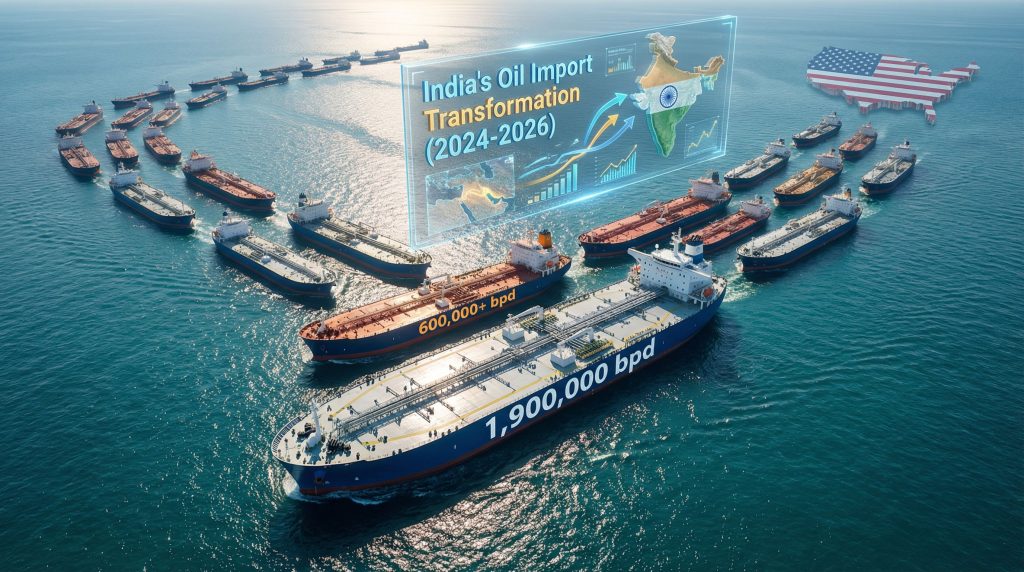
The potential restructuring of major oil import patterns creates cascading effects throughout international energy markets. When a nation consuming 1.7 million barrels per day from a specific supplier considers alternative sourcing arrangements, the implications extend far beyond simple supplier substitution.
Market Dynamics and Supply Chain Complexity
Current global oil market conditions provide a relatively stable foundation for such transitions, with adequate spare capacity across multiple producing regions. However, the technical specifications of different crude grades create additional complexity for refiners optimising their processing units.
Key Technical Considerations:
- Mid-sulfur crude processing requires different refinery configurations than light crude
- Heavy crude grades demand specialised processing infrastructure
- Freight cost differentials significantly impact delivered crude economics
- Inventory management strategies must account for longer supply routes
The transition from shorter regional supply routes to transcontinental shipping arrangements fundamentally alters working capital requirements and inventory planning cycles for major refiners. Moreover, these oil price movements have broader implications for global energy markets.
Economic Drivers Behind Strategic Energy Partnerships
Trade agreements that link energy procurement with broader commercial benefits represent a sophisticated approach to international commerce. The potential reduction in manufacturing tariffs from 50% to 18% creates substantial economic incentives that can offset higher crude acquisition costs.
Cost-Benefit Analysis Framework
| Economic Factor | Short-Term Impact | Long-Term Strategic Value |
|---|---|---|
| Crude Price Differential | +15-20% cost increase | Reduced geopolitical risk |
| Freight Costs | Higher due to distance | Diversified supply routes |
| Tariff Reductions | Immediate savings | Enhanced market access |
| Processing Flexibility | Adaptation costs | Improved crude slate options |
The economics of such arrangements depend heavily on the volume and consistency of non-energy trade flows that benefit from reduced tariff barriers. Manufacturing sectors with significant export potential to the US market could generate savings that substantially exceed increased energy costs.
Regional Supply Capacity Constraints
Venezuela's limited production capacity of approximately 900,000 barrels per day creates inherent constraints on its ability to serve as a major alternative supplier. Current export patterns show 76% flowing to China and 17% to the United States, leaving minimal volumes available for significant expansion to other markets.
Production and Export Reality Check
The arithmetic of Venezuelan supply availability reveals structural limitations:
- Total daily production: 900,000 barrels
- Current export commitments: 765,000 barrels daily
- Available surplus: Limited flexibility for new major contracts
- Infrastructure constraints: Aging production facilities limit rapid expansion
These capacity constraints suggest that Venezuelan crude would likely serve as a speciality grade supplement rather than a volume replacement for other suppliers. Refiners seeking Venezuelan heavy crude would need to compete with existing buyers or wait for production capacity expansion. Additionally, OPEC production impact considerations further complicate the global supply dynamics.
Refinery Optimisation and Technical Adaptation
Different crude types require specific refinery configurations to maximise processing efficiency and product yields. The transition from mid-sulfur Russian grades to light US crude and heavy Venezuelan supplies presents technical challenges that extend beyond simple supplier substitution.
Processing Infrastructure Requirements
Reliance Industries maintains the most advanced infrastructure for processing Venezuelan heavy crude among Indian refiners, having developed specialised capabilities during previous trading relationships. State-owned refiners including Indian Oil Corporation, BPCL, HPCL, and MRPL would require varying degrees of process optimisation to handle different crude slates effectively.
The technical specifications of crude processing create natural competitive advantages for refiners with flexible configurations capable of handling diverse feedstock qualities. This adaptation period coincides with broader concerns about US tariffs and economy impacts across multiple sectors.
Shipping and Logistics Network Transformation
The redirection of substantial oil volumes from regional to intercontinental supply routes creates significant implications for global shipping markets and logistics networks. The contrast between 7-day Black Sea voyages and 45-day transatlantic routes illustrates the magnitude of logistical transformation required.
Maritime Transport Implications
Route Distance Analysis:
- Russian supply routes: Approximately 3,000 nautical miles
- US Gulf Coast routes: Approximately 12,000 nautical miles
- Venezuelan supply routes: Approximately 8,500 nautical miles
- Freight cost multiplier: 2.5x to 4x for longer routes
The extended voyage durations require fundamental changes in inventory management strategies, with refiners needing to maintain larger crude stocks to ensure operational continuity during supply transit periods.
The next major ASX story will hit our subscribers first
LNG Integration and Diversification Strategy
Beyond crude oil considerations, the expanded energy partnership encompasses significant liquefied natural gas commitments. The structured 2.2 million tonne LNG agreement represents approximately 10% of projected 2026 LPG imports, demonstrating the comprehensive scope of supply diversification efforts.
Natural Gas Market Implications
LNG diversification provides multiple strategic benefits:
- Reduced dependence on traditional Middle Eastern gas suppliers
- Enhanced energy security through geographic diversification
- Support for US export capacity utilisation
- Potential for long-term price stability through structured contracts
The integration of LNG commitments with crude oil sourcing arrangements creates package deals that can improve overall energy procurement economics while achieving diversification objectives. These developments align with the broader US natural gas forecast trends affecting global markets.
Risk Management and Transition Planning
The complexity of transitioning major oil supply arrangements requires sophisticated risk management strategies to avoid supply disruptions or excessive cost impacts during changeover periods. Short-term supply scrambles represent the highest risk factor during transition phases.
Mitigation Strategy Framework
Phase 1: Gradual Implementation (Months 1-6)
- Reduce Russian volumes by 25% monthly
- Increase alternative supplier allocations proportionally
- Utilise strategic petroleum reserves as buffer stock
- Monitor market pricing and adjust timing as needed
Phase 2: Supply Chain Optimisation (Months 6-12)
- Optimise shipping schedules for new supply routes
- Adapt refinery operations for new crude slates
- Establish long-term contracts with alternative suppliers
- Develop contingency plans for supply disruptions
Phase 3: Strategic Stabilisation (Year 2+)
- Achieve target supply diversification ratios
- Optimise total cost of crude acquisition and processing
- Establish emergency supply protocols
- Evaluate additional diversification opportunities
Global Energy Diplomacy Evolution
The linking of trade concessions with energy sourcing commitments establishes precedents for future international energy negotiations. This model could influence energy diplomacy across Asia-Pacific markets, with other major consumers potentially seeking similar arrangements.
Competitive Response Scenarios
China's Strategic Response:
- Counter-offers to maintain market share in Indian energy trade
- Enhanced terms for existing Asian energy partnerships
- Acceleration of Belt and Road energy infrastructure projects
- Alternative crude supply arrangements for displaced volumes
Russia's Market Adaptation:
- Redirection of Indian-bound volumes to other Asian buyers
- Enhanced discounting to maintain competitiveness in remaining markets
- Infrastructure development for alternative export routes
- Strengthened partnerships with non-aligned energy consumers
Moreover, the broader tariffs and investment effects will influence how nations structure their energy partnerships going forward.
Long-Term Market Structure Implications
The potential success of trade-linked energy agreements could fundamentally alter how international energy markets operate. Traditional purely commercial relationships may give way to more integrated diplomatic and economic partnerships.
Future Energy Architecture
Scenario Modelling for 2027-2030:
High Integration Scenario (60% probability):
- Energy sourcing becomes integrated with broader trade agreements
- Geopolitical alignment increasingly influences commercial energy flows
- Regional energy blocs emerge based on diplomatic relationships
- Traditional market-price mechanisms become secondary considerations
Balanced Integration Scenario (30% probability):
- Selective use of energy-trade linkages for strategic relationships
- Continued dominance of commercial considerations for most energy trade
- Limited impact on global energy pricing mechanisms
- Regional variations in approach to energy diplomacy
Market Reversion Scenario (10% probability):
- Economic pressures force return to purely commercial arrangements
- Geopolitical considerations prove economically unsustainable
- Traditional supplier-consumer relationships reassert dominance
- Energy security achieved through diversification rather than alignment
Investment and Market Psychology Factors
Energy market participants must navigate increased uncertainty as political considerations become more prominent in supply chain decisions. This evolution affects investment planning, risk assessment methodologies, and strategic positioning across the energy value chain.
Strategic Investment Implications
For Energy Companies:
- Enhanced emphasis on supply chain flexibility and diversification
- Increased importance of geopolitical risk assessment capabilities
- Growing value of processing infrastructure adaptability
- Strategic importance of maintaining relationships across multiple regions
For Financial Markets:
- Energy commodity pricing models must incorporate geopolitical risk premiums
- Investment thesis development requires broader political economy analysis
- Portfolio diversification strategies need geographic and political balance
- Risk management frameworks must account for non-commercial supply disruptions
The integration of trade policy with energy procurement creates new categories of systematic risk that traditional energy market models may not fully capture, requiring enhanced analytical frameworks for market participants.
Regional Energy Security Implications
The broader implications of energy sourcing realignments extend throughout Asian energy markets, potentially influencing how other major consumers approach their own energy security strategies. The precedent of successful trade-linked energy agreements could encourage similar approaches across the region.
Strategic Energy Security Trends
Supply Chain Resilience Focus:
- Geographic diversification of energy sources
- Infrastructure development for multiple supply routes
- Strategic petroleum reserve expansion
- Enhanced regional energy cooperation mechanisms
Geopolitical Alignment Considerations:
- Energy partnerships as tools of broader diplomatic strategy
- Economic incentives for strategic energy relationships
- Balance between cost optimisation and supply security
- Integration of energy policy with trade and foreign policy
The evolution toward more strategically integrated energy relationships reflects broader trends in international relations, where economic interdependence serves multiple policy objectives beyond simple commercial optimisation. Consequently, the India US trade deal oil pivot demonstrates how modern trade negotiations increasingly intertwine energy security with broader economic cooperation.
In conclusion, the potential shift represents a significant transformation in how nations approach energy procurement in an interconnected world. The success of such arrangements could establish new models for international energy partnerships, fundamentally altering the landscape of global energy trade. However, this analysis provides educational insights into global energy market dynamics and should not be construed as investment advice. Energy market participants should conduct independent analysis and consult qualified professionals before making commercial decisions. The views expressed reflect current market conditions and analysis, which may change significantly based on evolving geopolitical and economic factors.
Ready to Capitalise on Energy Market Shifts?
Discovery Alert's proprietary Discovery IQ model delivers real-time alerts on significant ASX mineral discoveries, instantly empowering subscribers to identify actionable opportunities ahead of the broader market as global energy dynamics reshape commodity sectors. Begin your 14-day free trial today at Discovery Alert and position yourself to benefit from the next wave of strategic energy and resource developments.