May 13, 2026
Strategic Forces Reshaping Latin America's Critical Minerals Landscape
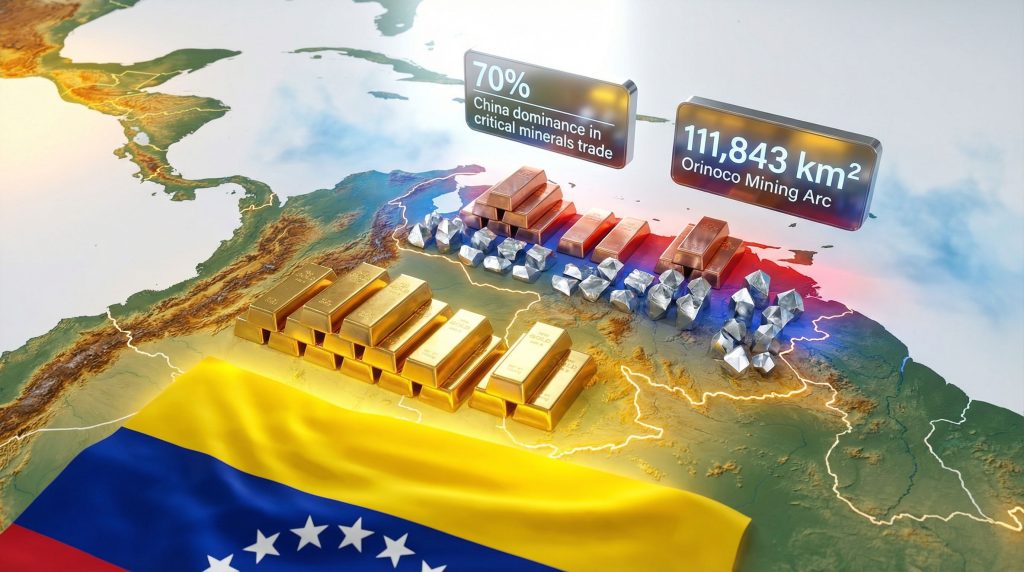
Global supply chain vulnerabilities have reached a tipping point where single-nation dependencies threaten industrial security across multiple sectors. With China controlling approximately 70% of critical minerals processing capacity, advanced economies face unprecedented risks in securing materials essential for defense systems, renewable energy infrastructure, and emerging technologies. This concentration of power has created a strategic imperative for alternative supply sources, particularly in regions with untapped geological wealth and proximity to major consumer markets.
Venezuela emerges as a compelling case study in this context, possessing what geological surveys suggest could be among Latin America's most diversified mineral portfolios. However, the transformation of theoretical resource potential into operational mining capacity requires navigating complex political, infrastructure, and regulatory challenges that have historically limited the country's ability to capitalise on its subsurface wealth.
The intersection of geopolitical strategy and resource security creates scenarios where changes in Venezuela mining opportunity could fundamentally alter regional commodity flows and international supply chain dynamics. Understanding these possibilities requires examining both the technical foundations of Venezuela's mineral endowment and the systemic conditions necessary for large-scale extraction operations.
When big ASX news breaks, our subscribers know first
Venezuela's Geological Foundation as a Critical Minerals Hub
Comprehensive Mineral Portfolio Beyond Traditional Resources
Venezuela's geological diversity extends far beyond its well-documented petroleum reserves, encompassing a range of materials classified as critical for modern industrial applications. The country's mineral inventory includes gold, copper, silver, iron ore, barite, quartz, graphite, thorium, and phosphate, positioning it as a potential supplier across multiple supply chains simultaneously.
This diversification provides strategic advantages compared to single-commodity producers, as it enables portfolio-based extraction strategies that can adapt to changing global demand patterns. Battery technology minerals represent a particularly significant opportunity, with copper serving as an essential component in electric vehicle manufacturing and energy storage systems.
The Orinoco Mining Arc, designated as a strategic development zone in 2016, encompasses 111,843 square kilometres of territory containing these varied mineral deposits. This geographic concentration creates potential efficiencies in infrastructure development and operational coordination that could reduce per-unit extraction costs compared to dispersed mining operations.
However, geological potential must be distinguished from proven reserves. Current assessments of Venezuela's mineral wealth rely heavily on historical surveys and regional geological knowledge rather than comprehensive modern exploration programmes. Political scientist Gastón Alvear notes that Venezuela's gold reserves have experienced significant decline over the past decade, with unclear accounting regarding how much remains under state control versus losses through informal extraction and contraband activities.
Regional Comparative Analysis and Competitive Positioning
| Country | Primary Strengths | Infrastructure Status | Regulatory Framework |
|---|---|---|---|
| Chile | Copper dominance, established mining code | Advanced port facilities | Mature investment protection |
| Peru | Gold/copper diversity, production expertise | Developed transportation networks | Proven foreign investment track record |
| Brazil | Iron ore scale, processing capacity | Integrated logistics systems | Complex but functional regulatory structure |
| Venezuela | Diversified portfolio, strategic location | Significant rehabilitation required | Framework requires international alignment |
Venezuela's competitive position depends largely on overcoming infrastructure deficits and regulatory uncertainties that currently limit access to its geological resources. Unlike Chile's established copper operations or Peru's proven gold mining expertise, Venezuela would be entering markets as a new participant requiring substantial capital investment and technical knowledge transfer.
The country's geographic location provides potential advantages for serving both North American and European markets, particularly if shipping infrastructure can be modernised to handle bulk commodity exports. However, this locational benefit remains theoretical without corresponding investments in port facilities, transportation networks, and processing capabilities.
Political Transformation Requirements for Mining Sector Development
Institutional Framework Modernisation Needs
Contemporary mining investment requires legal certainty mechanisms that protect long-term capital commitments while ensuring environmental and social compliance standards. Venezuela's current regulatory environment lacks the institutional foundation necessary to attract international mining companies accustomed to predictable permitting processes and enforceable contract terms.
Successful mining framework development typically involves several key components:
- Transparent permitting systems with defined timelines and clear approval criteria
- Environmental assessment protocols aligned with international best practices
- Community consultation mechanisms ensuring local stakeholder participation
- Fiscal terms providing reasonable returns while capturing appropriate resource rents for the state
- Dispute resolution systems offering neutral arbitration for contract disagreements
Peru's mining sector evolution from the 1990s through 2020s demonstrates how systematic regulatory reforms can attract foreign direct investment while maintaining environmental standards. The country's success in balancing resource extraction with social responsibility provides a potential template for Venezuelan policy development.
Colombia's recent mining code updates also offer relevant precedents, particularly regarding indigenous rights recognition and environmental protection requirements in mining operations. These frameworks suggest pathways for Venezuelan institutional development that could satisfy both international investor requirements and domestic social concerns.
Infrastructure Rehabilitation as Investment Foundation
Large-scale mining operations require substantial infrastructure support systems that extend well beyond individual project boundaries. Venezuela's current infrastructure status presents significant challenges across multiple critical areas:
Transportation Network Requirements:
- Road systems capable of handling heavy equipment and bulk commodity transport
- Rail connections linking mining areas to processing facilities and export terminals
- Bridge and tunnel maintenance ensuring year-round operational access
- Fuel distribution networks supporting mining equipment operations
Port Facility Modernisation:
- Deep-water berths accommodating large bulk commodity vessels
- Specialised loading equipment for different mineral types
- Storage facilities managing inventory between production and shipping cycles
- Container handling capacity for processed mineral products
Power Grid Stability:
- Reliable electricity supply for energy-intensive extraction and processing operations
- Backup power systems ensuring operational continuity during grid disruptions
- Transmission infrastructure connecting mining areas to national power systems
- Industrial-grade power quality suitable for sophisticated mining equipment
The scale of infrastructure investment required suggests that mining development would need to occur in phases, with early projects potentially requiring self-contained infrastructure solutions before broader regional systems can be rehabilitated.
Critical Minerals Investment Potential Assessment
Gold Reserves Analysis and Production Restoration Scenarios
Venezuela's gold sector presents both the greatest historical precedent and the most complex current challenges. Political scientist Gastón Alvear observes that the country possesses some of the region's largest gold reserves, though production has declined significantly over the past decade with unclear accounting of remaining state-controlled resources.
The Orinoco Mining Arc currently operates under what Alvear describes as "the logic of informality, control by armed groups and illegal economies, limiting the State's ability to capture mining income for social purposes." This situation represents both a challenge and an opportunity, as formalisation of existing extraction activities could dramatically increase official production statistics and state revenues.
Key factors influencing gold sector development:
- Artisanal mining formalisation potential requiring technical assistance and equipment modernisation
- Security normalisation in mining areas currently controlled by non-state actors
- Environmental rehabilitation addressing damage from unregulated extraction practices
- Revenue capture mechanisms ensuring state participation in mining income
Gold's established international markets and standardised pricing mechanisms make it an attractive initial focus for Venezuelan mining sector development. Unlike specialised industrial minerals requiring specific buyer relationships, gold provides immediate liquidity and transparent valuation.
Battery Metals Portfolio and Technology Manufacturing Potential
Copper Development Opportunities:
Copper represents Venezuela's most significant opportunity in the battery metals sector, given its essential role in electric vehicle manufacturing and renewable energy infrastructure. Unlike lithium, which requires specialised processing knowledge and established supply chain relationships, copper markets provide multiple pathway options for new producers.
Venezuela's copper deposits benefit from the metal's diverse application profile:
- Electric vehicle wiring and motor systems
- Power grid infrastructure for renewable energy integration
- Industrial machinery and construction applications
- Electronics manufacturing requiring high-conductivity materials
Strategic Minerals for Defence Applications:
Beyond commercial markets, Venezuela's mineral portfolio includes materials classified as critical for defence and national security applications by major economies. Thorium, graphite, and rare earth elements fall into categories where supply source diversification represents a strategic priority for countries seeking to reduce dependence on concentrated suppliers.
The defence minerals market operates under different dynamics than commercial commodity trading, often involving government-to-government agreements and long-term supply contracts. This creates potential opportunities for Venezuelan mineral exports even before commercial markets are fully developed.
Regional Integration Benefits and Cross-Border Opportunities
Latin American Supply Chain Resilience Enhancement
Political scientist Gastón Alvear notes that Venezuela's situation "reshapes the regional map because it forces Latin American countries to take a stand on issues such as external intervention, sovereignty, and energy security." This regional dynamic creates opportunities for collaborative approaches to mining development that could benefit multiple countries simultaneously.
Potential Integration Mechanisms:
- Joint venture structures combining Venezuelan mineral resources with regional technical expertise
- Processing hub development serving multiple countries' mineral beneficiation needs
- Technology transfer programmes sharing mining knowledge across Latin American operations
- Export coordination systems improving regional bargaining power in global commodity markets
Brazil's established iron ore industry and Colombia's growing mining sector provide potential partnership models for Venezuelan development. These relationships could offer technical expertise, equipment access, and market knowledge that would accelerate Venezuelan project development timelines.
Furthermore, Chile's copper industry expertise represents another collaboration opportunity, particularly in processing technologies and environmental management practices. Chilean companies have developed world-class capabilities in desert mining operations that could prove applicable to Venezuelan conditions.
Cross-Border Mining Network Development
Regional mining integration offers advantages extending beyond individual project economics. Shared infrastructure development across borders can reduce per-project costs while improving overall regional competitiveness in global markets.
Potential areas for cross-border cooperation include:
- Shared transportation corridors connecting mining regions to export facilities
- Joint processing facilities achieving economies of scale for smaller deposits
- Regional exploration programmes identifying deposits extending across national boundaries
- Coordinated marketing strategies presenting unified regional supply offerings to global buyers
The success of such integration depends heavily on political stability and regulatory harmonisation across participating countries. Venezuela's integration into regional mining networks would require not only domestic institutional development but also coordination with existing regional frameworks and standards.
Geopolitical Dynamics Influencing Investment Attractiveness
US-China Strategic Competition in Critical Minerals Access
Global supply chain security has become a central element of international strategic planning, particularly regarding materials essential for defence systems and emerging technologies. With China currently processing approximately 70% of global critical minerals, alternative supply sources have gained strategic importance beyond their pure economic value.
The US-China trade impacts and subsequent efforts to secure supply chain independence have created a framework where Venezuelan mining development could receive strategic support. This assessment suggests that Venezuelan mining development could receive support extending beyond normal commercial investment considerations.
Strategic Minerals Policy Framework:
- Critical materials supply chain diversification initiatives
- Defence stockpiling requirements for essential materials
- Technology transfer restrictions affecting mining equipment and processing capabilities
- Export finance support for projects reducing strategic material dependencies
The intersection of commercial opportunity and strategic necessity creates conditions where Venezuelan mining projects might receive governmental support from consumer countries seeking supply source diversification. This dynamic could improve project economics through preferential financing terms, technical assistance, or guaranteed purchase agreements.
However, as noted by Americas Quarterly, Venezuela's post-transition mining outlook will depend significantly on international cooperation and regulatory modernisation to attract the necessary investment for sector development.
Regional Security Implications and Stabilisation Effects
Gastón Alvear notes that Venezuela's situation "reignites tensions between the United States and extra-hemispheric actors with a presence in the Venezuelan country, such as China, Russia, or Iran." This geopolitical dimension adds complexity to mining investment decisions while potentially creating opportunities for projects that advance broader stabilisation objectives.
Security considerations affecting mining development:
- Armed group displacement from informal mining areas requiring security normalisation
- Environmental protection enforcement in previously unregulated zones
- Human rights compliance standards for international mining operations
- Regional migration pattern stabilisation through economic opportunity creation
Successful mining development could contribute to regional stability by providing legitimate economic alternatives to informal or illegal activities currently operating in mineral-rich areas. This stabilisation effect represents a positive externality that could justify additional support for early-stage mining projects.
The next major ASX story will hit our subscribers first
Development Timeline and Enabling Conditions
Phase 1: Immediate Stabilisation Requirements (0-2 years)
The foundation for Venezuelan mining development requires establishing basic institutional and operational conditions that enable international investment consideration. This initial phase focuses on creating minimum viable conditions rather than achieving comprehensive development.
Critical Phase 1 Requirements:
- Political transition completion with recognised governmental authority
- Basic legal framework establishment providing minimum investor protections
- Security normalisation in key mining areas enabling site access and assessment
- International sanctions relief allowing normal banking and commercial relationships
- Preliminary infrastructure assessment identifying priority rehabilitation requirements
This stabilisation phase determines whether subsequent development phases become viable. Without achieving these foundational conditions, more advanced mining development activities cannot proceed regardless of geological potential or market opportunities.
Essential institutional developments:
- Mining ministry establishment with clear regulatory authority
- Environmental assessment capabilities for project evaluation
- Community consultation frameworks ensuring stakeholder participation
- Foreign investment protection mechanisms with dispute resolution options
Phase 2: Investment Attraction and Project Development (2-5 years)
Once basic stability conditions are established, Venezuelan mining development enters a project development phase requiring substantial capital investment and technical expertise acquisition. This phase involves transforming geological potential into operational mining projects through systematic exploration, feasibility analysis, and infrastructure development.
Key Phase 2 Activities:
- Comprehensive geological surveys quantifying mineral reserves with modern exploration techniques
- Environmental impact assessments meeting international standards for major mining projects
- Infrastructure development planning coordinating mining projects with broader regional development
- Workforce development programmes creating technical capabilities for modern mining operations
- International partnership establishment bringing technical expertise and capital resources
This development phase typically requires 3-5 years for major mining projects, from initial feasibility studies through construction completion and production commencement. Venezuelan projects may require longer development timelines given infrastructure constraints and institutional capacity building requirements.
Technical assistance priorities:
- Modern mining equipment procurement and deployment
- Processing technology installation and commissioning
- Environmental management systems implementation
- Safety protocol development and training programmes
Phase 3: Full Production Integration (5-10 years)
The final development phase involves achieving full operational capacity and regional market integration. Venezuelan mining operations would need to demonstrate consistent production quality, reliable delivery schedules, and competitive cost structures to establish permanent positions in global commodity markets.
Phase 3 Integration Requirements:
- Large-scale operations optimisation achieving economies of scale for competitive positioning
- Export market development establishing buyer relationships and delivery reliability
- Regional processing hub creation adding value through beneficiation and specialised processing
- Technology innovation adoption maintaining competitiveness through operational improvements
- Sustainable practices implementation meeting evolving environmental and social standards
Successful completion of this phase would position Venezuela as a significant participant in Latin American mining networks with cross-border influence on pricing and contributions to global energy security supply chains.
Long-term sustainability factors:
- Continuous exploration programmes identifying new deposits for production extension
- Community benefit-sharing mechanisms ensuring local economic participation
- Environmental restoration ongoing programmes maintaining operational licences
- Regional cooperation frameworks maximising collective bargaining power
Investment Strategy Framework for Venezuelan Mining Opportunities
Risk Assessment and Mitigation Mechanisms
Mining investment in Venezuela requires sophisticated risk management approaches addressing political, operational, and market uncertainties simultaneously. Traditional mining investment analysis must incorporate additional risk factors specific to post-conflict or transitional environments.
Primary Risk Categories:
Political Risk Factors:
- Governmental policy continuity regarding foreign investment terms
- Regulatory framework stability affecting long-term project economics
- Currency controls and foreign exchange availability for operational requirements
- Taxation policy changes impacting project returns and cash flow management
Operational Risk Considerations:
- Infrastructure reliability affecting production schedules and cost predictability
- Security conditions in mining areas influencing personnel safety and operational continuity
- Technical workforce availability requiring extensive training and development programmes
- Environmental compliance costs potentially exceeding initial project estimates
Market Access Risks:
- International sanctions affecting export market accessibility and payment mechanisms
- Commodity price volatility impacting project economics during development phases
- Transportation disruptions affecting delivery reliability to international buyers
- Quality certification requirements for entering established commodity markets
Risk Mitigation Strategies:
- Development finance institution participation providing political risk insurance and technical assistance
- Phased investment approaches limiting exposure while demonstrating operational capabilities
- Regional partnership structures sharing risks with established Latin American mining companies
- Export credit agency support facilitating equipment financing and buyer credit arrangements
Partnership Models with Regional Mining Leaders
Venezuelan mining development benefits significantly from partnership arrangements that combine local resource access with established technical expertise and market relationships. Regional mining companies possess operational knowledge and infrastructure that can accelerate Venezuelan project development while reducing investment risks.
Joint Venture Structure Options:
Technical Partnership Models:
- Equipment leasing arrangements with established regional mining companies
- Management contract structures providing operational expertise during development phases
- Technology licensing agreements accessing specialised processing capabilities
- Training and workforce development partnerships building local technical capacity
Financial Partnership Mechanisms:
- Risk-sharing investment structures distributing capital requirements across multiple participants
- Revenue-sharing arrangements providing flexible return mechanisms based on production performance
- Infrastructure cost-sharing agreements reducing individual project burden for common facilities
- Marketing cooperation reducing individual company exposure to commodity price volatility
Strategic Alliance Benefits:
- Market access through established buyer relationships and distribution networks
- Technical expertise transfer accelerating operational capability development
- Regulatory knowledge sharing from companies experienced in Latin American mining frameworks
- Supply chain integration reducing procurement costs and improving equipment availability
Successful partnership arrangements require clear governance structures, transparent benefit distribution mechanisms, and aligned strategic objectives among all participants. Venezuelan mining partnerships must balance resource owner interests with technical partner requirements and investor return expectations.
Environmental and Social Governance Framework Development
Sustainable Mining Practices Implementation
Contemporary mining operations must meet increasingly stringent environmental and social standards to secure financing, obtain operational licences, and maintain market access. Venezuelan mining development provides opportunities to implement best practices from the outset rather than retrofitting existing operations.
Additionally, the mining sustainability transformation trends emphasise the importance of establishing comprehensive environmental frameworks from project initiation.
Environmental Management Priorities:
Restoration Requirements:
- Remediation of areas damaged by previous informal mining activities
- Water quality restoration in affected watersheds and groundwater systems
- Soil rehabilitation enabling alternative land use options following mining completion
- Biodiversity protection in areas of high conservation value adjacent to mining operations
Operational Environmental Standards:
- Waste management systems preventing contamination of surrounding environments
- Water treatment facilities ensuring discharge quality meets international standards
- Air quality monitoring and emission control systems protecting community health
- Energy efficiency optimisation reducing operational carbon footprints
Long-term Sustainability Measures:
- Mine closure planning ensuring environmental legacy management
- Continuous monitoring systems tracking environmental performance indicators
- Adaptive management approaches adjusting practices based on environmental monitoring results
- Community environmental oversight mechanisms providing local stakeholder involvement
Community Rights and Benefit-Sharing Frameworks
Mining operations in Venezuela must address the rights and interests of communities affected by extraction activities, including indigenous peoples with traditional territories in mining areas. International best practice emphasises free, prior, and informed consent processes and equitable benefit-sharing arrangements.
Community Engagement Requirements:
Rights Recognition Mechanisms:
- Traditional territory mapping and formal recognition processes
- Cultural heritage site identification and protection protocols
- Traditional knowledge documentation and intellectual property protection
- Community governance structure recognition in decision-making processes
Economic Participation Opportunities:
- Local employment preference programmes with skills development components
- Community enterprise development supporting local business creation
- Revenue-sharing mechanisms providing direct community benefits from mining operations
- Infrastructure development programmes serving broader community needs beyond mining requirements
Social Impact Management:
- Health impact assessments addressing potential community health effects
- Education programme support enhancing local human capital development
- Cultural preservation initiatives protecting traditional practices and languages
- Conflict resolution mechanisms addressing disputes between mining operations and communities
Effective community engagement requires long-term relationship building rather than transactional approaches to obtaining operational permits. Venezuelan mining success depends on creating genuinely beneficial relationships with affected communities that provide lasting positive impacts extending beyond individual project lifespans.
Global Commodity Market Impact Analysis
Supply Addition Effects on International Pricing Dynamics
Venezuelan mining production restoration could significantly impact global commodity markets, particularly in sectors where supply concentration creates price volatility risks. The scale of potential Venezuelan production additions varies significantly across different minerals, creating differentiated market impact scenarios.
Gold Market Integration:
Venezuelan gold production restoration represents the most immediate market impact opportunity, given the country's historical significance as a regional gold producer. The gold market outlook for 2025 suggests strong demand fundamentals that could accommodate Venezuelan production restoration.
Global gold markets possess sufficient liquidity to absorb Venezuelan production increases without dramatic price disruption, though regional supply chain benefits could improve cost structures for regional jewellery manufacturing and industrial applications requiring gold inputs.
Copper Supply Chain Enhancement:
Copper markets present more significant opportunities for Venezuelan production impact, given the metal's essential role in electric vehicle manufacturing and renewable energy infrastructure development. Projected demand growth for copper in clean energy applications creates market space for new production sources without displacing existing suppliers.
Venezuelan copper development could contribute to supply chain resilience by providing an alternative to concentrated production sources, particularly benefiting North American and European manufacturers seeking to reduce supply chain risks associated with single-country dependencies.
Long-term Strategic Implications for Resource Security
Beyond immediate market impacts, Venezuelan mining development represents a component of broader resource security strategies being implemented by major economies seeking to diversify supply sources for materials classified as critical for national security and economic competitiveness.
Supply Source Diversification Benefits:
NATO Country Supply Security:
- Reduced dependence on potentially unstable supply regions for defence-critical materials
- Alternative sources for materials subject to export restrictions or trade disputes
- Regional supply chain development reducing transportation vulnerabilities and costs
- Stockpiling opportunity diversification improving resource security reserve management
Emerging Market Access Improvements:
- Competitive pricing from increased supply source options
- Regional processing capability development creating value-added manufacturing opportunities
- Technology transfer opportunities from mining sector development
- Economic integration benefits from expanded trade relationships
The strategic value of Venezuelan mining development extends beyond the specific minerals produced to encompass broader geopolitical objectives related to regional stability, economic development, and supply chain resilience. These strategic benefits suggest that Venezuelan mining projects might receive support extending beyond normal commercial investment criteria.
Market Rebalancing Effects:
As the mining industry evolution continues, changes in Venezuela mining opportunity create potential for significant shifts in global commodity market structures. As Venezuela develops its mineral production capabilities, established supply relationships may face competitive pressure while buyers gain additional sourcing options that improve their negotiating positions and supply security.
Furthermore, the critical minerals energy transition requires diversified supply sources, making Venezuelan mineral development particularly relevant to global energy security objectives.
This market rebalancing benefits both producers and consumers by creating more competitive and resilient supply chains, though it requires careful management to avoid disrupting existing operations that provide employment and economic benefits in other regions.
According to BNAmericas analysis, changes in Venezuela mining opportunity represent a significant development for Latin American regional mining integration and could reshape competitive dynamics across the continent.
The evolution of Venezuelan mining capabilities represents a long-term process requiring sustained commitment from multiple stakeholders, including investors, government authorities, communities, and international partners. Success depends on maintaining focus on sustainable development practices that create lasting benefits extending well beyond immediate commodity production objectives.
Looking to Capitalise on Latin America's Mining Transformation?
Discovery Alert's proprietary Discovery IQ model delivers real-time alerts on significant ASX mineral discoveries across the critical minerals sector, instantly empowering subscribers to identify actionable opportunities ahead of the broader market. Understand why major mineral discoveries can lead to substantial market returns by exploring Discovery Alert's dedicated discoveries page, showcasing historic examples of exceptional outcomes, and begin your 30-day free trial today to position yourself ahead of the market.