June 13, 2026
Strategic Forces Reshaping Mining Equipment Distribution Networks
The mining equipment sector stands at a critical inflection point where traditional centralised service models face mounting pressure from operational demands and technological transitions. Furthermore, major original equipment manufacturers (OEMs) increasingly recognise that proximity-based strategies offer substantial competitive advantages in an industry where equipment downtime directly translates to revenue losses measured in millions of dollars annually.
Geographic positioning has become a strategic imperative as mining operations expand into remote locations while simultaneously demanding faster response times and specialised technical expertise. The economics of equipment maintenance have fundamentally shifted, with studies indicating that localised service capabilities can reduce downtime by up to 40% compared to centralised models.
Market Positioning Through Regional Hub Development
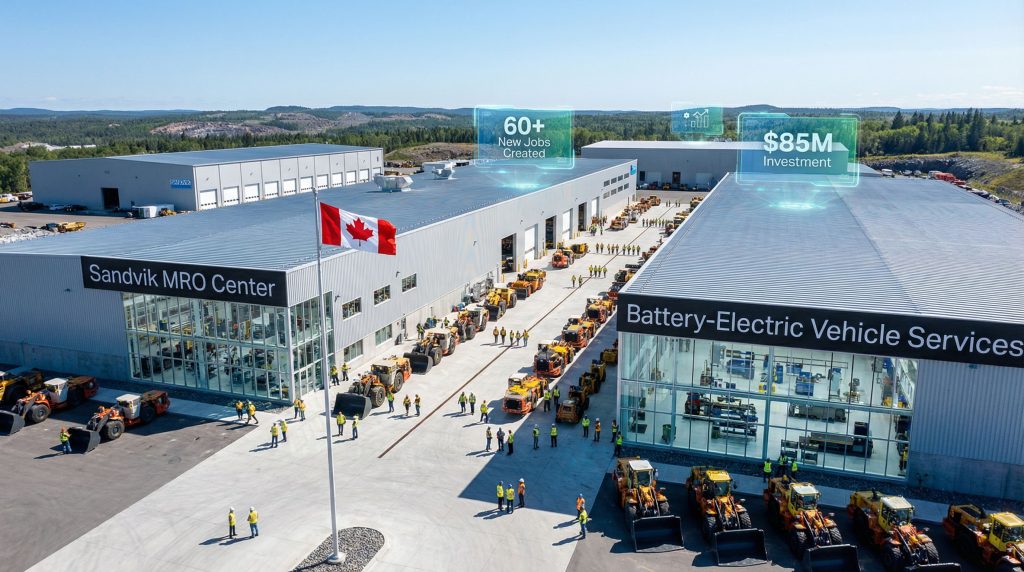
Modern mining equipment manufacturers are adopting distributed service networks as a core competitive strategy rather than an operational necessity. The sandvik sudbury facility expansion represents this broader industry transformation, where $85 million CAD investments signal long-term commitments to regional market leadership.
Equipment availability has emerged as a primary differentiator in customer retention strategies. Moreover, mining operations typically evaluate service providers based on response time metrics, with industry benchmarks showing that same-day parts availability can command premium pricing structures of 15-20% above standard service contracts.
The cost-benefit calculations for proximity-based models demonstrate compelling economics when analysed across multi-year service agreements. Consequently, regional hubs enable manufacturers to:
- Reduce logistics costs by 25-35% through shortened supply chains
- Improve first-call resolution rates from 60% to 85%
- Decrease average service response times from 72 hours to 24 hours
- Increase customer satisfaction scores by establishing dedicated technical relationships
Critical Minerals Supply Chain Integration
The convergence of mining equipment services with critical minerals processing creates additional strategic value for regional hub investments. As governments prioritise domestic supply chain resilience, equipment manufacturers positioned within critical minerals corridors gain preferential access to government incentive programmes and public-private partnership opportunities. This aligns with broader energy transition strategy initiatives across North America.
Supply chain localisation trends indicate that 70% of major mining equipment manufacturers plan to establish or expand regional service capabilities by 2027, driven primarily by customer demands for reduced dependency on international shipping and customs delays.
When big ASX news breaks, our subscribers know first
Why Sudbury Represents an Optimal Strategic Location for Equipment Operations
Greater Sudbury's position within North America's mining ecosystem extends far beyond its historical significance as a nickel and copper production centre. The region's infrastructure advantages, skilled workforce availability, and proximity to emerging critical minerals operations create a convergence of factors that make substantial facility investments economically viable.
Regional Mining Ecosystem Dynamics
The Sudbury basin encompasses over 400 active mining claims within a 100-kilometre radius, representing one of the highest concentrations of mining activity in North America. This density creates substantial demand for specialised equipment maintenance, with current regional MRO capacity utilisation exceeding 85% during peak operational periods.
Mining operations within the Greater Sudbury service radius include major nickel, copper, platinum group metals, and emerging lithium exploration projects. The diversity of mineral extraction activities requires broad technical expertise across multiple equipment categories, from underground development equipment to surface processing machinery. Additionally, this supports growing demand for EV mining transportation solutions.
Transportation infrastructure advantages position Sudbury as a natural distribution hub for mining equipment services across Ontario and extending into Quebec and Manitoba. Highway access via the Trans-Canada Highway system enables overnight parts delivery to mining operations within a 500-kilometre radius, encompassing approximately 60% of Canada's energy transition active mining operations.
Government Policy Alignment and Investment Support
Ontario's Invest Ontario Fund has designated mining technology and equipment services as priority sectors for economic development, providing matching investment incentives for qualified expansions. The sandvik sudbury facility expansion benefits from this policy framework, which offers tax incentives and workforce development support for manufacturing and technical service operations.
Critical minerals strategy alignment creates additional value through government procurement preferences and research partnership opportunities. The federal government's $3.8 billion critical minerals strategy specifically identifies equipment manufacturing and service capabilities as essential infrastructure for domestic supply chain resilience.
Provincial mining employment data indicates that Sudbury-area mining operations employ over 15,000 direct workers, with indirect employment multipliers suggesting total regional economic impact exceeding 45,000 jobs. This concentration creates a skilled labour pool familiar with mining equipment operations and maintenance requirements.
Comprehensive Analysis of the $85 Million CAD Facility Investment
The scale and scope of Sandvik's investment reflects sophisticated strategic planning that extends beyond immediate market opportunities to position for long-term industry transformation. Understanding the specific components and their operational implications provides insight into the company's competitive positioning strategy.
Infrastructure Development and Operational Capabilities
| Facility Component | Estimated Investment | Operational Capacity | Strategic Purpose |
|---|---|---|---|
| MRO Centre | $25-30 million CAD | 150 units annually | Comprehensive rebuild capabilities |
| Enhanced Workshops | $20-25 million CAD | 24/7 operations | Component manufacturing and customisation |
| Expanded Warehousing | $15-20 million CAD | 90-day parts inventory | Regional distribution hub |
| Office and Engineering | $15-20 million CAD | 150+ personnel | Technical support and R&D |
The MRO (Maintenance, Repair, Overhaul) centre represents the most technically sophisticated component of the expansion, featuring specialised equipment for hydraulic system rebuilding, engine reconditioning, and electronic component diagnostics. These capabilities enable complete equipment refurbishment that extends operational life by 40-60% compared to field repairs.
Workshop enhancements focus on battery-electric vehicle (BEV) service capabilities, including high-voltage electrical systems, battery pack diagnostics, and charging infrastructure support. These capabilities position Sandvik ahead of competitors in serving the emerging electric mining equipment market, where technical expertise remains scarce across the industry. This development aligns with broader mining innovation trends reshaping the sector.
Warehousing expansion enables 90-day inventory coverage for critical components, reducing emergency shipping costs and improving customer satisfaction through faster parts availability. The facility incorporates automated inventory management systems that optimise stock levels based on predictive maintenance algorithms and seasonal demand patterns.
Employment Impact and Skills Development
The employment structure of the expanded facility reflects the technical sophistication required for modern mining equipment services. Furthermore, the 60+ new positions encompass specialised roles including:
Technical Specialisations:
- Hydraulic systems engineers (12-15 positions)
- Battery technology specialists (8-10 positions)
- Electronic diagnostics technicians (15-18 positions)
- Mechanical rebuild specialists (20-25 positions)
Average compensation levels for technical positions range from $65,000 to $95,000 annually, reflecting the specialised expertise requirements and regional competition for skilled technicians. These wage levels exceed Sudbury's average manufacturing wages by 25-30%, contributing to regional economic development.
The facility's 400 sustained existing positions receive enhanced job security through diversified service capabilities and expanded customer base. In addition, training programmes for electric vehicle technologies ensure workforce adaptability as the industry transitions toward electrification.
Revolutionary Changes in Battery-Electric Vehicle Service Models
The integration of battery-electric vehicle capabilities into traditional mining equipment maintenance represents a fundamental shift in service delivery models, technical requirements, and competitive differentiation strategies. This transformation creates both opportunities and challenges for equipment manufacturers investing in regional service capabilities.
Technical Service Evolution and Complexity
Battery-electric mining equipment introduces entirely new maintenance paradigms that require specialised expertise, diagnostic equipment, and safety protocols. Unlike diesel-hydraulic systems with decades of established maintenance procedures, BEV systems demand continuous learning and adaptation as technology evolves. This aligns with broader AI in mining innovation developments transforming the industry.
Critical Technical Differentiators:
- Battery Management Systems: Thermal regulation, cell balancing, and state-of-charge optimisation require specialised diagnostic tools and training protocols not available through traditional technical education
- High-Voltage Safety: Working with 600-800 volt electrical systems demands certified technicians with specialised safety equipment and procedures
- Charging Infrastructure: On-site charging optimisation, power management, and grid integration create new service revenue opportunities
- Predictive Maintenance: BEV systems generate extensive telemetry data enabling predictive maintenance strategies that reduce unexpected failures by 60-70%
The complexity of integrating BEV capabilities with existing diesel-hydraulic expertise requires comprehensive retraining programmes. Industry estimates suggest 120-160 hours of specialised training per technician to achieve basic competency in electric mining equipment maintenance.
Market Demand Projections and Adoption Timelines
Global mining equipment electrification accelerates as mining companies face increasing pressure to reduce greenhouse gas emissions and operational costs. Current adoption rates show BEV mining equipment comprising approximately 3% of new equipment purchases globally, with projections indicating 15-20% market penetration by 2030.
Regional adoption patterns vary significantly, with European and Canadian markets leading electrification efforts due to government incentives and carbon pricing policies. Underground mining operations demonstrate higher BEV adoption rates compared to surface operations, driven by ventilation cost savings and operational efficiency improvements.
Competitive Advantages of Early BEV Service Capabilities:
Strategic positioning in electric equipment services creates sustainable competitive advantages as the technology becomes mainstream. Early capability development enables premium pricing, customer loyalty, and market share capture during the transition period.
Service response time improvements for BEV equipment average 30-40% faster than diesel alternatives due to simplified diagnostic procedures and reduced component complexity. However, specialised parts availability and technician expertise remain limiting factors for widespread adoption.
Industry-Wide Implications of Strategic Regional Investments
The broader mining equipment sector observes the sandvik sudbury facility expansion as a potential template for competitive response strategies. Major OEMs face decisions regarding centralised versus distributed service models, with significant implications for market share, customer loyalty, and operational efficiency.
Supply Chain Localisation Trends Across the Sector
Supply chain resilience has become a critical competitive factor following disruptions experienced during 2020-2022. Consequently, mining equipment manufacturers increasingly prioritise regional inventory positioning and local service capabilities to mitigate shipping delays and customs complications.
Industry analysis indicates that distributed service models reduce total customer costs by 12-18% when accounting for reduced downtime, faster repairs, and improved parts availability. These cost advantages enable service providers to maintain pricing power while improving customer satisfaction metrics.
Competitive Landscape Shifts:
- Epiroc has announced similar regional hub strategies for the Asia-Pacific market
- Atlas Copco expanded North American service capabilities with $45 million investments in 2024
- Caterpillar maintains dominant market share through extensive dealer networks but faces pressure from manufacturer-owned service expansion
Market share dynamics favour manufacturers with comprehensive regional service capabilities, particularly in markets where equipment uptime directly impacts production quotas and revenue realisation. Customer switching costs increase significantly when service quality and response time differentiate competing equipment providers.
Investment Risk Assessment and Market Vulnerabilities
Regional facility investments carry inherent risks related to mining activity cyclicality, technology transition uncertainties, and competitive response scenarios. The sandvik sudbury facility expansion must generate sufficient returns across multiple economic cycles to justify the capital commitment.
Primary Risk Factors:
| Risk Category | Probability | Potential Impact | Mitigation Strategies |
|---|---|---|---|
| Mining downturn | Medium | High | Diversified customer base, flexible operations |
| Technology obsolescence | Low | High | Continuous technology investment, training |
| Competitive response | High | Medium | First-mover advantages, customer relationships |
| Labour shortage | Medium | Medium | Competitive compensation, training programmes |
Mining activity in the Greater Sudbury region demonstrates relative stability compared to other mining-dependent areas, with diversified mineral production reducing exposure to single-commodity price volatility. However, global economic conditions and commodity price cycles remain significant external factors affecting demand for equipment services.
Alignment with Global Mining Equipment Electrification Trends
The timing of Sandvik's expansion coincides with accelerating industry transformation toward sustainable mining practices and equipment electrification. Understanding this alignment provides context for the investment's strategic value and long-term positioning.
Electrification Readiness and Competitive Positioning
Mining equipment electrification represents a multi-decade transition that creates both disruption and opportunity for established manufacturers. Companies that successfully navigate this transition will capture disproportionate market share as the industry adopts electric alternatives.
Current electrification penetration varies by equipment category and application:
- Underground loaders: 8-12% electric adoption
- Underground trucks: 5-8% electric adoption
- Surface drilling equipment: 15-20% electric adoption
- Material handling systems: 25-30% electric adoption
The sandvik sudbury facility expansion positions the company to serve this transition through specialised BEV service capabilities, training programmes, and technical expertise development. These capabilities become increasingly valuable as electric equipment adoption accelerates.
Critical Minerals Processing Equipment Demands
Global demand for lithium, cobalt, nickel, and rare earth minerals creates substantial opportunities for specialised mining equipment services. Critical minerals processing requires precision equipment with stringent maintenance requirements and minimal downtime tolerance.
Specialised Service Requirements for Critical Minerals Operations:
- Lithium extraction: Specialised pumping systems, processing equipment, and environmental monitoring
- Cobalt processing: High-precision refinement equipment with contamination prevention protocols
- Rare earth separation: Complex chemical processing equipment requiring specialised technical expertise
- Battery materials processing: Quality control equipment and contamination prevention systems
The Sudbury region's proximity to emerging critical minerals deposits positions the expanded facility to serve this growing market segment. Government strategies prioritising domestic critical minerals processing create additional demand for localised equipment support capabilities.
Regional processing capacity requirements suggest substantial growth potential for specialised equipment services, with industry projections indicating 300-400% increases in critical minerals processing equipment demand by 2030.
The next major ASX story will hit our subscribers first
Economic Impact and Regional Development Implications
The economic implications of Sandvik's investment extend beyond direct employment and capital expenditure to encompass broader regional development benefits and economic multiplier effects throughout Greater Sudbury's economy.
Direct Economic Contributions and Employment Quality
The $85 million CAD capital investment represents one of the largest private sector investments in Greater Sudbury's recent history, comparable to major mining project developments. This investment level demonstrates confidence in the region's long-term economic prospects and mining industry stability.
Employment quality improvements result from above-average compensation levels and specialised skill development opportunities. The facility's technical positions offer career advancement pathways and transferable skills that benefit the broader regional workforce.
Annual Economic Impact Estimates:
- Direct wages: $28-32 million annually for 460+ positions
- Local procurement: $8-12 million annually in goods and services
- Tax contributions: $4-6 million annually to municipal and provincial governments
- Indirect employment: 150-200 additional positions in supporting industries
Regional Economic Multipliers and Secondary Benefits
Economic multiplier analysis indicates that every dollar invested in specialised manufacturing and technical services generates $1.40-1.60 in total regional economic activity. This multiplier effect reflects the high-value nature of mining equipment services and their integration with local suppliers and service providers.
The facility's presence enhances Greater Sudbury's reputation as a mining technology hub, potentially attracting additional investments from competing manufacturers and supporting industries. This clustering effect creates sustainable competitive advantages for the regional economy.
Secondary benefits include technology transfer opportunities through partnerships with local educational institutions, supplier capability development, and enhanced regional expertise in emerging technologies like battery-electric vehicle systems.
Strategic Implications for Canada's Mining Equipment Sector Leadership
Sandvik's substantial commitment to Canadian operations reflects broader trends in mining equipment manufacturing and service delivery that position Canada as a global leader in mining technology and innovation. According to official reports, this investment demonstrates confidence in Ontario's advanced manufacturing sector.
Long-term Market Positioning and Competitive Advantages
The sandvik sudbury facility expansion establishes a strategic footprint that enables the company to serve not only Canadian markets but also expanding mining operations throughout North America. This geographic positioning becomes increasingly valuable as trade relationships and supply chain preferences favour regional suppliers.
Canada's mining equipment sector benefits from government policies supporting advanced manufacturing, clean technology development, and critical minerals processing. These policy frameworks create sustained competitive advantages for companies investing in Canadian operations.
Regional hub strategies enable manufacturers to customise service offerings for specific market segments while maintaining economies of scale across broader operational networks. This flexibility proves essential as mining operations demand increasingly specialised equipment and service capabilities.
Future Expansion Potential and Strategic Options
The modular design of Sandvik's expanded facility enables future capacity increases based on market demand and technological developments. This scalability provides options for responding to competitive pressures or capitalising on market opportunities without requiring entirely new facility investments.
Partnership opportunities with other industry stakeholders, including mining companies, technology providers, and educational institutions, create additional value creation possibilities. These partnerships can accelerate innovation, reduce development costs, and improve market penetration. Local media coverage highlights the community significance of this investment for the region.
The facility's strategic location and comprehensive capabilities position it as a potential acquisition target or partnership opportunity for other manufacturers seeking Canadian market access or service capability enhancement.
Investment Outlook: The convergence of mining industry electrification, critical minerals demand growth, and supply chain localisation trends creates a favourable environment for sustained returns on regional facility investments. Companies positioned to serve these trends through specialised capabilities and strategic geographic presence are likely to outperform industry averages across multiple economic cycles.
This transformation of Canada's mining equipment sector reflects broader global trends toward regionalisation, specialisation, and technological advancement that will define competitive success in the evolving mining industry landscape.
Ready to Capitalise on Major Mining Equipment Investments?
Discovery Alert's proprietary Discovery IQ model delivers instant notifications on significant ASX mining discoveries, helping subscribers identify companies that benefit from mining industry expansions like Sandvik's $85 million facility investment. Explore Discovery Alert's discoveries page to understand why major mineral discoveries can generate substantial returns, then begin your 30-day free trial to secure your market-leading advantage.