June 17, 2026
Strategic Framework for African Resource Development
Africa's resource development landscape is undergoing unprecedented transformation as mineral-rich nations seek to escape the traditional extraction-export cycle that has defined the continent's economic relationship with global markets for decades. This shift represents more than policy adjustment; it signals a fundamental reimagining of how natural resource endowments can serve as platforms for comprehensive industrial development rather than mere commodity export streams.
The emergence of integrated development models reflects growing recognition that mining infrastructure, when strategically deployed, can anchor broader economic transformation across multiple sectors simultaneously. This approach challenges conventional wisdom about resource-led growth by emphasizing value-addition, regional connectivity, and institutional capacity building as core components of sustainable development strategies.
When big ASX news breaks, our subscribers know first
Economic Transformation Through Strategic Resource Leverage
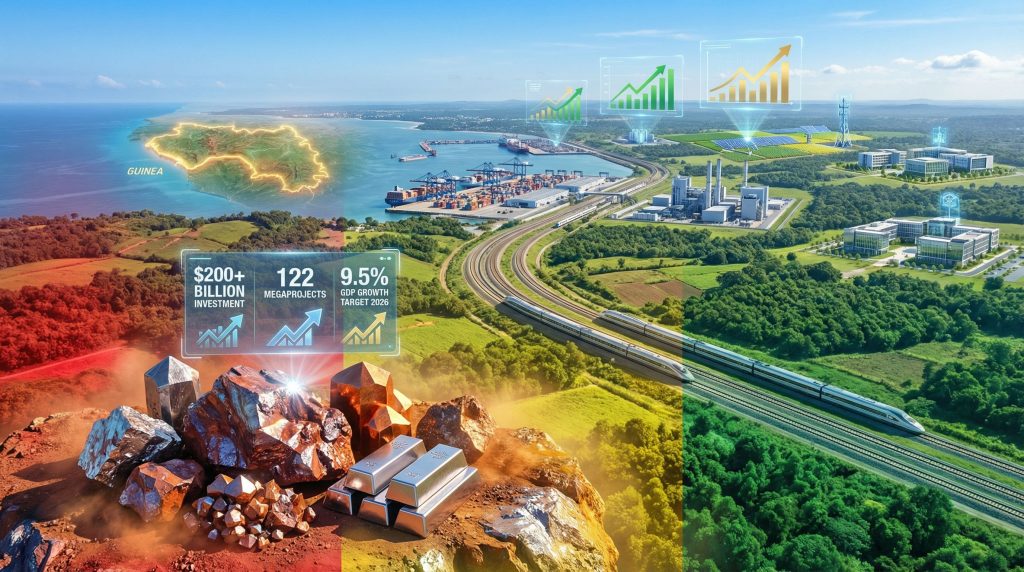
Guinea's comprehensive development blueprint demonstrates how nations can leverage exceptional mineral endowments to drive systematic economic transformation. The country possesses the world's largest reserves of high-grade bauxite alongside significant iron ore deposits, creating unique opportunities for integrated industrial development that extends far beyond traditional mining operations.
The strategic framework emphasizes converting raw material advantages into diversified economic foundations spanning manufacturing, agriculture, infrastructure, and services. This approach recognises that sustainable growth requires building productive capacity across multiple sectors rather than relying solely on commodity price cycles and external demand fluctuations.
Investment Scale and Partnership Architecture
The Simandou 2040 plan mobilizes extraordinary capital commitments through carefully structured international partnerships. Chinese steel conglomerates including China Baowu Steel Group and Chinalco provide substantial financing alongside Western mining corporations such as Rio Tinto, creating a balanced partnership structure that combines capital availability with technological expertise.
Regional development institutions and multilateral lenders complement private sector investment, ensuring that infrastructure development aligns with broader continental integration objectives. This diversified financing approach reduces dependency on single funding sources while maintaining strategic autonomy in project implementation decisions.
The partnership architecture deliberately balances different technological approaches and market access strategies, preventing over-reliance on any single economic relationship while maximizing knowledge transfer opportunities across various industrial sectors.
Phased Implementation Strategy
The development model operates through carefully sequenced phases designed to build upon previous achievements while managing implementation risks. The accelerated infrastructure phase focuses on establishing foundational transportation, energy, and telecommunications networks that support both mining operations and broader economic activities.
Economic diversification phases gradually shift emphasis toward value-added processing, manufacturing development, and service sector expansion. This sequencing allows human capital development and institutional capacity to evolve alongside infrastructure deployment, ensuring sustainable management of increased economic complexity.
Furthermore, regional consolidation phases leverage Guinea's enhanced economic position to expand trade relationships and investment flows across West Africa, transforming the country from a resource exporter into a regional economic hub with diversified productive capabilities.
How Does the Simandou Iron Ore Project Drive Economic Diversification?
The massive iron ore development serves as more than an extractive project; it functions as an economic catalyst designed to stimulate activity across multiple sectors through integrated infrastructure and deliberate value-addition strategies. This approach transforms mining from an enclave activity into a foundation for broader industrial development.
Integrated Mining Infrastructure Development
The project encompasses a comprehensive 650-kilometre railway system connecting interior mining areas to deepwater port facilities capable of handling annual export volumes exceeding 100 million tons. This transportation infrastructure creates economic opportunities for agricultural producers, manufacturers, and service providers along the entire corridor.
The railway design incorporates passenger service capabilities alongside freight operations, enabling population mobility and commercial activity that extends far beyond mining logistics. Port facilities include container handling capacity for general cargo, supporting import-export activities across multiple economic sectors.
Energy infrastructure development includes power generation facilities sized to meet both mining requirements and broader regional demand. In addition, this creates opportunities for energy-intensive manufacturing and industrial processing activities that benefit from reliable electricity access.
Value-Added Processing Capabilities
Strategic planning emphasizes establishing steel processing plants and downstream manufacturing facilities that capture higher-value segments of the iron ore supply chain. Local beneficiation requirements ensure that significant portions of extracted ore undergo initial processing before export, creating employment and industrial expertise within Guinea.
The processing strategy targets both domestic market development and export opportunities, building industrial capabilities that can serve regional steel demand while developing expertise in metallurgical processes applicable to other mineral resources within Guinea's geological endowments.
Technical training programmes associated with processing facilities develop skilled workforces capable of supporting broader industrial development initiatives across multiple sectors. Consequently, this creates human capital that benefits the entire economy rather than solely mining operations.
Regional Connectivity Enhancement
Transportation infrastructure extends Guinea's economic influence across neighbouring countries through improved logistics networks that reduce trade costs and facilitate commercial relationships. Cross-border railway connections enable landlocked neighbours to access Atlantic shipping routes through Guinea's port facilities.
This connectivity creates opportunities for Guinea to become a regional logistics and trade hub, capturing service revenues from transit activities while building commercial relationships that support broader economic integration across the ECOWAS region.
Enhanced transportation networks also facilitate labour mobility and knowledge transfer, enabling Guinea to access regional expertise while offering employment opportunities that contribute to broader West African development objectives.
What Are the Five Strategic Pillars of Guinea's 2040 Vision?
The comprehensive development framework operates through five interconnected strategic pillars that address different dimensions of economic transformation while maintaining coherent overall objectives. This multi-pillar approach ensures that growth benefits extend across all sectors of society rather than concentrating in extractive industries.
Agriculture and Food Industry Modernisation
Agricultural transformation focuses on mechanisation, irrigation systems, and processing capabilities that increase productivity while building export competitiveness in regional food markets. The strategy emphasizes both subsistence agriculture improvements and commercial farming development to ensure food security alongside economic growth.
Processing facility development targets value-addition for agricultural products, creating opportunities for food manufacturing that serves both domestic consumption and export markets. This approach builds on Guinea's favourable climate and soil conditions to establish sustainable agricultural industries.
Key agricultural targets include:
• Mechanisation of 75% of cultivated areas by 2035
• Establishment of 50 agro-processing facilities across major growing regions
• Development of irrigation systems covering 200,000 hectares
• Creation of 500,000 agricultural sector jobs through modernisation initiatives
Education and Cultural Development Framework
Human capital development emphasizes technical education, vocational training, and cultural preservation initiatives that support skilled workforce requirements while maintaining Guinea's cultural heritage. Educational investments target both immediate industrial needs and long-term knowledge economy development.
Vocational training programmes align with industrial development requirements, ensuring that citizens can access high-quality employment opportunities created by mining innovation trends and manufacturing expansion. University-level technical programmes develop engineering and management expertise necessary for complex industrial operations.
Cultural preservation initiatives recognise that sustainable development must respect traditional values while embracing technological advancement, creating development models that strengthen rather than undermine social cohesion.
Infrastructure and Technology Integration
Digital infrastructure development includes telecommunications networks, data centres, and e-government platforms that support both industrial operations and citizen services. Technology adoption accelerates across government functions and private sector activities through systematic digitisation initiatives.
Smart city development in major urban centres incorporates modern urban planning principles with technology integration to create efficient, sustainable urban environments that attract investment and improve quality of life for residents.
Transportation infrastructure extends beyond mining requirements to include urban transit systems, intercity highways, and aviation facilities that support tourism, commerce, and regional connectivity objectives.
Financial Services and Economic Management
Banking sector modernisation includes capital market development, improved financial regulations, and enhanced access to credit for small and medium enterprises. Financial infrastructure supports business development across all economic sectors while maintaining macroeconomic stability.
Fiscal management reforms emphasise transparent budget processes, efficient tax collection systems, and responsible debt management that maintains investor confidence while funding essential public investments in infrastructure and human capital.
Capital market development creates opportunities for domestic and international investment in Guinean enterprises, supporting private sector growth while providing alternative financing sources for development initiatives.
Healthcare and Social Development
Healthcare system strengthening includes facility construction, medical equipment procurement, and training programmes for healthcare workers. Health infrastructure improvements support economic productivity while addressing fundamental human development needs.
Social protection programmes provide safety nets for vulnerable populations while supporting economic transformation through skills training and employment assistance. For instance, these programmes ensure that development benefits reach all segments of society rather than concentrating among educated urban populations.
Community development initiatives emphasise local participation in development planning and implementation, ensuring that national development objectives align with local priorities and capabilities.
Which Growth Scenarios Does the 2026 Budget Implementation Target?
Guinea's National Transitional Council adopted a 2026 budget totalling 64,181 billion Guinean francs (approximately $7.3 billion), representing an 18.3% increase from the previous fiscal year according to official government announcements. This substantial budget expansion directly supports launching the Simandou 2040 sustainable development programme while targeting ambitious economic growth objectives.
Short-Term Economic Acceleration (2026-2027)
The enhanced budget targets 9.5% GDP growth for 2026, representing significant acceleration from historical performance levels. Between 2019 and 2023, Guinea's GDP grew at an average annual rate of 5.1% according to World Bank data, while 2024 growth reached approximately 5.7% driven by both mining and non-mining sectors.
Total revenue projections increase 27.06% from the revised 2025 budget, based on enhanced tax collection mechanisms and expanded mining royalty receipts. This revenue expansion provides fiscal space for infrastructure investments while maintaining a projected fiscal deficit of 2.6% alongside prudent debt management policies.
The government selected eleven ministries to pilot programme-based budgeting approaches, representing a methodological shift toward output and outcome measurement rather than traditional input-based budget allocation. This institutional reform supports more efficient resource allocation across development priorities.
Key 2026 Targets:
• GDP Growth: 9.5%
• Budget Increase: 18.3% ($7.3 billion total)
• Revenue Growth: 27.06%
• Fiscal Deficit: 2.6%
• Inflation Target: Below 5%
Medium-Term Diversification Outcomes (2028-2030)
Standard & Poor's projects economic growth approaching 10% annually over 2026-2029, supported by the Simandou integrated project ramp-up, expanded refining capacity, and major infrastructure investments. This external validation suggests that Guinea's growth projections align with independent economic analysis.
Mining sector contribution to GDP expansion is projected to reach approximately 26% during peak infrastructure development phases, while non-mining sectors gradually increase their relative economic importance. This balanced growth approach reduces dependency on commodity price fluctuations while building diversified productive capacity.
Infrastructure spending during this period focuses on completing transportation networks, energy systems, and telecommunications infrastructure that support both mining operations and broader economic activities. Private sector investment accelerates as infrastructure availability reduces business operating costs.
Long-Term Structural Transformation (2031-2040)
The final development phase emphasises manufacturing expansion, service sector growth, and knowledge-based economic activities that leverage infrastructure investments made during earlier phases. Regional economic influence expands through trade partnerships and infrastructure connectivity with neighbouring countries.
Manufacturing development focuses on steel processing, equipment production, and consumer goods that serve both domestic and regional markets. Service sector expansion includes financial services, logistics, telecommunications, and tourism activities that benefit from improved infrastructure and increased prosperity.
Knowledge economy development emphasises technology transfer, research and development capabilities, and higher education expansion that support continued economic sophistication beyond the 2040 planning horizon.
What Investment Opportunities Emerge from Simandou 2040 Implementation?
The comprehensive development programme creates systematic investment opportunities across multiple sectors as infrastructure development enables private sector expansion and industrial diversification. These opportunities span immediate infrastructure contracts through long-term manufacturing and service sector ventures.
Infrastructure Development Contracts
Transportation infrastructure projects require engineering, construction, and project management services valued in excess of $65 billion during initial implementation phases. Railway construction, port development, and highway building create opportunities for both international contractors and local firms through subcontracting and partnership arrangements.
Energy infrastructure development includes power generation facilities, transmission networks, and distribution systems that serve both mining operations and broader economic activities. Renewable energy projects receive particular emphasis as Guinea seeks to balance industrial development with environmental sustainability objectives.
Telecommunications infrastructure expansion creates opportunities for network equipment suppliers, system integrators, and service providers as digital connectivity becomes essential for modern economic activities across all sectors.
Major Infrastructure Investment Categories:
| Sector | Investment Scale | Timeline | Key Opportunities |
|---|---|---|---|
| Railway Transport | $25-30 billion | 2026-2030 | Engineering, construction, rolling stock |
| Port Development | $8-12 billion | 2026-2028 | Marine engineering, cargo handling systems |
| Power Generation | $15-20 billion | 2026-2035 | Renewable energy, grid infrastructure |
| Telecommunications | $5-8 billion | 2026-2030 | Network equipment, fibre optic deployment |
Manufacturing and Processing Ventures
Local content requirements and value-addition mandates create protected market opportunities for steel processing, equipment manufacturing, and industrial services. Joint venture partnerships with international companies receive government support through favourable regulatory treatment and infrastructure access.
Steel processing facilities benefit from guaranteed iron ore supply and preferential access to regional markets, creating investment opportunities for companies with metallurgical expertise. Equipment manufacturing serves both mining operations and broader industrial development across West Africa.
However, industrial services including maintenance, logistics, and technical support create opportunities for smaller enterprises and service providers that benefit from the expanded industrial base without requiring massive capital investments.
Agricultural and Agribusiness Expansion
Mechanisation programmes support private sector investment in agricultural equipment, irrigation systems, and processing facilities that serve Guinea's agricultural modernisation objectives. Food security initiatives create stable domestic markets while export development opens regional opportunities.
Agro-processing facilities benefit from improved transportation infrastructure and enhanced access to both raw materials and export markets. Processing activities include grain milling, fruit and vegetable processing, and livestock processing that add value to agricultural production.
Agricultural finance services create opportunities for specialised lenders and investment funds that support farmer modernisation and agribusiness development across Guinea's diverse agricultural regions.
The next major ASX story will hit our subscribers first
How Does Guinea's Strategy Compare to Other African Resource-Led Development Models?
Guinea's Simandou 2040 approach represents a distinctive model among African resource-led development strategies, emphasising comprehensive economic transformation rather than narrow sector development. Comparative analysis reveals both similarities and important differences with other continental development initiatives, particularly when examining the global mining landscape.
| Country | Primary Resource | Development Timeline | Investment Scale | Diversification Focus |
|---|---|---|---|---|
| Guinea (Simandou 2040) | Iron Ore/Bauxite | 15 years | $200+ billion | Manufacturing, Agriculture, Services |
| Botswana (Vision 2036) | Diamonds | 12 years | $50 billion | Financial Services, Tourism |
| Ghana (40-Year Plan) | Gold, Oil, Cocoa | 40 years | $150 billion | Technology, Manufacturing |
| Rwanda (Vision 2050) | Services/Human Capital | 25 years | $75 billion | Knowledge Economy, Services |
| Angola (2025 Plan) | Oil, Diamonds | 10 years | $120 billion | Agriculture, Manufacturing |
Resource Curse Mitigation Strategies
Guinea's approach emphasises economic diversification, institutional strengthening, and social development to avoid resource dependency patterns observed in other mineral-rich economies. The five-pillar strategy ensures that development benefits extend beyond extractive industries to create sustainable economic foundations.
Fiscal management reforms include sovereign wealth fund establishment, transparent revenue management, and debt sustainability protocols that prevent the boom-bust cycles characteristic of commodity-dependent economies. These institutional safeguards distinguish Guinea's approach from resource development models that lack such protective mechanisms.
Human capital development receives equal emphasis with infrastructure investment, recognising that sustainable mining transformation requires skilled populations capable of managing complex economic activities beyond resource extraction.
Regional Integration Benefits
Unlike isolated resource development projects that primarily serve external markets, Simandou 2040 creates cross-border infrastructure and trade relationships that benefit neighbouring economies while strengthening Guinea's regional economic position.
Transportation infrastructure enables landlocked countries to access Atlantic shipping routes through Guinea's enhanced port facilities, creating revenue streams from transit services while building regional trade relationships. This approach transforms Guinea into a regional economic hub rather than simply an export platform.
Regional labour mobility and skills transfer create knowledge spillovers that benefit multiple countries while providing Guinea access to broader talent pools and market opportunities across West Africa.
What Challenges Could Impact Simandou 2040 Implementation Success?
Despite ambitious objectives and substantial resource commitments, the Simandou 2040 programme faces significant implementation challenges that could affect outcomes and require adaptive management strategies throughout the development timeline.
Poverty Reduction and Social Inclusion
Approximately 52% of Guinea's population currently lives in poverty according to official government statistics, creating urgent pressures for development programmes to demonstrate tangible improvements in living standards and employment opportunities. The programme must balance long-term infrastructure investments with immediate poverty alleviation needs.
Income inequality could increase during initial development phases as skilled workers and urban populations benefit more rapidly from infrastructure investments and industrial development than rural populations engaged in subsistence agriculture. Targeted social programmes become essential for maintaining broad-based political support.
Employment generation must occur across skill levels to ensure that development benefits reach populations without advanced education or technical training. The programme's success depends partly on creating sufficient employment opportunities for Guinea's large youth population.
Fiscal Management and Debt Sustainability
Managing large-scale infrastructure investments while maintaining fiscal discipline requires sophisticated financial planning and transparent governance systems. Guinea's projected fiscal deficit of 2.6% provides limited margin for cost overruns or revenue shortfalls that commonly affect major infrastructure projects.
Debt sustainability becomes critical as international borrowing finances infrastructure development. The government's emphasis on "prudent debt management and tighter control of domestic debt" acknowledges these risks, but implementation requires consistent fiscal discipline over multiple budget cycles.
Revenue projections depend heavily on mining sector performance and commodity price stability, creating vulnerability to external economic shocks that could reduce government resources available for development programme continuation.
Political Stability and Institutional Capacity
Long-term development programmes require consistent political support and institutional capabilities that can adapt to changing circumstances while maintaining strategic direction. Guinea's transitional government context adds uncertainty to long-term policy continuity.
Institutional capacity must evolve to manage increasingly complex economic activities as infrastructure development proceeds and economic diversification accelerates. The pilot programme-based budgeting initiative represents institutional innovation, but broader capacity building remains essential.
Corruption risks increase with large-scale infrastructure spending and resource revenue flows, requiring robust governance systems and oversight mechanisms that maintain public confidence and international partner trust.
How Do International Partners Support Simandou 2040 Objectives?
The success of Guinea's development programme depends significantly on sustained international partnerships that provide capital, technology, and market access while respecting Guinea's strategic autonomy and development priorities.
Chinese Investment and Technology Transfer
Partnerships with China Baowu Steel Group, Chinalco, and other Chinese enterprises provide substantial capital commitments alongside technology transfer opportunities and access to Chinese steel markets. These relationships offer immediate financing solutions and guaranteed export demand for iron ore production.
Chinese involvement extends beyond mining operations to include infrastructure construction, equipment supply, and industrial development that aligns with China's Belt and Road Initiative objectives while supporting Guinea's diversification goals.
Technology transfer agreements include steel processing techniques, mining equipment operation, and infrastructure construction methods that build Guinea's domestic technical capabilities while reducing long-term dependency on foreign expertise.
Western Mining Company Participation
Rio Tinto's continued involvement brings international mining expertise, environmental standards, and access to global markets that complement Chinese partnerships. Western participation provides technological balance and operational best practices that enhance overall project performance.
Environmental and social governance standards associated with Western companies help Guinea meet international sustainability requirements while attracting additional investment from institutions emphasising responsible development practices.
Furthermore, market diversification through Western partnerships reduces dependency on Chinese export demand while providing access to European and American steel markets that offer different pricing and contractual arrangements.
Multilateral Development Institution Support
World Bank, African Development Bank, and other multilateral institutions provide technical assistance, policy guidance, and social development expertise that complement private sector investment. International institution involvement enhances programme credibility and implementation capacity.
Multilateral support includes governance assistance, environmental safeguards, and social development programmes that ensure development benefits reach vulnerable populations while maintaining international standards for responsible resource development.
Policy dialogue with international institutions helps Guinea align development strategies with global best practices while maintaining flexibility to adapt programmes to local conditions and priorities.
What Regional Economic Impact Will Simandou 2040 Generate?
Guinea's development success extends beyond national boundaries to influence broader West African economic integration and development patterns. The programme's regional significance could accelerate economic transformation across multiple countries while establishing new continental development models.
West African Trade Flow Transformation
Enhanced transportation infrastructure creates new trade corridors connecting landlocked countries including Mali, Burkina Faso, and Niger to Atlantic ports through Guinea's improved logistics networks. Regional commerce benefits from reduced transportation costs and improved reliability for imports and exports.
Cross-border railway connections enable more efficient movement of goods, people, and services across ECOWAS region boundaries, potentially accelerating economic integration beyond existing trade agreements. Guinea's position as a regional logistics hub creates revenue opportunities while supporting neighbouring country development.
Regional market integration accelerates as transportation barriers diminish and commercial relationships strengthen through improved infrastructure connectivity. This integration could support larger-scale manufacturing operations that serve regional rather than solely national markets.
Labour Market and Skills Development
Large-scale infrastructure projects create employment opportunities across skill levels while training programmes develop technical capabilities that benefit industries throughout West Africa. Regional labour mobility enables workers to access opportunities while Guinea benefits from broader talent pools.
Technical education and vocational training programmes produce graduates whose skills transfer across borders, supporting industrial development in multiple countries while creating networks of technical expertise that benefit the entire region.
Professional development opportunities in engineering, project management, and industrial operations create human capital that supports economic development initiatives across West Africa beyond Guinea's specific programmes.
Economic Integration Acceleration
Guinea's development success could catalyse similar comprehensive development programmes in neighbouring countries, potentially accelerating ECOWAS economic integration through improved infrastructure connectivity and expanded trade relationships.
Financial integration opportunities emerge as Guinea's banking sector modernisation creates cross-border financial services and investment opportunities that support regional economic development. Enhanced financial infrastructure facilitates trade and investment flows across multiple countries.
Policy coordination between Guinea and neighbouring countries could create harmonised approaches to infrastructure development, trade facilitation, and industrial development that maximise regional benefits from individual country development initiatives.
Key Takeaways: Simandou 2040's Strategic Significance
Guinea's Simandou 2040 plan represents a fundamental departure from traditional African resource development models by emphasising comprehensive economic transformation rather than narrow extractive sector growth. The programme's $200+ billion investment scale and 15-year timeline demonstrate unprecedented commitment to systematic development planning that addresses multiple economic sectors simultaneously.
The five-pillar strategic framework ensures that development benefits extend beyond mining operations to include agriculture, education, infrastructure, financial services, and healthcare improvements that address Guinea's 52% poverty rate while building sustainable economic foundations. This comprehensive approach distinguishes the programme from resource development initiatives that primarily benefit narrow segments of the population.
International partnerships with Chinese steel companies, Western mining corporations, and multilateral development institutions provide the capital, technology, and expertise necessary for successful implementation while maintaining strategic autonomy in development planning and execution. The balanced partnership structure reduces dependency on any single relationship while maximising knowledge transfer opportunities.
Success depends on effective management of implementation challenges including fiscal discipline during large-scale infrastructure spending, poverty reduction alongside industrial development, and institutional capacity building that supports increasingly complex economic activities. The government's adoption of programme-based budgeting and transparent debt management policies suggests recognition of these challenges.
The initiative's regional significance extends far beyond Guinea's borders through transportation infrastructure that transforms West African trade flows and accelerates economic integration across the ECOWAS region. In addition, the implementation of mine reclamation innovations and industry consolidation insights could establish a new continental model for resource-led development that avoids traditional resource curse patterns while creating sustainable economic transformation.
The 2026 budget adoption with its 18.3% increase to $7.3 billion and 9.5% GDP growth target provides a concrete foundation for programme implementation while the 27.06% revenue increase demonstrates improved resource mobilisation capabilities that support long-term development objectives.
This analysis is based on economic projections and development plans that involve inherent uncertainties. Actual outcomes may vary significantly based on global economic conditions, commodity prices, political developments, and implementation effectiveness. Investors should conduct independent due diligence before making investment decisions related to Guinea's development programme or associated opportunities.
Looking to Capitalise on African Resource Development Opportunities?
Discovery Alert's proprietary Discovery IQ model delivers real-time alerts on significant ASX mineral discoveries, instantly empowering subscribers to identify actionable opportunities ahead of the broader market. Understand why historic discoveries can generate substantial returns by visiting Discovery Alert's dedicated discoveries page, showcasing historic examples of exceptional outcomes, and begin your 14-day free trial today to position yourself ahead of the market.