August 14, 2026
Understanding the Strategic Framework Behind Recent Bilateral Negotiations
Global energy markets operate within an increasingly complex web of geopolitical calculations, where traditional supplier relationships face disruption from evolving diplomatic priorities. The intersection of trade policy and energy security has become a defining characteristic of contemporary international commerce, with nations leveraging economic agreements to reshape long-established supply chains.
Recent developments in India-Russia-US energy relationships exemplify this trend, where bilateral trade negotiations extend far beyond conventional tariff structures to encompass strategic resource dependencies. The February 2026 trade arrangement between Washington and New Delhi represents a significant shift in this dynamic, reducing US import duties on Indian manufactured goods whilst creating potential pathways for energy diversification.
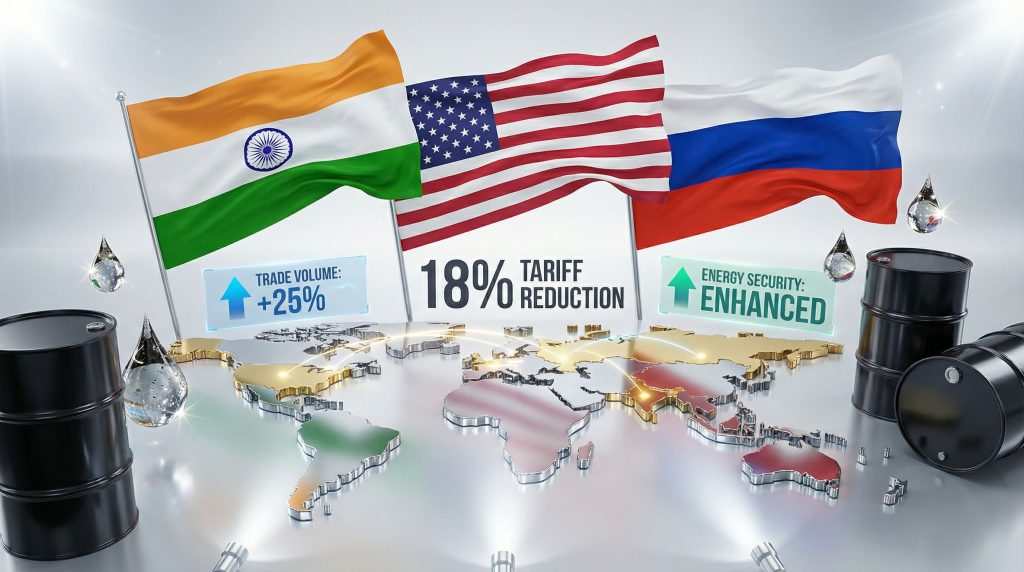
According to reports from Reuters, US President Donald Trump announced tariff reductions from 50% to 18% on Indian goods, alongside claims that India had agreed to halt Russian oil purchases as part of the accord. However, Russian officials indicated they had received no formal confirmation from Delhi regarding any cessation of energy imports, highlighting the complex diplomatic positioning surrounding these negotiations.
When big ASX news breaks, our subscribers know first
What Are the Core Components of This Trade Framework?
Tariff Structure Modifications:
• US tariffs on Indian goods reduced from 50% to 18%
• Elimination of additional punitive measures previously imposed
• Enhanced market access for Indian exporters across multiple sectors
• Potential reciprocal commitments from India regarding US agricultural and technology imports
Energy Trade Implications:
• Redirection possibilities for India's crude oil procurement patterns
• Enhanced opportunities for US energy exporters in Asian markets
• Strategic positioning against established Russian energy influence
• Creation of alternative supply chain pathways for energy security
The significance of this framework extends beyond immediate economic benefits, as it demonstrates how trade policy can serve as a tool for geopolitical influence. Furthermore, India's position as a major consumer of discounted Russian seaborne crude since 2022 has made it a focal point for Western efforts to reduce Moscow's energy revenues.
How Does This Agreement Compare to Other Recent Trade Realignments?
| Trading Partner | Current US Tariff Rate | Strategic Focus | Energy Component |
|---|---|---|---|
| India | 18% | Energy diversification | Russian oil alternatives |
| China | Variable (25-60%) | Technology competition | Limited cooperation |
| European Union | 2-8% average | Alliance strengthening | LNG expansion |
| Saudi Arabia | 0-5% | Energy partnership | Traditional cooperation |
This comparison reveals India's unique position in current US trade strategy, where energy considerations play a more prominent role than in other major bilateral relationships. The relatively high tariff rate of 18%, whilst reduced from previous levels, still reflects ongoing trade tensions that extend beyond energy considerations.
Consequently, the framework differs significantly from traditional energy partnerships, where cooperation typically develops through long-term contracts and infrastructure investments rather than being explicitly linked to broader trade agreements. The tariffs impact on investments demonstrates how such policy changes can reshape entire market sectors.
What Are the Geopolitical Scenarios This Agreement Enables?
Scenario 1: Accelerated Russian Energy Isolation
If India transitions away from Russian crude imports, Moscow faces potential revenue reductions estimated at $15-20 billion annually. India's emergence as the top buyer of discounted Russian seaborne crude following the 2022 Ukraine invasion has made it a crucial revenue source for Russian energy exports.
The scale of India's Russian energy imports represents a significant portion of Moscow's current export portfolio to non-Western markets. Any substantial reduction would force Russian suppliers to seek alternative buyers, potentially at even greater discounts or through more complex financing arrangements.
However, the practical implementation of such a transition faces considerable challenges:
• Indian refinery infrastructure optimised for specific crude specifications
• Existing long-term contracts and payment mechanisms
• Price volatility during supply source transitions
• Logistics costs associated with alternative suppliers
Scenario 2: Venezuelan Energy Market Re-entry
The agreement potentially creates pathways for Indian refiners to resume Venezuelan crude imports, previously restricted due to US sanctions. This development could provide India with alternative heavy crude sources whilst offering Venezuela renewed market access under modified sanctions frameworks.
Venezuelan crude characteristics match many Indian refinery specifications, making it a technically viable alternative to Russian supplies. The potential re-entry scenario would require:
• Modified US sanctions enforcement
• New financial and shipping arrangements
• Infrastructure rehabilitation in Venezuelan export facilities
• Risk management for international oil companies
Scenario 3: Enhanced US Energy Export Positioning
American energy producers could capture significant market share in India's expanding energy import portfolio, projected to reach $500 billion over the next decade. This positioning would represent a strategic shift in global energy trade patterns, with implications extending beyond bilateral relationships.
Moreover, US energy export capabilities have expanded dramatically through shale oil and gas development, creating surplus capacity for international markets. The oil price rally amid tariffs has highlighted the interconnected nature of these market dynamics.
Key advantages for US suppliers include:
• Advanced extraction technologies
• Flexible contract structures
• Integrated transportation infrastructure
• Financial market sophistication
Why Are There Discrepancies in Official Communications?
The asymmetric messaging between Washington and New Delhi reveals sophisticated diplomatic strategies employed by both nations. US officials emphasise Russian energy cessation as a central component of the agreement, whilst Indian authorities maintain strategic silence on specific energy commitments.
According to Al Jazeera, Kremlin spokesman Dmitry Peskov stated that Russia had not received any official statements from Delhi regarding halting oil purchases, indicating that India may be preserving negotiating flexibility whilst securing immediate economic benefits through tariff reductions.
This communication divergence suggests several strategic considerations:
US Perspective:
• Public emphasis on energy policy linkage demonstrates leverage
• Domestic political benefits from appearing to constrain Russian revenues
• Signal to other potential partners regarding trade-energy connections
Indian Positioning:
• Maintenance of strategic autonomy in energy procurement
• Balancing relationships between major powers
• Preservation of economic benefits whilst avoiding firm commitments
Russian Response:
• Emphasis on historical strategic partnership value
• Preparation for potential relationship recalibration
• Development of alternative market strategies
What Market Dynamics Could This Agreement Trigger?
Short-term Impacts (6-12 months)
Market Competitiveness Shifts:
Indian exporters gain significant advantages relative to Chinese manufacturers through reduced tariff burdens. This development could accelerate supply chain diversification efforts already underway among multinational corporations seeking to reduce China-dependency.
Energy Price Volatility:
Potential demand shifts away from Russian crude could create temporary pricing volatility as markets adjust to new supply-demand balances. Historical precedents suggest 3-6 month adjustment periods for major crude oil market restructuring. The trump tariff market impact analysis provides deeper insight into these market dynamics.
Currency Implications:
Enhanced Indian export competitiveness may strengthen the rupee through improved trade balance projections, whilst potentially affecting established currency arrangements with Russia.
Medium-term Restructuring (1-3 years)
Global Shipping Route Reconfiguration:
Major crude oil transportation patterns could shift as Indian refiners develop new supplier relationships. This reconfiguration affects:
• Tanker fleet utilisation patterns
• Port infrastructure development priorities
• Maritime insurance and financing arrangements
• Strategic petroleum reserve planning
Investment Flow Redirection:
Capital allocation toward US energy infrastructure serving Asian markets may accelerate, whilst Russian energy sector investments face continued constraints from Western financial institutions.
Payment Mechanism Evolution:
Development of alternative transaction systems for energy trade, potentially including expanded use of local currencies, digital payment platforms, or commodity-backed arrangements.
How Might Russia Respond to This Strategic Realignment?
Economic Countermeasures
Pricing Strategy Adjustments:
Russia may offer deeper crude oil discounts to retain Indian market share, potentially extending similar pricing advantages to other Asian buyers as competitive responses to US market positioning.
Enhanced China Cooperation:
Acceleration of energy cooperation agreements with Chinese importers, including potential expansion of pipeline infrastructure projects and long-term supply contracts designed to offset potential Indian market losses.
Alternative Market Development:
Intensified efforts to develop energy relationships with other Asian, African, and Latin American markets through infrastructure investments and preferential pricing arrangements.
Diplomatic Strategies
Russian officials have emphasised the importance of maintaining the strategic partnership with India, with Peskov stating that bilateral relationship development remains a priority regardless of US-India trade arrangements.
Key diplomatic responses include:
• Emphasis on historical defence cooperation agreements
• Coordination with other BRICS nations on alternative trade mechanisms
• Leveraging multilateral forums to maintain influence
• Development of non-dollar transaction systems
The next major ASX story will hit our subscribers first
What Are the Key Risk Factors for Implementation?
Operational Challenges
Refinery Infrastructure Compatibility:
Indian refineries have optimised processing capabilities for specific crude oil grades, particularly Russian Urals crude. Transitioning to alternative suppliers requires:
• Technical modifications to processing equipment
• Quality testing and certification processes
• Inventory management during transition periods
• Workforce retraining for new crude specifications
Logistics Cost Analysis:
Alternative supply sources may involve significantly different transportation costs:
| Supply Source | Shipping Distance | Transit Time | Cost Premium |
|---|---|---|---|
| Russian Ports | 4,000 miles | 12-15 days | Baseline |
| US Gulf Coast | 9,500 miles | 25-30 days | 40-60% higher |
| West Africa | 6,500 miles | 18-22 days | 25-35% higher |
| Middle East | 2,500 miles | 8-12 days | 15-25% lower |
Political Considerations
Domestic Indian Policy Debate:
Parliamentary discussions regarding energy security sovereignty may influence implementation timelines, with various political factions emphasising different aspects of national energy independence.
US Congressional Oversight:
American legislative bodies are likely to monitor agreement implementation closely, potentially affecting future trade relationship development and energy policy coordination. The interconnected nature of us tariffs & inflation concerns adds another layer of complexity to these deliberations.
Regional Diplomatic Balance:
India must navigate relationships with multiple major powers whilst maintaining regional stability partnerships and avoiding isolation from any significant trading bloc.
Which Industries Stand to Benefit Most From This Realignment?
US Energy Sector Winners
Shale Oil Producers:
Companies with established export infrastructure and flexible production capabilities are positioned to capture new market opportunities in Indian energy markets.
LNG Terminal Operators:
Existing liquefied natural gas export facilities may see increased utilisation as India seeks to diversify energy imports beyond crude oil.
Coal Mining Operations:
Despite global transitions toward renewable energy, Indian industrial demand for metallurgical coal creates opportunities for US producers.
Indian Manufacturing Beneficiaries
Textile Export Industry:
Reduced tariff burdens provide immediate competitive advantages in US markets, potentially worth billions in additional export revenue.
Pharmaceutical Manufacturers:
Indian generic drug producers gain enhanced access to US markets whilst maintaining cost advantages over domestic American production.
Technology Services Providers:
Software development and business process outsourcing companies benefit from improved overall trade relationships.
What Does This Mean for Global Energy Security Architecture?
This india russian oil trade deal demonstrates how economic leverage increasingly shapes energy diplomacy, creating precedents for future bilateral negotiations where trade policy and resource procurement become explicitly linked strategic tools.
Template Development:
The integration of tariff policy with energy procurement decisions establishes frameworks that other nations may adopt in similar negotiations, potentially reshaping global trade relationship structures.
Multipolar Energy Market Acceleration:
Traditional supplier-buyer relationships face disruption as political considerations increasingly influence commercial energy decisions, accelerating development of alternative supply chains and payment mechanisms.
Furthermore, the saudi arabia energy impact demonstrates how regional energy developments can have far-reaching global implications.
Alliance System Evolution:
Energy trade relationships become more closely aligned with broader diplomatic partnerships, potentially reducing the purely commercial nature of international energy markets.
How Should Market Participants Prepare for These Changes?
For Energy Companies
Supply Chain Diversification Strategies:
• Development of multiple supplier relationships across different geographic regions
• Investment in flexible refining capabilities that accommodate various crude specifications
• Creation of alternative transportation and storage infrastructure
• Enhanced financial hedging mechanisms for price volatility management
For Investors
Implementation Timeline Monitoring:
Market entry opportunities depend heavily on actual implementation schedules, which may differ significantly from announced political agreements.
Currency Risk Assessment:
Trade flow changes affect currency relationships, requiring sophisticated hedging strategies for international energy investments.
Geopolitical Risk Evaluation:
Energy sector investments increasingly require analysis of diplomatic relationship stability rather than purely commercial factors.
What Are the Long-term Scenarios for India-Russia Energy Relations?
Gradual Transition Model
Phased Reduction Approach:
India reduces Russian oil imports by 30-40% over 18 months whilst maintaining strategic relationships in defence and technology sectors. This scenario allows for infrastructure adaptation and alternative supplier development without dramatic market disruption.
Complete Decoupling Scenario
Rapid Cessation Framework:
Full elimination of Russian energy imports within 12 months, requiring massive supply chain restructuring and potentially significant short-term economic costs. This scenario appears less likely given infrastructure constraints and existing contract obligations.
Selective Compliance Framework
Strategic Balance Maintenance:
India maintains reduced Russian energy ties whilst meeting minimum US agreement requirements through carefully structured compliance mechanisms. This approach preserves relationship flexibility whilst capturing trade agreement benefits.
Investment Disclaimer: The scenarios and projections discussed in this analysis involve significant uncertainties and speculative elements. Energy market investments carry substantial risks related to geopolitical developments, price volatility, and regulatory changes. Historical performance and current trends do not guarantee future results. Investors should conduct thorough due diligence and consider multiple risk factors before making investment decisions in energy sector opportunities related to changing trade relationships.
The evolution of the india russian oil trade deal negotiations represents a fundamental shift in how nations approach energy security within broader diplomatic frameworks. In addition, market participants must adapt strategies to account for increasingly politicised energy procurement decisions whilst maintaining operational flexibility for multiple potential outcomes.
Ready to Capitalise on Energy Market Realignments?
Discovery Alert's proprietary Discovery IQ model delivers real-time alerts on significant ASX mineral discoveries within the rapidly evolving global energy and commodities landscape, instantly empowering subscribers to identify actionable opportunities ahead of the broader market. Begin your 14-day free trial today and position yourself to capture emerging opportunities as geopolitical shifts reshape traditional supply chains and create new investment prospects.