May 22, 2026
Strategic Framework for Large-Scale Mining Operations in Western Australia
Australia's mining sector operates within one of the world's most sophisticated regulatory environments, where federal environmental legislation intersects with state-based operational permits to create comprehensive oversight systems. The Environment Protection and Biodiversity Conservation Act 1999 serves as the cornerstone of national environmental assessment, establishing rigorous protocols for resource extraction activities across ecologically sensitive regions. Furthermore, these frameworks provide the foundation for understanding mining permitting insights across different operational contexts.
Environmental Protection Through Strategic Assessment Mechanisms
Strategic Assessment frameworks represent a fundamental shift in how regulatory authorities evaluate large-scale resource operations. Rather than examining individual mining proposals in isolation, these comprehensive reviews analyze cumulative environmental impacts across broader geographic regions and extended timeframes. In addition, this approach demonstrates how sustainability transformation influences modern mining practices.
Key Strategic Assessment Components:
• Regional Impact Evaluation: Assessment boundaries encompass multiple operational sites to understand interconnected ecological systems
• Extended Timeline Analysis: Environmental monitoring and compliance obligations spanning two decades (2025-2045)
• Adaptive Management Protocols: Annual adjustment mechanisms based on observed environmental outcomes
• Stakeholder Integration: Comprehensive consultation processes with local communities, environmental groups, and industry representatives
The Strategic Assessment model applied to Alcoa mining approval Western Australia operations demonstrates this regulatory evolution in practice. Federal authorities established unified compliance standards across multiple operational sites, creating regulatory certainty while maintaining environmental protection standards.
| Compliance Domain | Annual Requirements | Assessment Period | Investment Allocation |
|---|---|---|---|
| Land Rehabilitation | 1,000 hectares restored | Through 2027 | AUD 15M research funding |
| Vegetation Clearing | 800 hectares maximum | Annual limits | USD 36M environmental offset |
| Flora/Fauna Monitoring | Comprehensive impact analysis | 2025-2045 | Ongoing compliance costs |
| Community Protection | Expanded buffer zones | Permanent implementation | Infrastructure modifications |
Strategic Assessment protocols incorporate sophisticated environmental monitoring technologies, including remote sensing systems for vegetation health analysis, wildlife population tracking through camera networks, and water quality sensors providing real-time contamination detection. These technological systems generate continuous data streams enabling rapid response to emerging environmental challenges.
National Interest Exemption Framework
The National Interest Exemption mechanism acknowledges that certain resource operations carry strategic importance for national supply chain continuity and economic stability. This regulatory tool allows critical operations to continue during extended environmental review periods, preventing supply disruption while comprehensive assessments proceed. Consequently, these frameworks have successfully facilitated mining approvals across various operational contexts.
The National Interest Exemption recognizes that Australia's bauxite and alumina production constitutes essential infrastructure for domestic manufacturing sectors and international export commitments, requiring operational continuity during regulatory transitions.
NIE applications undergo rigorous evaluation considering multiple factors: strategic resource importance, global market positioning, domestic employment implications, and regional economic dependencies. Successful exemptions maintain full environmental compliance obligations while providing operational certainty during assessment periods.
For Alcoa mining approval Western Australia operations, the NIE framework enables continued production at Huntly and Willowdale sites while Strategic Assessment processes examine long-term regional environmental impacts. This approach prevents supply chain vulnerabilities that could affect global aluminum markets while ensuring environmental protection standards remain intact. However, recent developments have highlighted enforcement challenges in forest management, emphasising the importance of strict compliance protocols.
National Interest Exemption Operational Conditions:
• Environmental compliance monitoring intensifies during exemption periods
• Land clearing limitations remain strictly enforced (800 hectares annually)
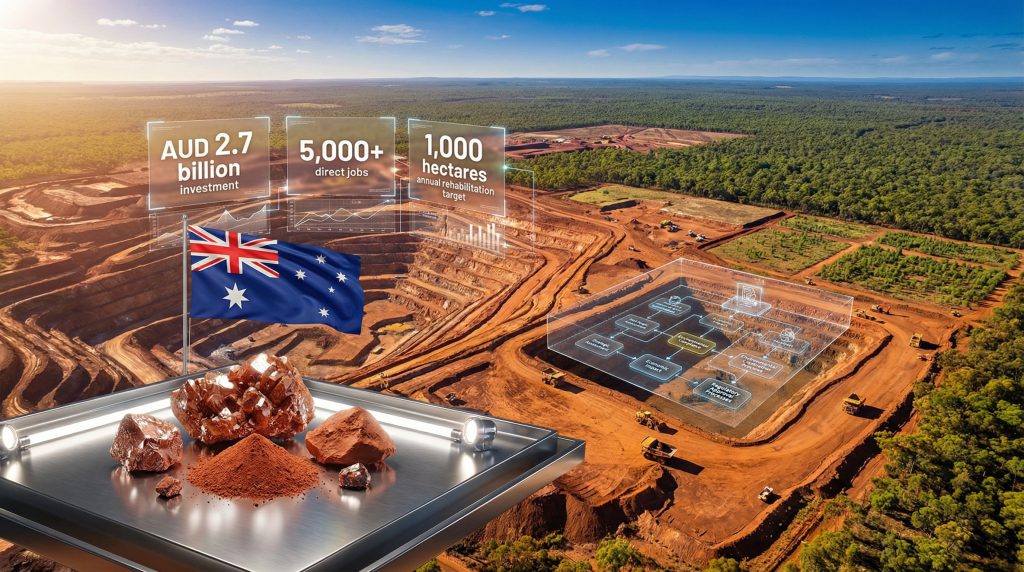
• Rehabilitation obligations accelerate (1,000 hectares by 2027)
• Community consultation requirements expand beyond standard protocols
• Financial assurance provisions increase to guarantee environmental restoration
When big ASX news breaks, our subscribers know first
Economic Transformation Through Federal Mining Approvals
Large-scale mining approvals generate substantial economic multiplier effects extending throughout regional and national economies. These operations function as economic anchors, supporting employment across multiple sectors while generating revenue streams that circulate through diverse economic channels. For instance, understanding bauxite project benefits helps illustrate the broader economic implications of these initiatives.
Employment Generation and Supply Chain Integration
Modern mining operations create employment ecosystems extending beyond direct operational positions. The Alcoa mining approval Western Australia framework supports over 5,000 direct positions across operational sites, encompassing technical operations, environmental management, engineering services, and administrative functions.
Direct Employment Categories:
• Operational Positions: Mining equipment operators, processing technicians, maintenance specialists
• Professional Roles: Environmental scientists, geological engineers, safety coordinators
• Support Services: Logistics coordinators, security personnel, administrative staff
• Specialized Functions: Rehabilitation specialists, community liaison officers, regulatory compliance managers
Supply chain integration demonstrates the breadth of economic participation in large-scale mining operations. Engagement with 1,500+ national contractors in 2024 illustrates supply network complexity spanning equipment manufacturers, logistics providers, professional services, and specialized technical suppliers.
Capital Investment Distribution (2024):
- Total Deployment: AUD 2.7 billion (USD 2 billion) through local suppliers
- Economic Retention: 70% of company revenue circulated within Australian economy
- Supplier Network: 1,500+ contractors across multiple industries
- Regional Concentration: Western Australia receives majority of investment flows
Economic multiplier effects from major mining operations typically generate 2.5-3.0x their direct investment value in broader economic activity. This multiplication occurs through wage expenditures supporting retail and service sectors, supplier expansion creating secondary employment, and infrastructure development benefiting regional communities.
Revenue Circulation and Regional Development
Mining sector revenue distribution creates cascading economic effects throughout regional and national economies. The 70% revenue retention rate achieved by major Western Australian operations demonstrates substantial domestic economic integration through multiple transmission channels. Consequently, this demonstrates the significant WA resources economic impact across multiple sectors.
Revenue Distribution Mechanisms:
-
Employee Compensation: Direct wage payments supporting regional consumption patterns
-
Supplier Procurement: Equipment, services, and materials sourced from Australian providers
-
Infrastructure Investment: Transportation, utilities, and operational facility development
-
Government Revenue: Royalties, taxation, and regulatory fees supporting public services
-
Community Investment: Environmental programs, education initiatives, and local development projects
The AUD 2.7 billion capital deployment through local suppliers in 2024 generated an estimated AUD 6.75-8.1 billion in total economic activity when standard mining sector multiplier effects (2.5-3.0x) are applied. This economic circulation supports employment across transportation, manufacturing, professional services, and retail sectors.
Regional economies in Western Australia particularly benefit from mining sector investment concentration. Remote and regional communities often experience limited economic diversification, making mining operations essential economic anchors supporting population retention and service sector viability.
Strategic Environmental Assessment Implementation
Environmental assessment frameworks for large-scale mining operations integrate multiple ecological domains to understand cumulative impacts across complex natural systems. These comprehensive approaches recognize that mining activities interact with biodiversity, water resources, soil systems, and atmospheric conditions simultaneously.
Integrated Environmental Monitoring Systems
Modern environmental assessment protocols employ sophisticated monitoring technologies providing continuous data collection across multiple environmental parameters. These systems enable real-time environmental condition tracking and rapid response to emerging ecological challenges. Furthermore, these approaches align with advancing mine reclamation innovation across the industry.
Biodiversity Protection Protocols:
• Threatened Species Monitoring: Population surveys using standardized protocols for endangered flora and fauna
• Habitat Condition Assessment: Vegetation community mapping with condition scoring methodologies
• Connectivity Analysis: Wildlife corridor identification and protection to maintain ecosystem function
• Restoration Effectiveness: Performance monitoring of rehabilitation areas using ecological indicators
Water resource management represents a critical component of environmental assessment frameworks, particularly in Western Australia's Mediterranean climate zones where water scarcity affects both ecological systems and community water supplies.
Water Resource Protection Framework:
- Drinking Water Source Protection: Expanded exclusion zones around public water supplies
- Groundwater Monitoring: Continuous quality and quantity assessment at monitoring bores
- Surface Water Management: Seasonal flow monitoring and contamination prevention protocols
- Hydrological Modeling: Predictive analysis of mining impacts on regional water systems
Community interface management acknowledges that mining operations occur within broader social landscapes requiring careful management of noise, dust, visual impacts, and transportation effects on residential areas.
Forest Research Centre Investment Strategy
Environmental research investment represents a fundamental component of modern mining approval frameworks, supporting scientific understanding of ecosystem function and restoration methodologies. The AUD 15 million commitment through 2029 demonstrates substantial dedication to advancing ecological knowledge.
Research Investment Allocation:
| Research Domain | Funding Period | Scientific Focus | Expected Outcomes |
|---|---|---|---|
| Northern Jarrah Forest Ecology | 2025-2029 | Ecosystem restoration methodologies | Evidence-based rehabilitation protocols |
| Threatened Species Recovery | 5-year commitment | Habitat enhancement techniques | Species population stabilisation |
| Invasive Species Management | Ongoing research | Biological control methods | Integrated pest management systems |
| Water System Function | Multi-year analysis | Hydrological impact assessment | Sustainable water use protocols |
Forest Research Centre initiatives focus on developing scientifically-based restoration techniques for Northern Jarrah Forest ecosystems, which represent unique Mediterranean-climate woodland systems found exclusively in Western Australia's southwestern regions.
Scientific Research Priorities:
-
Vegetation Community Restoration: Developing seed propagation techniques for native plant species
-
Soil Rehabilitation: Understanding mycorrhizal relationships supporting forest regeneration
-
Wildlife Habitat Creation: Designing habitat structures supporting threatened species recovery
-
Fire Management Integration: Incorporating traditional burning practices with restoration activities
-
Climate Adaptation: Developing restoration techniques resilient to changing climate conditions
Research outcomes directly inform operational practices, creating feedback loops between scientific understanding and practical implementation. This integration ensures that environmental management approaches evolve based on observed results and emerging scientific knowledge.
Financial Framework and Compliance Mechanisms
Environmental compliance in modern mining operations requires substantial financial commitments extending beyond traditional operational expenses. These investments reflect recognition that environmental protection constitutes essential infrastructure for sustainable resource extraction.
Environmental Reserve Allocation
Financial provisioning for environmental restoration demonstrates commitment to long-term ecological stewardship while providing regulatory authorities with assurance that restoration activities will proceed regardless of operational changes or economic challenges.
Financial Commitment Structure:
| Cost Category | Amount (USD) | Purpose | Payment Timeline |
|---|---|---|---|
| Q4 2025 Environmental Charge | $19 million | Cost of goods sold adjustment | Immediate recognition |
| Enforceable Undertaking | $36 million | Northern Jarrah Forest restoration | 2026 cash payment |
| Research Investment | $11 million USD | Forest Research Centre (5-year) | 2025-2029 disbursement |
| Total Environmental Investment | $66 million USD | Comprehensive restoration program | Multi-year implementation |
The USD 36 million enforceable undertaking represents recognition of past land clearing impacts and commitment to forest restoration activities exceeding minimum regulatory requirements. These funds support habitat enhancement, invasive species control, and scientific research advancing ecosystem understanding.
Environmental reserve allocation demonstrates financial capacity to undertake comprehensive restoration activities while maintaining operational profitability. This financial structure provides regulatory authorities with confidence that environmental commitments will be fulfilled throughout the 20-year assessment period.
Cost of Goods Sold Integration
Environmental compliance costs increasingly integrate into core operational accounting, reflecting recognition that environmental stewardship constitutes fundamental operational infrastructure rather than peripheral expense categories.
The USD 19 million Q4 2025 charge represents adjustment to previously reported cost of goods sold, incorporating environmental reserve allocation into core operational accounting. This integration demonstrates that environmental compliance costs are considered essential operational expenses comparable to equipment maintenance, labour costs, and materials procurement.
Accounting Treatment Benefits:
• Operational Transparency: Environmental costs clearly identified in financial reporting
• Investor Communication: Clear disclosure of environmental investment commitments
• Regulatory Compliance: Demonstrated financial capacity for restoration activities
• Long-term Planning: Environmental costs integrated into operational forecasting
Future Development Pipeline and Assessment Processes
Pipeline development under Strategic Assessment frameworks requires coordination between federal environmental approvals, state-based operational permits, and local community consultation processes. This multi-jurisdictional approach ensures comprehensive evaluation while maintaining operational efficiency.
Advanced Assessment Projects
Myara North and Holyoake Development Projects represent significant expansion opportunities within existing operational areas, requiring comprehensive environmental assessment under both Western Australian state legislation and federal EPBC Act provisions.
Development Timeline Framework:
- Environmental Assessment Completion: End of 2026 target
- Ministerial Approval Process: Dual state and federal coordination
- Production Commencement: No earlier than 2029
- Operational Integration: Seamless transition with existing operations
Advanced assessment processes incorporate lessons learned from initial Strategic Assessment implementation, including enhanced community consultation protocols, improved environmental monitoring systems, and refined habitat protection methodologies.
Assessment Enhancement Features:
-
Community Engagement Expansion: Extended consultation periods with local stakeholders
-
Environmental Monitoring Integration: Real-time data sharing between assessment sites
-
Adaptive Management Protocols: Flexibility to adjust practices based on environmental outcomes
-
Cumulative Impact Analysis: Regional-scale assessment considering all operational sites simultaneously
Bauxite Quality Maintenance During Transition
Maintaining bauxite quality consistency during assessment and development phases requires careful resource management and geological planning to ensure continuous supply of high-grade material to processing facilities.
Quality Assurance Protocols:
- Grade Consistency: Maintained quality standards during transition periods
- Resource Optimisation: Strategic extraction sequencing preserving high-grade deposits
- Processing Efficiency: Continued alumina quality meeting customer specifications
- Market Positioning: Sustained competitive advantage in global markets
Geological assessments indicate that existing operational areas contain sufficient high-grade bauxite reserves to maintain production quality through the development timeline for Myara North and Holyoake projects, ensuring supply chain continuity for downstream processing operations.
The next major ASX story will hit our subscribers first
Industry Transformation and Global Competitiveness
The Alcoa mining approval Western Australia framework establishes regulatory precedents influencing broader resource sector development patterns throughout Australia and internationally. This comprehensive approach demonstrates integration of environmental stewardship with economic productivity.
Regulatory Precedent Establishment
Strategic Assessment frameworks represent evolution in environmental regulation, moving from project-specific evaluation toward regional ecosystem management approaches. This regulatory innovation influences policy development across multiple jurisdictions.
Regulatory Innovation Elements:
• Regional Assessment Scale: Ecosystem-level analysis rather than project-specific evaluation
• Extended Timeline Integration: Multi-decade assessment periods matching ecological timescales
• Adaptive Management: Operational flexibility based on environmental monitoring results
• Stakeholder Integration: Enhanced consultation processes with community groups
• Financial Assurance: Substantial environmental investment commitments ensuring restoration activities
International mining companies increasingly recognise that environmental compliance represents competitive advantage rather than regulatory burden, particularly as global supply chains emphasise sustainable sourcing practices and environmental stewardship.
Global Supply Chain Positioning
Australia's comprehensive environmental regulatory framework enhances competitive positioning in global commodity markets increasingly focused on sustainable production practices and supply chain transparency.
Competitive Advantage Elements:
- Regulatory Certainty: Clear long-term frameworks supporting investment planning
- Environmental Leadership: Advanced stewardship practices attracting ESG-focused investment
- Supply Chain Reliability: Operational continuity during regulatory transitions
- Market Differentiation: Sustainable production practices supporting premium market positioning
The Strategic Assessment model provides operational certainty extending through 2045, enabling long-term capital allocation decisions and supply contract commitments that strengthen Australia's position in global bauxite and alumina markets.
Resource sector transformation toward integrated sustainability planning reflects broader economic evolution where environmental stewardship, community engagement, and economic productivity operate as interconnected rather than competing priorities. This integration positions Australian resource operations advantageously in global markets increasingly emphasising sustainable development practices.
Disclaimer: This analysis incorporates publicly available information and industry assessments. Mining operations involve inherent environmental and economic uncertainties. Regulatory frameworks and operational outcomes may vary based on environmental conditions, market factors, and policy changes. Investment and operational decisions should consider comprehensive risk assessment and professional consultation.
Ready to Capitalise on ASX Mining Discoveries Before Major Approvals Drive Share Prices Higher?
Discovery Alert's proprietary Discovery IQ model delivers instant notifications when significant mineral discoveries are announced, helping investors identify opportunities in companies progressing from exploration to large-scale operations like those discussed above. With major mining approvals often taking years to secure, early discovery alerts can position investors ahead of the regulatory approval cycles that eventually drive substantial market returns. Begin your 14-day free trial today and gain the market edge that comes from being first to know about potentially transformative mineral discoveries.