August 24, 2026
Strategic Frameworks Reshaping West African Resource Governance
Cross-border resource agreements represent a fundamental shift in how African nations approach mineral wealth management. Rather than competing for international investment, neighboring countries increasingly recognize the strategic advantages of coordinated development approaches. This evolution reflects deeper understanding of geological formations that span political boundaries and infrastructure requirements that exceed individual national capacities.
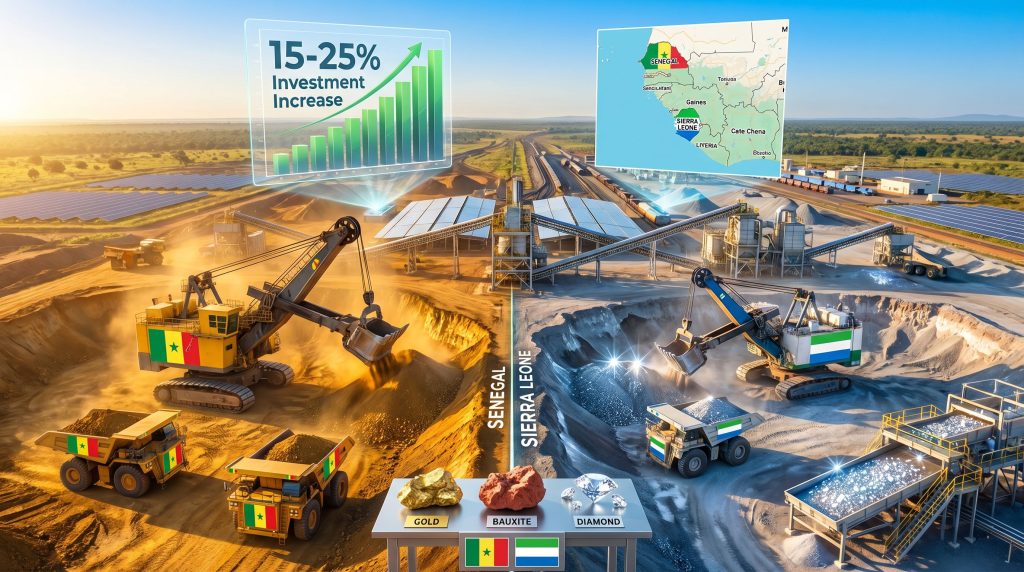
The bilateral Senegal and Sierra Leone Mining and Energy Treaty exemplifies this transformation. Signed on April 20, 2026, in Dakar during the International Forum on Peace and Security in Africa, the agreement establishes mechanisms for joint resource exploration, coordinated energy security planning, and harmonised regulatory frameworks.
When big ASX news breaks, our subscribers know first
Bilateral Resource Partnerships: Economic Integration Through Mineral Cooperation
West African nations pursue bilateral resource agreements to address fundamental challenges in mineral sector development. Traditional extractive models often leave producing countries with minimal value addition, while foreign multinational corporations capture the majority of economic benefits through processing and marketing operations conducted outside Africa.
Regional Mineral Endowments and Cooperation Potential
The geological foundations supporting bilateral cooperation are substantial across West Africa. Furthermore, these partnerships align with broader mining industry evolution trends emphasising regional cooperation.
Iron Ore Resources:
- Guinea: Over 20 billion tonnes of reserves in the Simandou range
- Sierra Leone: Marampa and Tonkolili deposits with established mining infrastructure
- Liberia: Mount Nimba complex extending across multiple borders
Bauxite Deposits:
- Guinea controls approximately 27% of global bauxite reserves
- Sierra Leone maintains smaller but commercially viable deposits
- Coordinated development could create integrated aluminum value chains with significant bauxite project economic benefits
Diamond Mining Operations:
- Sierra Leone's alluvial and kimberlite diamond resources
- Artisanal mining sectors requiring technical modernisation
- Shared marketing and certification systems reducing smuggling
Infrastructure Optimisation Through Bilateral Frameworks
The Economic Community of West African States (ECOWAS) provides the overarching legal framework enabling bilateral resource cooperation. The Revised Treaty of 1993 established protocols for cross-border trade in goods and services, including mineral products, while maintaining individual national sovereignty over natural resources.
Cross-border infrastructure projects become economically viable when multiple countries coordinate development:
- Shared port facilities reduce individual capital investment requirements
- Railway networks connecting mining areas to coastal export terminals
- Processing plants serving multiple mineral types from different countries
- Energy generation projects utilising shared watershed systems
Economic Transformation Scenarios Under Joint Resource Development
Accelerated Mining Development Framework
Joint mineral development creates opportunities for value-chain integration previously unavailable to individual countries. Sierra Leone's iron ore deposits, combined with Senegal's phosphate processing expertise, could establish regional mineral beneficiation capabilities. This approach reflects growing iron ore demand insights globally.
The West African Power Pool (WAPP), encompassing 19 member states including both Senegal and Sierra Leone, provides the institutional framework for energy cooperation. Mining and energy cooperation agreements like this demonstrate increasing regional integration. Established in 1999, WAPP facilitates cross-border electricity trading, though physical interconnection infrastructure remains limited between the two nations.
Senegal's Energy Profile (2024):
- Renewable capacity: 450 MW (solar, wind, hydroelectric combined)
- Natural gas dominance: 1,900 MW total grid capacity
- Policy target: 50% renewable energy by 2030
Sierra Leone's Energy Profile (2024):
- Total installed capacity: 440 MW
- Generation mix: 60% diesel, emerging renewable capacity
- Hydroelectric potential: 5,000 MW theoretical maximum
Regional Processing Hub Development
Bilateral cooperation enables establishment of specialised mineral processing centres serving multiple countries. Rather than exporting raw materials, integrated facilities could produce:
- Refined iron ore pellets for steel manufacturing
- Processed bauxite for aluminum production
- Cut and polished diamonds for jewellery markets
- Phosphate-based fertilisers for regional agricultural sectors
Regulatory Harmonisation: Investment Climate Enhancement Mechanisms
Current Regulatory Frameworks
Senegal's Mining Code (2003, amended 2016) establishes:
- Standard 5% mineral royalty rates
- Environmental Impact Assessment requirements for all projects
- Foreign investment protection protocols
- Local content requirements for major operations
Sierra Leone's Mines and Minerals Act (2009, amended 2012) provides:
- Comprehensive licensing frameworks for exploration and production
- Community development agreement requirements
- Environmental rehabilitation bonding systems
- Revenue transparency mechanisms
Harmonisation Benefits for International Investors
Regulatory alignment reduces due diligence costs and operational complexity for multinational mining corporations. However, implementing a comprehensive mining claims framework requires careful coordination. The United Nations Conference on Trade and Development (UNCTAD) research indicates that regulatory consistency can reduce project development timelines by 12-18 months, translating to significant cost savings.
Investment Flow Considerations:
| Factor | Individual Country Approach | Bilateral Framework Benefits |
|---|---|---|
| Permitting | Separate applications per country | Coordinated single-window processing |
| Environmental Compliance | Dual regulatory requirements | Unified standards and monitoring |
| Taxation | Potential double taxation | Coordinated fiscal policies |
| Labour Mobility | Cross-border work permit complexities | Harmonised employment frameworks |
Foreign direct investment in African mining reached $7.2 billion in 2023, down from $11.3 billion in 2021, according to UNCTAD data. West Africa captured approximately 18% of this investment, suggesting significant potential for growth through improved regulatory coordination.
Energy Security Integration and Cross-Border Projects
Renewable Energy Cooperation Potential
The Senegal River Basin provides substantial hydroelectric development opportunities spanning multiple countries. While no verified feasibility studies specific to Senegal-Sierra Leone joint development have been publicly released, the watershed systems offer documented potential for cross-border renewable energy projects.
Senegal's Renewable Energy Initiatives:
- Kaolack Solar Park and expanding photovoltaic installations
- Wind energy development along Atlantic coastal areas
- National Renewable Energy Policy targeting 50% renewable capacity by 2030
Sierra Leone's Energy Development Challenges:
- Approximately 40% of population lacks reliable electricity access
- Heavy reliance on expensive diesel generation
- Limited grid infrastructure requiring substantial investment
Grid Interconnection and Power Trading
Both nations participate in the West African Power Pool, which facilitates regional electricity trading. However, physical interconnection infrastructure between Senegal and Sierra Leone remains underdeveloped, limiting actual power exchange capabilities.
Cross-border energy projects under bilateral frameworks could include:
- Shared hydroelectric facilities on border watersheds
- Solar energy installations with power-sharing agreements
- Grid strengthening projects enabling bilateral electricity trade
- Energy storage systems supporting renewable energy integration
Technical Cooperation and Knowledge Transfer Mechanisms
Geological Survey Integration
Joint geological mapping initiatives can identify previously unknown mineral deposits along border regions. Shared exploration data reduces duplication costs while accelerating discovery timelines, particularly important for areas where geological formations cross political boundaries.
The Birimian Craton, a geological formation spanning multiple West African countries, contains significant gold mineralisation. Coordinated exploration programmes could optimise resource identification across national borders.
Human Capital Development
Technical training programmes addressing skills gaps in mining operations, geological survey techniques, and environmental management create sustainable competitive advantages. Joint training centres could serve:
- Mining engineering education utilising international best practices
- Environmental management certification programmes
- Equipment operation and maintenance specialised training
- Geological survey techniques and modern exploration methods
The next major ASX story will hit our subscribers first
Implementation Challenges and Risk Assessment
Regulatory Coordination Complexities
Constitutional approval processes in both nations may require significant time frames. Existing mining concessions might require renegotiation to align with new bilateral frameworks, creating potential investor uncertainty during transition periods.
Key Implementation Challenges:
- Revenue sharing formula development between participating countries
- Dispute resolution mechanism establishment for cross-border projects
- Infrastructure cost allocation agreements
- Market access prioritisation when export capacity constraints exist
Political Risk Factors
Leadership changes in either country could affect treaty continuity, particularly if new administrations prioritise different economic strategies. Regional security concerns, including instability in neighbouring countries, may impact long-term project viability.
International sanctions or trade restrictions affecting either country could disrupt bilateral cooperation mechanisms, requiring contingency planning for sustained operations. Recent strategic partnerships demonstrate growing regional cooperation despite these challenges.
Investment Evaluation Framework for Bilateral Resource Projects
Due Diligence Considerations
Investors evaluating opportunities under the Senegal and Sierra Leone Mining and Energy Treaty should assess:
Treaty Implementation Timeline:
- Ratification schedules in both national legislatures
- Detailed regulation development and publication
- Institutional capacity building for joint coordination bodies
Existing Concession Impacts:
- Current mining licence renegotiation requirements
- Environmental permit alignment processes
- Community agreement modification needs
Risk Assessment Methodologies
Political Stability Indicators:
- Electoral calendar alignment in both countries
- Historical treaty compliance records
- Regional diplomatic relationship trends
Economic Risk Factors:
- International commodity price volatility impacts
- Currency exchange rate management between countries
- Trade finance availability for cross-border projects
Long-term Economic Transformation Potential
Industrial Development Acceleration
Coordinated mineral processing capabilities could establish both nations as regional manufacturing hubs. Value-added production, rather than raw material exports, creates employment opportunities and technology transfer benefits extending beyond the mining sector. Furthermore, this aligns with emerging critical minerals strategy initiatives globally.
Manufacturing Integration Opportunities:
- Steel production facilities utilising Sierra Leone iron ore
- Fertiliser manufacturing from Senegal phosphate resources
- Construction materials production serving regional infrastructure projects
- Technology assembly operations supporting mining equipment maintenance
Export Diversification Strategies
Joint marketing strategies enable both nations to access new international markets previously unavailable to individual countries. Coordinated trade missions, shared diplomatic resources, and unified quality certification systems enhance global market penetration capabilities.
Market Access Enhancement:
- European Union markets through coordinated certification programmes
- Asian manufacturing centres requiring consistent mineral supplies
- Regional African markets through ECOWAS trade facilitation mechanisms
- Middle Eastern processing facilities seeking reliable raw material sources
The Senegal and Sierra Leone Mining and Energy Treaty represents a strategic shift toward African-led resource governance, balancing national sovereignty with regional economic integration. Success will depend on effective implementation mechanisms, sustained political commitment, and international investor confidence in the bilateral framework's stability and transparency.
Disclaimer: This analysis contains forward-looking statements and projections based on publicly available information. Investment decisions should be based on comprehensive due diligence and professional financial advice. Political and economic conditions may change, affecting the viability of cross-border resource projects discussed herein.
Exploring Opportunities in West African Resource Development?
Discovery Alert's proprietary Discovery IQ model delivers real-time alerts on significant mineral discoveries across global markets, instantly empowering subscribers to identify actionable opportunities ahead of the broader market. Begin your 14-day free trial today and secure your market-leading advantage in emerging resource sectors.