June 15, 2026
Strategic Gas Infrastructure: The Foundation of Australia's Industrial Evolution
Australia's manufacturing sector stands at a critical juncture where traditional energy-intensive processes are being reimagined through strategic partnerships between resource producers and heavy industry. This transformation reflects broader global patterns where energy security converges with industrial competitiveness, creating new frameworks for long-term supply relationships that extend far beyond conventional commercial transactions.
The emergence of decade-long gas supply commitments represents a fundamental shift in how Australia approaches industrial decarbonisation. Rather than pursuing rapid transitions that might compromise economic stability, the nation has embraced a measured approach that leverages existing hydrocarbon infrastructure to facilitate technological advancement while maintaining competitive positioning in global manufacturing markets.
This strategic positioning becomes particularly significant when examined through the lens of international competition. Resource-rich nations worldwide are discovering that their conventional energy assets can serve as bridges to lower-carbon industrial processes, providing competitive advantages during transitional periods while new technologies mature and achieve cost competitiveness.
When big ASX news breaks, our subscribers know first
Economic Architecture of Extended Gas Supply Commitments
Pricing Mechanisms and Market Dynamics
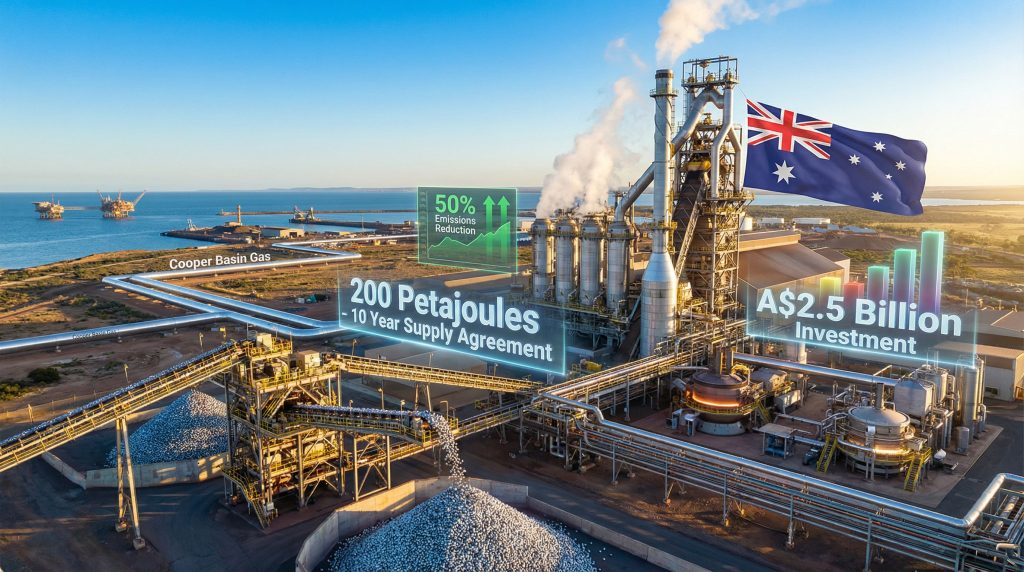
The structure of Australia's latest major industrial gas agreement reveals sophisticated risk-sharing mechanisms designed to balance multiple stakeholder interests. The 200 petajoule commitment over ten years represents approximately 20 petajoules annually, equivalent to 534 million cubic metres per year, demonstrating the scale required for industrial transformation projects.
Contemporary Australian gas supply agreements typically incorporate several key components:
- Indexed pricing structures that link costs to established market benchmarks
- Prepayment arrangements providing upstream capital for infrastructure development
- Volume flexibility parameters allowing for operational adjustments within predetermined ranges
- Long-term delivery commitments extending to 2030 and beyond
| Contract Element | Traditional Model | Modern Industrial Framework |
|---|---|---|
| Duration | 5-15 years | 10-20 years |
| Volume Tolerance | ±10-15% | ±5-10% |
| Price Reference | Oil-linked | Hybrid domestic/international |
| Capital Structure | Limited buyer investment | Significant prepayment components |
The Cooper Basin supply allocation of 20 petajoules per year represents approximately 30% of Santos' current production from this mature field, indicating substantial commitment to domestic industrial supply despite competing LNG export opportunities. This allocation decision reflects broader policy coordination between government industrial strategy and private sector resource development.
Regional Supply Chain Optimisation
The geographic positioning of Cooper Basin resources relative to industrial demand centres creates opportunities for supply chain efficiency that extend beyond immediate cost considerations. The ex-Moomba delivery structure leverages existing pipeline infrastructure, reducing transportation costs while providing supply security through established delivery mechanisms.
Regional economic benefits cascade through multiple channels:
- Infrastructure utilisation efficiency maximising value from existing pipeline networks
- Operational synergies between upstream production and downstream manufacturing
- Employment stability in both energy and industrial sectors
- Regional development multipliers supporting broader economic activity
Australia's domestic gas pricing environment presents unique challenges for industrial competitiveness. East coast gas markets typically see prices in the A$8-12 per gigajoule range, significantly higher than international competitors benefiting from lower-cost supply structures. However, understanding natural gas price trends becomes crucial for planning these long-term commitments.
Steel Manufacturing Revolution Through Gas-Based Technologies
Direct Reduced Iron Implementation Strategy
The transition from coal-based blast furnace operations to direct reduced iron technology represents one of Australia's most significant industrial transformation initiatives. The 1.2 million tonne per year capacity at Whyalla demonstrates how established steel production facilities can be reimagined using natural gas as a transitional fuel source.
Technical Process Overview:
Stage 1: Raw Material Preparation
- Magnetite ore sourcing from regional deposits
- Beneficiation processes upgrading ore quality to optimal specifications
- Pelletisation creating uniform feedstock for reduction processes
- Quality assurance systems ensuring consistent chemical composition
Stage 2: Gas-Based Reduction
- Natural gas reforming producing hydrogen and carbon monoxide
- High-temperature reduction reactions at 800-900°C
- Continuous process monitoring optimising gas utilisation efficiency
- Real-time adjustments maintaining product quality standards
Stage 3: Electric Arc Furnace Integration
- DRI charging into modern electric steelmaking equipment
- Reduced energy intensity compared to traditional blast furnace routes
- Enhanced metallurgical control enabling precise product specifications
- Flexible production capability accommodating market demand variations
Emissions Reduction Pathways
The 50% emissions reduction target associated with this technological transition reflects comprehensive lifecycle assessment approaches that account for multiple emission sources. Furthermore, this transformation involves several interconnected benefits:
- Direct emissions reduction through elimination of coking coal consumption
- Process efficiency improvements reducing overall energy intensity per tonne of steel
- Future flexibility enabling potential hydrogen integration as costs decrease
- Regional air quality benefits from reduced particulate and sulfur emissions
Gas consumption calculations for DRI operations typically require 15-22 gigajoules per tonne of final steel product, indicating that the 20 petajoule annual allocation provides sufficient feedstock for full-capacity operations with appropriate safety margins. This aligns with broader energy transition strategy considerations across industrial sectors.
Government Policy Integration and Industrial Support
Multi-Level Financial Support Framework
The A$2.5 billion government subsidy package supporting Whyalla's transformation exemplifies coordinated policy intervention designed to maintain industrial capacity while advancing decarbonisation objectives. This support structure encompasses multiple components:
Direct Financial Assistance:
- Capital grants for technology conversion infrastructure
- Operating subsidies during transition periods
- Research and development incentives for process optimisation
- Workforce retraining and skills development programmes
Regulatory Framework Adaptations:
- Streamlined environmental approval processes for approved technologies
- Planning permission acceleration for industrial modernisation projects
- Regional development initiatives maximising economic benefits
- Coordination mechanisms aligning federal and state objectives
Administrative Transition and Ownership Evolution
The steelworks' progression through administration into consortium acquisition illustrates complex industrial restructuring dynamics. The transition from GFG Alliance control through government administration to BlueScope-led consortium management demonstrates how public policy can facilitate private sector solutions whilst protecting regional employment and industrial capacity.
Critical considerations in this transition include:
- Asset valuation methodologies accounting for technology upgrade requirements
- Employment continuity provisions protecting workforce during ownership changes
- Operational continuity planning minimising production disruptions
- Community stakeholder coordination addressing regional development concerns
Market Competitiveness and Strategic Positioning
International Benchmarking and Cost Analysis
Australia's domestic gas pricing challenges become apparent when compared to international manufacturing competitors. The cost structure comparison reveals significant disparities:
| Region | Gas Price Range (USD/GJ) | Competitive Position |
|---|---|---|
| Australia East Coast | $6-9 | Cost pressure challenges |
| US Gulf Coast | $3-5 | Significant advantage |
| European Industrial | $6-10 | Variable competitiveness |
| Middle East | $1-3 | Substantial cost benefits |
These pricing differentials reflect Australia's dual market structure, where LNG export demand influences domestic pricing. The Santos gas sales deal South Australia represents an attempt to provide industrial users with supply certainty despite broader market pressures.
In addition, recent developments in industry innovation trends suggest that technological advancement may help offset these cost disadvantages through improved efficiency.
Supply Security Through Long-Term Contracts
Extended supply agreements serve multiple risk management functions beyond price predictability:
- Volume assurance protecting against supply shortages during peak demand periods
- Quality consistency ensuring gas specifications meet industrial process requirements
- Operational flexibility accommodating maintenance schedules and unexpected disruptions
- Financial planning certainty enabling long-term capital investment decisions
The coincidence of delivery commencement in March 2030 with the expiry of Santos' Horizon contract with Gladstone LNG demonstrates strategic portfolio rebalancing from export-focused supply toward domestic industrial markets.
Regional Development and Economic Transformation
Upper Spencer Gulf Industrial Hub Development
The Whyalla region's industrial transformation extends beyond steel production to encompass broader economic development objectives that create multiplier effects throughout the regional economy:
Primary Economic Benefits:
- Direct employment maintenance and creation in steel manufacturing operations
- Indirect employment generation in supporting service and supply industries
- Regional procurement opportunities for local suppliers and contractors
- Skills development initiatives creating transferable technical capabilities
Secondary Development Opportunities:
- Advanced manufacturing cluster development leveraging low-carbon steel production capabilities
- Research and development facility establishment focusing on industrial decarbonisation technologies
- Export infrastructure enhancement supporting expanded regional trade flows
- Educational and tourism facility development showcasing industrial innovation
However, these developments must also contend with energy export challenges that could impact long-term competitiveness.
Infrastructure Investment Cascading Effects
Major industrial energy partnerships typically generate infrastructure investment cascades that benefit broader regional development patterns:
- Transportation network upgrades improving connectivity for industrial and general use
- Utilities infrastructure enhancement supporting broader commercial and residential development
- Digital infrastructure investment enabling advanced manufacturing technologies and regional connectivity
- Community facility development supporting workforce requirements and quality of life improvements
The regional economic impact extends beyond immediate employment to include technology transfer, skills development, and supply chain strengthening that positions the Upper Spencer Gulf as a centre of industrial innovation.
The next major ASX story will hit our subscribers first
Technology Evolution and Future Scenarios
Hydrogen Integration Pathways
While current agreements focus on natural gas supply, future scenarios increasingly incorporate hydrogen transition possibilities that could further reduce emissions whilst maintaining industrial competitiveness:
Phase 1: Natural Gas Optimisation (2030-2035)
- Maximising efficiency of current DRI technology implementation
- Developing hydrogen-ready infrastructure components
- Establishing research partnerships for advanced technology development
- Creating regulatory frameworks supporting fuel transition flexibility
Phase 2: Hydrogen Blending Integration (2035-2040)
- Gradual introduction of hydrogen blending in reduction processes
- Infrastructure modifications supporting dual-fuel capabilities
- Economic modelling determining hydrogen cost competitiveness thresholds
- Workforce development programmes for hydrogen-based operations
Phase 3: Full Hydrogen Economy Integration (2040+)
- Complete transition to hydrogen-based steel production processes
- Regional hydrogen hub development utilising renewable energy resources
- Export market development for hydrogen-based steel products
- Technology leadership positioning in global decarbonisation markets
Technological Risk Assessment Framework
Successful long-term energy partnerships require comprehensive risk assessment addressing multiple technological and commercial dimensions:
Technical Risk Factors:
- Process technology performance reliability over extended operational periods
- Supply chain disruption potential affecting production continuity
- Regulatory evolution impacts on operational and financial parameters
- Environmental compliance requirements changes over contract terms
Commercial Risk Considerations:
- Market demand volatility affecting industrial output requirements
- International competitiveness maintenance challenges
- Currency exchange impacts on global manufacturing market positioning
- Alternative technology development threatening current process approaches
Investment Implications and Strategic Outlook
Capital Allocation in Energy Transition
The Santos gas sales deal South Australia represents broader capital allocation trends across Australia's energy and industrial sectors, where investment decisions must balance traditional asset optimisation with emerging technology development:
Upstream Investment Priorities:
- Field development optimisation maximising existing asset value and longevity
- Infrastructure enhancement supporting extended-term supply commitments
- Technology advancement reducing production costs and environmental impacts
- Portfolio diversification balancing conventional and transitional energy sources
Downstream Industrial Investment:
- Manufacturing technology modernisation supporting competitive positioning in global markets
- Supply chain integration enhancing operational efficiency and cost management
- Market development initiatives expanding customer base diversity and resilience
- Sustainability certification programmes accessing premium market segments
The strategic alignment between upstream gas production capabilities and downstream industrial transformation requirements creates opportunities for value creation that extend beyond traditional buyer-seller relationships into integrated development partnerships.
Market Psychology and Investment Sentiment
Industry sentiment regarding gas-led steel production strategies reflects broader debates about optimal decarbonisation pathways. Consequently, sceptical voices, including analysis from Climate Energy Finance, highlight concerns about Australia's gas price competitiveness relative to international benchmarks, suggesting that supply agreements alone may not resolve underlying cost structure challenges.
This scepticism creates investment implications across multiple dimensions:
- Technology risk assessment requiring careful evaluation of long-term economic viability
- Policy continuity considerations affecting government support sustainability
- Market positioning strategies addressing competitive pressures from lower-cost international producers
- Alternative pathway evaluation considering hydrogen, electrification, and other decarbonisation approaches
The final gas supply agreement deadline of June 30, 2026 provides a clear timeline for resolving commercial terms and addressing remaining technical and financial considerations, offering investors and stakeholders clarity on project progression milestones.
Forward-Looking Strategic Considerations
Australia's approach to industrial energy partnerships through long-term gas supply commitments reflects broader strategic considerations about maintaining manufacturing competitiveness during global energy transitions. The success of this model depends on multiple factors converging effectively:
- Technology performance meeting promised emissions reduction and cost targets
- Market demand sustainability for steel products produced through transitional processes
- Policy framework stability supporting continued government involvement and subsidy provision
- International competitive positioning maintaining market share despite cost structure challenges
For instance, developments showcased at the global innovation expo demonstrate emerging technologies that could influence these strategic calculations. Moreover, the 10-year gas supply deal with Whyalla steelworks represents a significant test case for this approach.
The Santos gas sales deal South Australia serves as a significant test case for this approach, with implications extending beyond the immediate participants to influence broader Australian industrial policy and energy market development strategies.
Please note: This analysis involves forecasting and speculation about future market conditions, technology performance, and policy developments. Industrial energy partnerships involve significant technical and commercial risks that may affect actual outcomes. Readers should conduct independent due diligence before making investment or business decisions based on this information.
Looking to Capitalise on Australia's Industrial Transformation?
Discovery Alert provides instant notifications on significant ASX mineral discoveries, powered by its proprietary Discovery IQ model, helping investors identify opportunities in the evolving energy and resources sector. Explore how major mineral discoveries have generated substantial returns by visiting Discovery Alert's dedicated discoveries page and begin your 14-day free trial today to secure your market-leading advantage.