
August 22, 2026
Strategic Geographic Positioning in Energy Infrastructure Networks
Geopolitical tensions across global energy corridors have reshaped how infrastructure planners evaluate critical chokepoint vulnerabilities. The UAE Fujairah terminals resume loading after attacks highlights the complex interplay between geographic positioning, storage capacity optimization, and transit route diversification in energy security frameworks. This incident reveals fundamental questions about resilience in an increasingly volatile world, particularly when considering the broader OPEC production impact on global supply chains.
Energy infrastructure resilience depends heavily on geographic positioning relative to major transit corridors. Facilities positioned outside primary chokepoints gain strategic value during periods of heightened conflict, particularly when traditional routing becomes compromised by military activities or defensive operations.
Terminal Infrastructure Capacity and Strategic Value
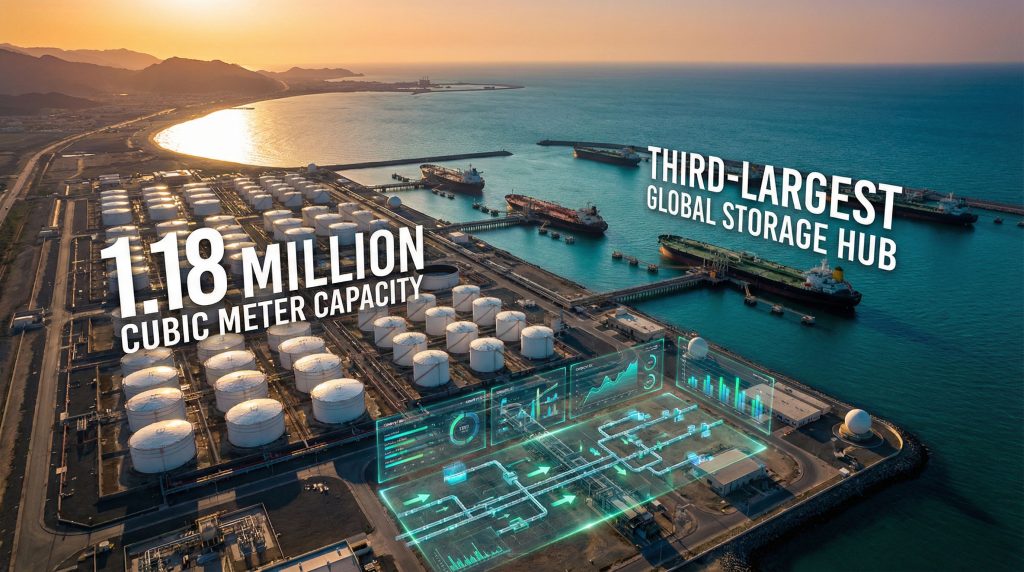
Modern energy storage hubs operate as complex integrated systems rather than isolated facilities. The 1.18 million cubic meter storage capacity at major Middle Eastern terminals represents more than simple volumetric holdings. It functions as a buffer mechanism for global supply chain continuity during disruption periods.
The world's third-largest crude and products storage hub status carries implications beyond regional significance. Such facilities serve as critical nodes where East-of-Suez energy flows can be temporarily held, redistributed, or rerouted based on changing geopolitical conditions and market demands.
Key Infrastructure Components:
• Oil Terminal 1 (OT1) – Primary loading operations with multiple berth configurations
• VLCC jetty systems – Specialised infrastructure for Very Large Crude Carrier operations
• Integrated storage networks – Vopak Horizon and VTTI facility coordination
• Bunker fuel supply stations – Critical refuelling points for Hormuz transit vessels
Storage-to-throughput ratio optimisation becomes particularly critical during conflict scenarios. Facilities maintaining approximately two weeks of production storage capacity face acute vulnerability when export disruptions extend beyond short-term operational constraints.
When big ASX news breaks, our subscribers know first
Attack Vector Analysis and Infrastructure Vulnerability Assessment
Contemporary threats to energy infrastructure have evolved beyond direct targeting to include secondary effects from defensive operations. The classification of incidents as falling debris following successful interception represents a new category of operational risk that infrastructure planners must incorporate into resilience models.
Furthermore, the UAE Fujairah terminals resume loading after attacks demonstrates how terminal disruptions affect broader regional stability. This incident coincides with global challenges, including the US oil production decline and ongoing supply chain crisis affecting critical resources.
Operational Impact Patterns
March 2026 Incident Timeline:
| Date | Event | Infrastructure Impact | Recovery Status |
|---|---|---|---|
| March 9 | Drone debris strikes facilities | Selective terminal damage | Phased restoration initiated |
| March 11-12 | Regional attacks expand to Salalah | Geographic escalation confirmed | Alternative routing activated |
| March 12+ | Selective operations resume | Limited berth availability | Partial capacity restored |
Force majeure declarations following such incidents create cascading contractual implications across supply agreements. The linguistic framing of disruptions as falling debris rather than direct attacks affects how counterparties interpret obligation fulfilment and liability allocation.
Damage Assessment Categories:
• Primary infrastructure – Core loading systems and berth configurations
• Secondary systems – Storage tanks and processing equipment
• Administrative constraints – Port permission protocols and security clearances
• Product-specific impacts – Refined versus crude oil facility segregation
Geographic Escalation Patterns
The expansion of targeting to facilities 400+ kilometres southeast indicates a strategic shift toward broader infrastructure vulnerability rather than concentrated chokepoint pressure. This geographic diversification of threats requires corresponding adjustments in risk assessment methodologies.
Regional escalation patterns suggest systematic targeting of alternative routing options. Consequently, this effectively reduces the number of viable bypass corridors available during primary transit route disruptions. However, the enhanced security measures implemented across regional ports demonstrate adaptive responses to emerging threats.
Phased Recovery and Operational Continuity Frameworks
Terminal recovery operations following infrastructure attacks demonstrate the importance of prioritised restoration strategies. Rather than pursuing all-or-nothing facility status, successful recovery frameworks implement selective berth-by-berth restoration based on throughput capacity optimisation.
Recovery Timeline Analysis
Facility Restoration Priorities:
• FOTT OT1 Berths – Full operations within 72 hours (highest priority)
• VLCC Jetty – Operational within 48 hours (mega-tanker capacity)
• OT2 Berths – Partial operations by 96+ hours (secondary capacity)
• Specialised terminals – Extended timelines based on damage severity
The rapid 48-72 hour return to operations at core facilities indicates that damage was contained to secondary systems rather than primary loading infrastructure. Alternatively, superficial damage permitted immediate operational restart with reduced capacity.
Alternative Supply Chain Mechanisms
Barge-Based Contingency Operations:
Floating storage assets provide secondary resilience when fixed terminal infrastructure becomes compromised. Limited bunker supply operations continued through products stored in barges, indicating that:
• Fixed infrastructure – Estimated 70-80% of normal throughput capacity
• Floating storage – Estimated 20-30% of reduced-throughput capacity
• Combined systems – Degraded but functional operational continuity
Administrative security protocols add operational friction beyond technical restoration requirements. Port permission requirements for barge operations suggest policy optimisation could enhance recovery speed during future incidents.
Regional Supply Network Disruption Impacts
The broader implications of terminal attacks extend far beyond individual facility operations. Global refinery runs declining by 4.3 million barrels per day in March 2026 compared to February levels demonstrate the interconnected nature of regional infrastructure vulnerabilities.
Middle East Gulf refineries bore disproportionate burden with approximately three-quarters of run cuts concentrated in the region. This geographic concentration of impacts reflects the systemic vulnerability of energy infrastructure clustering in politically volatile areas.
In addition, the incident highlights how the UAE Fujairah terminals resume loading after attacks affects global energy networks. This disruption compounds existing challenges in Australia energy exports and the broader impact of trade tariffs impact on international supply chains.
Refinery Capacity at Risk
Critical Facilities Affected:
• Saudi Arabia's Ras Tanura – 550,000 b/d capacity (attacked, operational status compromised)
• Bahrain's Sitra – 405,000 b/d capacity (attacked, partial/full shutdown)
• UAE's Ruwais – 817,000 b/d capacity (attacked, operational status unclear)
Approximately 4 million barrels per day of crude refining capacity remained shut or at risk of closure. This represents significant supply chain vulnerability concentrated within a relatively small geographic area.
Expected recovery forecasts suggested Middle East refineries returning to 10 million b/d by May 2026, potentially exceeding pre-crisis February rates of 9.8 million b/d. This recovery projection indicates that infrastructure hardening and rapid restoration capabilities can potentially enhance regional capacity beyond pre-incident levels.
Inventory Limitation Constraints
Export-oriented refineries in the Middle East Gulf maintain capacity of two weeks of production at best, creating acute vulnerability to export disruption scenarios. This constraint contrasts sharply with OECD strategic reserves typically maintaining 90+ day coverage or major consumer country inventory buffers.
The limited storage capacity relative to production rates means that even brief export disruptions can force production shutdowns. Consequently, this amplifies the economic impact of infrastructure attacks beyond the immediate physical damage.
Risk Premium Calculations and Market Response Mechanisms
Energy markets must incorporate operational risk premiums reflecting the probability and duration of terminal disruptions. Global oil demand declining only 60,000 b/d in March 2026 compared to supply-side disruptions of 4.3 million b/d refinery run cuts indicates price pressures become substantial when supply availability becomes the binding constraint.
Geographic Risk Distribution
OECD Asia-Oceania Impact Analysis:
• Crude runs cut by approximately 500,000 b/d to 5.4 million b/d
• Regional reduction of approximately 8% from normal operations
• Downstream availability constraints potentially exceeding refinery-side impacts
Non-OECD Other Asia Response:
• Run cuts of approximately 430,000 b/d to 10.4 million b/d
• Regional reduction of approximately 4% from baseline operations
• Import dependency – over 60% of crude requirements from Middle East sources
Asian refineries receiving more than 60% of crude from Middle East sources face acute exposure to regional infrastructure vulnerabilities. Therefore, this necessitates supply diversification strategies and alternative sourcing arrangements.
The next major ASX story will hit our subscribers first
Long-Term Infrastructure Resilience and Investment Frameworks
Terminal hardening and defence integration represent critical components of long-term infrastructure resilience planning. The integration of air defence systems with port operations demonstrates the evolution toward militarised energy infrastructure in volatile regions.
Strategic Infrastructure Investment Priorities
Multi-Terminal Operational Coordination:
Modern resilience models require coordination across multiple terminal facilities rather than relying on single-point-of-failure infrastructure. Geographic risk distribution and redundant facility development become essential for maintaining operational continuity during extended conflict periods.
Infrastructure Protection Investment Frameworks:
• Physical hardening – Reinforced storage systems and critical infrastructure protection
• Defensive integration – Air defence coordination with operational requirements
• Redundant systems – Multiple facility coordination and backup capacity development
• Emergency protocols – Rapid response and recovery procedure standardisation
Supply chain diversification imperatives extend beyond geographic distribution to include alternative routing development and regional storage capacity expansion planning. Energy security infrastructure investment models must balance operational efficiency with resilience requirements in an increasingly complex threat environment.
Investment Risk Considerations: Infrastructure resilience planning must account for the evolving nature of threats, including secondary effects from defensive operations and the geographic expansion of targeting beyond traditional chokepoints.
The implications of UAE Fujairah terminals resume loading after attacks extend beyond immediate operational recovery to fundamental questions about energy infrastructure vulnerability in an interconnected global system. Future infrastructure development must integrate security considerations from the design phase rather than retrofitting protection measures after vulnerabilities become apparent through actual attacks.
Disclaimer: This analysis contains forward-looking statements and speculation about future market conditions, geopolitical developments, and infrastructure scenarios. Actual outcomes may differ significantly from projections discussed. Readers should conduct independent analysis and consult relevant specialists before making investment or operational decisions based on this content.
Looking to Capitalise on Energy Infrastructure Disruptions?
Discovery Alert's proprietary Discovery IQ model delivers real-time alerts on significant ASX mineral discoveries, including critical energy infrastructure materials like lithium, uranium, and rare earth elements that become increasingly valuable during global supply chain disruptions. Begin your 14-day free trial today to position yourself ahead of the market and discover why major mineral discoveries can generate substantial returns by exploring our dedicated discoveries page.