June 22, 2026
Strategic Geographic Positioning Drives Investment Appeal
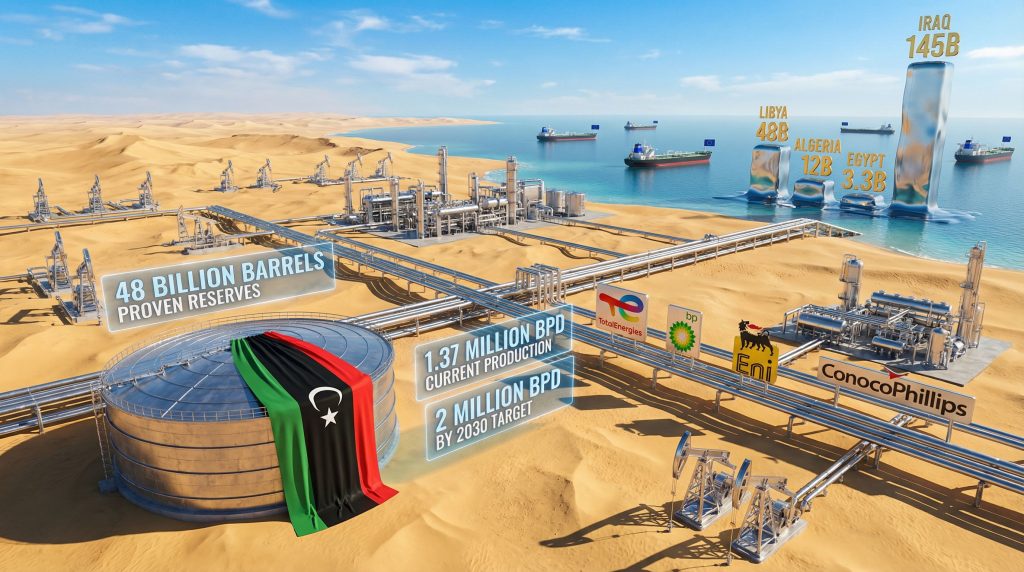
Libya's Mediterranean coastline provides direct access to European energy markets, positioning the nation as a critical alternative to traditional Middle Eastern suppliers. The country maintains Africa's most substantial proven crude oil reserves at 48 billion barrels, representing a cornerstone resource base that has attracted renewed Western attention since 2022. Furthermore, recent developments suggest this positioning will become increasingly valuable as global energy dynamics continue evolving.
Geographic advantages extend beyond mere proximity to consumer markets. Libya's existing pipeline infrastructure connects directly to European distribution networks, reducing transportation costs and delivery timeframes compared to Gulf producers. The 85-kilometer offshore positioning of major gas fields like Bahr Essalam creates operational efficiencies, with water depths around 650 feet facilitating cost-effective extraction using modern deepwater drilling technologies.
Oil Quality and Market Demand Characteristics
The technical specifications of Libyan crude oil represent a significant competitive advantage. Production focuses primarily on high-quality light, sweet crude oil, particularly valued by Mediterranean and Northwest European refineries operating under strict environmental regulations. This crude grade commands premium pricing due to reduced refining complexity and lower sulfur content.
Historical production patterns demonstrate Libya's capacity for substantial output increases. Before 2011, the country produced approximately 1.65 million barrels per day, with peak levels exceeding 3 million bpd during the late 1960s. Current production approaches 1.37 million bpd, representing the highest levels since mid-2013, though political disruptions have periodically reduced output to as low as 500,000 bpd.
Enhanced Oil Recovery (EOR) techniques offer additional expansion potential. Libya's National Oil Corporation has identified opportunities to increase capacity by approximately 775,000 bpd through EOR implementation at existing fields, representing significant upside potential without requiring extensive new field development. Additionally, the OPEC production impact on regional dynamics continues to influence strategic planning.
When big ASX news breaks, our subscribers know first
Major Western Energy Companies Establish Strategic Positions
European energy giants have positioned themselves at the forefront of Libya's investment resurgence through substantial capital commitments and operational expansions. The scale and duration of these investments signal confidence in Libya's political trajectory and regulatory stability. Moreover, this represents a significant shift from earlier periods of limited Western engagement.
| Company | Primary Investment Focus | Key Assets | Strategic Commitment |
|---|---|---|---|
| TotalEnergies | Field Development | Waha, Sharara, Mabruk fields | $20B over 25 years |
| Eni | Offshore Gas Discovery | Bahr Essalam, BESS-2, BESS-3 | Deepwater drilling program |
| BP | Exploration Partnership | Sirte Basin operations | 16-well drilling commitment |
| ConocoPhillips | Production Enhancement | Waha Oil joint venture | 850,000 bpd capacity target |
TotalEnergies' Comprehensive Development Strategy
TotalEnergies has established the most extensive Western footprint through its 37.5% stake in the Mabruk oil field and broader development commitments across multiple assets. The company's 25-year development agreement, valued at approximately $20 billion, encompasses production increases across Waha, Sharara, Al Jurf, and Mabruk fields totaling at least 175,000 bpd.
The restart of Mabruk field production in 2026 represents a significant operational milestone. Located approximately 130 kilometers south of Sirte, this field ceased production in 2015, creating an 11-year production gap. The restart required substantial infrastructure restoration and workforce mobilization, demonstrating TotalEnergies' confidence in sustained operational conditions.
Priority development of the Waha-concession North Gialo and NC-98 oil fields targets combined estimated capacity of at least 350,000 bpd. This sequenced approach enables rapid production increases while minimizing political risk exposure through phased investment deployment. Consequently, this development pattern reflects broader market trends analysed in our oil price rally analysis.
Eni's Deepwater Innovation Leadership
Italian energy giant Eni has pioneered Libya's return to deepwater drilling capabilities after a nearly two-decade absence. The company's recent offshore gas discoveries near Bahr Essalam demonstrate advanced technical capabilities and operational confidence in sustained field operations.
Technical Achievement: The BESS-2 and BESS-3 discoveries contain preliminary estimates exceeding 1 trillion cubic feet of gas in place, positioning these assets among Libya's most significant recent energy finds.
Eni's fast-track development strategy leverages existing infrastructure through tie-ins to Bahr Essalam facilities. The 16-kilometer proximity of new discoveries to existing processing infrastructure reduces capital expenditure and accelerates production timelines, demonstrating efficient field development methodology.
BP-Eni Joint Venture Structure
The BP-Eni partnership represents a balanced approach to Libyan market entry, with each company holding 42.5% stakes and the Libyan Investment Authority maintaining 15% ownership. This structure provides international operational expertise while ensuring sovereign Libyan participation in project governance.
The joint venture commitment to drill 16 additional wells across onshore and offshore areas indicates substantial capital allocation over multiple operational phases. BP's memorandum of understanding to evaluate redevelopment options for the Sarir and Messla onshore fields expands this partnership's scope into Libya's most established producing regions.
Investment Confidence Signals Through Long-Term Commitments
The duration and scale of recent western investments in Libyan oil provide quantitative measures of perceived political and operational stability. Multi-decade contracts requiring sustained security guarantees indicate collective assessment of improved conditions compared to the post-2011 period. However, these commitments also reflect careful analysis of market volatility patterns examined in our oil price crash review.
Contract Duration as Stability Indicator
TotalEnergies' 25-year development agreement represents the longest-term Western energy commitment to Libya since the 2011 conflict. This contract structure requires certainty about political continuity, regulatory consistency, and security conditions across multiple government cycles and potential leadership transitions.
Revenue projections for this partnership, while not publicly detailed, likely exceed hundreds of billions of dollars over the contract term based on production targets and historical crude pricing patterns. At potential 850,000 bpd production increases and average Brent crude prices, the mathematical implications support multi-hundred billion revenue scenarios.
Infrastructure Investment Momentum
Beyond extraction activities, downstream infrastructure development signals confidence in Libya's long-term energy sector viability. U.S.-based technology firm KBR secured contracts for project management and technical services supporting the South Refinery Project in Ubari, southwest Libya.
This refinery development, part of broader infrastructure advancement efforts, indicates Western confidence extends beyond upstream production into processing and distribution capabilities. Such investments require longer payback periods and sustained operational environments compared to extraction-focused projects. Furthermore, this aligns with broader investment patterns described in our analysis of tariff impact on investments.
Licensing Round Participation Metrics:
- 22 offshore and onshore blocks available for initial bidding
- Over 40 international oil companies registered interest
- $3-4 billion estimated initial investment commitments
- First licensing round in nearly two decades
Deepwater Drilling as Confidence Measure
The resumption of deepwater offshore operations represents perhaps the strongest indicator of Western confidence in Libya's stability trajectory. These projects require long-term capital commitments and security guarantees that energy companies avoid unless political risk assessments indicate substantial improvement.
Eni's deepwater drilling in the Sirte basin's Matsola exploration prospect marks the first such operation in Libya for approximately 17-20 years. This technical milestone required advanced equipment deployment, specialised workforce mobilisation, and multi-year operational planning.
The Mediterranean Sea exploration in Contract Area 38/3 demonstrates restoration of technical capabilities not exercised in Libya since approximately 2006-2007. Such operations require sustained political stability and regulatory predictability to justify the substantial capital investments involved.
Infrastructure Modernisation Supporting Investment Growth
Libya's energy infrastructure development extends beyond traditional extraction operations to encompass comprehensive supply chain modernisation. These improvements create operational efficiencies while reducing political risk exposure through diversified revenue streams and enhanced technical capabilities.
Subsea Infrastructure Development
Modern subsea tie-in strategies demonstrate cost-efficient field development approaches suited to Libya's offshore resources. Eni's development plan for BESS-2 and BESS-3 discoveries utilises proximity to existing Bahr Essalam infrastructure to minimise capital requirements and accelerate production timelines.
This fast-track development trajectory reduces project exposure to potential political disruptions while maximising return on investment through shared processing facilities. The 16-kilometer distance between new discoveries and existing infrastructure enables cost-effective subsea connections using proven technologies.
Subsea development techniques also reduce surface infrastructure requirements, limiting exposure to security concerns while maintaining operational flexibility. This approach proves particularly valuable in regions where political conditions may affect onshore operations, especially considering factors highlighted in our oil price trade impacts analysis.
Downstream Market Integration
Western companies have expanded beyond upstream operations to establish comprehensive supply chain positions. Vitol's securing of 5-10 gasoline cargoes monthly plus diesel contracts represents systematic downstream market penetration replacing previous Russian import dependencies.
Additional downstream participants including Trafigura, OMV, BGN, and Iplom have established supply relationships, creating competitive market conditions and reducing single-supplier dependencies. This diversification improves market resilience while providing alternative revenue streams for Libyan energy operations.
The shift from Russian fuel imports toward Western suppliers aligns with broader European energy security objectives while creating sustainable market relationships. These long-term supply agreements provide predictable revenue streams supporting continued infrastructure investment.
Processing Capacity Enhancement
Refinery modernisation projects support domestic energy security while creating export opportunities. The South Refinery Project in Ubari represents comprehensive infrastructure advancement beyond extraction-focused investments.
KBR's involvement in project management and technical services demonstrates Western technology transfer into Libya's processing capabilities. These developments reduce import dependencies while creating domestic value-added production capabilities.
Enhanced processing capacity also supports product quality improvements, enabling access to premium export markets with higher margins than crude oil sales. This vertical integration strengthens Libya's energy sector competitiveness while reducing external supply dependencies.
Geopolitical Realignment Influencing Western Investment Decisions
Libya's strategic importance has intensified following Russia's February 2022 invasion of Ukraine, as Western nations prioritise energy supply diversification away from Russian-controlled resources. This geopolitical shift creates sustained demand for alternative energy sources, positioning Libya as a critical component of European energy security strategies.
Post-Ukraine War Energy Security Imperatives
European Union energy diversification objectives have elevated Libya's strategic significance beyond traditional commercial considerations. The Mediterranean supply route advantages provide shorter shipping distances compared to Middle Eastern alternatives, reducing transportation costs and delivery vulnerabilities.
Libya's relative political stability compared to major Middle Eastern producers creates additional appeal for Western energy security planners. While Libya faces ongoing governance challenges, recent investment patterns suggest Western assessment of political risk has improved relative to other regional alternatives.
The urgency of non-Russian energy alternatives has accelerated Western engagement timelines, creating opportunities for rapid market entry and partnership development. This accelerated engagement benefits both Western energy security objectives and Libyan economic development priorities.
Regulatory Framework Improvements
Libya has implemented several measures to enhance foreign investment attractiveness, including updated production-sharing terms raising contractor returns to approximately 35.8%. These improved financial terms reflect competitive positioning relative to other North African energy producers.
Enhanced legal protections for international operators provide greater certainty for long-term capital commitments. Streamlined licensing procedures reduce bureaucratic barriers while maintaining appropriate oversight of foreign investment activities.
The Libyan government's commitment to achieving 2 million bpd production targets by 2030 aligns with Western supply diversification objectives, creating mutual incentives for sustained partnership development. This production target represents nearly 50% increase from current output levels.
Strategic Classification Benefits
Libya's positioning within broader European energy security frameworks provides policy support for Western investment activities. While not constituting direct project-specific support, these strategic classifications facilitate financing and regulatory approvals for energy investments.
The alignment between Libyan production expansion objectives and European supply diversification needs creates favourable conditions for sustained partnership development. This mutual dependence reduces political risk while ensuring continued Western engagement.
Mediterranean energy hub development strategies position Libya as a critical component of regional supply networks, providing long-term strategic value beyond immediate commercial returns. This strategic positioning supports continued investment even during periods of political uncertainty.
Risk Assessment and Operational Challenges
Despite increased western investments in Libyan oil and improved geopolitical positioning, Libya continues to face significant governance and operational challenges that could impact long-term project sustainability. Understanding these risk factors remains critical for evaluating investment prospects and operational planning.
What are the main political governance challenges?
Libya's dual government structure creates ongoing uncertainty regarding resource allocation and revenue distribution mechanisms. The absence of unified political authority complicates long-term contract enforcement and regulatory consistency.
Critical Risk Factor: The lack of a functioning joint technical committee for oil revenue distribution represents a fundamental governance gap that could trigger future conflicts affecting energy operations.
Key Governance Challenges:
- Unresolved oil revenue distribution mechanisms between competing authorities
- Central Bank of Libya control disputes affecting payment systems
- Absence of unified budget framework meeting regional stakeholder needs
- Limited coordination between rival political factions on energy policy
The failure to implement joint technical committee recommendations from the 2020 interim peace agreement indicates ongoing political dysfunction. This committee was intended to oversee oil revenues and ensure fair distribution of resources, but no progress has been made toward its establishment.
Operational Security Considerations
Recent incidents at major production facilities highlight ongoing operational vulnerabilities. The Sharara field fire caused by pipeline infrastructure issues demonstrates how technical failures can be exacerbated by security concerns and maintenance challenges.
Historical production volatility provides context for ongoing operational risks. Libya's output has fluctuated dramatically from 20,000 bpd during the civil war depths to current levels of 1.37 million bpd, with periodic shutdowns reducing production to 500,000 bpd during political disputes.
Security Risk Factors:
- Militia control over key oil installations
- Pipeline infrastructure vulnerability to sabotage
- Workforce security concerns affecting operations
- Equipment theft and facility damage during conflicts
Ongoing factional conflicts continue to affect field operations, particularly in regions where territorial control remains disputed. These security challenges require substantial risk mitigation strategies and may limit operational efficiency in certain areas.
Financial and Contractual Risks
The absence of unified budget mechanisms creates uncertainty regarding contract payments and revenue sharing arrangements. Without functioning joint technical committees, long-term financial commitments face potential disruption from political disputes.
Currency stability concerns and banking system limitations may complicate international financial transactions. These issues require careful structuring of investment agreements and payment mechanisms to ensure operational continuity.
Contract enforcement mechanisms remain uncertain given competing legal authorities and unclear jurisdictional frameworks. This legal ambiguity increases transaction costs and may limit the scope of potential investments.
The next major ASX story will hit our subscribers first
Production Scenarios and Investment Returns Through 2030
Libya's energy sector development presents multiple potential trajectories depending on political stability, infrastructure investment success, and global market conditions. Understanding these scenarios enables better assessment of western investments in Libyan oil prospects and strategic positioning.
Optimistic Growth Trajectory Analysis
Under favourable conditions, Libya could achieve the 2 million bpd production target by 2030 through successful implementation of enhanced recovery techniques and infrastructure modernisation. This represents approximately 46% increase from current production levels.
Key Growth Drivers:
- 850,000 bpd capacity increase from TotalEnergies-ConocoPhillips Waha development
- 775,000 bpd potential from Enhanced Oil Recovery at existing fields
- 1+ trillion cubic feet gas production from Eni's BESS discoveries
- Infrastructure modernisation reducing production disruptions
The optimistic scenario assumes successful political reconciliation enabling unified energy policy implementation. This would require establishment of joint technical committees and resolution of revenue distribution mechanisms currently blocking comprehensive development.
Offshore gas discoveries could contribute substantially to both domestic energy security and export revenue generation. The fast-track development timeline for BESS-2 and BESS-3 enables rapid production increases supporting overall sector growth objectives.
Conservative Investment Return Projections
A more cautious assessment focuses on maintaining current 1.37 million bpd production levels while gradually expanding operations in politically stable regions. This approach emphasises risk mitigation over aggressive expansion targets.
Conservative scenarios prioritise highest-quality reserves in secure locations rather than pursuing maximum production increases. This strategy reduces political risk exposure while ensuring sustainable returns on western investments in Libyan oil.
Risk-Adjusted Development Priorities:
- Offshore operations with reduced security exposure
- Phased investment approach allowing operational flexibility
- Focus on existing infrastructure rehabilitation over new field development
- Emphasis on premium crude grades commanding higher prices
The conservative approach acknowledges ongoing political uncertainties while positioning for gradual expansion as conditions improve. This strategy aligns with Western energy companies' risk management requirements while maintaining market presence.
Infrastructure Investment Impact Modelling
Successful infrastructure modernisation could enable production stability even during political disruptions. The South Refinery Project and pipeline improvements reduce single-point-of-failure vulnerabilities affecting overall system reliability.
Downstream integration through refinery capacity expansion creates domestic value-added production reducing import dependencies. This vertical integration improves sector resilience while generating additional revenue streams for reinvestment.
Enhanced processing capabilities also enable access to premium product markets with higher margins than crude oil exports. This market positioning improves profitability while reducing dependence on volatile crude pricing.
Regional Competitive Positioning and Market Dynamics
Libya's strategic positioning within North African energy markets creates both competitive advantages and challenges relative to neighbouring producers. Understanding these dynamics enables better assessment of Western investment sustainability and growth prospects.
Mediterranean Energy Hub Development
Libya's direct pipeline access to European markets provides significant competitive advantages over more distant suppliers. The Mediterranean location reduces shipping costs and delivery times compared to Gulf producers, creating sustainable cost advantages.
Transportation cost differentials become increasingly important as European energy security priorities emphasise supply diversification. Libya's proximity enables competitive pricing while maintaining acceptable profit margins for Western energy companies.
Strategic Geographic Advantages:
- 85-kilometer offshore positioning reducing transportation costs
- Direct European pipeline connections
- Mediterranean Sea access enabling multiple export routes
- Proximity to major European refining centres
The development of Libya as a Mediterranean energy hub aligns with broader European infrastructure strategies emphasising supply route diversification. This strategic positioning provides long-term competitive advantages supporting continued Western investment.
Competitive Analysis with Regional Producers
| Production Factor | Libya | Algeria | Egypt | Iraq |
|---|---|---|---|---|
| Proven Reserves | 48B barrels | 12.2B barrels | 4.4B barrels | 145B barrels |
| Current Output | 1.37M bpd | 1.0M bpd | 0.6M bpd | 4.1M bpd |
| Political Stability | Moderate | Moderate | High | Low |
| Western Access | Improving | Limited | Good | Restricted |
| Infrastructure Quality | Moderate | Good | Good | Poor |
Libya's 48 billion barrel reserve base provides substantial competitive advantages over regional alternatives, despite current political challenges. The combination of large reserves and moderate political conditions creates attractive investment opportunities relative to more stable but resource-limited alternatives.
Production capacity potential significantly exceeds current output levels, indicating substantial upside potential compared to regional producers operating closer to maximum sustainable capacity. This growth potential justifies Western investment despite political risks.
Market Access and Distribution Networks
Libya's established pipeline infrastructure provides immediate access to European distribution networks without requiring new transportation investments. This existing infrastructure represents significant competitive advantages over potential alternatives requiring new pipeline or shipping route development.
The Bahr Essalam offshore gas field enables direct supply to Italian markets through existing subsea infrastructure. This established relationship provides predictable revenue streams supporting continued investment in capacity expansion.
European energy companies' existing partnerships in Libya create preferential access to production and distribution opportunities. These established relationships reduce market entry costs while providing operational expertise for efficient field development.
Long-Term Strategic Implications for Global Energy Markets
Western investments in Libyan oil represent broader shifts in global energy supply chains, with implications extending beyond immediate commercial returns. These strategic developments influence international energy security, investment patterns, and geopolitical relationships across multiple regions. Furthermore, analysis of Libya's strategic position indicates renewed confidence among major operators.
European Energy Security Architecture Evolution
Libya's integration into European energy security frameworks creates diversified supply alternatives reducing dependence on Russian energy imports. This strategic shift represents fundamental changes in European energy policy emphasising supply source diversification.
The Mediterranean supply corridor development positions Libya as a critical component of European energy resilience strategies. This strategic classification provides policy support for continued Western investment while ensuring long-term market access.
Strategic Energy Security Benefits:
- Reduced European dependence on Russian imports
- Alternative supply routes via Mediterranean shipping
- Enhanced supply diversity reducing single-source risks
- Potential for Libya becoming major LNG exporter to European markets
The establishment of sustainable energy partnerships with Libya creates mutual dependencies supporting long-term political stability. This strategic relationship benefits both European energy security and Libyan economic development objectives. According to Reuters' analysis, Libya's fuel supply agreements are displacing Russian imports across Mediterranean markets.
Investment Precedent for African Energy Development
Western engagement in Libya's energy sector creates templates for risk-managed investment in emerging markets across Africa. The investment structures and operational approaches developed in Libya provide models for similar opportunities in other post-conflict energy sectors.
The production-sharing agreements and joint venture structures established in Libya demonstrate frameworks balancing international operational expertise with sovereign participation requirements. These models enable sustainable partnerships while respecting national ownership priorities.
Technical capabilities transferred through Western partnerships create domestic capacity building supporting long-term sector development. This knowledge transfer benefits broader African energy development initiatives while creating sustainable competitive advantages.
Global Supply Chain Diversification Impact
Libya's increased production capacity contributes to global supply chain resilience reducing market concentration risks. This diversification benefits global energy security while creating competitive pressures supporting consumer interests.
The potential for Libya to achieve 2 million bpd production by 2030 represents significant additional global capacity supporting market stability during supply disruptions. This capacity increase provides strategic reserves supporting international energy security.
Global Market Implications:
- Enhanced global production diversity
- Reduced market concentration in Middle Eastern suppliers
- Competitive pressure supporting consumer pricing
- Strategic capacity reserves for crisis management
The success of western investments in Libyan oil influences similar opportunities across Africa and other emerging energy markets. This demonstration effect could accelerate broader energy sector modernisation supporting global supply security.
Disclaimer: This analysis is based on publicly available information and market assessments. Energy sector investments involve substantial risks including political instability, regulatory changes, and market volatility. Investors should conduct independent due diligence and consider professional advice before making investment decisions.
Want to Capitalise on Energy Market Opportunities?
Discovery Alert's proprietary Discovery IQ model delivers real-time alerts on significant ASX mineral discoveries, including energy and commodity companies positioned to benefit from global market shifts like Libya's resurging oil sector. Stay ahead of market movements with immediate notifications on actionable investment opportunities that could transform your portfolio.