May 19, 2026
Strategic Industry Calendar Analysis for Mining Sector Stakeholders
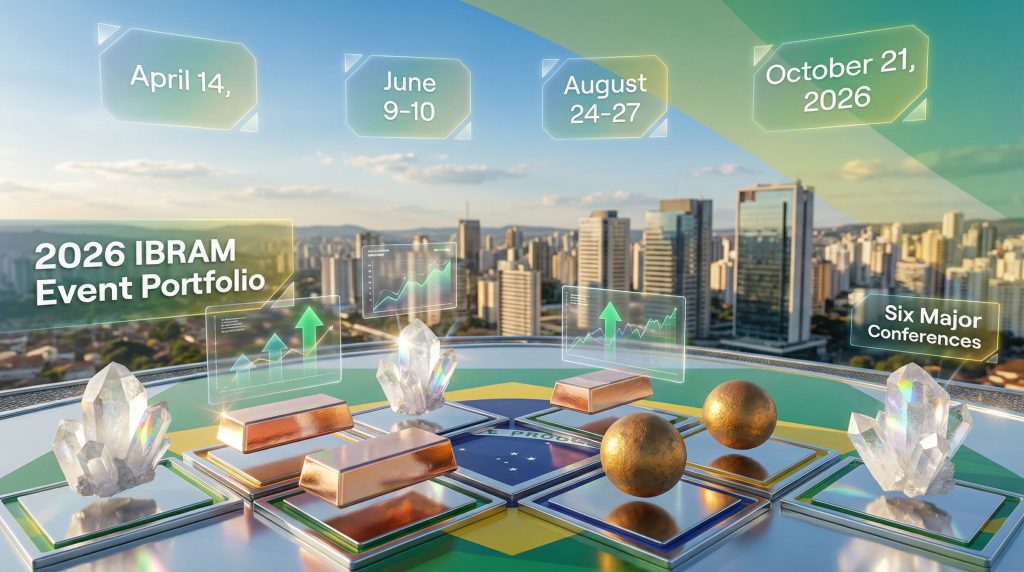
Brazil's mining sector institutional framework reflects a sophisticated approach to industry development, positioning the country as a global mining hub through six strategically distributed conferences throughout 2026. This comprehensive event portfolio demonstrates how established mining economies leverage coordinated programming to address multiple industry priorities simultaneously.
The IBRAM events 2026 calendar represents a carefully orchestrated sequence designed to maximise stakeholder engagement across technical, regulatory, and strategic domains. Unlike ad hoc conference scheduling common in emerging mining jurisdictions, Brazil's approach integrates thematic progression with geographic optimisation to create sustained industry dialogue throughout the calendar year.
When big ASX news breaks, our subscribers know first
Participatory Programming Framework
The consultation mechanism established for IBRAM events 2026 closes January 31, 2026, creating a deadline-driven approach to stakeholder input that ensures programming relevance. This participatory model allows industry participants to influence thematic direction through formal submission channels, distinguishing Brazilian mining sector programming from top-down conference models prevalent in other jurisdictions.
The Microsoft Forms-based consultation system enables multi-sector contribution from associates and partners, creating a feedback loop between industry practitioners and event organisers. This approach transforms passive conference attendance into active industry engagement, where participants help shape the strategic agenda rather than merely consuming predetermined content.
Strategic alignment methodology through industry demand-driven agenda development ensures that IBRAM events 2026 address real-world challenges facing Brazilian mining operations rather than theoretical frameworks disconnected from operational realities.
Event Distribution Timeline Analysis
Table: 2026 IBRAM Event Portfolio Distribution
| Quarter | Event Focus | Strategic Positioning | Location |
|---|---|---|---|
| Q2 | Diversity & Inclusion + Technical Safety | Social licence foundation | Belo Horizonte |
| Q2-Q3 | Critical Minerals + Technology Expo | Global competitiveness | Brasília + BH |
| Q3-Q4 | Legal Framework + Best Practices | Regulatory excellence | Brasília + BH |
This distribution pattern reveals sophisticated strategic thinking, with social licence activities positioned early in the calendar to establish foundational stakeholder relationships before technical and regulatory discussions. The progression from diversity programming in April through best practices recognition in October creates a narrative arc that strengthens industry credibility throughout the year.
International Seminário de Minerais Críticos Analysis
Geopolitical Context Framework
The global energy transition creates unprecedented demand for critical minerals energy security, positioning countries with substantial reserves at the centre of geopolitical discussions about supply chain security. Brazil's participation in this transformation extends beyond simple commodity export, requiring sophisticated policy frameworks that balance resource development with strategic national interests.
Energy transition demand drivers include lithium for battery storage, rare earth elements for wind turbines and electric vehicle motors, copper for electrical infrastructure, and nickel for battery cathodes. These materials represent the physical foundation of decarbonisation efforts, making their secure supply essential for achieving global climate objectives.
Supply chain security imperatives have intensified following disruptions in traditional mining regions and increasing recognition that energy transition success depends on diversified, reliable mineral sources. Countries seeking to reduce dependence on concentrated supply chains are actively developing relationships with alternative producers, creating opportunities for Brazilian mineral sector expansion.
Policy development focus through public sector engagement in Brasília positions the June 9-10, 2026 seminar as a direct interface between mining industry stakeholders and government decision-makers responsible for Brazil's mineral resource strategy.
Economic Security Positioning
The Brasília location for the critical minerals seminar reflects Brazil's recognition that mineral resources represent national strategic assets requiring coordinated policy approaches. Unlike technical conferences focused on operational improvements, this event addresses how mineral development contributes to broader economic security objectives.
Economic development through mineral security involves balancing immediate revenue generation from mineral exports with long-term value creation through downstream processing capabilities. Countries successfully navigating this balance develop domestic mineral processing industries that capture higher-value portions of global supply chains.
The emphasis on public policies, sustainability, and global energy transition challenges creates a framework for discussing how Brazilian mineral development can contribute to international decarbonisation efforts while advancing domestic economic objectives.
Continental Hub Strategy Through Technology Showcase
Scale and Scope Metrics
EXPOSIBRAM 2026 operates on a four-day format (August 24-27) that positions it among the most comprehensive mining events in Latin America. This duration allows for both extensive exhibition space and substantive congress programming, creating multiple engagement opportunities for international and domestic participants.
The Belo Horizonte location leverages one of Latin America's most established mining clusters, where proximity to major mining operations, equipment suppliers, and technical services creates natural networking advantages. This geographic positioning reduces logistical complexity for Brazilian mining companies whilst providing international visitors with direct access to operational mining environments.
Combined exhibition and congress approaches enable technology demonstration alongside strategic discussion, allowing participants to observe practical applications of innovations being discussed in congress sessions. This integration distinguishes EXPOSIBRAM from purely academic conferences or equipment-focused trade shows.
Innovation Ecosystem Development
Technology exposure platforms at major mining conferences serve as accelerators for innovation adoption, where equipment suppliers, technology developers, and mining companies interact to evaluate emerging solutions. Furthermore, AI mining innovation has become increasingly prominent at such events, where concentrated interactions create efficiency in technology transfer that would require months to achieve through individual company visits.
Strategic networking infrastructure develops through structured interaction opportunities that connect international technology providers with Brazilian mining operations seeking operational improvements. These relationships often extend beyond conference participation to become long-term commercial partnerships.
Global trend integration allows Brazilian mining companies to evaluate international developments in automation, digitalisation, and sustainability practices within a single venue, accelerating awareness of available solutions and best practices from other mining jurisdictions.
Technical Excellence Through Specialised Programming
Operational Risk Management Priority
Tailings Brazil 2026 represents a specialised response to Brazil's recognition that tailings management represents one of the mining sector's most critical technical challenges. The May 26-27 scheduling positions this event early in the mining season, allowing operational improvements to be implemented before peak production periods.
Advanced operational practices encompass both technological solutions and management systems approaches to tailings risk reduction. Brazilian mining operations have invested substantially in upgraded monitoring systems, alternative tailings disposal methods, and emergency response capabilities following regulatory changes implemented after significant tailings incidents.
Regulatory compliance requirements in Brazil now include enhanced reporting standards, independent technical reviews, and community notification systems that exceed previous requirements. Mining companies must demonstrate not only technical compliance but also stakeholder engagement and emergency preparedness capabilities.
Emergency Preparedness Integration
Prevention methodology focuses on identifying potential failure modes before they develop into operational risks, using advanced monitoring technologies that provide early warning of developing stability issues. These systems integrate geotechnical sensors, satellite monitoring, and data analytics to create comprehensive risk assessment capabilities.
Response capability development involves coordinated planning between mining companies, local communities, and emergency response agencies to ensure rapid, effective action in case of tailings incidents. This planning includes evacuation procedures, communication protocols, and resource pre-positioning to minimise response time.
Brazilian legislative compliance requirements now mandate regular emergency response exercises, community engagement in emergency planning, and transparent reporting of monitoring results to regulatory agencies and affected communities.
The next major ASX story will hit our subscribers first
Diversibram 2026 – Sector Inclusion Strategy
Social Licence Development
The "Mineração sem rótulos" theme for the April 14, 2026 diversity event reflects Brazil's approach to addressing mining sector social licence challenges through workforce inclusion and community engagement. Moreover, addressing mining diversity challenges has become essential as mining operations increasingly recognise that social acceptance depends partially on demonstrating commitment to inclusive employment practices and community development.
Mining companies operating in diverse communities must navigate complex social dynamics where historical patterns of resource extraction have created scepticism about industry commitment to local development. Diversity programming demonstrates tangible commitment to inclusive practices that extend beyond compliance requirements.
Stakeholder engagement through diversity initiatives creates opportunities for mining companies to build relationships with community organisations, educational institutions, and local suppliers that might not otherwise engage with mining operations.
Value Chain Integration
Complete production chain involvement in diversity programming extends inclusion efforts beyond direct mining employment to encompass suppliers, contractors, and service providers throughout the mineral value chain. This comprehensive approach addresses diversity at multiple levels of economic activity generated by mining operations.
Innovation focus through diversity-driven operational improvements recognises that diverse teams often generate more innovative solutions to technical and operational challenges. Mining companies implementing comprehensive diversity programs report improved problem-solving capabilities and enhanced operational creativity.
Progressive sector leadership positioning allows Brazilian mining companies to differentiate themselves from competitors in other jurisdictions where diversity initiatives may be less comprehensive or less integrated into operational planning.
Legal and Regulatory Trends Shape Mining Rights Landscape
Regulatory Framework Evolution
The International Mining Law Congress scheduled for September 15-16, 2026, addresses the dynamic nature of mining regulation in an environment where environmental requirements, community rights, and international investment standards continue evolving. Legal frameworks must balance resource development objectives with stakeholder protection and environmental preservation.
Expert composition including legal specialists and industry practitioners creates dialogue between theoretical legal frameworks and practical implementation challenges. Mining companies require legal guidance that addresses real-world operational complexities rather than purely academic legal interpretation.
Global perspective through international regulatory comparison allows Brazilian mining companies to understand how legal frameworks in other jurisdictions address similar challenges, potentially informing approaches to regulatory compliance and stakeholder engagement in Brazilian operations.
Sustainability Integration
Legal compliance increasingly incorporates environmental and social requirements that extend beyond traditional mining permits to encompass community consultation, environmental monitoring, and post-closure site management obligations. Mining companies must integrate these requirements into operational planning from project inception through closure.
Industry standards development through best practice legal frameworks creates standardised approaches to regulatory compliance that reduce uncertainty for mining companies whilst ensuring consistent stakeholder protection. These standards often become informal requirements for international investment and financing.
Future-proofing through anticipatory regulatory preparation involves analysing emerging regulatory trends and implementing compliance systems that exceed current requirements, reducing adjustment costs when regulations evolve.
Recognition Programs Drive Industry Excellence Standards
Excellence Categories Framework
The Best Practices Awards program, running since 2012, establishes measurable standards for mining sector performance across multiple dimensions critical to sustainable operations. Safety performance metrics evaluate not only incident reduction but also proactive risk management systems and safety culture development within mining organisations.
Energy efficiency recognition addresses both cost management and environmental performance, as mining operations seek to reduce energy consumption whilst maintaining production levels. Companies implementing successful energy efficiency programs often report substantial cost savings alongside environmental benefits.
Technical standards excellence encompasses both compliance with regulatory requirements and adoption of industry best practices that exceed minimum standards. Recognition in this category often correlates with operational excellence and competitive advantage in attracting international investment.
Socioeconomic development measurement evaluates mining companies' contributions to local community development through employment, supplier development, infrastructure investment, and educational programming.
Historical Performance Context
The fourteen-year track record since 2012 provides substantial data for evaluating trends in Brazilian mining sector performance across all recognition categories. This historical perspective allows identification of companies and practices that demonstrate sustained excellence over multiple operating cycles.
The October 21, 2026 recognition ceremony timing positions awards announcement during peak mining industry activity, maximising visibility for recognised practices and companies whilst providing motivation for continuous improvement efforts.
Industry benchmarking through comparative performance standards creates competitive dynamics that encourage adoption of best practices across the mining sector, as companies seek recognition and the commercial advantages associated with demonstrated excellence.
Geographic Concentration Strategy Analysis
Regional Cluster Advantages
Belo Horizonte's hosting of four major IBRAM events 2026 reflects the strategic advantages of concentrating mining industry programming within Brazil's established mining capital. This geographic concentration leverages existing infrastructure, reduces travel complexity for domestic participants, and reinforces the region's position as Brazil's mining hub.
Event concentration enables cross-event participation, where stakeholders attending one conference can efficiently participate in multiple events throughout the year. This creates cost savings for companies and enhanced networking opportunities for industry professionals.
Infrastructure optimisation through established venue and logistics capabilities reduces event costs whilst ensuring consistent quality standards across multiple conferences. Belo Horizonte's mining industry infrastructure includes specialised conference facilities, accommodation capacity, and transport options designed to serve mining sector events.
Strategic Positioning Benefits
Cost efficiency through reduced travel and logistics complexity makes participation more accessible for smaller mining companies and service providers who might find multiple travel requirements prohibitive. This enhanced accessibility strengthens industry-wide participation in professional development and networking activities.
Knowledge density created through concentrated expert participation enables more substantive discussions and collaboration, as the same industry leaders often participate in multiple events throughout the year, creating continuity in strategic discussions and relationship development.
Regional development through mining cluster strengthening creates positive economic impacts for Belo Horizonte and surrounding areas, reinforcing the region's mining industry infrastructure and supporting continued investment in mining-related services and capabilities.
Event Participation and Strategic Value
How can mining companies maximise return on investment from IBRAM events 2026 participation?
Strategic participation across multiple events creates comprehensive industry engagement opportunities that extend far beyond individual conference benefits. Companies implementing coordinated participation strategies often assign consistent representatives to build relationships across the event series whilst ensuring knowledge transfer throughout their organisations.
Technical excellence development through specialised events like Tailings Brazil provides operational improvements that generate measurable value through enhanced safety performance, regulatory compliance, and risk reduction. Companies actively implementing lessons learned from technical conferences report substantial operational improvements and cost savings.
Market positioning opportunities at EXPOSIBRAM enable companies to demonstrate thought leadership, showcase technological capabilities, and build strategic relationships with potential customers, suppliers, and partners in Latin America's most comprehensive mining industry venue. Additionally, participation in such events allows mining professionals to observe industry evolution trends firsthand and adapt their strategies accordingly.
What makes the critical minerals seminar strategically important for international investors?
The Brasília location provides direct access to Brazilian government decision-makers responsible for mineral resource policy, regulatory frameworks, and international trade relationships. International investors require understanding of policy directions that could affect mining project economics, permitting processes, and operational requirements.
Policy focus discussions enable investors to evaluate how Brazilian government priorities align with international investment objectives and assess regulatory stability for long-term mining investments. Understanding government perspectives on critical minerals development helps investors identify opportunities and potential challenges.
Strategic mineral policy development affects international supply chain relationships and export opportunities, making government engagement essential for investors seeking to develop Brazilian mineral resources for international markets.
How does the consultation period enhance event relevance for industry participants?
The January 31 deadline for suggestions creates urgency around stakeholder input whilst ensuring programming reflects current industry challenges and emerging opportunities. This consultation approach transforms participants from passive consumers of predetermined content into active contributors to event programming.
Industry-driven agenda development ensures that IBRAM events 2026 address real-world operational challenges, regulatory developments, and market opportunities rather than theoretical topics with limited practical application. For instance, participants might connect with industry leaders at events such as the WA mining conference to share insights that could inform Brazilian programming.
Stakeholder engagement through formal consultation mechanisms creates ownership among participants, increasing commitment to event participation and implementation of lessons learned. Companies contributing to event programming often report higher value realisation from conference participation.
Strategic Recommendations for 2026 Mining Event Participation
Comprehensive Participation Strategy
Technical development through specialised programming enables mining companies to address specific operational challenges whilst building expertise in critical areas like tailings management, safety performance, and regulatory compliance. Companies implementing comprehensive technical development strategies often assign specialist teams to relevant conferences whilst ensuring knowledge transfer throughout their organisations.
Market positioning through EXPOSIBRAM technology showcase provides opportunities to demonstrate innovation capabilities, build customer relationships, and evaluate competitive developments in mining technology and services. Strategic exhibition participation combined with congress engagement maximises return on marketing investment.
Policy engagement through critical minerals and legal conferences enables mining companies to understand regulatory developments, contribute to policy discussions, and build relationships with government stakeholders responsible for mining sector oversight.
Social licence development through diversity and best practices programs demonstrates commitment to sustainable mining practices and community engagement, strengthening operational sustainability and stakeholder relationships.
Investment in Industry Leadership
The comprehensive six-event portfolio represents Brazil's strategic approach to mining sector development, combining technical excellence, regulatory advancement, and social responsibility in a coordinated annual strategy that positions Brazilian mining companies for sustained competitiveness in global markets.
Disclaimer: This analysis is based on publicly available information about IBRAM events 2026 and general industry trends. Participants should verify current event details, registration requirements, and programming updates through official IBRAM channels before making participation decisions. Event programming and focus areas may evolve based on industry consultation and emerging developments in the mining sector.
Ready to Capitalise on Critical Minerals and Mining Opportunities?
Discovery Alert's proprietary Discovery IQ model delivers real-time alerts on significant ASX mineral discoveries, instantly empowering subscribers to identify actionable opportunities ahead of the broader market. Begin your 14-day free trial today at Discovery Alert and secure your market-leading advantage in the rapidly evolving critical minerals sector.