June 24, 2026
Strategic Infrastructure Development Reshapes West African Resource Corridors
West African iron ore extraction faces a fundamental transformation as regional governments increasingly recognise the strategic value of shared infrastructure systems. The traditional model of single-company resource corridors is giving way to multi-user frameworks that promise greater economic efficiency and reduced dependency on dominant mining operators. Furthermore, the Liberia backs Ivanhoe Atlantic rail deal to unlock iron ore mine development reflects broader geopolitical currents as nations seek to maximise the value of their mineral endowments whilst creating alternative supply chains.
The evolution of mining infrastructure governance represents more than operational efficiency improvements. These changes signal a strategic recalibration in how African nations approach resource development partnerships, particularly in critical minerals where supply chain security has become paramount for major consuming economies.
When big ASX news breaks, our subscribers know first
Geographic Advantages Drive Strategic Railway Access Arrangements
The recently approved Liberia backs Ivanhoe Atlantic rail deal to unlock iron ore mine demonstrates how geographic positioning can create competitive advantages in global commodity markets. The 243-kilometre rail route connecting Guinea's Kon Kweni deposit to Liberia's Buchanan port represents the shortest viable export pathway for iron ore reaching Atlantic markets, offering substantial logistical efficiencies compared to alternative routes.
Current export route comparisons reveal significant distance advantages that translate directly into cost savings and market access benefits. Whilst Guinea's Simandou project utilises a 650-kilometre railway to Conakry port, the Buchanan alternative reduces transport distance by over 400 kilometres. Consequently, this geographic efficiency becomes increasingly valuable as production scales reach planned levels of 30 million tonnes annually.
Maritime Logistics and Port Infrastructure Considerations
Buchanan port's deep-water facilities provide direct access to Atlantic shipping routes, enabling more efficient cargo handling compared to alternative West African export terminals. The port infrastructure supports large-capacity iron ore carriers, with expansion plans outlined in the $850 million Phase 2 development program.
The strategic positioning offers particular advantages for serving North American and European steel markets. In addition, shipping time reductions of 2-3 days per voyage create meaningful cost efficiencies whilst supporting premium pricing strategies for high-grade iron ore products targeting quality-sensitive manufacturing applications.
Multi-Modal Transportation Integration
The railway system's integration with port facilities creates opportunities for optimised loading and storage operations. Current specifications indicate the infrastructure can handle:
- 20 million tonnes annually under current ArcelorMittal operations
- 50+ million tonnes potential capacity with planned expansions
- Standardised rolling stock compatibility for multiple user coordination
- Dedicated ore handling facilities supporting quality segregation requirements
Financial Architecture Establishes New Resource Partnership Models
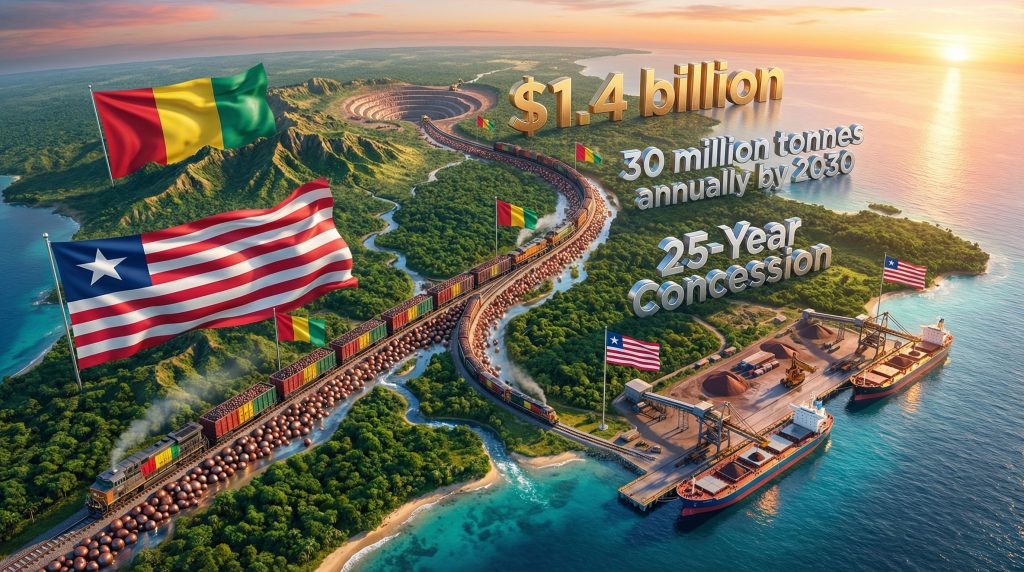
The Liberian railway agreement creates a financial framework that differs substantially from traditional mining concessions. Rather than single-company infrastructure ownership, the arrangement establishes a 25-year multi-user access system generating sustained revenue streams for government stakeholders whilst distributing development costs across multiple operators.
Government Revenue Structure and Economic Impact
Verified financial commitments under the concession create substantial fiscal contributions for Liberia's government budget:
- $1.4 billion in rail user fees over the 25-year term
- $600 million in additional taxes and charges
- $56 million average annual rail revenue to government coffers
- $24 million yearly tax contributions from related mining activities
For Liberia, with estimated annual government revenues of approximately $500-600 million, these mining-related contributions represent roughly 13-16% of total fiscal receipts. This level of contribution from a single infrastructure project demonstrates the transformative potential of strategic resource partnerships, particularly when implementing effective capital market strategies.
Infrastructure Investment Cost-Sharing Framework
The agreement establishes precedent for proportional infrastructure investment requirements. ArcelorMittal's $800 million railway rehabilitation investment provides the foundation for multi-user operations, whilst additional capacity expansion costs are allocated based on utilisation projections.
Investment allocation structure includes:
- Phase 1 operational integration: Estimated capital requirements for initial production coordination
- Phase 2 capacity expansion: $850 million infrastructure upgrade program
- User fee structure: Approximately $1.87 per tonne transported (calculated from total fees and projected volumes)
- Maintenance cost sharing: Proportional allocation based on traffic volumes and operational requirements
Capital Formation and Project Financing Strategies
Ivanhoe Atlantic's preparation for an Australian initial public offering highlights the role of railway access certainty in project financing. The company's UK subsidiary filing indicated that confirmed rail infrastructure access would be critical for future fundraising narratives. Furthermore, this connection between infrastructure access and investment attraction demonstrates how multi-user railway frameworks can enhance project bankability for multiple developers simultaneously.
Regulatory Innovation Through Multi-User Infrastructure Governance
Liberian President Joseph Boakai's October 2025 executive order establishing independent operator management and equitable multi-user access represents significant governance innovation in African mining infrastructure. This regulatory approach prioritises public asset optimisation over single-company operational control.
Independent Operator Management Transition
The planned transition from ArcelorMittal's exclusive railway operation to independent third-party management creates a regulatory precedent for infrastructure governance. This shift enables:
- Neutral traffic coordination between competing mining operators
- Standardised access protocols ensuring equitable treatment
- Performance-based service standards with regulatory oversight
- Capacity allocation systems managing peak-period congestion
ArcelorMittal's current operating rights expire in 2030, coinciding with Ivanhoe Atlantic's production ramp-up timeline. Consequently, this alignment provides a natural transition window for implementing multi-user coordination systems that reflect broader industry evolution trends.
Technical Integration and Operational Coordination
Multi-user railway operations require sophisticated coordination protocols addressing equipment compatibility, maintenance scheduling, and quality control procedures. Key technical requirements include:
Rolling Stock Standardisation:
- Compatible gauge specifications across different operators
- Coordinated maintenance protocols preventing simultaneous shutdowns
- Quality segregation procedures for different ore grades
- Traffic management systems optimising capacity utilisation
Maintenance Scheduling Coordination:
- Shared infrastructure upgrade responsibilities
- Coordinated shutdown periods for major maintenance
- Emergency response protocols for operational disruptions
- Performance monitoring and reporting systems
Strategic Timing Creates Operational Integration Opportunities
The convergence of ArcelorMittal's concession expiration with Ivanhoe Atlantic's production timeline creates unique opportunities for gradual operational integration. This 2026-2030 transition period allows both companies to develop coordination protocols whilst maintaining operational continuity.
Phased Implementation Strategy
The transition timeline provides structured phases for implementing multi-user operations:
Phase 1 (2026-2027): Construction overlap period
- Kon Kweni development commences whilst ArcelorMittal maintains full railway operation
- Limited coordination requirements during infrastructure preparation
- Pilot programs for shared maintenance scheduling
Phase 2 (2028-2030): Production ramp and capacity sharing
- Initial Ivanhoe Atlantic shipments begin at 5 million tonnes annually
- Combined railway utilisation approaches 25 million tonnes
- Active coordination protocols for traffic optimisation
Phase 3 (2030+): Independent operator implementation
- Full multi-user framework activation
- 30 million tonne production target for Ivanhoe Atlantic
- Potential additional users accessing shared infrastructure
How Does This Address Investment Risk?
The structured transition timeline reduces execution risks for both existing and new operators. ArcelorMittal benefits from cost-sharing opportunities for infrastructure upgrades, whilst Ivanhoe Atlantic gains operational certainty supporting capital raising efforts.
This investment risk mitigation approach demonstrates how carefully planned transitions can create mutual benefits rather than competitive conflicts between mining operators sharing critical infrastructure.
Supply Chain Diversification and Geopolitical Positioning
The Liberia backs Ivanhoe Atlantic rail deal to unlock iron ore mine arrangement fits within broader strategic initiatives aimed at reducing dependency on Chinese-controlled mining infrastructure. Whilst Guinea's Simandou project represents the largest iron ore development in the region, its 120 million tonne annual capacity is primarily oriented toward Chinese steel mills through Chinese state enterprise ownership.
Alternative Supply Chain Development
Ivanhoe Atlantic's connection to US commercial interests, through founder Robert Friedland's I-Pulse Inc., positions the project as a strategic alternative for Western steel producers. The 30 million tonne annual production target represents approximately 1.9% of global seaborne iron ore trade, providing meaningful supply diversification for non-Chinese buyers and supporting effective trade diversification strategies.
Strategic supply chain benefits include:
- Direct shipping routes to North American and European markets
- Reduced reliance on Chinese-controlled export terminals
- Enhanced supply security for Western manufacturing sectors
- Alternative pricing mechanisms independent of Chinese demand cycles
Regional Infrastructure Development Precedents
The multi-user railway framework aligns with other African infrastructure initiatives designed to create alternative resource corridors:
- Lobito Corridor (Angola-DRC): Multi-country railway supporting copper and cobalt exports with structured third-party access
- Northern Corridor (Kenya-Uganda): Regional transportation network with standardised access protocols
- Nacala Corridor (Mozambique-Malawi): Coal export infrastructure with multi-user coordination systems
These precedents demonstrate growing African government interest in maximising infrastructure asset utilisation through multi-user frameworks rather than single-company concessions. Moreover, these developments align with global critical minerals strategy implementations.
The next major ASX story will hit our subscribers first
Technical Infrastructure and Quality Management Considerations
Multi-user railway operations require sophisticated systems for managing different ore qualities whilst maintaining operational efficiency across multiple mining operations. Kon Kweni's high-grade iron ore (65%+ Fe content) requires segregated handling procedures to maintain quality premiums in export markets.
Ore Quality Differentiation and Handling Protocols
The railway system must accommodate different ore specifications whilst preventing quality degradation through cross-contamination. Technical requirements include:
Quality Control Systems:
- Segregated storage facilities at loading points
- Dedicated rolling stock for different ore grades
- Quality testing protocols at transfer points
- Documentation systems tracking ore sources and destinations
Operational Coordination Protocols:
- Scheduling systems prioritising premium ore shipments
- Maintenance procedures preserving equipment cleanliness
- Loading rate optimisation for different ore characteristics
- Emergency protocols managing operational disruptions
Capacity Expansion and Infrastructure Investment
Current railway capacity of 20 million tonnes annually requires substantial expansion to accommodate projected demand. The $850 million Phase 2 investment program supports capacity increases to 50+ million tonnes, enabling multiple operators whilst maintaining operational efficiency.
Infrastructure expansion components include:
- Additional rolling stock and locomotive capacity
- Enhanced loading and unloading facilities
- Upgraded signalling and traffic management systems
- Expanded maintenance facilities supporting higher utilisation rates
Market Dynamics and Competitive Positioning Implications
The addition of West African iron ore capacity through multiple projects creates new dynamics in global supply-demand relationships. Combined production from Simandou (120 million tonnes) and Kon Kweni (30 million tonnes) represents significant new supply entering markets previously dominated by Australian and Brazilian producers.
Premium Market Positioning Strategies
Kon Kweni's high-grade ore characteristics support premium market positioning, particularly for specialty steel applications requiring low impurity content. This quality differential enables:
Market Segmentation Opportunities:
- Direct sales to premium steel producers
- Long-term supply agreements with strategic customers
- Geographic market focus on quality-sensitive regions
- Price differentiation based on ore specifications
Global Supply Chain Integration Scenarios
Multiple scenarios could emerge as West African iron ore production scales:
Gradual Integration Scenario (2027-2030):
- Measured production increases aligned with market demand growth
- Stable pricing environment with modest premium compression
- Enhanced buyer negotiating power through supply diversification
Accelerated Development Scenario (2026-2028):
- Rapid capacity additions during demand uncertainty
- Potential supply-demand rebalancing creating price volatility
- Increased competition for premium market segments
What Challenges Could Impact Implementation?
Despite legislative approval in Liberia, the project faces several implementation challenges that could impact development timelines and operational success. The recent Liberian parliament's unanimous approval provides regulatory certainty, yet complex coordination requirements remain.
Cross-Border Regulatory Coordination Requirements
The Liberia backs Ivanhoe Atlantic rail deal to unlock iron ore mine project's success depends on coordinated approvals from both Liberian and Guinean authorities. Outstanding requirements include:
- Guinea mining ministry final approvals for cross-border operations
- Environmental impact assessment completion for railway corridor
- Community consultation processes in affected regions
- Regulatory harmonisation agreements between national authorities
Technical Integration and Operational Coordination Challenges
Multi-user railway operations present complex coordination challenges:
Operational Risk Factors:
- Traffic scheduling conflicts during peak shipping periods
- Maintenance coordination preventing service disruptions
- Quality control consistency across multiple operators
- Capacity allocation disputes requiring regulatory intervention
Financial Market Access and Capital Formation
Ivanhoe Atlantic's postponed Australian IPO highlights ongoing challenges in mining sector capital formation. Current constraints include:
- Market volatility affecting mining sector valuations
- Regulatory scrutiny of foreign mining investments
- Debt financing availability in higher interest rate environments
- Investor appetite for African mining projects
Long-Term Strategic Implications for Regional Development
The railway agreement establishes foundation principles for broader West African economic integration through shared infrastructure development. Beyond iron ore transportation, the framework demonstrates how strategic partnerships can create lasting regional economic benefits.
Infrastructure Platform Development Opportunities
The railway corridor creates opportunities for additional infrastructure integration:
Potential Expansion Areas:
- Power transmission interconnection between Guinea and Liberia
- Telecommunications infrastructure sharing reducing deployment costs
- Road network development supporting regional trade
- Cross-border trade facilitation agreements
Regional Economic Integration Model
This arrangement could serve as template for other African infrastructure initiatives:
- Multi-country mining corridor developments
- Resource-backed development finance structures
- Regional economic community integration projects
- Infrastructure financing mechanisms supporting smaller economies
The Liberia-Ivanhoe Atlantic railway agreement represents more than mining logistics coordination. It demonstrates how strategic infrastructure partnerships can reshape regional economic relationships and create alternative pathways for African resource development that serve diverse global markets whilst maximising local economic benefits.
Future Market Evolution and Strategic Positioning
As global steel production continues evolving toward higher-grade requirements and supply chain resilience priorities, West African iron ore developments positioned outside traditional Chinese-controlled networks may gain strategic value beyond current market pricing models.
The successful implementation of multi-user infrastructure frameworks in Liberia could influence similar arrangements across Africa. Consequently, this could create networks of shared resource corridors that enhance economic integration whilst serving diversified international markets, representing a fundamental shift from single-company concession models toward collaborative infrastructure development supporting multiple stakeholders.
Disclaimer: This analysis involves forward-looking statements and market projections that are subject to numerous risks and uncertainties. Actual results may differ materially from those discussed. Readers should conduct independent research and consult qualified advisors before making investment decisions.
Interested in the Next Big Mining Discovery?
Discovery Alert's proprietary Discovery IQ model delivers instant notifications on significant ASX mineral discoveries, empowering subscribers to identify actionable opportunities ahead of the broader market. Explore why major mineral discoveries can generate substantial returns and begin your 30-day free trial today to position yourself strategically in the evolving mining landscape.