August 6, 2026
Strategic Infrastructure Developments Reshaping Regional Energy Architecture
The Asia-Pacific region stands at a critical juncture in its energy transformation, where massive infrastructure investments are fundamentally altering supply chain dynamics and market positioning. Within this evolving landscape, Papua New Guinea emerges as a strategically positioned territory offering unique advantages for liquefied natural gas development, backed by substantial resource deposits and geographic proximity to the world's fastest-growing energy markets. The TotalEnergies Papua LNG rebid phase represents a pivotal moment in regional energy infrastructure development.
Recent developments in project engineering and financing structures demonstrate how modern energy ventures adapt to cost pressures while maintaining operational excellence. The ongoing transformation of major LNG initiatives reflects broader industry trends toward optimisation, technological innovation, and strategic repositioning for long-term competitiveness.
When big ASX news breaks, our subscribers know first
Understanding Papua New Guinea's Strategic LNG Position
Papua New Guinea occupies a uniquely advantageous position within the Asia-Pacific energy corridor, leveraging both substantial natural gas reserves and strategic shipping routes to major consumption centres. The nation's existing LNG infrastructure, established through earlier developments, provides critical foundation knowledge for subsequent projects seeking to capitalise on regional demand growth.
Geographic and Market Access Advantages:
• Proximity to Asian Markets: Shipping distances to Japan, South Korea, and China significantly shorter than competing suppliers
• Established Infrastructure: Existing PNG LNG facility operational since 2014, demonstrating proven development capabilities
• Resource Base Scale: Multiple gas fields providing long-term supply security for sustained operations
• Port Infrastructure: Deep-water access supporting large-scale vessel operations
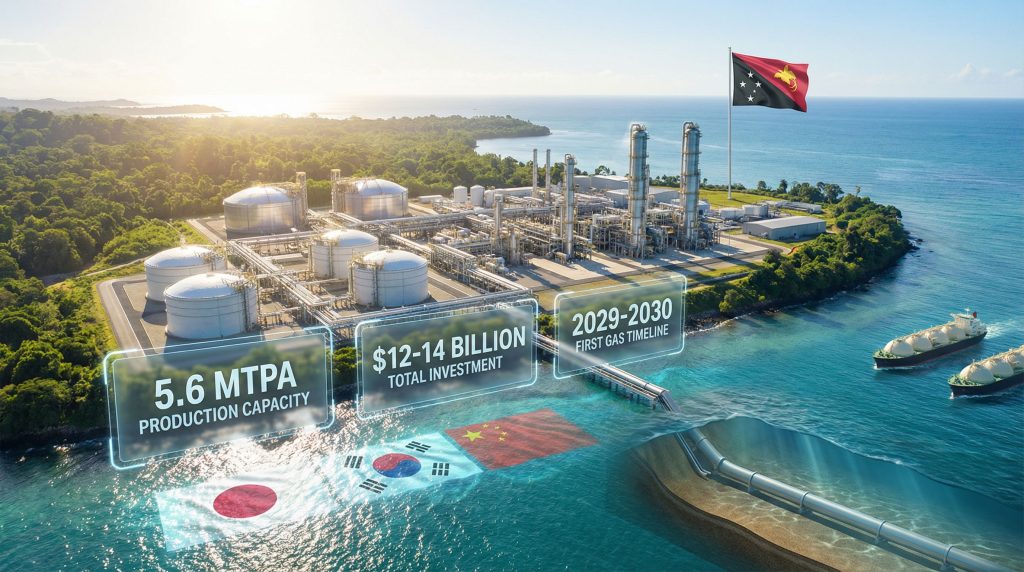
The Papua LNG project, with its planned 5.6 million tonnes per annum capacity, positions itself as a substantial contributor to regional supply diversity. This scale represents a significant addition to Papua New Guinea's existing LNG export capabilities, potentially transforming the nation into a major regional energy hub.
Pipeline infrastructure modifications reflect sophisticated engineering approaches to cost optimisation. The transition from a 40-inch diameter to 30-inch diameter gas pipeline demonstrates how technical specifications can dramatically expand contractor availability and competitive dynamics. This modification increases the universe of globally available pipelay vessels capable of installation work, subsequently enhancing bidding competition among marine contractors.
Infrastructure Development Timeline:
| Phase | Timeline | Key Milestones |
|---|---|---|
| Engineering Rebid | Late 2024 – Dec 2025 | Contractor pool expansion, design optimisation |
| Development Forum | Q1 2026 | Regulatory approval prerequisite |
| Final Investment Decision | Early 2026 | Joint venture commitment milestone |
| First Gas Production | 2029-2030 | Commercial operations commencement |
What Makes the TotalEnergies Papua LNG Rebid Phase Significant for Energy Markets
Engineering and Procurement Strategy Overhaul
The comprehensive restructuring of the Papua LNG project's engineering and procurement approach represents a watershed moment in modern LNG development methodology. Initial project estimates reaching $18 billion USD prompted a fundamental reassessment of technical specifications and contractor engagement strategies. However, effective commodity market hedging strategies can help mitigate cost volatility in such large-scale projects.
Cost Optimisation Achievements:
• Target Cost Reduction: From $18B to approximately $14B (22% reduction)
• Expanded Contractor Pool: Inclusion of Chinese engineering, procurement, and construction firms
• Design Simplification: Pipeline diameter reduction enabling broader vessel availability
• Infrastructure Rationalisation: Condensate routing modifications reducing overall system complexity
The rebid process, launched in late 2024, culminated with new engineering proposals received by December 10, 2025. This timeline compression reflects industry urgency to secure competitive positioning amid evolving market conditions and competing project timelines throughout the region.
Arnaud Berthet, Managing Director of TotalEnergies EP PNG, indicated to the PNG Resources and Energy Investment Conference that the company successfully concluded the rebid phase after receiving offers at reasonable costs. This achievement validates the strategic decision to expand contractor eligibility criteria whilst optimising technical specifications.
Technical Design Modifications and Market Implications
Pipeline Engineering Economics:
| Specification | Original Design | Revised Design | Market Impact |
|---|---|---|---|
| Gas Pipeline Diameter | 40 inches | 30 inches | Expanded vessel availability pool |
| Condensate Routing | Eastern pipeline route | Western FSO vessel route | Reduced pipeline infrastructure costs |
| Installation Complexity | Higher specification requirements | Standard industry capabilities | Increased competitive bidding |
The shift to 30-inch pipeline specifications fundamentally alters the project's marine installation requirements. This modification expands the universe of capable pipelay vessels from a limited pool of specialised large-diameter equipment to a substantially broader range of standard industry vessels.
Consequently, marine contractors face increased competition, driving down installation costs whilst improving scheduling flexibility. Moreover, this project demonstrates sophisticated approaches to capital raising methods that optimise cost structures for major infrastructure developments.
Condensate handling represents another significant technical innovation. The revised approach routes condensate westward to a floating storage and offloading (FSO) vessel, eliminating the need for extended pipeline infrastructure to eastern terminals. This modification reduces both capital expenditure and operational complexity whilst providing enhanced flexibility for condensate marketing and transportation.
Contractor Pool Expansion Strategy:
• Geographic Diversification: Chinese firms added to previously Western-dominated contractor list
• Technology Transfer Opportunities: Enhanced knowledge sharing across international partnerships
• Cost Competition: Broader bidding base driving competitive pricing structures
• Schedule Optimisation: Multiple contractor options reducing project timeline risks
How Do Regulatory Frameworks Impact LNG Project Development
Papua New Guinea's Development Forum Requirements
Papua New Guinea's regulatory structure requires a formal development forum before any final investment decision can proceed. This legal prerequisite, scheduled for January-March 2026, represents a critical milestone in the project's advancement timeline.
The development forum process ensures comprehensive stakeholder engagement, environmental compliance verification, and community benefit arrangements. This regulatory framework balances investor requirements with national development objectives and environmental stewardship responsibilities.
Regulatory Timeline Implications:
• Q1 2026: Development forum completion requirement
• Early 2026: Anticipated final investment decision timing
• Mid-2026: Potential construction commencement authorisation
• 2029-2030: Projected first gas production timeline
Financing Architecture for Mega-Scale LNG Projects
The Papua LNG project has generated substantial interest from international financial institutions, demonstrating market confidence in both the technical approach and commercial viability. Seven export credit agencies along with more than 30 commercial banks have expressed financing interest, indicating robust capital availability for the development.
Export Credit Agency Participation:
This level of ECA engagement typically reflects several positive factors including strong sponsor creditworthiness, favourable project economics, and alignment with national energy security objectives of participating countries. The involvement of multiple ECAs also suggests potential for competitive financing terms and comprehensive risk mitigation structures.
Commercial Banking Consortium Structure:
• 30+ Commercial Banks: Unprecedented interest level for PNG projects
• Risk Distribution: Multiple institution participation enabling large-scale financing
• Competitive Terms: Bank competition likely driving favourable financing conditions
• Currency Hedging: Multiple currency expertise supporting international operations
The substantial banking interest reflects several factors including TotalEnergies' strong credit profile, the project's strategic importance to Asian energy security, and proven LNG market fundamentals supporting long-term cash flow projections. Furthermore, understanding energy exports challenges helps contextualise the broader regional investment climate.
What Are the Market Dynamics Driving Investment Decisions
Asian LNG Demand Projections Through 2030
Asian LNG markets continue demonstrating robust growth trajectories, driven by industrial expansion, power generation requirements, and energy transition policies favouring cleaner-burning natural gas over coal alternatives. The Papua LNG project's timing aligns strategically with this demand expansion, positioning it to capture market share during a critical growth phase.
Sales and Purchase Agreement Development:
Long-term LNG sales and purchase agreements remain under active negotiation, according to project management statements. These agreements typically provide the foundation for project financing, offering guaranteed cash flows that support debt service and investor returns over 15-20 year contract periods.
Regional Supply-Demand Balance Factors:
• Chinese Industrial Growth: Continued manufacturing expansion driving gas consumption
• Japanese Energy Security: Diversification strategies following nuclear capacity constraints
• South Korean Clean Energy: Natural gas bridge fuel policies supporting demand
• Southeast Asian Development: Economic growth correlating with energy consumption increases
The TotalEnergies Papua LNG rebid phase positions the project to capitalise on these favourable demand dynamics whilst managing cost pressures through optimised engineering approaches.
Comparative Analysis: Papua LNG vs Regional Projects
The Papua LNG project's 5.6 mtpa capacity positions it within the mid-tier range of regional LNG developments. At an estimated $14 billion total investment, the project achieves approximately $2.5 billion per mtpa of capacity, competitive with industry benchmarks for greenfield developments.
Competitive Positioning Analysis:
| Project Factor | Papua LNG | Regional Benchmark | Competitive Assessment |
|---|---|---|---|
| Production Capacity | 5.6 mtpa | 6-8 mtpa average | Moderate scale advantage |
| Capital Intensity | ~$2.5B/mtpa | $2.0-3.0B/mtpa | Industry competitive |
| Time to Market | 2029-2030 | 5-7 year standard | Aligned with expectations |
| Geographic Advantage | Asia-Pacific proximity | Variable | Strong competitive position |
How Will Joint Venture Dynamics Influence Project Success
Partner Alignment and Strategic Objectives
The Papua LNG joint venture structure brings together complementary capabilities and strategic objectives from major international energy companies. TotalEnergies operates as project leader, leveraging extensive LNG experience and Asia-Pacific regional expertise.
TotalEnergies Strategic Framework:
• Regional Expansion: Papua LNG aligns with broader Asia-Pacific growth strategy
• LNG Portfolio Diversification: Geographic and resource base expansion
• Technology Leadership: Application of advanced LNG development methodologies
• Operational Excellence: Proven track record in complex international projects
According to Argus Media reports, TotalEnergies remains confident about achieving a first-quarter 2026 final investment decision, reflecting strong partner coordination and project momentum.
Santos Partnership Benefits:
Australian independent Santos brings regional operational experience and market knowledge, having previously signalled expectations for an early 2026 final investment decision. This timeline alignment demonstrates partner coordination and shared strategic objectives.
ExxonMobil Contribution:
ExxonMobil's existing PNG LNG operational experience provides invaluable local knowledge, regulatory familiarity, and infrastructure synergies. This operational history reduces development risks whilst offering potential cost-sharing opportunities for common facilities and services.
ENEOS Energy Security Objectives:
Japanese partner ENEOS represents the buyer perspective within the joint venture, ensuring project development aligns with end-market requirements and long-term supply security objectives.
Risk Allocation Models in International Energy Projects
Operational Risk Distribution:
• Technical Risk: Shared among partners based on expertise and operational capabilities
• Commercial Risk: Allocated according to market exposure and sales responsibilities
• Regulatory Risk: Managed through local partner knowledge and government relations
• Environmental Risk: Distributed based on operational roles and compliance responsibilities
Financial Commitment Structures:
Joint venture financial arrangements typically reflect ownership percentages, operational responsibilities, and strategic value contributions. The multi-billion dollar capital requirements necessitate carefully structured commitment schedules aligned with project development milestones.
The next major ASX story will hit our subscribers first
What Are the Broader Implications for Energy Transition
Natural Gas Role in Asia-Pacific Decarbonisation
Natural gas increasingly serves as a critical bridge fuel within Asia-Pacific decarbonisation strategies, offering substantial carbon intensity reductions compared to coal whilst providing dispatchable power generation supporting renewable energy integration. This aligns with broader energy transition strategy objectives across the region.
Carbon Intensity Comparison Benefits:
• Coal Displacement: Natural gas power generation produces approximately 50% lower CO2 emissions
• Grid Stability: Dispatchable generation supporting renewable energy intermittency
• Industrial Applications: Cleaner feedstock for petrochemical and manufacturing processes
• Transportation Fuel: LNG truck and marine fuel applications reducing emissions
National Energy Strategy Integration:
Multiple Asian nations incorporate natural gas expansion within their climate commitments and energy transition pathways. These policies support long-term demand fundamentals whilst creating regulatory frameworks favouring LNG infrastructure development.
Additionally, monitoring natural gas trends becomes crucial for project economics and market positioning as the industry navigates volatile pricing environments.
Supply Chain Resilience and Energy Security
The Papua LNG project enhances regional energy security through geographic diversification of LNG supply sources. Asian importers increasingly prioritise supply chain resilience following geopolitical disruptions and shipping route vulnerabilities.
Geographic Diversification Benefits:
• Reduced Dependency: Alternative to Australian and US LNG suppliers
• Shipping Route Optimisation: Shorter transportation distances reducing costs and risks
• Political Stability: Papua New Guinea's stable governance framework
• Infrastructure Redundancy: Multiple supply source options for importing nations
Investment Scenarios and Market Outcomes
Scenario 1: Accelerated Development (FID Early 2026)
An early 2026 final investment decision would position Papua LNG advantageously within the regional development timeline, capturing first-mover benefits during a period of expanding Asian demand. The TotalEnergies Papua LNG rebid phase success supports this optimistic timeline scenario.
Market Share Capture Opportunities:
• Timing Advantage: Early market entry during demand growth phase
• Contract Negotiation: Favourable terms before competing projects advance
• Infrastructure Synergies: Coordination with existing PNG LNG operations
• Regional Hub Development: Papua New Guinea positioning as major LNG supplier
Revenue and Return Projections:
Early development timing would optimise revenue capture during projected peak demand growth periods, potentially achieving superior internal rates of return compared to delayed scenarios.
Scenario 2: Delayed Implementation (FID Late 2026 or Beyond)
Development delays could result in challenging competitive positioning as alternative projects advance and market share becomes increasingly contested among regional suppliers.
Competitive Positioning Challenges:
• Market Share Loss: Competing projects securing long-term contracts
• Cost Escalation: Construction cost inflation affecting project economics
• Technology Obsolescence: Newer projects implementing advanced technologies
• Financing Constraints: Reduced capital availability during delayed periods
Risk Mitigation Strategies:
• Contract Pre-positioning: Early sales agreement negotiations reducing market risk
• Technology Upgrades: Enhanced project specifications maintaining competitiveness
• Strategic Partnerships: Additional joint venture participants strengthening capabilities
Scenario 3: Project Restructuring Requirements
Market conditions or technical challenges might necessitate fundamental project restructuring, including capacity modifications, ownership adjustments, or alternative development approaches.
Potential Restructuring Elements:
• Capacity Scaling: Adjustment to market demand projections
• Ownership Rebalancing: Partner stake modifications reflecting changing strategic priorities
• Phased Development: Sequential capacity additions reducing initial capital requirements
• Technology Integration: Advanced systems improving operational efficiency
Future Market Positioning and Strategic Considerations
Technology Innovation Impact on Project Economics
Advanced technologies increasingly influence LNG project economics through operational efficiency improvements, cost reductions, and enhanced environmental performance.
Digital Twin Applications:
• Operational Optimisation: Real-time performance monitoring and predictive maintenance
• Safety Enhancement: Advanced simulation capabilities reducing operational risks
• Cost Management: Improved resource allocation and maintenance scheduling
• Environmental Monitoring: Continuous emissions tracking and compliance verification
Automation Potential:
Automation technologies offer substantial cost reduction opportunities through reduced labour requirements, improved safety performance, and enhanced operational consistency.
Long-term Competitiveness Factors
Carbon Capture Integration Possibilities:
Future carbon capture and storage requirements could be integrated into Papua LNG design specifications, ensuring long-term regulatory compliance and environmental performance leadership.
Hydrogen Production Potential:
Natural gas resources supporting Papua LNG development could eventually support hydrogen production facilities, creating additional revenue streams and energy transition alignment.
According to PNG LNG project updates, TotalEnergies demonstrates strong confidence in the project timeline, indicating robust preparation for future market opportunities.
Circular Economy Applications:
• Waste Heat Recovery: Industrial process integration maximising energy efficiency
• Byproduct Utilisation: Condensate and natural gas liquids value optimisation
• Infrastructure Sharing: Multi-purpose facilities reducing capital intensity
Key Performance Indicators for Project Success
Financial Performance Metrics:
| Indicator | Target Range | Industry Benchmark | Competitive Assessment |
|---|---|---|---|
| Total Capital Cost | $12-14 billion | $2.0-3.0B per mtpa | Competitive range |
| Production Capacity | 5.6 mtpa | 6-8 mtpa average | Moderate scale |
| Development Timeline | 4-5 years | 5-7 year standard | Accelerated schedule |
| Operating Cost | <$3/mmbtu | $2-4/mmbtu range | Target competitive |
Operational Excellence Targets:
• Availability Factor: >95% operational uptime
• Safety Performance: Zero significant incidents
• Environmental Compliance: Full regulatory adherence
• Cost Performance: Budget and schedule adherence
Market Performance Objectives:
• Contract Coverage: >80% of production under long-term agreements
• Price Realisation: Premium to regional benchmark pricing
• Customer Diversification: Multiple geographic market exposure
• Supply Reliability: Consistent delivery performance
Strategic Implications for Energy Market Stakeholders
For Energy Markets
The Papua LNG project represents a significant addition to regional supply diversity, potentially influencing pricing dynamics through increased competition among suppliers and enhanced buyer optionality.
Supply Diversification Impact:
• Price Competition: Additional supply source creating competitive pressure
• Contract Flexibility: Buyers gaining negotiating leverage through supplier options
• Regional Hub Development: Papua New Guinea emerging as major LNG centre
• Infrastructure Investment: Catalyst for additional regional energy investments
For Investors
Risk-Adjusted Return Profiles:
The project offers attractive return potential within current market conditions, supported by strong demand fundamentals, competitive cost structure, and experienced operator leadership.
Portfolio Diversification Benefits:
• Geographic Exposure: Asia-Pacific market access
• Commodity Diversification: Natural gas price exposure
• Currency Hedging: Multi-currency revenue streams
• ESG Alignment: Cleaner energy infrastructure investment
ESG Compliance and Reporting Requirements:
Environmental, social, and governance considerations increasingly influence investment decisions, requiring comprehensive sustainability frameworks and transparent reporting structures.
Disclaimer: This analysis includes forward-looking statements and projections based on currently available information. Actual results may differ materially from projections due to market conditions, regulatory changes, technical challenges, or other unforeseen factors. Investment decisions should consider comprehensive due diligence and professional advisory services.
The Papua LNG project's successful development would establish Papua New Guinea as a cornerstone supplier within Asia-Pacific energy markets whilst demonstrating how strategic engineering optimisation and international partnership can deliver competitive advantages in modern LNG development. The project's progression through the TotalEnergies Papua LNG rebid phase toward final investment decision represents a critical test of industry adaptation to evolving market conditions and technological capabilities.
Want to Capitalise on Major Energy Infrastructure Discoveries?
Discovery Alert's proprietary Discovery IQ model delivers real-time alerts on significant ASX mineral and energy discoveries, instantly empowering subscribers to identify actionable opportunities ahead of the broader market. Understand why historic discoveries can generate substantial returns by exploring major mineral finds that transformed investor portfolios, then begin your 30-day free trial today to position yourself ahead of the market.