July 24, 2026
Strategic Infrastructure Resilience in Arctic Energy Markets
The evolution of global energy security increasingly depends on infrastructure systems designed to withstand geopolitical pressures. Russia's Arctic LNG defies sanctions through specialized geographical positioning, bilateral partnerships, and technological adaptations that create operational continuity despite external constraints. Understanding these resilience mechanisms provides insights into emerging patterns of energy market fragmentation and the limitations of traditional enforcement approaches.
Modern energy infrastructure faces unprecedented challenges from sanctions regimes, supply chain disruptions, and shifting geopolitical alignments. Projects operating in extreme environments with specialized requirements often demonstrate different vulnerability profiles compared to conventional energy developments. Furthermore, the US tariffs and inflation dynamics add complexity to global energy pricing mechanisms.
When big ASX news breaks, our subscribers know first
Understanding Arctic LNG Infrastructure and Operational Frameworks
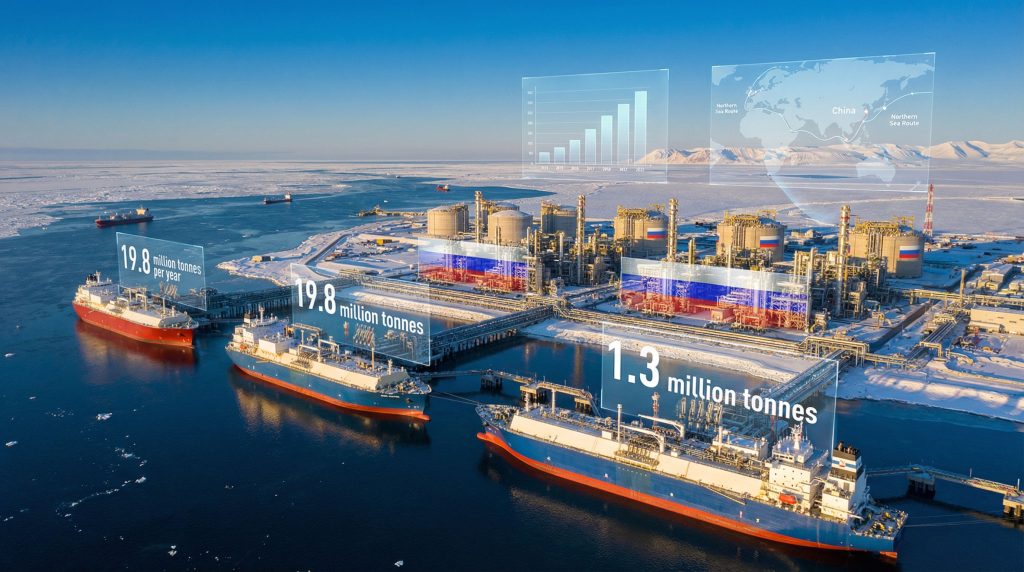
Russia's Arctic LNG defies sanctions by demonstrating how strategic infrastructure planning can maintain operational continuity despite comprehensive international restrictions. The Arctic LNG 2 facility, with its 19.8 million tonnes per annum design capacity across three production trains, represents significant investment in sanctions-resistant capabilities developed before current geopolitical tensions escalated.
The project's operational performance reveals both resilience and constraints. While theoretical capacity reaches nearly 20 million tonnes annually, practical output under current conditions totaled approximately 4.1 million tonnes in 2024, representing roughly 21% of nameplate capacity. This performance gap demonstrates how external pressures affect real-world operations despite continued functionality.
Current Operational Metrics:
- Train 1 Capacity: 6.6 million tonnes per annum (operational since December 2023)
- Actual 2024 Performance: Approximately 31-32 cargo deliveries
- Primary Export Destination: Chinese state-controlled terminals
- Ownership Structure: Entirely Russian-controlled following foreign stakeholder divestment
The facility's design incorporates pre-sanctions equipment procurement strategies that created operational buffers. Critical liquefaction and export infrastructure was substantially completed before February 2022, limiting retroactive enforcement effectiveness. Advanced purchasing of specialized components provided equipment replacement timelines extending current operational capabilities.
Financial Structure and Capital Requirements
Original project cost estimates ranged from $27-30 billion pre-sanctions, with current capital expenditure projections reaching $35+ billion through completion. This 15-20% cost increase reflects financing constraints, equipment sourcing challenges, and operational inefficiencies resulting from restricted supplier networks.
The project demonstrates how infrastructure investments create switching costs that maintain operations despite external pressures. Sunk capital in specialized Arctic facilities, dedicated transportation systems, and bilateral partnership agreements creates economic incentives for continued operation even under suboptimal conditions.
Specialized Transportation Networks and Route Diversification
Arctic LNG operations depend on purpose-built vessel fleets and navigation systems unavailable through Western suppliers. The project utilizes approximately 15 ice-class LNG carriers with Arc7 and Arc5 classifications, enabling transit through multi-year ice formations up to 3 meters thick.
Vessel Technical Specifications:
| Component | Standard LNG Carrier | Arc7 Ice-Class |
|---|---|---|
| Hull thickness (ice zones) | 18-20mm | 25-32mm |
| Propulsion power | 15-20 MW | 40-50 MW |
| LNG capacity | 150,000-160,000 m³ | 170,000-175,000 m³ |
| Ice-breaking capability | None | 3-meter multi-year ice |
The Northern Sea Route provides alternative transit pathways bypassing traditional chokepoints controlled by Western enforcement mechanisms. However, oil price stagnation affects overall energy market dynamics and pricing considerations for Arctic projects.
Operational windows remain constrained by seasonal conditions:
- Summer Operations (June-October): Optimal conditions with minimal icebreaker assistance
- Winter Operations (November-May): Severely limited to 2-4 vessel transits during January-March period
- Annual Accessibility: Extended seasonal rather than truly year-round commercial operations
Navigation Infrastructure Dependencies
Arctic operations require specialized support systems unavailable from Western providers:
- Real-time Ice Charting: Russian Arctic and Antarctic Research Institute (AARI) data services
- Icebreaker Escort: Nuclear icebreaker assistance for winter transits (4 operational vessels)
- Crew Certification: Arctic-qualified maritime personnel from Russian training institutions
- Route Planning: Specialized weather and ice forecasting capabilities
The Murmansk floating storage facility provides critical buffer capacity, enabling LNG accumulation during favorable weather windows followed by coordinated shipments to Chinese terminals. Current operational capacity reaches approximately 50% of planned 200,000 cubic meter storage volume.
Bilateral Trade Mechanisms and Market Concentration
China's continued LNG imports from Arctic projects demonstrate how bilateral energy agreements operate parallel to multilateral sanctions frameworks. Chinese state enterprises PetroChina, CNOOC, and Sinopec represent 100% of identified Arctic LNG 2 offtakers, eliminating private sector exposure to sanctions compliance requirements.
Contract Structure Analysis:
- Long-term Volume Commitments: 3-6 million tonnes per annum depending on capacity realization
- Pricing Mechanisms: Oil-indexed formulas (Brent crude + differential) rather than Western benchmarks
- Payment Systems: Currency diversification including Chinese Yuan (30-40%), Russian Ruble (20-30%), and limited USD usage (10-20%)
This single-buyer model provides operational advantages including simplified logistics, guaranteed demand, and reduced compliance complexity. However, it creates complete market dependency and limits price negotiation flexibility for Russian operators. In addition, the broader US-China trade war impacts influence bilateral energy relationships and contract negotiations.
Risk Management Through State Control
Chinese state-controlled importers reduce sanctions exposure through several mechanisms:
- Sovereign Decision-Making: Government-level energy security prioritisation over commercial considerations
- Alternative Financial Networks: Reduced dependency on Western banking and insurance systems
- Infrastructure Integration: Long-term investments creating switching cost barriers
- Legal Framework Insulation: Bilateral agreements providing contract continuity despite multilateral restrictions
The currency diversification strategy particularly demonstrates adaptation to Western enforcement mechanisms. Reduced USD usage from approximately 80-90% pre-sanctions to 10-20% currently limits exposure to dollar-based blocking measures and SWIFT restrictions.
Sanctions Architecture Limitations and Enforcement Challenges
The Arctic LNG case illustrates fundamental constraints in Western sanctions design when applied to geographically isolated, bilaterally-traded infrastructure projects. Russia's Arctic LNG defies sanctions through several factors that limit enforcement effectiveness:
Jurisdictional Complexity: Arctic maritime routes traverse multiple overlapping zones where Western enforcement authority faces legal challenges. The Northern Sea Route passes through Russian territorial waters where interdiction capabilities remain disputed.
Alternative Chokepoint Avoidance: Unlike Persian Gulf oil exports dependent on the Strait of Hormuz or traditional LNG requiring Suez Canal transit, Arctic routes provide genuine geographical alternatives to Western-controlled maritime passages.
Insurance Market Adaptation: Russian operators utilise Chinese, Indian, and Middle Eastern insurance providers rather than London-based markets, though at premium costs typically 2-5 times higher than international rates.
Technology Transfer and Equipment Constraints
While operations continue, sanctions create measurable impacts on expansion capabilities and operational efficiency. According to Russia blames sanctions for delaying annual LNG output target, the country faces significant production timeline challenges.
Equipment Sourcing Challenges:
- Train 2 Completion: Original 2025-2026 timeline delayed due to specialised equipment restrictions
- Train 3 Development: 2026-2027 target severely impacted by component availability
- Operational Efficiency: Reduced performance from alternative supplier networks
Technology Gap Analysis:
- LNG Compression Systems: Limited access to Western high-efficiency equipment
- Process Control Instrumentation: Increased reliance on Russian domestic suppliers
- Maintenance and Upgrades: Constrained access to original equipment manufacturer support
Climate Variables and Infrastructure Vulnerability
Arctic operations face additional complexity from changing environmental conditions. The Barents Sea has experienced warming of 1.5-2°C above 1991-2020 baseline, creating both opportunities and risks for ice-class vessel operations.
Environmental Impact Factors:
- Extended Navigation Seasons: Reduced ice coverage potentially increasing operational windows
- Unpredictable Ice Patterns: Historical routing assumptions becoming less reliable
- Weather Variability: Increased storm intensity affecting vessel scheduling
- Infrastructure Stress: Temperature fluctuations impacting onshore facility operations
These climate variables introduce operational uncertainties independent of geopolitical factors, potentially affecting long-term project viability and transportation route reliability. Moreover, the OPEC production impact on global energy markets creates additional complexity for Arctic energy planning.
The next major ASX story will hit our subscribers first
Strategic Implications for Global Energy Markets
Russia's Arctic LNG defies sanctions and demonstrates emerging patterns in energy market segmentation where sanctions create parallel trading systems rather than complete supply disruption. This fragmentation has several implications:
Market Structure Evolution:
- Western-aligned Supply Chains: Enhanced compliance requirements and reduced efficiency
- Alternative Trading Networks: Independent infrastructure development around geopolitical alignments
- Regional Market Consolidation: Energy security prioritisation over economic optimisation
- Technology Sovereignty: Domestic capability development in critical sectors
Consequently, analysts note significant tariff impact on markets as parallel trading systems develop across different geopolitical blocs.
Production Timeline and Capacity Realisation
Russian LNG sector growth faces systematic constraints despite individual project resilience. Industry-wide impacts include:
- 2030 Production Targets: 60 million tonnes below original forecasts
- Technology Dependencies: Critical equipment sourcing limitations
- Financing Constraints: Restricted access to Western capital markets
- Vessel Availability: Specialised tanker fleet expansion delays
Comparative Resilience Assessment:
| Risk Category | Arctic LNG 2 | Russian LNG Industry Average |
|---|---|---|
| Technology dependence | Moderate | High |
| Market diversification | Low | Moderate |
| Infrastructure isolation | Low | High |
| Financing flexibility | Moderate | Low |
Future Scenario Development and Policy Implications
Three primary scenarios emerge for Arctic energy corridor development:
Sustained Bilateral Model: Continued China-Russia energy integration with infrastructure expansion within aligned markets and technology development through alternative partnerships.
Gradual Market Reintegration: Potential sanctions modification over time leading to broader market access restoration and technology transfer resumption.
Permanent Market Segmentation: Parallel global energy trading systems with regional infrastructure development and long-term geopolitical energy blocs.
Investment and Strategic Considerations
The Arctic LNG case provides several lessons for energy security planning. Furthermore, research from Columbia University's Energy Policy Analysis reveals the complexity of enforcing sanctions on Arctic energy infrastructure.
- Energy Security Prioritisation: Acceptance of reduced economic efficiency for political independence
- Infrastructure Redundancy: Geographic and technological diversification as risk management
- Technology Sovereignty: Domestic capability development in critical energy sectors
- Market Diversification: Bilateral partnerships as sanctions mitigation strategy
Policy Effectiveness Analysis:
Sanctions have created significant capacity constraints and development delays while demonstrating limited ability to completely halt operations of strategically important, geographically isolated projects with dedicated bilateral partnerships. The Arctic LNG 2 experience suggests that infrastructure resilience depends heavily on pre-existing investments, alternative supply chains, and committed bilateral relationships rather than purely economic considerations.
This dynamic creates complex calculations for both sanctions policy design and energy security planning, as geographic advantages and bilateral partnerships can partially offset multilateral economic pressures in specialised infrastructure sectors.
Disclaimer: This analysis is based on publicly available information and industry reporting. Geopolitical situations and energy market dynamics can change rapidly, and readers should consult current sources and professional advisors for investment or policy decisions related to Arctic energy infrastructure.
Ready to Capitalise on Energy Market Disruptions?
Discovery Alert's proprietary Discovery IQ model delivers real-time alerts on significant ASX mineral discoveries, instantly empowering subscribers to identify actionable opportunities ahead of the broader market as global energy dynamics reshape resource valuations. Understand why historic discoveries can generate substantial returns and begin your 30-day free trial today to position yourself ahead of the market.