June 29, 2026
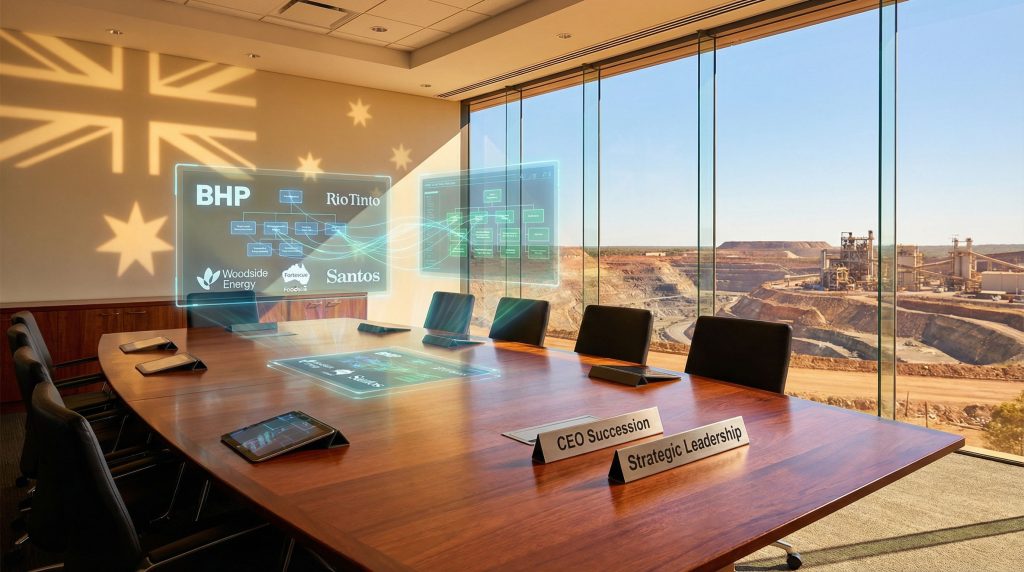
Strategic Leadership Transitions: Understanding Executive Movement in Australia's Resources Sector
Australia's resources sector operates within a complex ecosystem of leadership transitions that reflect broader industry dynamics and corporate governance evolution. The movement of senior executives between major mining and energy companies reveals strategic patterns that extend far beyond individual career decisions, encompassing succession planning frameworks, competitive positioning strategies, and organizational transformation requirements that shape the sector's future direction.
Understanding these leadership dynamics requires examining how major resource companies evaluate executive talent, the factors that make certain leaders attractive across multiple organizations, and the strategic implications of succession decisions for shareholders and industry stakeholders. The intersection of internal development programs and external recruitment strategies creates a sophisticated talent marketplace where proven operational expertise and strategic vision command premium value.
When big ASX news breaks, our subscribers know first
Executive Talent Mobility Patterns Across Australia's Mining Giants
Cross-industry leadership migration in Australia's resources sector demonstrates sophisticated patterns of executive development and strategic positioning. Senior leaders who have successfully navigated operational challenges across multiple commodity sectors become particularly valuable to boards seeking proven track records in complex project delivery and stakeholder management.
The recent case of Geraldine Slattery Woodside CEO candidate, currently President of Australia for BHP Group, illustrates this dynamic perfectly. Her simultaneous consideration for CEO positions at both BHP and Woodside Energy demonstrates how cross-sector experience creates competitive advantages in executive recruitment. Industry analysis suggests that leaders with operational expertise spanning mining and energy operations develop transferable skills in:
- Large-scale project management and capital allocation
- Regulatory compliance across multiple jurisdictions
- Stakeholder relations with government and community groups
- Technology integration and operational optimization
- Crisis management and operational resilience
Furthermore, the mining industry evolution 2025 trends innovation continues to shape executive requirements across the sector.
Financial Context and Market Response
At the time of Slattery's candidacy discussions in March 2026, BHP share price reached $51.77 (up 1.05%), while Woodside share price traded at $30.07 (down 0.36%). These price movements occurred amid executive succession speculation, though isolating the specific impact of leadership transition announcements from broader market factors requires careful analysis of trading volumes and analyst commentary during these periods.
The talent competition between major ASX resources companies creates measurable market dynamics. When Woodside merged with BHP's petroleum business, it created one of the largest independent oil and gas producers listed on the ASX, demonstrating how strategic transactions influence subsequent leadership requirements and executive recruitment priorities. According to The Australian, Slattery finds herself at the centre of a CEO tug-of-war between the two major resources giants.
Succession Planning Framework Implementation
Modern resources companies implement succession planning frameworks that balance internal development with external recruitment options. Woodside's current CEO search exemplifies this approach, with the company evaluating both internal candidates including Liz Westcott (acting chief executive), Mark Abbotsford (chief commercial officer), and Daniel Kalms (chief operating officer for international operations), alongside external prospects.
This dual-track approach allows boards to:
- Compare internal pipeline strength against external market options
- Maintain operational continuity during transition periods
- Negotiate from positions of strength with preferred candidates
- Minimise market uncertainty through transparent communication
- Align leadership appointments with strategic project timelines
In addition, mining industry consolidation 2025 joint ventures asset sales creates additional complexity in succession planning across the sector.
CEO Candidate Evaluation Frameworks in Major Resources Companies
Resources company boards employ sophisticated evaluation criteria when assessing CEO candidates, focusing on measurable operational achievements, strategic vision capabilities, and stakeholder management track records. The evaluation process for senior leadership positions involves comprehensive assessment across multiple competency domains.
Technical Competency Assessment Methods
Modern resources leadership evaluation emphasises quantifiable operational expertise across large-scale project delivery. Candidates are assessed on their experience managing assets at specific scales and complexity levels. Slattery's background includes experience working across major energy assets, including projects previously operated by BHP, providing measurable operational credibility.
Project-Specific Leadership Requirements:
Woodside's new CEO will inherit responsibility for major developments including the Scarborough gas project and the Pluto Train 2 LNG expansion. These projects represent multi-billion-dollar commitments requiring leaders with demonstrated capability in:
- Capital project delivery under complex regulatory environments
- International stakeholder coordination across joint venture partnerships
- Technology integration in frontier development environments
- Market cycle navigation through commodity price volatility
- ESG compliance in evolving regulatory frameworks
External candidates like Nigel Hearne, chief operating officer at Harbour Energy and former Chevron Corporation executive, demonstrate how international energy sector experience translates into Australian market opportunities. His background illustrates the global nature of executive talent pools for major resources positions.
Strategic Vision Evaluation Criteria
Boards evaluate CEO candidates' ability to position companies for long-term value creation amid evolving energy markets and regulatory environments. The assessment typically includes analysis of candidates' previous strategic decisions, market positioning outcomes, and stakeholder relationship management.
Forward-Looking Strategic Assessment:
Industry analysis suggests that Woodside's next chief executive will help guide the company through the next phase of global energy demand, requiring strategic capabilities in:
- Portfolio optimisation across existing and development assets
- Energy transition positioning within evolving policy frameworks
- International expansion strategies and market entry decisions
- Technology adoption for operational efficiency and environmental compliance
- Capital allocation optimisation across competing investment opportunities
The evaluation process typically involves detailed scenario planning exercises where candidates demonstrate their approach to managing complex strategic trade-offs under different market conditions and regulatory environments. Moreover, critical minerals energy transition 2025 energy security considerations increasingly influence strategic leadership requirements.
Cross-Sector Executive Value Creation and Competitive Advantages
Senior executives who successfully transition between mining and energy sectors develop distinctive capabilities that create competitive advantages in executive recruitment. The operational similarities between large-scale resource extraction projects create transferable expertise that boards highly value.
Shared Operational Challenges and Solutions
Mining and energy operations share fundamental challenges in project development, regulatory compliance, and stakeholder management. Executives with cross-sector experience understand how to navigate these common operational requirements:
Technical Operations Overlap:
- Large-scale infrastructure development and maintenance
- Environmental impact assessment and mitigation strategies
- Community relations and social licence maintenance
- Regulatory compliance across multiple jurisdictions
- International joint venture management and coordination
Market Dynamics Understanding:
- Commodity price cycle navigation and hedging strategies
- Supply chain optimisation across global markets
- Technology adoption for operational efficiency improvements
- Labour relations in remote and challenging environments
- Crisis management during operational disruptions
Consequently, Slattery's characterisation as one of Australia's most experienced resources executives reflects her successful navigation of these challenges across both mining and energy contexts. Her role in shaping BHP's domestic strategy demonstrates the strategic impact that cross-sector leaders can achieve.
Leadership Track Record Evaluation Metrics
Resources companies evaluate executive candidates using measurable performance indicators from their previous roles. The assessment typically includes quantitative analysis of financial performance, project delivery success rates, and operational efficiency improvements achieved during their tenure.
Performance Measurement Categories:
| Metric Category | Evaluation Focus | Measurement Timeline |
|---|---|---|
| Financial Performance | Revenue growth, cost management, margin improvement | 3-5 year periods |
| Project Delivery | On-time, on-budget completion rates | Individual project cycles |
| Operational Excellence | Safety performance, production efficiency | Annual and multi-year trends |
| Strategic Positioning | Market share gains, competitive advantage creation | Long-term strategic cycles |
| Stakeholder Management | Regulatory compliance, community relations success | Ongoing relationship quality |
The evaluation process typically involves detailed due diligence on candidates' specific contributions to organisational performance, including their role in major strategic decisions and operational improvements.
Market Response Patterns and Strategic Implications of Executive Succession
Executive succession announcements in major ASX resources companies generate measurable market responses that reflect investor confidence in leadership continuity and strategic direction. Understanding these patterns provides insight into how markets evaluate leadership transitions and their potential impact on company performance.
Share Price Volatility During Leadership Transitions
Market analysis suggests that resources companies experience specific patterns of share price movement during CEO search and appointment periods. The complexity of these organisations and the strategic significance of leadership decisions create heightened investor attention during transition periods.
Investor Sentiment Indicators:
During executive succession periods, market participants typically monitor several key indicators:
- Trading volume increases reflecting heightened investor interest
- Analyst coverage intensity with increased research publication frequency
- Institutional investor engagement through meetings and conference calls
- Media attention patterns influencing retail investor sentiment
- Peer company comparison analysis for relative performance assessment
The simultaneous consideration of the Geraldine Slattery Woodside CEO candidate at both BHP and Woodside creates a unique market dynamic where two major resources companies compete for the same executive talent, potentially influencing share price movements at both organisations. Bloomberg reports indicate BHP's Australia boss is in the running for the top job at Woodside.
Competitive Positioning Through Strategic Leadership Appointments
Major resources companies use CEO appointments as competitive positioning tools, signalling strategic direction and organisational capability to stakeholders. The selection of leaders with specific operational backgrounds or strategic expertise communicates intended strategic focus areas.
Strategic Signalling Through Leadership Selection:
- Operational expertise emphasis through candidates with strong project delivery backgrounds
- International expansion focus via leaders with global operational experience
- Technology integration priority through executives with digital transformation track records
- ESG leadership commitment via candidates with strong sustainability credentials
- Market cycle navigation through leaders with proven crisis management experience
Industry observers note that boards coordinate CEO appointment timing with major project milestones and strategic inflection points, maximising the strategic impact of leadership transitions.
Internal Development Versus External Recruitment Strategy Optimisation
Resources companies balance internal succession pipeline development with external recruitment strategies to optimise leadership continuity and strategic capability enhancement. This balance reflects organisational culture, strategic requirements, and market conditions.
Internal Candidate Development Strategies
Major resources companies invest significantly in developing internal leadership pipelines through structured development programs and cross-functional experience opportunities. Woodside's identification of multiple internal candidates demonstrates sophisticated succession planning implementation.
Internal Development Program Components:
- Cross-functional rotation through operations, commercial, and strategic roles
- International assignment exposure for global perspective development
- Mentoring relationships with senior executives and board members
- External advisory roles for industry network development
- Advanced education programs including executive MBA and specialised technical training
The presence of three distinct internal candidates at Woodside (acting CEO, chief commercial officer, and international operations COO) indicates deliberate development of succession options across different functional competency areas.
External Search Process Optimisation Frameworks
External CEO recruitment in resources companies involves sophisticated search processes designed to identify and evaluate candidates across global talent pools. The process typically spans several months and involves multiple evaluation phases.
Search Process Structure:
- Candidate identification across domestic and international markets
- Initial screening for basic qualifications and cultural fit assessment
- Detailed evaluation including operational track record analysis
- Reference verification with former colleagues, board members, and stakeholders
- Final assessment through board interviews and scenario-based discussions
The identification of external candidates like Slattery and Hearne suggests boards cast wide nets across the resources sector, evaluating leaders from both domestic and international markets. Furthermore, gold miners 2025 ceos perspective provides additional insights into leadership requirements across different mining sectors.
The next major ASX story will hit our subscribers first
Gender Diversity Evolution in Resources Sector Leadership
The potential appointment of the Geraldine Slattery Woodside CEO candidate as BHP's first female CEO in the company's 140-year history represents a significant milestone in resources sector leadership diversity. This development reflects broader industry transformation toward more inclusive leadership representation.
Industry Progress Toward Gender-Balanced Leadership
Australia's resources sector has traditionally exhibited lower female representation in senior executive positions compared to other industries. Recent developments suggest accelerating progress toward more balanced leadership composition.
Diversity Milestone Significance:
- Historical barriers being addressed through structured diversity initiatives
- Board mandate evolution incorporating diversity considerations into succession planning
- Investor expectations increasingly emphasising ESG factors including leadership diversity
- Talent pool expansion through enhanced female participation in resources sector roles
- Cultural transformation requirements for traditional industry modernisation
The consideration of female candidates for CEO positions at major resources companies signals board recognition that diverse leadership perspectives contribute to strategic decision-making quality and organisational performance. For instance, women mining 2025 challenges evolution opportunities explores the changing landscape for female leadership in the sector.
Breaking Traditional Industry Barriers
Female leadership success in resources sector executive roles demonstrates the potential for organisational culture transformation in traditionally male-dominated industries. Successful examples create precedents that influence future appointment decisions and industry expectations.
Organisational Culture Considerations:
- Stakeholder perception management during diversity-focused leadership transitions
- Operational credibility establishment in technical and commercial environments
- Team integration strategies for new leadership in established organisational cultures
- Performance measurement consistency ensuring objective evaluation criteria application
- Industry network development supporting diverse leadership representation
Industry analysis suggests that boards increasingly view diversity as a strategic advantage rather than merely a compliance requirement, recognising that varied perspectives enhance decision-making quality in complex operational environments.
Future Leadership Competency Requirements in Australian Resources
The evolving resources sector landscape requires CEO candidates to demonstrate capabilities in emerging competency areas beyond traditional operational and commercial expertise. These requirements reflect technological advancement, regulatory evolution, and stakeholder expectation changes.
Emerging Strategic Leadership Capabilities
Modern resources sector CEOs must navigate increasingly complex operating environments that require new forms of strategic thinking and operational capability.
Critical Future Competencies:
- Climate transition strategy development for net-zero commitment implementation
- Digital mining and automation leadership for operational efficiency optimisation
- Indigenous relations expertise for social licence maintenance and enhancement
- Circular economy integration for waste reduction and resource optimisation
- Geopolitical risk navigation for international operations and supply chain management
The requirement for leaders to guide companies through the next phase of global energy demand necessitates sophisticated understanding of evolving market dynamics and regulatory frameworks.
Strategic Timing Considerations for Major Leadership Appointments
Resources companies coordinate CEO appointments with economic cycles, major project timelines, and regulatory environment stability to maximise leadership effectiveness and shareholder value creation.
Timing Optimisation Factors:
- Economic cycle positioning for countercyclical investment and operational decisions
- Major project milestone alignment ensuring leadership continuity during critical phases
- Regulatory environment stability providing predictable operating context for new leadership
- Market sentiment windows optimising announcement timing for positive stakeholder reception
- Competitive landscape dynamics considering peer company activities and market positioning
Industry observers note that successful CEO transitions typically occur during periods of operational stability, allowing new leaders to establish strategic direction without managing immediate crisis situations.
Investment Decision Framework During Resources Sector Leadership Transitions
Investors require sophisticated analytical frameworks for evaluating resources companies during CEO succession periods. These frameworks balance leadership continuity risks against potential value creation opportunities from strategic direction changes.
Risk Assessment Methodologies
Investment analysis during leadership transitions focuses on quantifiable risk factors that could impact operational performance and strategic execution capability.
Key Risk Categories:
| Risk Factor | Assessment Method | Mitigation Indicators |
|---|---|---|
| Operational Continuity | Management depth analysis | Strong internal pipeline presence |
| Strategic Direction | Board communication consistency | Clear succession planning communication |
| Market Confidence | Trading volume and price volatility | Stable institutional ownership |
| Project Execution | Timeline and budget adherence | Experienced project management teams |
| Stakeholder Relations | Regulatory and community feedback | Established relationship continuity |
Performance Continuity Indicators:
Investors monitor specific indicators that suggest successful leadership transition management:
- Operational metrics stability during transition announcement and implementation periods
- Strategic project progression continuing according to established timelines
- Financial performance consistency with historical patterns and guidance
- Stakeholder engagement maintenance through regulatory and community relationships
- Management team stability with key operational leaders remaining in positions
Long-Term Value Creation Potential Evaluation
Investment frameworks for resources companies during CEO transitions emphasise long-term value creation potential rather than short-term market volatility. This approach recognises that leadership quality significantly influences multi-decade operational and strategic outcomes.
Value Creation Assessment Framework:
- Strategic vision alignment with long-term industry trends and regulatory frameworks
- Operational excellence potential based on candidate track record and organisational capability
- Capital allocation discipline demonstrated through previous leadership experience
- Stakeholder relationship quality supporting long-term operational licence maintenance
- Technology adoption capability for competitive advantage development and operational optimisation
The evaluation of candidates like the Geraldine Slattery Woodside CEO candidate, with proven operational experience across major energy assets and strategic responsibility for domestic operations, provides measurable indicators of potential value creation capability.
Industry Consolidation and Leadership Mobility Strategic Implications
The movement of senior executives between major resources companies creates strategic opportunities and challenges that extend beyond individual organisational impacts. Understanding these broader implications helps investors assess sector-wide competitive dynamics.
Strategic Partnership Opportunities:
Leadership transitions can create windows for strategic partnerships, joint ventures, or consolidation opportunities as new executives bring fresh perspectives to existing relationships and market positioning strategies.
Competitive Advantage Through Superior Succession Planning:
Organisations with well-developed internal succession pipelines and strategic external recruitment capabilities gain competitive advantages through:
- Reduced transition disruption maintaining operational momentum during leadership changes
- Strategic flexibility adapting to changing market conditions through appropriate leadership selection
- Talent attraction enhancement demonstrating career development opportunities to high-potential executives
- Stakeholder confidence maintenance through transparent and professional succession management
- Market positioning optimisation using leadership appointments to signal strategic direction and capability
Disclaimer: This analysis is based on publicly available information and industry observations. Investment decisions should consider multiple factors beyond leadership transitions, including operational performance, market conditions, and individual risk tolerance. Past performance does not guarantee future results, and resources sector investments carry inherent commodity price and operational risks.
Looking to Capitalise on Australia's Next Major Resource Discovery?
Discovery Alert's proprietary Discovery IQ model provides instant notifications when significant ASX mineral discoveries are announced, transforming complex geological data into actionable investment insights that help subscribers position themselves ahead of market movements. Explore how major mineral discoveries have delivered exceptional returns throughout history and begin your 14-day free trial today to secure your competitive advantage in the resources sector.