June 4, 2026
Strategic Manufacturing Evolution in Mining Supply Chains
Mining equipment manufacturing has traditionally concentrated in major industrial centres, relying on established supply chains and economies of scale. However, extreme operational environments and massive transportation costs have prompted industry leaders to reconsider localisation strategies. The Pilbara region of Western Australia, hosting some of the world's largest iron ore operations, represents a compelling case study for this manufacturing transformation. With harsh environmental conditions, remote locations, and continuous high-volume operations requiring 300+ million tonnes of annual transport capacity, the region demands equipment solutions that prioritise proximity over traditional cost structures. Furthermore, Australia iron ore advantages continue to drive innovations in manufacturing and supply chain management.
When big ASX news breaks, our subscribers know first
What Does Rio Tinto's Pilbara Railcar Manufacturing Initiative Represent?
Strategic Supply Chain Localisation Framework
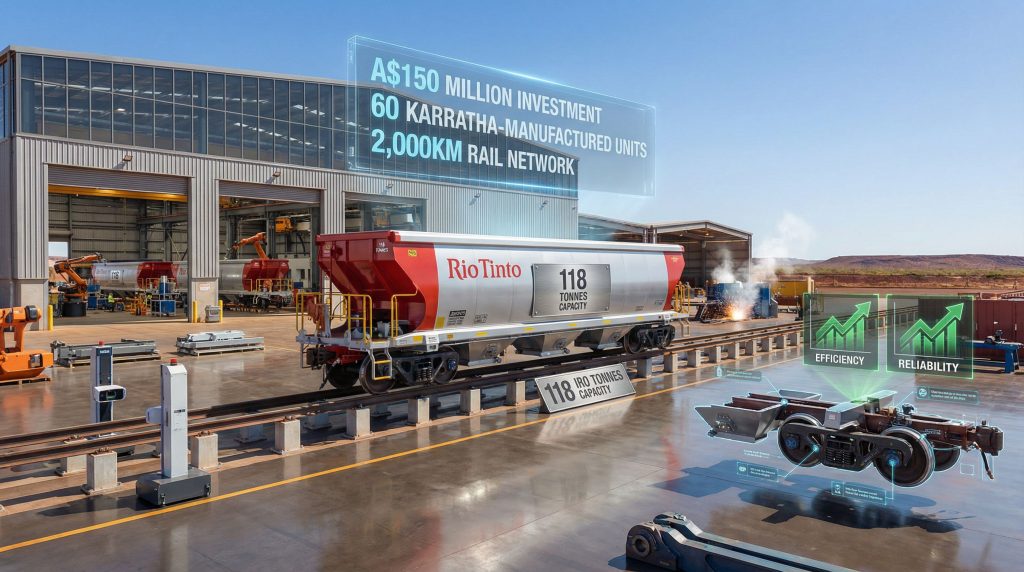
The A$150 million partnership between Rio Tinto and Gemco Rail demonstrates a sophisticated approach to manufacturing distribution across Western Australia. This investment structure encompasses 40 railcar units manufactured at Gemco's established Perth facility, while 60 additional units will emerge from a purpose-built Karratha facility. The initiative operates within Rio Tinto's expansive infrastructure network spanning nearly 2,000 kilometres of rail tracks connecting 18 Pilbara iron ore mines to Dampier and Cape Lambert port facilities.
Rio Tinto's current fleet of approximately 13,500 iron ore railcars requires systematic replacement, with roughly 10 units retiring annually. The 100-unit order represents a decade of replacement capacity while establishing permanent manufacturing infrastructure within the operational region.
Railcar Technical Performance Metrics:
| Specification | Value |
|---|---|
| Load capacity per unit | 118 tonnes |
| Total order quantity | 100 railcars |
| Fleet integration timeline | December 2025 |
| Total network railcar fleet | 13,500 units |
| Annual replacement requirement | ~10 units |
Manufacturing Facility Integration Model
The hybrid production model leverages existing Perth-based expertise while establishing new Karratha capabilities. This approach enables technology transfer from Gemco Rail's established operations to the Pilbara facility while maintaining quality control standards. The sequenced production schedule reduces implementation risk during the Karratha facility commissioning phase.
Matthew Holcz, Rio Tinto Iron Ore CEO, characterised the initiative as representing operational enhancement coupled with community investment: "Local manufacturing strengthens not only our business, it also empowers local communities, supports regional jobs and creates new economic opportunities in the Pilbara." This positioning extends the initiative beyond logistics optimisation to encompass broader regional economic development.
How Does Local Manufacturing Transform Pilbara Industrial Capabilities?
Manufacturing Facility Development in Karratha
Gemco Rail, operating as a subsidiary of Engenco, has established the first dedicated railcar manufacturing facility in the Pilbara region. This purpose-built facility represents a significant industrial capability addition to Karratha, historically focused on resource extraction and processing rather than equipment manufacturing.
The facility development incorporates workforce training programmes transferring technical expertise from Perth operations to newly-hired Karratha personnel. This knowledge transfer encompasses advanced rail equipment manufacturing techniques, quality assurance protocols, and integration requirements specific to Rio Tinto's operational standards. In addition, WA economic impact demonstrates the significant potential for regional industrial development.
Economic Impact Assessment for Western Australia
Dean Draper, Engenco CEO, emphasised the strategic dimensions of establishing manufacturing presence in Karratha: the ability to work closely with customers, enhanced supply chain resilience, and regional industry support through employment creation. This positioning reflects operational philosophy prioritising geographic proximity and partnership-based relationships over traditional transactional manufacturing models.
Rio Tinto's broader supplier spending of A$10.3 billion annually within Western Australia demonstrates the scale of regional economic integration, with railcar manufacturing representing strategic infrastructure investment extending beyond immediate operational requirements.
Western Australian Premier Roger Cook positioned the initiative within state economic diversification strategy: "Our government brought railcar manufacturing back to Perth, and we're proud to see businesses like Rio Tinto and Gemco Rail get behind our state's industry, build more things here and create WA jobs." This statement indicates previous railcar manufacturing capacity within Western Australia that had been discontinued, with current partnerships representing re-establishment of industrial capability.
What Are the Operational Advantages of Pilbara-Based Rail Manufacturing?
Logistics and Maintenance Optimisation
Karratha-based manufacturing proximity to active mining operations enables rapid response capabilities for equipment maintenance and replacement. With 300+ million tonnes of iron ore transported annually across the network, equipment reliability directly impacts operational continuity. Localised manufacturing reduces transportation lead times for both new equipment delivery and repair turnaround.
The 118-tonne capacity railcars operate under extreme conditions including high ambient temperatures, dust exposure, and continuous heavy-load cycles. Manufacturing proximity enables real-time feedback integration between operational performance and manufacturing processes, facilitating rapid design improvements based on field experience. Consequently, data-driven mining operations are becoming increasingly important for optimising performance.
Supply Chain Risk Mitigation Strategies
Key Risk Reduction Elements:
- Geographic diversification from centralised manufacturing locations
- Reduced dependency on long-distance equipment transportation across Australia
- Enhanced operational continuity during potential supply chain disruptions
- Localised spare parts inventory and technical support capabilities
- Direct coordination between manufacturing and operational maintenance teams
The initiative addresses vulnerability associated with single-source manufacturing dependencies, particularly relevant for critical mining infrastructure requiring rapid replacement capabilities. Proximity manufacturing enables condition-based maintenance programmes informed by direct technical expertise rather than remote diagnostics.
How Does This Initiative Compare to Global Mining Manufacturing Trends?
International Mining Equipment Localisation Context
Mining operations worldwide increasingly prioritise equipment manufacturing localisation to address similar logistical challenges and operational requirements. Remote mining regions face comparable transportation costs, environmental challenges, and equipment durability requirements that favour proximity manufacturing over centralised production. Moreover, mining innovation trends continue to drive such strategic decisions across the industry.
The A$150 million investment scale reflects substantial commitment to manufacturing infrastructure development, positioning the Karratha facility as a significant industrial addition to the Pilbara region. This investment encompasses facility construction, equipment procurement, workforce development, and initial production capacity establishment.
Competitive Positioning Analysis
Rio Tinto's localisation strategy demonstrates recognition that critical infrastructure components warrant domestic manufacturing capabilities despite potentially higher unit costs compared to imported alternatives. This approach balances operational efficiency considerations including reduced logistics costs, supply chain resilience through geographic diversification, and community development via regional employment.
The initiative positions Rio Tinto with enhanced operational autonomy, reducing external supplier dependencies for critical infrastructure components while enabling customisation aligned with specific Pilbara operational conditions. Furthermore, mining consolidation trends indicate that strategic partnerships like this will become increasingly important.
What Are the Technical Challenges in Pilbara Railcar Manufacturing?
Environmental and Operational Constraints
Karratha manufacturing operations face significant environmental challenges affecting production processes and equipment performance:
Extreme Climate Considerations:
- High ambient temperatures affecting metal fabrication and welding processes
- Humidity exposure requiring enhanced corrosion protection protocols
- Tropical cyclone risk necessitating facility structural design considerations
- Salt spray environment demanding specialised coatings and material treatments
- Dust exposure requiring enhanced filtration and protection systems
Quality Control Standards for Mining Applications
Mining-grade railcar manufacturing requires stringent certification and performance validation to ensure reliability under continuous heavy-load operation. The 118-tonne load capacity specification must be maintained consistently across units manufactured at the new facility, requiring sophisticated quality assurance protocols.
Integration Requirements:
- Compatibility with existing locomotive systems operating on Rio Tinto's network
- Alignment with signalling and operational control systems
- Port facility loading and unloading equipment coordination at Dampier and Cape Lambert
- Maintenance infrastructure and spare parts ecosystem integration throughout Pilbara
Manufacturing railcars for integration into an established 13,500-unit fleet requires precise compatibility standards to ensure seamless operational integration without system disruptions.
The next major ASX story will hit our subscribers first
How Will This Impact Rio Tinto's Operational Efficiency Metrics?
Cost-Benefit Analysis Framework
The A$150 million investment distributed across 100 railcar units represents approximately A$1.5 million per unit when averaged across the partnership. Within the context of Rio Tinto's 13,500-railcar fleet, this initiative represents 0.74% replacement capacity while establishing permanent manufacturing infrastructure.
Manufacturing Return on Investment Calculation:
The investment generates returns through multiple mechanisms including reduced logistics costs for equipment transportation, improved maintenance response times, enhanced operational flexibility, and regional workforce development. These benefits extend beyond direct cost reduction to encompass operational resilience and community relationship strengthening.
Performance Indicators and Success Metrics
Operational Context Metrics:
- Annual Transport Volume: 300+ million tonnes of iron ore
- Network Infrastructure: Nearly 2,000 kilometres of rail tracks
- Mine Portfolio: 18 Pilbara iron ore operations
- Annual Replacement Programme: ~10 railcars requiring replacement annually
The December 2025 deployment timeline provides opportunity to measure integration success rates, maintenance cost impacts, and operational efficiency improvements compared to externally-sourced alternatives.
What Does This Mean for Australia's Mining Equipment Manufacturing Sector?
Industry Precedent and Replication Potential
The Karratha railcar facility establishes a precedent for mining equipment manufacturing localisation within operational regions rather than centralised metropolitan production. This model demonstrates viability for manufacturing other critical mining equipment categories including conveyor systems, processing equipment components, and mobile machinery parts.
Success of the railcar initiative could encourage similar manufacturing investments by other major Pilbara operators, potentially creating a regional equipment manufacturing ecosystem. The facility's performance will provide valuable data regarding cost-effectiveness, quality maintenance, and operational integration of locally-manufactured mining equipment. According to Rio Tinto's announcement, this represents a significant milestone for regional manufacturing.
Future Manufacturing Expansion Possibilities
If operational performance meets expectations, the Karratha facility infrastructure could support expanded production capacity or additional equipment categories. The purpose-built facility design and established workforce provide foundation for manufacturing diversification based on regional mining industry requirements.
Potential Expansion Scenarios:
- Additional railcar production capacity for other Pilbara operators
- Manufacturing diversification into related rail infrastructure components
- Spare parts and maintenance component production
- Custom equipment modification and repair services
How Does Government Policy Support Mining Manufacturing Localisation?
Western Australian Economic Diversification Strategy
State government policy actively supports local production capabilities through various mechanisms designed to encourage mining sector manufacturing investment. The Premier's statement regarding bringing "railcar manufacturing back to Perth" indicates previous industrial capability that government policy aims to restore and expand.
Western Australian economic diversification strategy recognises mining sector manufacturing as opportunity for regional development beyond resource extraction. Government support encompasses regulatory framework development, skills training programme coordination, and investment incentive structures. Industry reports suggest that Gemco's successful production demonstrates the effectiveness of these policies.
Federal Policy Alignment and Strategic Implications
Manufacturing localisation aligns with national strategic priorities including supply chain resilience, advanced manufacturing capability development, and regional economic strengthening. Mining equipment manufacturing represents intersection of resource sector expertise with advanced manufacturing technology.
The initiative demonstrates potential for Australian mining operations to support domestic manufacturing capabilities while maintaining operational competitiveness. This approach reduces import dependency while building exportable manufacturing expertise.
What Are the Long-Term Strategic Implications?
Regional Industrial Ecosystem Development
Successful railcar manufacturing could catalyse broader industrial ecosystem development around Karratha, attracting related manufacturing capabilities and supplier networks. The facility provides anchor for additional manufacturing investment, potentially transforming Karratha from purely extractive operations to integrated industrial capability.
Regional population growth and skills retention represent additional benefits extending beyond immediate manufacturing employment. Technical workforce development contributes to long-term regional capability building supporting sustainable economic diversification.
Competitive Advantage Sustainability
Local manufacturing provides Rio Tinto with enhanced operational control, reduced supply chain vulnerabilities, and strengthened community relationships, creating sustainable competitive advantages in Pilbara iron ore operations while contributing to regional industrial development.
The initiative positions Rio Tinto with manufacturing autonomy enabling rapid response to operational requirements and customisation capabilities aligned with specific mining conditions. This operational flexibility represents competitive advantage particularly valuable during market volatility or supply chain disruptions.
Assessing the Railcar Manufacturing Initiative's Broader Impact
Operational Excellence and Regional Development Synthesis
The A$150 million Rio Tinto Pilbara railcar manufacturing initiative represents sophisticated integration of operational efficiency improvements with regional economic development objectives. By establishing purpose-built manufacturing capability within the operational region, Rio Tinto demonstrates that large-scale mining operations can contribute meaningfully to local industrial capability while enhancing their own operational resilience.
The initiative's success will be measured not only through traditional operational metrics including cost reduction and efficiency improvements, but also through broader regional impact including workforce development, supplier ecosystem growth, and industrial capability expansion. This comprehensive approach positions the Karratha facility as potentially transformative for Pilbara regional development beyond immediate railcar production requirements.
Disclaimer: This analysis is based on publicly available information and industry trends. Actual operational performance, cost-benefit realisation, and regional economic impacts may vary based on implementation execution, market conditions, and operational factors not yet disclosed. Investment and operational decisions should be based on comprehensive due diligence and professional consultation.
Ready to Capitalise on Australia's Manufacturing and Mining Innovations?
Discovery Alert's proprietary Discovery IQ model delivers real-time alerts on significant ASX mineral discoveries and mining sector developments, instantly empowering subscribers to identify actionable opportunities ahead of the broader market. Begin your 30-day free trial today and secure your market-leading advantage in Australia's evolving resources sector.