
August 14, 2026
Strategic Implications of Maritime Energy Security
Global energy markets face unprecedented vulnerability as maritime chokepoints become critical battlegrounds in an increasingly interconnected world. The intricate web of oil transportation routes, strategic reserves, and alternative supply mechanisms reveals how quickly localised disruptions can cascade into worldwide economic instability. Furthermore, understanding these complex interdependencies has become essential for investors, policymakers, and industry participants navigating an era where geopolitical tensions directly translate into energy price volatility and the current Middle East oil reserves crisis.
When big ASX news breaks, our subscribers know first
Understanding the Strait of Hormuz Vulnerability Matrix
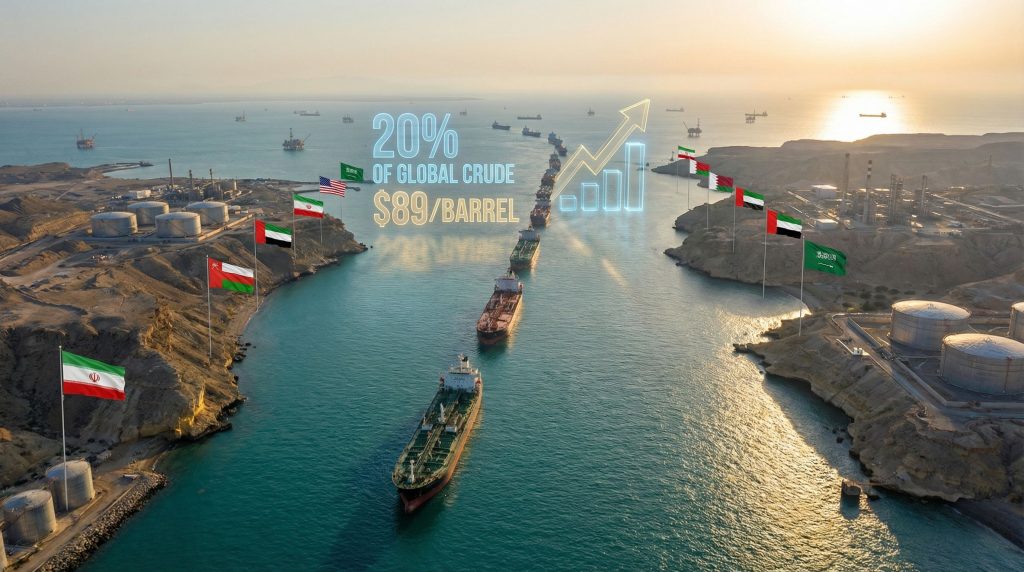
The Persian Gulf's narrow maritime corridor represents one of the world's most strategically important energy transit points, with approximately one-fifth of global crude oil shipments passing through this 21-mile waterway under normal market conditions. This geographic bottleneck creates systematic risk for the entire global energy system, as demonstrated by the current Middle East oil reserves crisis that began following February 28, 2026 strikes.
Current market data reveals the immediate impact of disrupted shipping lanes. Brent crude futures reached $89 per barrel by March 6, 2026, marking the highest price level in nearly two years. Consequently, U.S. retail petrol prices simultaneously climbed to their strongest position since 2024, though these levels remain considerably below peaks reached during Russia's 2022 invasion of Ukraine.
Geographic Chokepoint Analysis
The narrow passage creates multiple layers of vulnerability that extend far beyond simple shipping delays. When maritime traffic through the Strait of Hormuz becomes "essentially halted," as observed during the current crisis, the ripple effects impact:
• Loading terminal operations at major export facilities
• Inventory management at refineries dependent on Gulf crude
• Storage capacity utilisation as vessels queue in safer waters
• Alternative routing calculations through significantly longer passages
Economic dependency mapping reveals stark regional variations in exposure levels. Japan's energy infrastructure demonstrates extreme vulnerability with 95% dependency on Middle East crude imports, while China maintains greater flexibility through diversified supply relationships including Russian crude and expanding domestic production capabilities.
Strategic petroleum reserve adequacy becomes critical during extended disruptions. Current global stockpile capacity calculations suggest most developed nations maintain 90-day import coverage under International Energy Agency protocols. However, actual deployment decisions depend on political assessments rather than automatic triggers.
How Geopolitical Tensions Cascade Through Energy Infrastructure Networks
The February 28, 2026 strikes that triggered the current crisis demonstrate how rapidly geopolitical events transform into infrastructure vulnerabilities. Within days of the initial conflict escalation, shipping through the Persian Gulf's vital corridor ceased, creating immediate pressure on global energy export challenges and supply chains.
Critical Infrastructure Exposure Assessment
Production facilities across the region face varying degrees of operational risk depending on their geographic positioning and defensive capabilities. The systematic nature of these vulnerabilities creates compounding effects:
Offshore Platform Vulnerabilities:
• Exposed drilling and production installations in Gulf waters
• Limited defensive capabilities against targeted disruption
• Complex evacuation procedures requiring extended operational shutdowns
Refinery Network Risks:
• Coastal facility exposure to maritime-based threats
• Feedstock supply interruptions from crude import dependencies
• Product distribution bottlenecks through compromised export terminals
Transportation Corridor Limitations:
• Pipeline capacity constraints for alternative routing
• Extended transit times through alternate shipping lanes
• Insurance premium increases affecting commercial viability
Iraq's southern export infrastructure exemplifies regional vulnerability patterns, with approximately 3.5 million barrels per day of production dependent on Gulf shipping routes. Similarly, Qatar's liquefied natural gas operations, representing roughly 20% of global LNG supply, face operational constraints when regional maritime security deteriorates. In addition, these disruptions affect broader LNG market opportunities across the Pacific Basin.
Saudi Arabia's operational adjustments during the crisis highlight adaptive capacity within the system. The kingdom's ability to redirect crude flows through Red Sea terminals while managing Ras Tanura refinery throughput demonstrates both flexibility and limitations within existing infrastructure networks.
Regional Production Impact Quantification
Storage capacity bottlenecks create additional pressure points during extended disruptions. Tank farm limitations at loading terminals force production curtailments when export capacity becomes constrained, amplifying the economic impact beyond simple transportation delays.
The accumulation of surplus oil from Russia and Iran on tankers at sea, as observed during the current crisis, illustrates how sanctions enforcement interacts with physical supply chain disruptions. This creates complex market dynamics that influence global oil price movements and trading patterns.
What Economic Indicators Signal Long-Term Market Restructuring?
Price discovery mechanisms during the current Middle East oil reserves crisis reveal important insights about market psychology versus fundamental supply constraints. Despite shipping disruptions through the Persian Gulf, International Energy Agency assessments characterise the situation as a temporary logistical disruption rather than actual supply shortage.
Price Discovery Mechanism Analysis
The current $89 per barrel Brent crude peak, while representing almost two-year highs, remains significantly below Ukraine crisis levels. This suggests market participants distinguish between different types of supply disruptions. This pricing behaviour indicates:
| Crisis Type | Peak Price Response | Duration | Recovery Pattern |
|---|---|---|---|
| Libya 2011 | Sharp spike, rapid recovery | 3-6 months | V-shaped |
| Ukraine 2022 | Sustained elevation | 12+ months | Gradual decline |
| Iran 2026 | Moderate spike | TBD | Under assessment |
Forward curve dynamics during the crisis provide additional insight into market expectations. Contango versus backwardation shifts reveal whether traders anticipate extended disruption or relatively quick resolution. Furthermore, storage economics become particularly relevant when floating storage utilisation increases, as observed with Russian and Iranian crude accumulation on tankers.
Demand Destruction Threshold Analysis
Consumer price elasticity mapping becomes critical for understanding long-term market restructuring potential. Historical analysis suggests petrol price points above certain thresholds trigger measurable behavioural changes in transportation fuel consumption patterns.
Industrial consumption adjustments vary significantly by sector:
• Petrochemical operations face feedstock cost pressures affecting profit margins
• Manufacturing sectors implement energy efficiency measures during price spikes
• Transportation industries accelerate alternative fuel adoption timelines
Regional price differential expansion during crises creates arbitrage opportunities while revealing infrastructure constraints. Asia-Pacific premium development during Middle East disruptions reflects both increased shipping costs and regional supply tightness. These factors contribute to broader patterns in oil price rally dynamics during periods of uncertainty.
How Do Strategic Petroleum Reserves Function During Supply Shocks?
The coordinated response to the March 2026 Middle East oil reserves crisis reveals important aspects of international energy security mechanisms. Despite $89 per barrel crude prices and halted Strait of Hormuz shipping, major consuming nations have thus far refrained from emergency reserve releases.
International Energy Agency Response Framework
IEA Executive Director Fatih Birol's assessment that markets contain a huge surplus and face only temporary logistical disruption provides the rationale for maintaining current reserve policies. His statement that all options remain available while no collective action is currently planned demonstrates the organisation's strategic positioning.
Collective Action Triggers:
• 90-day import disruption threshold mechanisms
• Member nation consensus requirements
• Market impact assessment protocols
• Strategic versus commercial reserve deployment decisions
The divergence between collective and individual national responses emerges clearly during the current crisis. While the IEA maintains its wait-and-see approach, individual member nations pursue different strategies:
National Reserve Management Strategies
Japan's Position: Government consideration of unilateral reserve releases despite IEA guidance reflects the nation's extreme import dependency. With 95% Middle East crude reliance, Japan faces immediate supply security concerns that transcend broader market surplus assessments.
European Union Approach: Member states received explicit guidance that current conditions do not justify strategic stock releases. However, individual countries retain sovereign decision-making authority for their national reserves.
United States Policy: The Trump administration's decision against immediate reserve releases aligns with IEA collective assessment while maintaining policy flexibility for future developments.
The IEA maintains readiness to act if necessary while assessing current disruption as temporary and logistical rather than representing fundamental supply shortage.
Historical precedent analysis from previous interventions during the 2011 Libyan uprising and 2022 Ukraine invasion provides context for current decision-making frameworks. Reserve release effectiveness depends on disruption duration, alternative supply availability, and market psychology factors.
What Alternative Supply Chain Adaptations Emerge During Crises?
The current crisis has activated multiple alternative supply mechanisms that demonstrate market adaptability during disruptions. These adaptations reveal both regulatory flexibility and private sector innovation in maintaining energy flows despite traditional route closures.
Sanctions Circumvention Economics
U.S. licensing decisions during the crisis illustrate how regulatory frameworks adapt to changing supply conditions. The one-month licence issued to India for increased Russian crude purchases represents a significant policy reversal, acknowledging market realities during regional disruptions.
Temporary Licensing Mechanisms:
• Time-limited sanctions relief for strategic importers
• Alternative payment system arrangements
• Regulatory flexibility during emergency conditions
• Diplomatic coordination between consuming nations
The accumulation of surplus Russian and Iranian crude on floating storage demonstrates how sanctions enforcement creates unintended inventory buffers. These ship-based stockpiles become available for rapid deployment when market conditions deteriorate, providing unofficial strategic reserves outside traditional government-controlled systems.
Infrastructure Redundancy Development
Trump administration commitments to naval escorts and insurance guarantees for tankers represent direct government intervention in commercial shipping markets. These guarantees address risk premium increases that otherwise make alternative routing economically unviable. For instance, OPEC production impact decisions become more critical during such disruptions.
Pipeline Capacity Utilisation:
• East-West crude transportation alternatives
• Spare capacity activation during emergency conditions
• Cross-border cooperation agreements
• Strategic pipeline reverse-flow capabilities
Refinery configuration adjustments enable crude slate flexibility during supply disruptions. Facilities capable of processing different crude grades maintain operational continuity while optimising product yield based on available feedstock sources.
LNG shipping route diversification becomes critical when traditional supply corridors face disruption. Atlantic Basin versus Pacific Basin supply rebalancing reflects both infrastructure capacity and long-term contract flexibility.
The next major ASX story will hit our subscribers first
How Do Energy Market Disruptions Amplify Macroeconomic Instability?
Energy price volatility during the crisis creates transmission mechanisms that extend far beyond petroleum markets. The $89 per barrel Brent crude peak generates cascading effects through multiple economic sectors while challenging central bank policy frameworks.
Inflation Transmission Mechanisms
Core versus headline consumer price index divergence becomes pronounced during energy crises as petroleum price increases flow through to consumer goods and services. Transportation costs affect supply chains for virtually all physical products, while heating and electricity expenses directly impact household budgets.
Central bank policy response constraints emerge when energy-driven inflation conflicts with growth preservation objectives. Monetary tightening to combat headline inflation risks exacerbating economic slowdown, while accommodation permits inflationary expectations to become entrenched.
Emerging Market Pressures:
• Import-dependent economies face balance of payments stress
• Currency depreciation amplifies petroleum import costs
• Foreign exchange reserve depletion during extended crises
• Credit market access restrictions for vulnerable nations
Financial Market Contagion Pathways
Energy sector equity valuations demonstrate stark divergence between upstream and downstream company performance during supply disruptions. Exploration and production companies benefit from higher crude prices while refining and marketing operations face margin compression from increased feedstock costs.
Credit market stress indicators reveal sector-specific vulnerabilities:
| Sector | Credit Impact | Refinancing Risk | Margin Pressure |
|---|---|---|---|
| Upstream E&P | Positive | Reduced | Improving |
| Refining | Mixed | Moderate | High |
| Petrochemicals | Negative | Elevated | Severe |
| Transportation | Negative | High | Critical |
Commodity trading firm liquidity faces particular stress during volatile markets as margin call pressures increase while counterparty risk assessment becomes more complex. Trading house balance sheets must accommodate larger working capital requirements while managing exposure to politically sensitive supply sources.
According to analysis from The Guardian, the crisis has created significant challenges for central banks balancing inflation control with economic growth objectives.
What Long-Term Structural Changes Could Reshape Global Energy Security?
The current crisis accelerates existing trends toward energy supply diversification and strategic autonomy. While immediate price impacts reflect temporary logistical disruption, the underlying vulnerability exposure drives longer-term structural adaptations.
Strategic Reserve Capacity Expansion
Optimal stockpile duration calculations must balance economic costs against security benefits while considering storage technology alternatives. Underground salt cavern storage offers cost advantages for long-term holdings, while above-ground facilities provide greater operational flexibility for rapid deployment.
Storage Technology Comparison:
• Underground caverns: Lower per-barrel storage costs, strategic depth
• Above-ground tanks: Faster inventory turnover, maintenance flexibility
• Floating storage: Operational mobility, market positioning advantages
• Regional coordination: Shared infrastructure costs, diplomatic benefits
Regional reserve sharing agreements represent emerging cooperation frameworks that distribute costs while enhancing collective security. Bilateral and multilateral arrangements enable smaller nations to access strategic depth without maintaining full domestic stockpile capacity.
Energy Transition Acceleration Factors
Crisis-driven policy support for renewable energy investment reflects both supply security motivations and climate objectives. Private capital flows toward alternative energy technologies increase during petroleum price volatility as investors seek insulation from geopolitical risk.
Electric vehicle adoption curves demonstrate consumer behaviour shifts during fuel price spikes. Higher petrol costs accelerate payback calculations for electric vehicle purchases while governments implement supportive policies to reduce import dependency.
Industrial decarbonisation timeline compression occurs when corporate energy security strategies prioritise supply reliability over short-term cost optimisation. Manufacturing operations increasingly invest in renewable power sources and energy efficiency technologies to reduce exposure to fossil fuel price volatility.
Comparative Analysis: Crisis Response Effectiveness Across Regions
Regional variations in crisis response reveal fundamental differences in energy security preparedness and policy frameworks. These disparities create both vulnerabilities and opportunities within the global energy system.
| Region | Import Dependency | Strategic Reserves | Alternative Sources | Policy Response |
|---|---|---|---|---|
| Japan | 95% Middle East | 90-day coverage | Limited Pacific suppliers | Individual action consideration |
| China | 45% Middle East | Rapidly expanding | Russia, domestic production | Flexible procurement strategy |
| European Union | 25% Middle East | Variable by country | Norway, North Sea, Algeria | Collective restraint approach |
| India | 85% Middle East | 40-day coverage | Temporary Russian access | Opportunistic sourcing |
| United States | Minimal Middle East | Large SPR capacity | Domestic production | Strategic non-intervention |
Japan's extreme vulnerability drives consideration of unilateral reserve releases despite international coordination preferences. The nation's 95% Middle East dependency creates immediate supply security concerns that override broader market surplus considerations.
China's strategic positioning enables opportunistic behaviour during crises through diversified supply relationships and expanding domestic strategic petroleum reserve capacity. Floating storage accumulation of sanctioned crude provides additional flexibility during market disruptions.
European Union coordination challenges emerge from varying member state energy profiles and reserve policies. While collective guidance advises against stock releases, individual countries maintain sovereign authority over their strategic reserves.
Risk Scenario Modelling: Duration-Based Economic Impact Assessment
Understanding potential crisis duration outcomes enables better preparation for various disruption scenarios. The current crisis could evolve along different timeframes with distinct economic implications.
Short-Term Disruption (1-30 days)
Price spike magnitude during brief disruptions reflects market psychology and hedging behaviour more than fundamental supply constraints. Historical precedent suggests commercial inventory drawdown can accommodate temporary shipping delays without triggering strategic reserve releases.
Market Response Patterns:
• Immediate volatility increase with risk premium incorporation
• Commercial stockpile utilisation before government intervention
• Transportation sector adjustment to higher fuel costs
• Consumer behaviour largely unchanged during brief spikes
Medium-Term Crisis (30-90 days)
Demand destruction mechanisms activate as sustained higher prices trigger behavioural adaptations. Price elasticity thresholds become apparent through reduced consumption in discretionary transportation and industrial applications.
Alternative supply activation increases as non-Middle East producers expand output and previously sanctioned sources receive temporary licensing. Russian and Iranian floating storage provides rapid deployment capability for refineries willing to accept political risk.
Financial market adaptation occurs through evolved hedging strategies and normalised risk premiums. Initial volatility subsides as market participants develop greater certainty about disruption parameters and available supply alternatives.
Extended Disruption (90+ days)
Structural market transformation becomes inevitable during prolonged supply route closures. Permanent supply chain diversification investments justify higher costs to reduce concentration risk in critical transportation corridors.
Energy security policy overhauls accelerate strategic reserve expansion programmes while governments implement comprehensive alternative energy policies. Emergency cooperation agreements between consuming nations become formalised into long-term frameworks.
Geopolitical realignment possibilities include new regional alliance formation around energy security objectives and expanded diplomatic engagement with previously marginalised suppliers.
Investment Strategy Implications for Energy Market Participants
The crisis creates both immediate trading opportunities and longer-term strategic investment implications. Portfolio rebalancing decisions must account for heightened geopolitical risk while capturing value from market dislocations.
Portfolio Rebalancing Considerations
Geographic diversification imperatives extend beyond simple regional exposure reduction to encompass entire supply chain vulnerability assessment. Investors must evaluate transportation route dependencies, storage facility locations, and processing capacity distribution.
Technology Investment Priorities:
• Enhanced recovery techniques for non-Middle East reserves
• Alternative transportation infrastructure development
• Advanced storage capacity and inventory management systems
• Energy efficiency and demand reduction technologies
Hedging instrument evolution responds to extended disruption scenario requirements. Traditional options and futures markets may prove inadequate for managing tail risks associated with prolonged supply route closures.
Corporate Energy Security Planning
Supply chain resilience building requires multiple supplier relationships and contractual flexibility arrangements that function during crisis conditions. Simple cost optimisation strategies prove inadequate when primary supply sources become unavailable.
Energy efficiency acceleration serves dual purposes as both cost reduction and risk mitigation strategy. Industrial operations that reduce overall energy consumption face lower absolute exposure to price volatility and supply disruption.
Alternative energy integration becomes strategically essential rather than merely environmentally beneficial. Corporate renewable power installations and fuel switching capabilities provide operational continuity during fossil fuel market disruptions.
Investment Timeline Considerations:
• Immediate (0-12 months): Enhanced inventory management, flexible supply contracts
• Medium-term (1-3 years): Infrastructure diversification, efficiency improvements
• Long-term (3-10 years): Fundamental energy transition, supply chain restructuring
The IEA's assessment, as reported by World Oil, continues to influence strategic reserve deployment decisions across major consuming nations.
Disclaimer: This analysis is for informational purposes only and should not be considered as financial advice. Energy market investments involve substantial risks including commodity price volatility, geopolitical uncertainty, and regulatory changes. Past performance does not guarantee future results. Investors should conduct their own due diligence and consult with qualified financial advisors before making investment decisions. Forward-looking statements and scenario analyses are inherently speculative and subject to significant uncertainty.
Could Energy Security Vulnerabilities Create ASX Mining Investment Opportunities?
As global energy markets navigate unprecedented maritime chokepoint vulnerabilities, Australian resource companies are uniquely positioned to benefit from accelerating supply diversification trends. Discovery Alert's proprietary Discovery IQ model identifies critical mineral discoveries across ASX-listed companies, providing real-time alerts on significant mineral discoveries that could capitalise on emerging energy security imperatives. Begin your 14-day free trial today to position yourself ahead of the market as geopolitical tensions reshape global supply chains and resource demand patterns.