
May 14, 2026
Strategic Maritime Infrastructure Dependencies Shape Global Energy Vulnerability
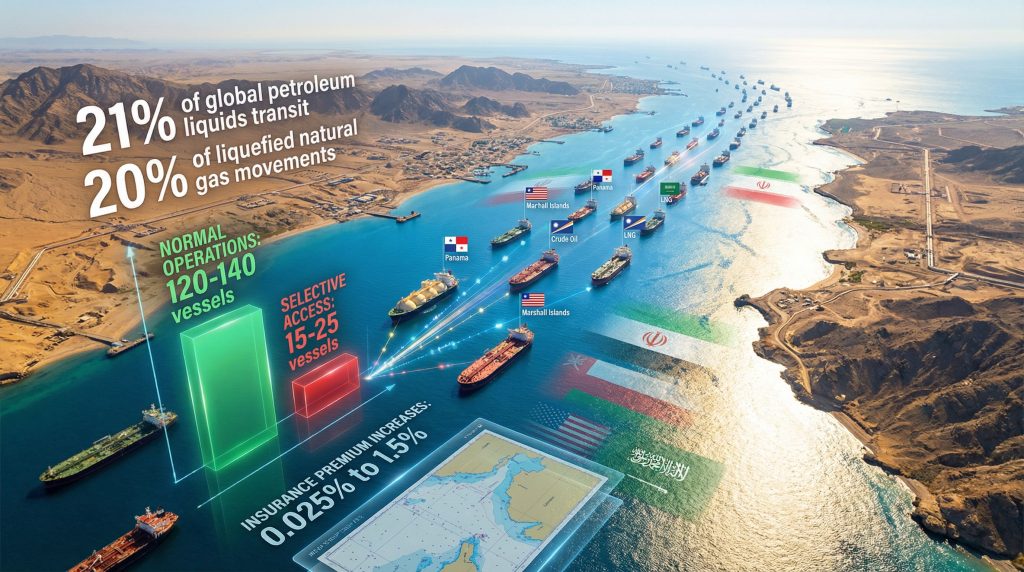
Modern energy infrastructure relies heavily on several critical maritime passages that function as economic lifelines for international petroleum and natural gas trade. These waterways represent potential single points of failure in the global supply chain, where disruptions can cascade through markets within hours of initial restrictions. The Persian Gulf's primary shipping corridor exemplifies this vulnerability, handling approximately one-fifth of global petroleum liquids and similar volumes of liquefied natural gas on a daily basis. Furthermore, recent developments regarding the strait of hormuz reopening have highlighted the critical importance of these strategic waterways.
The strategic value of these passages extends beyond simple transportation metrics. Maritime energy corridors concentrate massive economic flows through geographically constrained channels, creating leverage points where regional powers can influence global markets. Understanding how selective access policies function reveals broader patterns in energy security management and the evolving relationship between geopolitical control and economic pragmatism.
Economic Calculations Behind Maritime Access Control
Regional authorities must weigh substantial economic costs against strategic positioning when implementing corridor restrictions. Daily revenue losses from maritime access limitations can exceed two billion dollars in regional economic activity, creating powerful financial incentives for measured reopening approaches. These calculations become particularly complex during extended disruptions, where cumulative losses mount rapidly across multiple economic sectors.
The February 2026 crisis in the Persian Gulf demonstrates these economic pressures in practice. Prior to the disruption, the waterway facilitated approximately 120 vessel transits daily, representing massive daily throughput of energy commodities. Following the implementation of selective access policies, transit volumes dropped to an average of nine vessels daily, representing a 92.5% reduction in traffic flow.
In addition, broader geopolitical tensions, particularly those stemming from the US‑China trade war, have complicated these maritime access calculations by adding layers of economic uncertainty beyond regional considerations.
Insurance Market Dynamics and Risk Pricing
Maritime insurance markets respond dramatically to corridor restrictions, with war risk insurance premiums climbing from standard rates of 0.025% to 1.5% of cargo value during crisis periods. These insurance cost increases fundamentally alter shipping economics, forcing energy companies to recalculate delivery routes and pricing structures. The impact extends beyond immediate shipping costs, influencing long-term contract negotiations and supply chain planning.
Current market conditions following the strait of hormuz reopening announcement demonstrate this pricing sensitivity. Brent crude prices dropped seven percent to below $100 per barrel, while West Texas Intermediate oil prices stabilised near $87 per barrel. These price movements reflect immediate market response to reduced perceived risk, even though physical supply restoration remains limited.
When big ASX news breaks, our subscribers know first
Vessel Classification Systems and Transit Management
Modern maritime control strategies employ sophisticated screening mechanisms that categorise vessels based on multiple criteria. Flag state relationships and diplomatic status represent primary screening factors, with cargo destination verification and end-user analysis providing secondary layers of assessment. Historical compliance with regional navigation requirements influences vessel approval, while insurance coverage and safety certifications complete the evaluation framework.
Iran's implementation of selective access for vessels demonstrates these classification systems in practice. The designation of certain ships as qualified for transit through restrictions creates operational categories that separate commercial shipping from broader geopolitical tensions. However, the specific technical criteria determining these classifications remain unclear, highlighting gaps in publicly available information about screening protocols.
Operational Impact Assessment
Current transit data reveals the practical limitations of selective access policies. Despite official announcements regarding reopening to qualified vessels, MarineTraffic data indicates that only nine ships on average have successfully transited the strait since February 2026. An estimated 400 vessels remain at anchor outside the corridor, demonstrating persistent uncertainty about safety and operational stability.
Comparative Transit Analysis During Different Access Periods:
| Operational Status | Daily Vessel Count | Oil Volume | Throughput Reduction |
|---|---|---|---|
| Normal Operations | 120-140 vessels | 18-20 million barrels | Baseline |
| Selective Access | 9-15 vessels | 2-3 million barrels | 87-92% decline |
| Full Closure | 0-2 vessels | Under 1 million barrels | 95%+ decline |
This data demonstrates that selective access policies, while politically significant, achieve limited restoration of normal commercial flows in practice.
Alternative Transportation Route Development
Energy companies respond to corridor restrictions by activating alternative transportation networks, though these routes typically involve higher costs and longer transit times. Saudi Arabia's western coast infrastructure experiences capacity increases during Persian Gulf restrictions, with the Yanbu terminal complex capable of accommodating additional tanker traffic. However, transportation costs increase by $3-5 per barrel due to extended routing requirements.
Regional operators have implemented practical workarounds during the current disruption period. With major Gulf ports including Jebel Ali, Hamad, Manama, and Dammam experiencing restricted access, many energy shipments now route through Jeddah on Saudi Arabia's west coast. These shipments complete their journeys by overland transportation, demonstrating the flexibility of integrated logistics networks.
Pipeline Infrastructure Alternatives
Overland pipeline systems provide critical backup capacity during maritime disruptions, though total alternative capacity remains limited compared to normal waterway volumes:
- Saudi East-West Pipeline: 5 million barrels daily capacity
- UAE-Oman Pipeline Systems: 1.2 million barrels daily
- Iraqi-Turkish Pipeline: 1.6 million barrels daily (when operational)
These pipeline alternatives combined represent approximately 7.8 million barrels of daily capacity, significantly below the 18-20 million barrels typically transiting through the Persian Gulf waterway during normal operations.
Market Response Mechanisms and Price Volatility
Energy markets demonstrate extreme sensitivity to corridor access developments, with five to ten percent daily price movements common during uncertainty periods. Trading algorithms increasingly incorporate real-time vessel tracking data and diplomatic communication analysis to predict price movements, amplifying both upward and downward price swings based on access policy changes.
The March 2026 reopening announcement illustrates this market responsiveness. News regarding potential ceasefire negotiations between the United States and Iran prompted immediate investor confidence increases, driving crude oil prices down seven percent within hours of the announcement. This demonstrates how geopolitical developments influence market sentiment independently of immediate physical supply changes.
Furthermore, the broader implications of tariffs and market impact have created additional layers of market volatility that compound with maritime corridor disruptions.
Strategic Reserve Deployment Considerations
Major consuming nations maintain substantial emergency stockpiles for deployment during extended corridor disruptions:
- United States: 714 million barrel strategic petroleum reserve capacity
- China: 500+ million barrel estimated emergency reserves
- Japan: 145 million barrel commercial and government stocks
- European Union: 90-day import equivalent storage requirements
These strategic reserves provide buffer capacity during supply disruptions, though their deployment depends on assessment of disruption duration and severity. The current Persian Gulf situation has not yet triggered major strategic reserve releases, suggesting confidence in eventual supply restoration.
Infrastructure Adaptation and Long-term Planning
Extended maritime corridor vulnerabilities drive accelerated investment in alternative infrastructure development. Energy companies and regional governments prioritise pipeline expansion projects and regional refining capacity increases when traditional shipping routes face persistent risks. These adaptations represent fundamental shifts in energy infrastructure planning, moving away from single-route dependency toward diversified supply networks.
Regional refining capacity expansion offers particular strategic value during corridor disruptions. Gulf states increasingly focus on domestic refining investments to reduce crude export dependency, transforming from raw material exporters into finished product suppliers. This strategy reduces vulnerability to shipping disruptions while maintaining revenue streams through higher-value product exports.
Consequently, the influence of OPEC production impact becomes more complex as member states balance traditional crude exports against refined product strategies during corridor uncertainties.
Shipping Industry Operational Changes
Major energy transporters implement fleet repositioning strategies during corridor restrictions, maintaining vessel reserves outside restricted zones for rapid deployment when access conditions improve. These approaches increase operational costs but ensure market responsiveness when normal operations resume.
Technology integration becomes essential for maintaining access privileges under selective policies. Advanced vessel tracking systems and automated compliance reporting help ships demonstrate qualified status for transit approval. Investment in navigation technology and communication systems supports efforts to maintain access to restricted corridors.
Regional Economic Consequences and Revenue Impact
Oil-dependent economies face severe fiscal pressure during extended corridor closures, with daily revenue losses potentially exceeding $500 million for major producers. These losses create powerful incentives for diplomatic resolution, balancing strategic positioning against economic necessity. The scale of potential losses influences both the implementation and duration of access restrictions.
Industries dependent on petrochemical feedstocks experience cascading disruptions extending far beyond energy markets. Plastic production, pharmaceutical manufacturing, and agricultural chemical sectors face input shortages within 30-45 days of sustained shipping restrictions. This broader economic impact amplifies pressure for corridor reopening beyond immediate energy market concerns.
Global Supply Chain Integration Effects
Manufacturing supply chains demonstrate increasing vulnerability to maritime corridor disruptions as global integration deepens. Just-in-time inventory systems provide limited buffer capacity against extended shipping delays, forcing rapid operational adjustments when key routes face restrictions. The Persian Gulf situation illustrates how geographically distant conflicts can disrupt manufacturing operations worldwide within weeks.
However, understanding the broader context of trade war oil impact helps explain how multiple geopolitical factors simultaneously influence global energy supply chains.
The next major ASX story will hit our subscribers first
Insurance Market Evolution and Risk Management
Maritime insurers develop increasingly sophisticated pricing algorithms incorporating real-time diplomatic intelligence, historical conflict duration analysis, vessel-specific risk profiles, and cargo value considerations. These dynamic risk assessment models enable more precise pricing but also contribute to rapid premium adjustments during developing crises.
Large energy companies increasingly establish internal insurance capabilities to manage corridor-related risks, reducing dependence on commercial insurance markets during volatile periods. This captive insurance market growth represents a structural shift in how major energy firms manage geopolitical risk exposure.
Expert analysis suggests that even official reopening announcements may not immediately restore normal shipping patterns. According to military experts analysing reopening strategies, carriers actively avoid high-risk passages despite official clearance. This behavioural pattern suggests that formal Iranian announcements regarding qualified vessel access may require extended periods to achieve meaningful traffic restoration.
Diplomatic Framework Development and Sustainable Management
Multilateral naval cooperation agreements provide frameworks for neutral vessel protection during regional tensions, separating commercial shipping concerns from political disputes while maintaining security oversight. These arrangements enable continued energy flows during diplomatic crises, though their effectiveness depends on sustained international cooperation.
Economic incentive structures emerge as practical tools for managing corridor access during tensions. Fee-based transit systems can generate $50-100 million monthly in revenue while maintaining some level of international energy flow. These mechanisms offer middle-ground approaches between complete closure and unrestricted access.
Current Negotiation Status and Future Prospects
Current diplomatic efforts focus on comprehensive settlement frameworks that address both immediate access concerns and underlying strategic disputes. Recent developments indicate that the UK has offered to host international security summit discussions to address the strait reopening challenges. The proposed 15-point plan for reducing hostilities includes nuclear programme constraints and regional security arrangements, though Iran maintains that any agreement must respect its sovereignty requirements.
Iranian officials continue to emphasise conditional control over corridor access, with military representatives stating that normal operations will resume only according to Iranian decisions rather than external pressure. This position suggests that selective access policies may persist even during active diplomatic negotiations.
Future Energy Security Architecture Implications
The evolution of selective access policies in critical maritime corridors represents a fundamental shift in international energy security management approaches. Rather than implementing complete closures that generate maximum economic disruption, sophisticated control mechanisms allow regional powers to maintain strategic leverage while limiting global economic chaos.
This approach indicates that future energy infrastructure development will increasingly emphasise route diversification, strategic stockpiling capabilities, and diplomatic frameworks that separate commercial energy flows from geopolitical tensions. The lessons learned from current corridor management strategies will likely influence international maritime law development and energy security protocols for decades.
Investment patterns already reflect these changing dynamics, with accelerated pipeline development, expanded regional refining capacity, and enhanced strategic reserve programmes receiving increased attention from both government and private sector planning. Moreover, considerations of US economy tariffs add another dimension to energy security planning as nations seek to balance trade relationships with energy independence.
The strait of hormuz reopening serves as a case study in how modern energy security challenges require integrated responses combining diplomatic, economic, and infrastructure elements. Furthermore, this situation demonstrates the interconnected nature of global energy markets and the critical importance of maintaining flexible, diversified supply chains in an increasingly complex geopolitical environment.
Disclaimer: This analysis involves forecasts and speculative assessments based on current market conditions and geopolitical developments. Energy market predictions carry inherent uncertainty, and actual outcomes may differ significantly from projected scenarios. Readers should consult multiple sources and professional advisors before making investment or operational decisions based on this analysis.
Are You Positioned for the Next Maritime Energy Crisis?
Critical waterway disruptions and energy infrastructure vulnerabilities create significant opportunities for astute investors in ASX-listed resource companies. Discovery Alert's proprietary Discovery IQ model delivers real-time alerts on significant mineral discoveries, empowering subscribers to identify actionable opportunities in energy and resource sectors ahead of market movements. Begin your 14-day free trial today to secure your market-leading advantage during volatile energy markets.