May 21, 2026
Understanding Strategic Maritime Trade Vulnerabilities
Global commerce operates through an intricate network of maritime corridors, yet the system's efficiency creates dangerous concentration points where disruption can cascade across multiple economic sectors. The world economy has evolved toward supply chain optimization that prioritizes cost reduction over resilience, creating what economists term "fragility traps" where normal operations appear stable but exhibit extreme vulnerability during crisis periods.
These maritime chokepoints represent more than geographic constraints; they function as systemic pressure points where the failure of a single corridor can trigger sequential disruptions across manufacturing, energy, and financial markets. The recent Hormuz crisis Malacca Strait chokepoint has exposed these vulnerabilities, forcing policymakers to examine alternative routes and contingency planning for other critical passages.
The interconnected nature of modern supply chains means that disruption in one chokepoint creates ripple effects far beyond the immediate geographic region. Companies operating just-in-time inventory systems, refineries dependent on specific crude oil grades, and financial markets exposed through derivative instruments all face concentrated risk when critical maritime passages experience disruption.
When big ASX news breaks, our subscribers know first
Comparative Analysis of Global Maritime Chokepoints
Strategic Traffic Volume Assessment
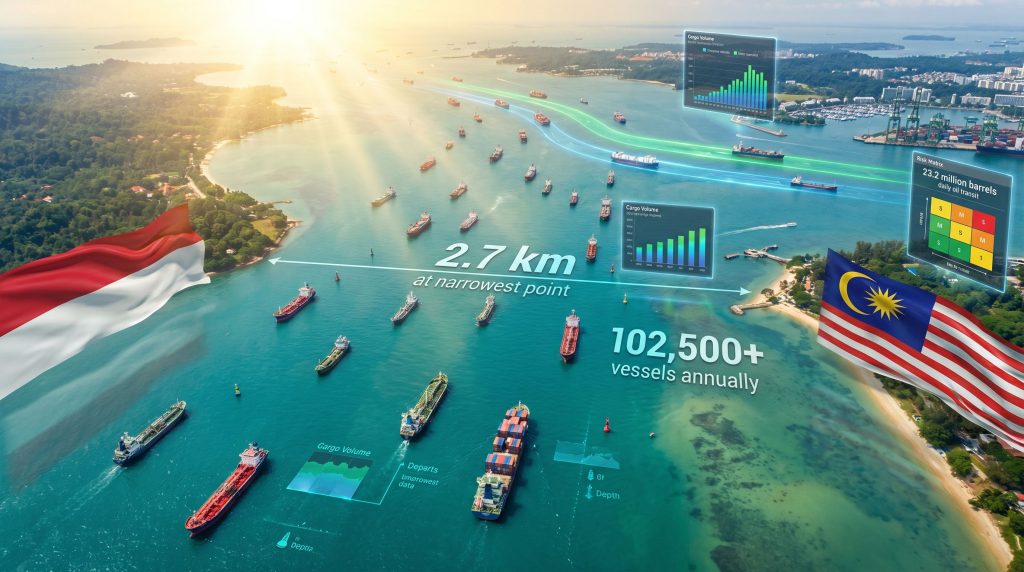
The Malacca Strait has emerged as the world's busiest commercial waterway, handling 102,500+ vessels in 2025, representing an 8.7% increase from 94,300 vessels in 2024. This surge in traffic volume reflects growing trade integration between East Asian manufacturing centers and global markets, creating unprecedented concentration of commercial shipping through a single corridor.
Oil flow data reveals the Malacca Strait's dominance in global energy transport, carrying 23.2 million barrels per day during the first half of 2025, representing 29% of total maritime oil flows worldwide. This volume exceeds the Strait of Hormuz, traditionally considered the world's most critical energy chokepoint, which handles approximately 20.9 million barrels per day.
Geographic Constraints and Operational Limitations
| Chokepoint Factor | Malacca Strait | Strait of Hormuz |
|---|---|---|
| Daily Oil Transit | 23.2 million barrels | 20.9 million barrels |
| Total Length | 900 km | ~160 km |
| Narrowest Point | 2.7 km (Phillips Channel) | 34 km |
| Annual Vessel Transits | 102,500+ vessels | ~15,000 tankers |
| Depth Restrictions | 25-27 m (limiting VLCC operations) | Deeper waters |
| Global Trade Dependency | 22% of maritime trade | ~20% of oil consumption |
The Phillips Channel represents the most constrained section of the Malacca passage, where vessels navigate through a corridor barely 2.7 kilometers wide. This extreme narrowness creates mechanical vulnerabilities including collision risk, grounding hazards, and environmental contamination potential that complement the geopolitical risks associated with other chokepoints.
China's strategic vulnerability through Malacca dependence becomes clear when examining cargo composition: approximately 75% of China's seaborne crude oil imports transit this corridor, according to tanker tracking data. This concentration creates economic leverage points that extend far beyond energy security into broader trade relationships and regional power dynamics.
Security Threat Analysis and Risk Patterns
Maritime Crime and Piracy Dynamics
Recent security data reveals cyclical patterns in maritime criminal activity, with 104 criminal attacks documented during a peak period, followed by significant decline in the first quarter of 2026. This fluctuation pattern suggests that security threats respond to operational factors including naval presence, port state control inspections, and crew awareness programs rather than representing endemic criminal conditions.
The targeting pattern shows criminal preference for smaller commercial vessels, which carry reduced security personnel and operate with limited communication protocols compared to major container ships or tankers. This creates segmented risk exposure across the merchant fleet, with smaller operators facing disproportionate security costs and operational constraints.
Criminal organizations utilize sophisticated methods including:
- Cargo theft operations targeting high-value container shipments
- Ransom extraction focusing on crew detention rather than vessel seizure
- Coordination with port-based criminal networks for cargo disposal
- Intelligence gathering on vessel schedules and cargo manifests
Illegal Ship-to-Ship Transfer Operations
Malaysian maritime authorities report increasing instances of clandestine oil transfers designed to obscure cargo origins and circumvent international sanctions regimes. These ship-to-ship (STS) operations create multiple operational hazards:
- Navigation complications through additional vessel congestion in narrow waters
- Supply chain transparency disruption complicating sanctions enforcement and cargo quality certification
- Enhanced collision risks during transfer operations in high-traffic zones
- Regulatory evasion facilitation for sanctions circumvention and origin obfuscation
The concentration of STS operations reflects broader challenges in maritime governance, where international waters provide operational space for activities designed to evade national regulatory frameworks while creating safety hazards for legitimate commercial traffic.
Environmental and Structural Vulnerabilities
The combination of extreme traffic density (102,500+ annual transits) within a confined 900-kilometer corridor creates persistent environmental and collision hazards. Depth restrictions averaging 25-27 meters in critical sections force Very Large Crude Carriers (VLCCs) exceeding 20-meter draft to coordinate transit windows with tidal variations, effectively reducing available capacity by 20-30% during low-tide periods.
A major environmental incident involving VLCC grounding or collision with oil spillage could block the entire waterway for extended periods, potentially creating the most severe supply chain disruption in modern maritime history. Environmental modeling suggests that pollution cleanup operations in the narrow Phillips Channel could require waterway closure lasting weeks or months, as detailed by the Hinrich Foundation's analysis of critical maritime bottlenecks.
Regional Coordination and Crisis Response Mechanisms
ASEAN Multilateral Framework
Singapore Foreign Affairs Minister Vivian Balakrishnan has stated that regional nations maintain strategic consensus on keeping maritime passages open for international commerce, with formal assurances provided to both the United States and China regarding guaranteed transit rights. This diplomatic framework reflects underlying economic incentives where all littoral states derive substantial revenue from maritime services.
Malaysian Foreign Minister Mohamad Hasan confirmed that Malaysia coordinates with Singapore, Indonesia, and Thailand through joint patrol arrangements, emphasizing that unilateral restrictions on strait access remain prohibited under regional agreements. These institutional mechanisms provide structured crisis response capabilities while maintaining neutral access policies during geopolitical tensions.
Economic Incentive Alignment Structure
The revenue dependency structure creates powerful incentives for cooperative crisis management rather than unilateral restrictions:
- Singapore Port Authority: Derives substantial income from transshipment services, port fees, and vessel servicing operations
- Malaysia (Port Klang, Port of Tanjung Pelepas): Benefits from pilot services, terminal operations, and maritime logistics
- Indonesian ports: Generate transit fee revenue and related maritime services income
- Thailand: Captures regional trade flow benefits despite minimal direct transit revenue
Indonesian Finance Minister Purbaya Yudhi Sadewa recently highlighted the economic value of strait transit by discussing potential toll mechanisms, while acknowledging that such arrangements remain prohibited under international maritime law. This discussion reflects growing awareness of the economic value generated by strait operations and the incentive structures that promote regional cooperation.
Alternative Routing Options and Economic Implications
Sunda Strait Limitations and Capacity Constraints
The Sunda Strait provides the primary alternative routing option but operates under significant capacity limitations. Vessel size restrictions limit passage to ships under 150,000 DWT, effectively excluding modern megavessels including Ultra-Large Container Vessels and larger tankers that form the backbone of Asian trade routes.
Furthermore, infrastructure constraints compound geographic limitations, as the Sunda Strait lacks the sophisticated traffic management systems, pilotage services, and emergency response capabilities that support high-volume operations through Malacca. This infrastructure deficit means that large-scale rerouting would require substantial investment in supporting systems rather than simple route substitution.
Lombok Strait Alternative Assessment
Deeper waters in the Lombok Strait accommodate larger vessels than Sunda, but operational complexity increases significantly due to extended routing and navigational challenges. The 4-5 additional days transit time represents more than schedule inconvenience; it creates inventory carrying cost increases, port congestion effects, and supply chain timing disruptions that cascade across multiple economic sectors.
Comprehensive Rerouting Cost Analysis
| Alternative Route | Additional Distance | Time Penalty | Cost Increase | Vessel Compatibility |
|---|---|---|---|---|
| Via Sunda Strait | +1,200 nautical miles | +2-3 days | +15-20% | Limited to <150,000 DWT |
| Via Lombok Strait | +1,800 nautical miles | +4-5 days | +25-35% | Most vessel types |
| Around Australia | +4,500 nautical miles | +12-15 days | +60-80% | All vessels |
The Australian circumnavigation option, while technically feasible for all vessel types, represents economic impracticality for routine operations. The 60-80% cost increase would fundamentally alter trade economics between Asia and the Middle East/Europe, potentially forcing structural changes in manufacturing location and supply chain architecture.
Infrastructure Investment and Technological Solutions
Singapore's Digital Traffic Management Innovation
Singapore has implemented advanced port expansion and digital traffic management systems designed to optimize vessel flow through congested waterways while maintaining safety standards. These technological solutions include automated vessel tracking, predictive analytics for traffic flow optimization, and integrated communication systems that coordinate passage timing across multiple vessels simultaneously.
The digital infrastructure represents a strategic investment in maintaining competitive advantage as global trade volumes increase. By maximizing throughput efficiency within existing geographic constraints, Singapore aims to preserve its position as the primary transshipment hub while accommodating growing vessel sizes and traffic density.
Coordinated Security Architecture
The Malacca Strait Security Initiative involves coordinated naval patrols and intelligence sharing among regional maritime forces, providing rapid response capabilities for security incidents while maintaining strict neutrality regarding commercial access. This framework operates independently of broader geopolitical tensions, focusing specifically on operational security rather than strategic positioning.
Regional governments have developed protocols that separate security cooperation from commercial policy, ensuring that anti-piracy efforts and emergency response capabilities remain functional even during periods of diplomatic tension between major powers with interests in the region.
The next major ASX story will hit our subscribers first
Future Challenges and Strategic Projections
Vessel Evolution and Capacity Constraints
Maritime industry projections indicate 15-20% increases in container vessel sizes and 25% growth in total cargo volumes between 2026-2030. These trends create escalating pressure on physical infrastructure, particularly depth restrictions and channel width that cannot be easily modified to accommodate larger vessels.
The growing size of Ultra-Large Container Vessels and new generation tankers means that alternative routing options will become less viable over time, concentrating traffic through Malacca even further. This evolution toward larger vessels reflects economic efficiency priorities but creates additional vulnerability concentration in chokepoint passages.
Climate Impact Assessment
Rising sea levels may provide marginal depth increases in shallow sections of the strait, but changing weather patterns could create more frequent extreme weather events requiring temporary waterway closures. Climate modeling suggests that severe storm frequency may increase, creating operational disruptions beyond traditional security and environmental risks.
Extreme weather events that previously occurred on multi-decade cycles may become more frequent, requiring enhanced contingency planning and potentially permanent infrastructure modifications to maintain reliable passage during adverse conditions.
Geopolitical Scenario Planning
Shifting great power competition in the Indo-Pacific region will likely increase strategic attention on maritime chokepoints, potentially leading to new security arrangements or tensions that could affect commercial operations. The Taiwan Strait, which handles an additional 21% of global maritime trade, represents another potential disruption point that could compound Malacca vulnerabilities.
Regional powers are developing military capabilities that could theoretically interdict or protect chokepoint passages, creating strategic calculation changes for both commercial operators and national governments with significant trade dependencies flowing through these corridors.
Business Risk Management and Contingency Planning
Supply Chain Diversification Strategies
Companies with significant exposure to Asian supply chains are implementing comprehensive risk management approaches that extend beyond simple route diversification:
Geographic Distribution Strategies:
- Multiple supplier location development across Southeast Asia, South Asia, and alternative regions
- Strategic inventory positioning in pre-positioned warehouses near major consumption markets
- Alternative manufacturing capability development in regions less dependent on Malacca transit
Financial Risk Mitigation:
- Freight cost insurance products specifically designed for chokepoint disruption scenarios
- Currency hedging arrangements accounting for extended routing cost variations
- Force majeure contract provisions that distribute disruption costs across supply chain participants
Additionally, companies must consider broader market impacts such as the OPEC meeting 2025 oil production decisions and US oil production decline affecting global energy costs.
Technology Integration for Supply Chain Visibility
Advanced tracking systems and predictive analytics enable companies to anticipate disruptions and implement alternative arrangements before crisis conditions fully develop. Real-time vessel tracking, port congestion monitoring, and weather pattern analysis provide early warning systems that support proactive decision-making.
These technological solutions are becoming essential infrastructure for companies operating global supply chains, providing the visibility necessary to manage complex contingency plans across multiple routing options and supplier relationships.
International Framework and Governance Mechanisms
International Maritime Organization Standards
The International Maritime Organization (IMO) provides technical standards and coordination mechanisms specifically designed for safe passage through restricted waterways. These include mandatory traffic separation schemes, vessel reporting requirements, and standardized communication protocols that reduce collision risks in high-density corridors.
IMO frameworks create international legal foundations for maintaining open access to chokepoint passages while establishing safety standards that protect both commercial operations and environmental conditions. These technical standards operate independently of political considerations, providing stability mechanisms during periods of geopolitical tension.
Regional Security Cooperation Architecture
The ASEAN Regional Forum and related multilateral institutions provide diplomatic channels for addressing security concerns before they escalate to crisis levels. These frameworks enable coordination on issues ranging from piracy suppression to environmental protection without requiring broader political agreement on strategic issues.
Economic integration benefits through trade agreements and partnership arrangements create additional stakeholder incentives for maintaining open access to critical maritime corridors, providing multiple reinforcing mechanisms that support stable operations even amid commodity market volatility and broader economic pressures.
What Makes the Hormuz Crisis Different From Previous Disruptions?
The current situation demonstrates how modern global trade dependencies create unprecedented vulnerabilities compared to historical precedents. Unlike previous maritime crises that affected regional markets, the Hormuz crisis Malacca Strait chokepoint interaction reveals systemic interconnections where Middle Eastern energy disruptions trigger immediate effects on Asian manufacturing and European consumption patterns.
The scale of modern container vessels and oil tankers means that single incidents can remove significantly more capacity from global trade than historical disruptions. When combined with just-in-time inventory systems and complex derivative financial instruments, these physical disruptions create cascading effects across multiple economic sectors.
Furthermore, the geopolitical complexity surrounding multiple chokepoints simultaneously means that traditional crisis management approaches focusing on single geographic areas prove insufficient for addressing systemic vulnerabilities in global maritime trade networks.
How Do Trade Wars Amplify Maritime Chokepoint Risks?
Trade tensions create additional pressure on maritime chokepoints by concentrating cargo flows through specific routes while simultaneously reducing diplomatic cooperation on security issues. The trade war oil impact demonstrates how commercial restrictions force cargo rerouting that increases traffic density through alternative passages.
Economic nationalism and sanctions regimes create requirements for cargo route verification that complicate traditional shipping patterns, potentially forcing more vessels through already congested chokepoints. The US-China trade war impact on global markets shows how bilateral tensions affect multilateral trade flows through shared maritime infrastructure.
Moreover, trade wars reduce international cooperation on infrastructure investment and security coordination, making it harder to address chokepoint vulnerabilities through multilateral approaches that require sustained diplomatic engagement and shared financial commitments.
Building Resilient Maritime Trade Networks
The Hormuz crisis has illuminated the interconnected vulnerabilities within global maritime infrastructure, with the Malacca Strait chokepoint representing both the greatest opportunity and highest risk concentration in contemporary trade systems. As the world's busiest commercial waterway handling 22% of global maritime trade, Malacca operations directly affect economic activity across multiple continents.
Effective risk management requires coordination across multiple dimensions: diplomatic cooperation among regional powers, technological investment in traffic management and security systems, and strategic planning by commercial stakeholders to build supply chain resilience. The institutional frameworks developed by ASEAN members provide models for multilateral cooperation that separates operational security from broader geopolitical competition.
The future stability of global trade depends on developing comprehensive approaches that maintain efficiency while building redundancy into critical systems. This includes infrastructure investment in alternative routing options, technological solutions for enhanced supply chain visibility, and financial instruments that distribute disruption risks across multiple stakeholders.
Success in managing chokepoint vulnerabilities will require balancing optimization pressures with resilience investments, ensuring that the global economy can maintain the benefits of efficient maritime commerce while developing the flexibility to adapt to evolving security challenges in an increasingly complex geopolitical environment. As experts from the South China Morning Post have noted, the chain reaction potential between different chokepoints requires coordinated international responses.
Disclaimer: This analysis contains forward-looking assessments and scenario projections that involve uncertainty. Maritime security conditions, geopolitical situations, and economic factors can change rapidly, affecting the accuracy of predictions and strategic assessments presented in this analysis.
Ready to Capitalise on Maritime Trade Disruptions?
Discovery Alert's proprietary Discovery IQ model helps investors identify ASX-listed companies that could benefit from global supply chain shifts and commodity price volatility. When maritime chokepoints create market uncertainty, savvy investors use Discovery Alert to spot mining and exploration opportunities that emerge from these geopolitical and economic disruptions. Begin your 14-day free trial today at Discovery Alert and position yourself ahead of market-moving developments.